2027 Best Online Certifications With No Campus Visits Required

Co-Founder and Chief Data Scientist
Choosing an online certificate is difficult when "online" can still mean required labs, clinicals, or testing-site visits. Fully online certificates deliver coursework, assessments, and student support remotely, but they do not automatically meet hands-on licensing rules. U.S. Bureau of Labor Statistics (BLS) projections for 2023-33 show above-average growth in several certificate-relevant fields, including electricians at 11% and medical records specialists at 9%.
This guide helps career changers, working adults, and upskillers compare realistic no-campus options, costs, recognition, and career limits before enrolling.
Key Things You Should Know
- A fully online certificate is an educational credential; a professional certification is usually awarded by an industry body after an exam or other requirements. Many careers require one, both, or neither.
- No-campus programs work best for digital, administrative, legal support, business, and design skills. Programs leading to hands-on trades, patient care, or state licensure commonly require in-person clinical, lab, internship, or examination components.
- BLS projects 2023-33 employment growth of 11% for electricians, 9% for medical records specialists, and 8% for web developers and digital designers, but projected demand does not guarantee employment or mean an online certificate alone meets entry requirements.
Top 10 Best Online Certifications With No Campus Visits Required
Popular Trade School Programs
Fully online trade-related certificates are most practical for estimating, construction management support, CAD drafting, occupational safety, supply-chain operations, and electrical theory. They can build job-ready knowledge for office-based or support roles, but they generally cannot replace supervised field hours needed for electrician, HVAC, welding, plumbing, or similar licenses. Choose a remote program if your target role is design, scheduling, compliance, or project coordination. Choose an apprenticeship, employer training, or hybrid school if you need hands-on competency verification.
Healthcare Programs
No-campus healthcare certificates commonly cover medical billing and coding, health information, medical transcription, pharmacy-administration concepts, and healthcare management support. These programs may prepare students for an optional industry certification exam, depending on curriculum and eligibility rules. They are a better fit for records, revenue cycle, and administrative work than direct patient-care roles. Medical assisting, nursing, dental hygiene, imaging, and laboratory programs usually require clinical education; a school advertising these as entirely online deserves close scrutiny. Confirm exam eligibility and employer recognition before paying.
Criminal Justice / Law Programs
Online certificates and associate degrees in criminal justice, legal studies, homeland security, and paralegal studies can suit corrections support, compliance, investigation support, court administration, or legal-office work. A paralegal certificate may be useful for degree holders seeking focused legal training, while an associate degree provides broader general education. Neither credential authorizes someone to practice law, and police employment has agency-specific fitness, background, academy, and state requirements. Review whether the curriculum covers legal research, writing, ethics, and the software used by local employers.
Arts & Design Programs
Fully online certificates in graphic design, UX design, digital marketing design, animation, web design, and digital photography emphasize software practice and portfolio development. They are suitable for learners who can show finished work to employers or clients, not just a completion credential. A credit-bearing certificate can sometimes stack into an associate or bachelor's degree; noncredit programs usually do not transfer. Before enrolling, inspect portfolio requirements, instructor feedback, software costs, and whether projects reflect current accessibility, responsive-design, and AI-assisted workflow expectations.
What types of careers can you pursue with fully online certifications?
Fully online certificates can support entry-level or advancement-oriented work where employers value demonstrable skills, a recognized curriculum, or an industry examination. They are strongest when the credential directly matches a job posting's tools and responsibilities rather than serving as a vague résumé addition.
The following career directions illustrate the difference between a useful certificate and a license-qualifying pathway:
- Medical billing, coding, health-information support, and patient-access roles may value healthcare administration training; employers may also prefer an industry certification.
- Paralegal and legal-assistant roles can be supported by legal studies coursework, although employers may prefer a degree or prior office experience.
- Web content, junior web development, digital design, and marketing-production roles can rely heavily on a portfolio and current technical skills.
- Project coordination, logistics support, bookkeeping support, and customer operations roles may reward software, process, and communication training.
- Construction estimating, CAD support, and safety coordination can be remote-learning pathways, while field trades require practical training and often licensing.
For people prioritizing location-flexible work, compare these paths with work from home degrees that pay good money. A certificate is often a faster test of career fit, but a degree may be the better long-term choice when employers require broad education, promotion eligibility, or regulated preparation.
How do you verify accreditation and quality for online certificate programs?
For a credit-bearing college certificate or associate degree, verify that the institution holds institutional accreditation recognized by the U.S. Department of Education or the Council for Higher Education Accreditation. Then check whether the specific program has specialized accreditation when that field uses it. Institutional accreditation does not automatically mean a program satisfies licensing-board rules.
Use these checks before submitting an application or payment:
- Confirm the school's legal name, accreditor, program length, and delivery method directly with the institution.
- Ask whether any practicum, clinical, lab, orientation, proctored exam, or internship requires travel.
- Request the total-cost estimate, including technology, books, software, examination, background check, and equipment fees.
- Check whether the curriculum meets eligibility requirements for any certification examination you intend to take.
- For a noncredit provider, evaluate employer recognition, instructor expertise, assessment quality, refund terms, and portfolio or project outcomes rather than assuming academic accreditation applies.
A reputable school should answer these questions clearly and provide written policies. If you want to compare institution-level options, review the top 10 online colleges alongside each program's own requirements.
What are the admission requirements for reputable online certification programs?
Admissions depend on the credential type. Community-college credit certificates and associate degrees commonly require an application, high school completion or an equivalent credential, residency information, and placement or prerequisite review. Some programs accept students without a competitive GPA threshold, but selective or advanced certificates may require prior college coursework.
Professional certificates, vendor training, and noncredit career programs may use lighter enrollment requirements, such as basic computer access, payment, and relevant work experience. Before applying, confirm these practical requirements:
- Whether the program is credit-bearing, noncredit, undergraduate, graduate, or continuing education.
- Whether prior coursework, a degree, work experience, typing speed, software knowledge, or a background check is required.
- Whether international, state-residency, or age restrictions apply.
- Whether transfer credit, prior-learning credit, or employer tuition assistance is accepted.
- Whether the program's admission standard is separate from eligibility for a certification exam or professional license.
A common mistake is treating easy enrollment as proof that the credential will be accepted by employers. Match admission requirements to the complexity and regulation of the career you want.
How do online certification formats differ from campus-based and hybrid options?
"Online" describes delivery, not necessarily every requirement. The format determines scheduling freedom, interaction, equipment needs, and whether the program can prepare you for a regulated occupation.
This comparison clarifies what each format usually means before you commit to a program advertised as flexible:
| Format | Where learning occurs | Best fit | Key limitation |
| Fully online | Lectures, assignments, discussions, and assessments are remote | Digital, administrative, business, legal support, and design skills | May not provide required hands-on practice for licensure |
| Online with local placement | Coursework is remote; practicum or externship occurs locally | Some healthcare and applied programs | It is not a no-campus/no-site-visit option |
| Hybrid | Remote coursework plus scheduled campus labs or meetings | Programs requiring equipment or skills demonstration | Travel and fixed dates reduce flexibility |
| Campus-based | Most instruction and practice occur in person | Hands-on trades and clinical professions | Less convenient for distant or working learners |
Also ask how exams are proctored. Remote proctoring may be acceptable for a no-campus goal, but it can require a webcam, identification check, stable internet, and a private testing space.
What does the typical curriculum and coursework look like in online certificates?
Online certificate coursework is usually narrower than an associate degree and organized around a defined skill set. Credit-bearing academic certificates may include graded courses, term schedules, and transferable credits under stated policies. Noncredit professional certificates often use self-paced modules, projects, simulations, and a completion badge.
A credible curriculum should make its outcomes and assessments visible. Depending on the field, look for these components:
- Foundation courses that explain terminology, regulations, ethics, and workflow.
- Applied assignments using relevant software, case studies, documents, coding scenarios, or design briefs.
- Instructor feedback, rubrics, and assessments that verify individual learning.
- Career artifacts such as a portfolio, coding practice record, legal-research memo, or project plan.
- Clear preparation boundaries for external certification exams, clinical requirements, or licensing steps.
AI tools are increasingly part of workplace workflows, especially in design, coding, administration, and documentation. Prefer programs that teach responsible use, verification, privacy, and original work rather than programs that merely promise AI exposure.
How long do online certification programs take and what do they cost?
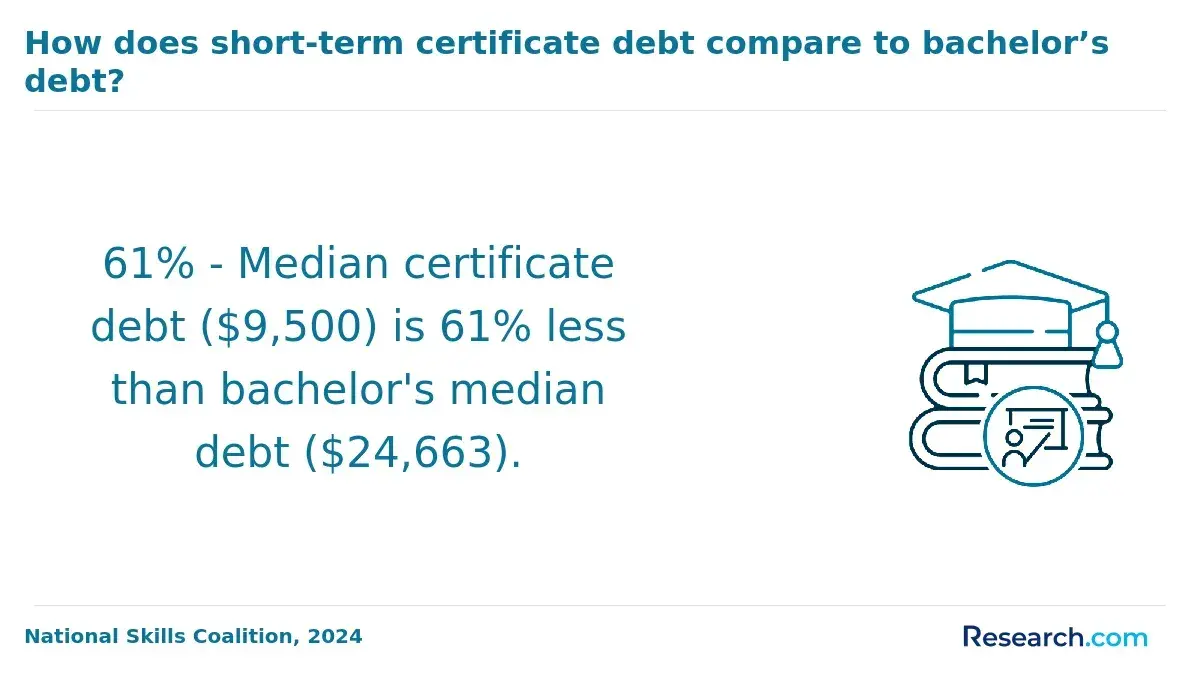
Completion time ranges from a few weeks for a focused noncredit course to roughly one year or more for a multi-course college certificate; associate degrees usually take longer because they include general education and additional credits. Self-paced programs can be faster only if you have enough weekly study time and no required placement. Compare the total investment, not tuition alone.
The cost categories below help reveal why two programs with similar advertised tuition can have very different final prices:
| Program type | Typical time pattern | Main cost factors | Funding considerations |
| Noncredit career or professional certificate | Weeks to months; often self-paced | Program fee, subscriptions, exam voucher, optional coaching | Employer reimbursement or payment plans may be available; federal aid often does not apply |
| Credit-bearing college certificate | One or more academic terms | Per-credit tuition, institutional fees, books, software, proctoring | May qualify for federal aid if the school and program are eligible |
| Associate degree | Usually multiple terms | Tuition, general education, fees, materials, possible campus requirements | May offer broader aid and transfer options, subject to eligibility |
Request a written net-price estimate and ask whether required certifications, laptops, software, or travel are excluded. If affordability is the deciding factor, compare the cheapest online degrees as an alternative when a bachelor's degree would better serve your target occupation.
What licensing or professional certification requirements apply after program completion?
Completing an online certificate does not automatically create a professional license or certification. Licensure is granted by a government authority and is common in regulated occupations; certification is generally granted by a professional association, testing organization, or vendor. Requirements can include an approved education program, supervised experience, an examination, continuing education, and a background check.
Before choosing a program tied to healthcare, law enforcement, construction, or another regulated field, take these steps:
- Identify the exact job title and state where you intend to work.
- Review the relevant state board, agency, or employer requirements for that title.
- Ask the school whether its online curriculum meets educational eligibility requirements in your state.
- Confirm whether clinical hours, field experience, fingerprints, drug screening, or an in-person exam are required.
- Get written confirmation when a school markets preparation for a specific examination or license.
Red flags include vague claims such as "license-ready" without naming the state, board, or required supervised experience. For unregulated roles, employer preference and demonstrated skills may matter more than a formal license.
What salaries and earning potential are realistic with these online certifications?
Salary depends on occupation, location, experience, employer, education level, and job duties—not simply on possessing a certificate. The BLS May 2024 national median annual wage figures below provide occupational context. They should be used to compare career targets, not as a prediction of what a certificate completer will earn.
| Occupation | BLS May 2024 median annual wage | Certificate relevance |
| Medical records specialists | $50,250 | Billing, coding, and health-information certificates can be relevant; employer and certification preferences vary |
| Paralegals and legal assistants | $61,010 | Legal studies or paralegal education may help, but employers may prefer a degree or experience |
| Electricians | $62,350 | Requires practical training and typically apprenticeship or licensing steps; online theory alone is insufficient |
| Web developers and digital designers | $95,380 | Portfolio, technical ability, and experience are central; a certificate can be one route to skill development |
Higher-paying outcomes generally require more than rapid completion: relevant experience, a portfolio, industry certification, or a degree can matter. Explore online programs that pay well if your goal is to compare broader education paths rather than select a short credential alone.
What is the job outlook and demand for fields served by online certificates?
Demand is strongest where employers need technical skills, digital systems support, replacement workers, or regulated services. BLS employment projections for 2023-33 estimate 11% growth for electricians, 9% for medical records specialists, 9% for heating, air conditioning, and refrigeration mechanics and installers, and 8% for web developers and digital designers. These figures are national projections, not local hiring guarantees.
For fully online learners, the important distinction is between a growing occupation and an occupation accessible through remote-only preparation. Medical records, digital design, web development, legal support, and business operations can align well with remote instruction. Electrician and HVAC growth may be attractive, but the training pathway still requires hands-on learning, supervised work, and often state or local licensing.
Use local job postings to validate demand. Look for repeated requirements involving specific software, certification exams, portfolios, shift availability, or prior experience. If postings consistently require a degree, license, or apprenticeship, do not assume a short online certificate will substitute for it.
Other Things You Should Know About
Yes, particularly in digital, business, administrative, design, and some legal-support subjects. Verify every requirement in writing, including orientation, exams, internships, labs, and proctoring. A remote proctored exam is not a campus visit, but it may require specific technology and a private testing environment.
They can be worthwhile when they teach a clearly requested skill, produce work samples, and fit a realistic entry-level job target. They are less suitable when the target career requires a license, clinical training, an apprenticeship, or a degree that the certificate does not provide.
Many employers focus on the issuing institution or provider, curriculum, demonstrated skills, and relevant experience rather than delivery format. A recognized college certificate, respected industry credential, strong portfolio, or certification exam result can carry more weight than an unverified completion badge.
It may, but only when the school and specific credit-bearing program meet federal eligibility rules and you qualify for aid. Many noncredit, bootcamp-style, and vendor certificates are not federal-aid eligible. Ask the financial-aid office for the program's status before enrolling.
References
- In-Person Learning vs. Online Learning: Which Is Right for You? | ACE Blog https://ace.edu/blog/examining-in-person-instruction-from-a-virtual-mindset-what-can-we-improve/
- Your guide to online proctoring solutions - PSI Exams https://www.psiexams.com/online-proctoring-guide/
- 7 in-demand certifications in 2025 | edX https://www.edx.org/resources/in-demand-professional-certifications
- 6 Proctoring Essentials for Remote Certification provider https://www.talview.com/blog/6-proctoring-essentials-for-remote-certification-provider
- Remote Proctoring: Everything You Need To Know | Questionmark https://www.questionmark.com/resources/blog/remote-proctoring-everything-you-need-to-know/
- Online vs. In-Person Certification: What Works | HealthCerts https://healthcareercerts.org/blog/online-vs-in-person-certification-what-works-best-college-students/
- Remote & Secure Exam Proctoring: Balancing Integrity with Student Privacy | Proctortrack https://proctortrack.com/remote-secure-exam-proctoring-balancing-integrity-with-student-privacy/
- Are online education programs worth it? Understanding their value - MSU Denver https://www.msudenver.edu/innovative-lifelong-learning/blog/are-online-education-programs-worth-it-understanding-their-value/
- Top 10 Benefits of Professional Certification - Identity Management Institute® https://identitymanagementinstitute.org/top-10-benefits-of-professional-certification/
- 10 Reasons to Enroll in a Certificate Program https://www.managementconcepts.com/resource/top-10-reasons-to-consider-a-certification-program-and-why/