2027 Best Certificate Programs With 2.0 GPA Admission

Co-Founder and Chief Data Scientist
A 2.0 GPA can narrow some college options, but it does not eliminate practical certificate and career-training paths. Certificate programs can help students build job-ready skills without committing to a full degree, although admission rules, licensing requirements, and transferability vary widely.
The U.S. Bureau of Labor Statistics projects overall employment growth of 4% through 2033, with stronger demand in several healthcare, skilled-trade, and technology-supported roles. This guide helps you compare realistic programs, confirm eligibility, estimate costs, and avoid enrolling in a credential that does not match your career goal.
Key Things You Should Know
- A 2.0 GPA may be sufficient for many open-admission community colleges, workforce certificates, and noncredit career programs, but selective healthcare and licensure tracks can require stronger grades in prerequisite courses.
- Short certificates commonly take weeks to about one year; College Board reported average published in-district tuition and fees of $4,050 at public two-year colleges for 2024-25, before supplies, testing, tools, and living costs.
- Choose a program based on its required credential for the target job: a school certificate may build skills, while certification exams, apprenticeships, state licenses, or an associate degree may still be required.
Top 10 Best Certificate Programs With 2.0 GPA Admission
Popular Trade School Programs
Trade certificates often emphasize hands-on training and may use open enrollment, placement testing, or basic education requirements rather than a high GPA. Common choices include welding, HVAC/R, electrical technology, plumbing, diesel technology, industrial maintenance, automotive service, and commercial driving.
Many programs take one semester to one year; apprenticeships can take longer but combine paid work with training. Confirm whether the certificate prepares you for an industry exam, such as EPA Section 608 for refrigerant work, or meets state apprenticeship requirements. An associate degree may be better for students seeking broader technical advancement.
Healthcare Programs
Healthcare certificates can include medical assisting, pharmacy technician, medical billing and coding, patient care technician, sterile processing, dental assisting, and practical nursing prerequisites. Entry rules vary: nonclinical administrative programs may have modest GPA thresholds, while nursing and imaging programs often rank applicants using prerequisite grades, entrance tests, and background checks.
Clinical programs may also require immunizations, CPR training, drug screening, and supervised clinical hours. A certificate is not the same as professional certification or state licensure. Verify that the curriculum meets the requirements for any exam or license you intend to pursue.
Criminal Justice / Law Programs
Certificate options in criminal justice, legal studies, paralegal support, security, corrections, and emergency management can suit students with modest academic records. Programs may teach report writing, legal terminology, ethics, evidence procedures, records management, and community safety principles.
A certificate can support entry-level administrative or support work, but it does not automatically qualify someone as a police officer, lawyer, licensed security professional, or certified paralegal. Those roles can involve agency hiring standards, background reviews, academy training, examinations, or state-specific rules. Check local employer expectations before selecting a specialization.
Arts & Design Programs
Arts and design certificates may cover graphic design, digital media, web design, photography, animation, fashion, interior decorating, or UX fundamentals. Many focus more on a portfolio, software access, and completed coursework than on GPA. Students commonly learn Adobe Creative Cloud, layout, typography, visual communication, digital imaging, and portfolio presentation.
A short certificate can be a practical way to test a creative field, but employers often evaluate work samples more closely than the credential title. Choose a program with current software, instructor feedback, portfolio projects, and clear ownership rights for your completed work.
What are the most in-demand certificate programs open to a 2.0 GPA?
The most in-demand option is not automatically the best one for every student with a 2.0 GPA. Programs are strongest when they lead to a role that is available locally, fits your schedule and physical requirements, and has a clear employer-recognized next step. The Bureau of Labor Statistics projects much faster-than-average growth for several healthcare support and technology-related occupations, but local hiring and licensure rules still matter.
These program types are commonly worth comparing because they connect training to identifiable entry-level duties.
| Program type | Typical credential outcome | Best fit | Important limitation |
| HVAC/R or industrial maintenance | College certificate; possible industry exam preparation | Students seeking hands-on technical work | May require tools, fieldwork, and separate credentials |
| Medical billing and coding | Academic or career certificate | Detail-oriented students interested in healthcare administration | Certification may be preferred by employers but is separate from the certificate |
| Pharmacy technician | Career certificate | Students comfortable with customer service and accuracy | State registration and national certification rules differ |
| IT support | Academic certificate or noncredit training | Students building entry-level technical skills | Employers may expect a portfolio, experience, or industry certification |
| Commercial driver training | Career-training certificate | Students seeking an accelerated transportation path | A CDL skills test and medical qualification are separate requirements |
For a broader view of fields that combine earnings potential with personal interest, review majors that make money and are fun. A certificate is usually a faster entry point than a degree, but it may offer less mobility if the occupation later requires an associate or bachelor's degree.
Which accredited schools offer flexible online certificate programs for a 2.0 GPA?
Accredited colleges may offer online certificates with flexible admission practices, but no school should be assumed to admit every applicant with a 2.0 GPA. Start with public community colleges, technical colleges, and regionally accredited institutions that clearly publish program-level admission rules. Institutional accreditation supports academic quality and can matter for federal aid eligibility, transfer review, and employer confidence; it does not by itself prove that a particular program meets licensing standards.
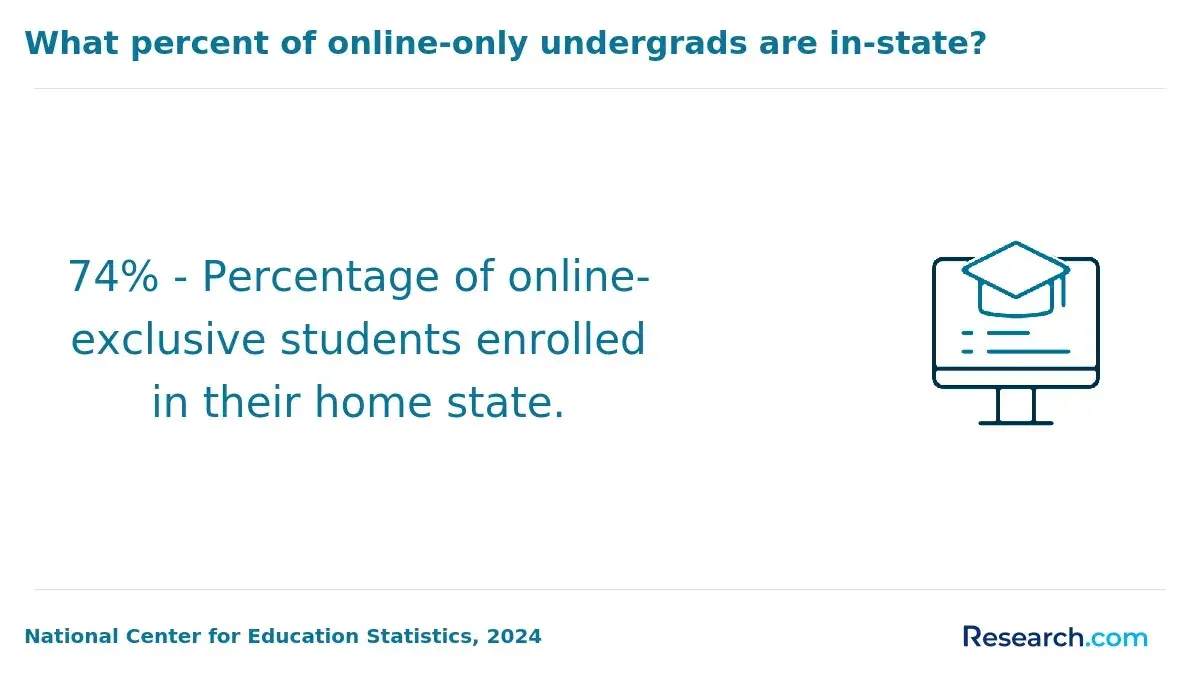
When evaluating an online option, ask the admissions office whether the program is credit-bearing, whether it is available to residents of your state, and whether courses include required in-person labs or clinical placements. Online learning can work well for business, IT, billing, legal support, and design foundations. It is less suitable when students need substantial supervised equipment practice or clinical training.
If you later decide that a graduate credential better fits your goal, compare admissions standards separately; master's degrees online generally require a completed bachelor's degree and use different eligibility criteria from undergraduate certificates.
What admission requirements do certificate programs typically have for students with a 2.0 GPA?
Certificate admissions depend on the provider and credential type. A noncredit workforce course may require only identity verification and payment. A credit-bearing college certificate can require a high school diploma or equivalent, an application, transcripts, placement measures, and proof of residency. A 2.0 GPA may meet the minimum for general college admission while still falling short for a limited-enrollment program.
Before applying, separate general admission from admission to the specific certificate. The following checkpoints prevent a common and costly misunderstanding.
- Ask whether the stated GPA is cumulative high school GPA, college GPA, or prerequisite-course GPA.
- Confirm whether placement testing, developmental coursework, or English and math prerequisites are required before technical courses begin.
- Check whether the program has capacity limits, a waitlist, a point system, interviews, or a separate application deadline.
- For clinical, driving, security, or field-based programs, request the full list of background, health, physical, and legal eligibility requirements.
If your record is below a program's threshold, ask about conditional admission, academic renewal, prerequisite retakes, adult-basic-education pathways, or starting in a related open-enrollment certificate. Do not assume an appeal changes externally mandated licensure requirements.
How do online and campus certificate programs compare for students with a lower GPA?
Online and campus certificates can carry similar academic credit when offered by the same institution, but their learning experience and suitability differ. The better choice depends on whether your intended work requires physical practice, live supervision, clinical hours, or equipment that cannot be replicated at home.
This comparison highlights the practical trade-off rather than treating online delivery as automatically easier or less rigorous.
| Factor | Online or hybrid certificate | Campus-based certificate |
| Scheduling | Often offers asynchronous lectures and fewer commutes | Usually has fixed class, lab, or shop times |
| Best for | Administrative, business, IT, coding, and design coursework | Trades, clinical care, labs, and equipment-intensive training |
| Student support | Requires proactive use of virtual tutoring and advising | Provides easier in-person access to instructors and facilities |
| Hidden requirements | May still include proctored exams, fieldwork, or campus intensives | May include commuting, parking, uniforms, and lab fees |
| Career preparation | Can build digital collaboration habits | Can provide supervised practice and local employer contact |
Students who need rapid, structured academic momentum may prefer campus support. Students balancing work may prefer online courses, provided they can reliably manage deadlines. If you are comparing longer credentials later, a shortest master's program is a separate decision that generally follows undergraduate study rather than replacing entry-level technical training.
How long do certificate programs for 2.0 GPA students usually take and what do they cost?
Most career certificates run from several weeks to roughly 12 months, while credit-bearing college certificates commonly require about 16 to 30 credits and can take one to three semesters of full-time enrollment. Part-time schedules, prerequisite classes, clinical rotations, and course availability can extend the timeline. Associate degrees generally take longer but may offer broader general education, transfer options, and advancement potential.
Tuition is only one part of the investment. College Board's 2024-25 average published in-district tuition and fees at public two-year colleges was $4,050, a useful benchmark rather than a quote for any one program. Compare the full cost categories below before deciding that a low-tuition program is the lowest-cost option.
- Tuition and mandatory institutional fees, including distance-learning or technology charges.
- Books, software subscriptions, tools, uniforms, equipment, and required supplies.
- Exam, background-check, immunization, drug-screening, licensing, or certification fees where applicable.
- Transportation, childcare, lost work time, and living costs during clinicals, labs, or unpaid placements.
Credit-bearing certificates at eligible institutions may qualify for federal or state aid when students meet program and enrollment requirements. Noncredit programs may instead offer workforce grants, payment plans, employer reimbursement, or workforce-agency funding. Ask for a written cost estimate and aid eligibility before enrolling.
What courses and skills are covered in career-focused certificate programs with modest GPA thresholds?
Career-focused certificates teach a narrower set of skills than an associate degree. The right curriculum starts with the tasks employers expect at entry level and adds safety, communication, documentation, and technology skills. Look for course descriptions, lab hours, and assessed projects rather than relying only on a program title.
Across fields, strong programs commonly combine occupation-specific instruction with the following employability foundations.
- Workplace communication, customer service, professional conduct, and team collaboration.
- Digital literacy, secure file handling, scheduling systems, spreadsheets, and job-specific software.
- Safety procedures, compliance basics, ethics, documentation, and quality-control practices.
- Hands-on labs, simulations, supervised fieldwork, or portfolio projects when the occupation requires demonstrated ability.
For example, an HVAC certificate may cover electrical fundamentals, refrigeration cycles, diagnostics, and safety. A medical billing certificate may cover medical terminology, coding systems, claims workflows, and privacy practices. Ask whether instruction uses current equipment or software and whether course projects can become evidence of your skills in an interview.
What entry-level careers and job roles can these certificate programs prepare you for?
A certificate can prepare you to apply for related entry-level work, but it is not a job guarantee. Employers may also assess experience, background eligibility, state credentials, portfolios, physical capacity, schedules, and communication skills. Treat the credential as one component of a job-search plan that includes networking, targeted applications, and interview preparation.
The roles below illustrate common entry points and the additional qualification questions to investigate.
| Certificate area | Possible entry-level roles | Check before enrolling |
| Skilled trades | HVAC helper, maintenance technician trainee, welder trainee, shop assistant | Apprenticeship pathway, tools, safety training, and local licensing rules |
| Healthcare administration | Medical records clerk, billing assistant, patient-access representative | Software training, employer certification preferences, and privacy training |
| Patient care | Nursing assistant, medical assistant, pharmacy technician trainee | State approval, examination eligibility, clinical hours, and background rules |
| Legal and public safety support | Records clerk, legal assistant, security support staff | Agency standards, background requirements, and whether a license is needed |
| Digital design | Production artist assistant, content assistant, junior design support | Portfolio quality, software proficiency, and freelance-business expectations |
Some certificate paths, particularly coding, records, design, and IT support, can appeal to people who prefer focused independent work. Explore related jobs for introverts that pay well while remembering that every role still involves some communication and collaboration.
What salary ranges and job outlook can graduates of these certificate programs expect?
Salary information should be used as labor-market context, not as a promise that a certificate graduate will earn a particular amount. Pay varies by location, employer, shift, experience, union status, licensure, and whether a worker advances beyond an entry-level role. A certificate alone may not meet the qualification standard for every occupation associated with its subject area.
The U.S. Bureau of Labor Statistics' 2024 occupational data illustrates the range among fields commonly explored by certificate seekers.
| Occupation | Median annual wage | Projected growth through 2033 | Credential caution |
| Heating, air conditioning, and refrigeration mechanics and installers | $59,810 | 8% | Employers may expect EPA certification and on-the-job training |
| Medical assistants | $44,200 | 15% | Requirements and certification preferences vary by employer and state |
| Pharmacy technicians | $43,460 | 7% | State registration or certification may be required |
| Paralegals and legal assistants | $61,010 | 1% | Many positions prefer an associate degree or bachelor's degree plus training |
| Graphic designers | $61,300 | 2% | Portfolio quality and experience are central to hiring |
These BLS figures describe all workers in each occupation, not certificate graduates specifically. Use them to compare fields, then review local job postings to see whether employers request a certificate, certification, degree, apprenticeship, or prior experience.
How can students with a 2.0 GPA choose a reputable, accredited certificate program?
A reputable program makes its admission rules, total charges, delivery format, completion requirements, and career limitations easy to verify. Do not choose solely because a school advertises "no GPA requirement" or fast completion. That language may refer only to general enrollment, not to placement in a restricted clinical, licensure, or advanced technical track.
Use this process to compare programs before submitting a deposit.
- Define the specific job you want and review several local job postings for required credentials, schedules, and experience.
- Verify the school's institutional accreditation when academic credit, aid, or transferability matters, and verify program approval separately when licensing is involved.
- Request the full program map, including prerequisites, clinicals or labs, attendance rules, completion time, and every required fee.
- Ask whether credits transfer or stack into an associate degree and get the policy in writing rather than relying on verbal assurances.
- Confirm the program's eligibility for any certification examination, state license, or employer partnership it advertises.
- Compare completion support, tutoring, career services, withdrawal rules, and realistic local placement information before enrolling.
Red flags include pressure to enroll immediately, vague claims about accreditation, guaranteed employment or salary language, missing fee details, and no explanation of licensure eligibility. A lower GPA should not push you toward a program with weaker transparency; it should push you toward one with clear supports and a credible next step.
Other Things You Should Know About
Yes, many community college and workforce certificate programs may consider a 2.0 GPA or use open admission. However, competitive programs, especially nursing, imaging, and some allied-health tracks, can require higher prerequisite grades or use selective admission criteria.
No. A certificate is usually awarded by a college or training provider after coursework. A certification is typically awarded by an independent professional organization after an examination and sometimes experience or continuing education requirements.
It may, if the certificate is credit-bearing, offered by an eligible institution, and meets applicable federal or state aid rules. Many short noncredit programs do not qualify for federal student aid, though workforce grants, employer support, and payment plans may be available.
Choose a certificate when you need focused, shorter training for a clearly defined entry-level role. Consider an associate degree if your target occupation requires it, you want transferable general-education credits, or you expect to pursue longer-term advancement after improving your academic record.
References
- Highest Paying College Majors in 2026: Salary Data & Rankings | Extern https://www.extern.com/post/highest-earning-majors
- Scholarships for College Students https://accessscholarships.com/blog/50-scholarships-for-college-students/
- Colleges That Accept Low GPA Scores | Find Options https://www.educationconnection.com/resources/colleges-that-accept-low-gpa/
- 7 in-demand certifications in 2025 | edX https://www.edx.org/resources/in-demand-professional-certifications
- Medical School Requirements in 2025: The Definitive Guide - Shemmassian Academic Consulting https://www.shemmassianconsulting.com/blog/medical-school-requirements
- Best Paying Jobs Without a Degree: 24 High-Income Careers for 2026 - tripleten.com/blog https://tripleten.com/blog/posts/best-paying-jobs-without-a-degree
- Scholarships for Short-Term Certificates https://www.sscc.edu/financialaid/short-term-certificate.shtml
- Guide To Low GPA Transfer Strategies For College | Learning At College Strategy Blog https://www.learning.collegestrategyblog.com/low-gpa-transfer-strategies-for-college/
- Which Online Certification Programs Are Recognized by Employers in the U.S.? https://fellow.msicertified.com/blog/which-online-certification-programs-are-recognized-by-employers-in-the-u-s
- Education Requirements https://www.tmdsas.com/explore/education-req.html