2027 Best Stackable Credentials for Job Security

Co-Founder and Chief Data Scientist
Choosing a short program is risky when its credits, license preparation, or employer value do not lead to a stronger next step. Stackable credentials solve that problem by letting learners build from a certificate to an associate or bachelor's degree while working. U.S. Bureau of Labor Statistics projections released in 2024 show healthcare support occupations are expected to grow faster than the average for all occupations through 2033. This guide helps career changers, recent graduates, and working adults compare pathways, verify quality, and choose credentials that can support long-term job security.
Key Things You Should Know
- Choose a credit-bearing certificate only when the school documents exactly how its courses apply to the next credential; a "stackable" label alone does not guarantee transfer.
- Healthcare, skilled trades, information technology, and business operations can offer resilient pathways, but many regulated jobs require a separate state license or national certification after training.
- For context, BLS May 2024 data lists median annual pay of $62,340 for licensed practical and licensed vocational nurses and $99,340 for registered nurses; occupation-level wages are not guaranteed outcomes for credential completers.
Top 10 Best Stackable Credentials for Job Security
Popular Trade School Programs
Trade stacks work best when an entry credential leads to paid field experience, apprenticeship hours, and a higher license or technical role. Common routes include welding certificates into advanced fabrication credentials, HVAC certificates into EPA Section 608 certification preparation, and electrical training into an apprenticeship and journeyman licensing path. An associate degree can add controls, estimating, supervision, or construction management skills. Choose programs with substantial lab time and local employer relationships. Avoid schools that imply classroom training alone qualifies graduates for electrician, plumbing, or contractor licensure; state rules usually require supervised work hours and examinations.
Healthcare Programs
Healthcare stacks commonly begin with nursing assistant, medical assisting, phlebotomy, practical nursing, or health information certificates. Credit-bearing practical nursing coursework may later support an associate degree in nursing, though bridge rules vary by school and state. A short certificate can prepare a learner for an external exam, but the school certificate and the professional certification are different credentials. Clinical placement capacity, program approval, background-check rules, immunizations, and licensing eligibility matter more than speed. Learners seeking registered-nurse roles should confirm the nursing board approval and NCLEX preparation before paying tuition.
Criminal Justice / Law Programs
Criminal justice stacks can start with certificates in corrections, public safety, legal studies, cybersecurity, or emergency management and progress to an associate degree. Paralegal studies may be valuable for legal support work, but a certificate does not authorize someone to practice law or guarantee paralegal employment. Public-safety hiring often includes background investigations, physical standards, and agency-specific academy training. For applicants managing a record, career planning should begin with realistic employer and licensing restrictions; guidance on what is the best degree for a convicted felon can help identify education options before enrollment.
Arts & Design Programs
Design stacks usually pair a foundational certificate in graphic design, digital media, UX tools, or web production with an associate degree or portfolio-focused advanced certificate. They suit learners who need demonstrable work quickly, but software badges alone rarely replace a strong portfolio, client communication, and revision skills. Verify that courses teach current tools while emphasizing transferable design principles, accessibility, typography, and copyright awareness. A credit-bearing pathway is preferable when a learner may later pursue a bachelor's degree; noncredit bootcamps can be useful for focused upskilling but often have limited transfer value.
What are stackable credentials and how do they improve long-term job security?
Stackable credentials are intentionally connected educational awards: completing one credential supplies skills, and often academic credits, that count toward the next award. A typical stack may move from a short certificate to a longer certificate, associate degree, bachelor's degree, or industry certification. The defining feature is documented progression, not simply earning several unrelated badges.
They can improve job security by allowing a worker to enter a field sooner, gain experience, and return for higher-level preparation as job requirements change. This is especially useful where employers value both hands-on competence and formal education. It is not automatically the best choice for occupations requiring a bachelor's, graduate degree, or specific license before entry.
Before committing, use this sequence to test whether a stack is real and useful:
- Identify the job title, required license, and minimum education level in the state where you plan to work.
- Request a written course-to-course map showing which certificate credits apply to the next credential and any time limits on transfer.
- Compare total tuition, fees, tools, exams, clinical costs, and lost work time across the complete pathway rather than the first certificate alone.
- Ask whether the next program has selective admission, limited clinical seats, GPA thresholds, or prerequisite courses.
Which industries offer the most valuable stackable credentials for stable careers?
The most valuable stack is one tied to a local labor market, recognized employer requirements, and a credible advancement route. Stable demand does not mean every role is insulated from automation; it means workers can add higher-value technical, supervisory, compliance, or patient-facing skills as routine tasks change.
This comparison shows where stacking is commonly practical and what learners should verify before enrolling.
| Industry | Typical entry credential | Potential next step | Key job-security check |
| Healthcare | Nursing assistant, practical nursing, medical coding, or allied-health certificate | Associate degree, specialty certification, or bachelor's completion | Program approval, clinical placement, and state licensing rules |
| Skilled trades | HVAC, welding, electrical, or construction certificate | Apprenticeship, license, advanced technical credential | Required field hours and local licensing standards |
| Information technology | IT support or networking certificate | Vendor certification, cybersecurity credential, or degree | Hands-on labs and employer recognition of the credential |
| Business operations | Bookkeeping, project coordination, or supply-chain certificate | Associate or bachelor's degree plus industry certification | Software fluency and experience requirements for advancement |
Healthcare is often attractive because demand is broad, while trades can offer strong local opportunity where construction and maintenance demand are sustained. Technology stacks require frequent updating as AI changes entry-level tasks. Learners who want to build beyond an associate degree may eventually consider an online doctorate, but that is generally relevant to advanced leadership, research, or specialized practice rather than entry-level credential stacking.
How do stackable credential pathways work from certificates to degrees?
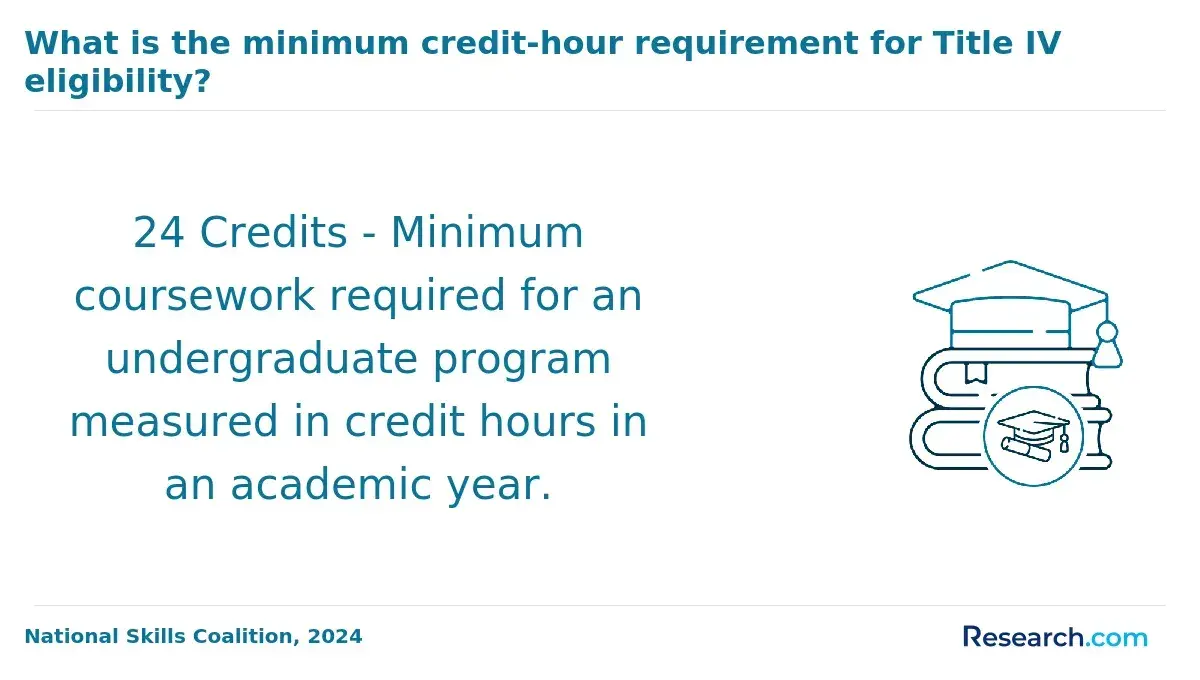
A sound pathway has a published ladder: the first credential has defined learning outcomes, its credits apply to the next program, and the higher award adds rather than repeats skills. Community colleges often offer the clearest academic stacks because they can award credit-bearing certificates and associate degrees under one catalog. Employer or vendor credentials may complement that pathway but may not transfer as college credit.
Use the following distinctions when comparing providers. They prevent a common mistake: assuming every digital badge has the same value as a college certificate.
| Credential type | Usually awards college credit? | Best use | Main limitation |
| Academic certificate | Often, if offered by a college | Building toward a degree or meeting entry-level training needs | Transfer policies can limit where credits apply |
| Professional certificate | Varies | Targeted career skills and employer-facing training | May be noncredit and not transferable |
| Industry certification | Usually no | Demonstrating competence against an external standard | May require exams, renewal, or work experience |
| Associate degree | Yes | Broader technical preparation and transfer options | Longer and usually more expensive than a certificate |
Ask for the catalog year, articulation agreement, and maximum transferable credits in writing. If degree completion is your goal, compare the stack with easy degrees to get online only after confirming that "easy" does not mean misaligned with your intended occupation.
What accreditation and licensing requirements should stackable credential programs meet?
Accreditation and approval protect the usefulness of a credential, but the right standard depends on the field. Institutional accreditation matters when students need federal financial aid, transferable credit, or a recognized college award. Programmatic accreditation or state approval becomes critical for regulated education such as nursing, certain allied-health programs, and some legal or technical disciplines.
Check these items directly with the school and, when applicable, the licensing board:
- Whether the institution is accredited by an accreditor recognized by the U.S. Department of Education or the Council for Higher Education Accreditation.
- Whether the specific program holds required state approval or specialized accreditation for the license you seek.
- Whether distance learners are eligible for licensure in their home state and whether clinical or practicum placements are arranged.
- Whether the curriculum meets eligibility requirements for the named certification examination, including supervised experience requirements.
A major red flag is a school that says its credential is "accredited" without naming the accreditor or claiming it leads to licensure without identifying the state board. Do not rely solely on recruiter statements; licensing boards have the final authority over eligibility.
How do online stackable credential programs compare with campus options for quality and outcomes?
Online stackable programs can be high quality when they use the same curriculum, faculty standards, assessments, and documented credit pathways as campus programs. They are often a practical choice for working adults in business, IT, general education, health information, and some design fields. Campus or hybrid delivery is usually stronger when repeated lab practice, equipment access, live performance assessment, or clinical training is essential.
This comparison highlights the delivery issue that matters most: whether the format can produce the required evidence of competence.
| Factor | Online option | Campus or hybrid option |
| Schedule | Often flexible for lectures and assignments | Fixed meeting times may support routine and accountability |
| Hands-on training | May require local placements, kits, or short residencies | Usually easier access to labs, equipment, and instructors |
| Networking | May require intentional virtual outreach | Often stronger local employer and peer contact |
| Licensure preparation | Must be checked state by state | May align more directly with local board requirements |
Compare nonprofit, public, and private providers on outcomes and total cost rather than delivery format alone. A nonprofit university may offer a clearer degree-completion route, while a community college may offer lower tuition and local clinical or trade partnerships. Do not enroll in an online clinical or licensure-track program until your state eligibility is confirmed in writing.
What admission criteria, program length, and costs should students expect for stackable credentials?
Admissions requirements vary by credential type. Noncredit workforce programs may require only an application, while credit-bearing college certificates typically require high school completion or an equivalent credential and placement or prerequisite coursework. Selective nursing and allied-health programs can add GPA, entrance testing, immunization, background-check, and clinical requirements. Industry certification providers may instead require an examination fee, verified work experience, or prior training.
Completion time ranges from weeks for a focused noncredit course to roughly one year for many college certificates and about two years of full-time study for an associate degree. Cost is equally variable: tuition is only one part of the decision. The table identifies expenses that should be included in a complete comparison.
| Cost category | Why it matters |
| Tuition and mandatory fees | Credit load, residency, and delivery format can change the total substantially |
| Books, software, tools, and uniforms | Trade, design, and clinical programs may require significant program-specific purchases |
| Exam, licensing, and background-check fees | These may be necessary after graduation to pursue the intended role |
| Transportation and unpaid placement time | Clinical, practicum, and lab schedules can reduce available work hours |
Ask whether the certificate is eligible for federal aid, state workforce funding, employer tuition assistance, or payment plans; eligibility differs by program and enrollment status. A low first-term price can be misleading if credits do not transfer or if the later degree stage is much more expensive.
What core courses and skills are included in high-quality stackable credential curricula?
High-quality curricula combine job-specific practice with durable skills that remain useful when software, workflows, or regulations change. The best stack does not merely repeat introductory content at each level; it increases complexity, responsibility, and the ability to solve unfamiliar problems.
Look for these core elements because they help distinguish a meaningful credential ladder from a collection of disconnected courses:
- Foundational communication, math, digital literacy, documentation, and customer or patient interaction skills.
- Hands-on practice using current tools, equipment, simulations, case studies, or supervised field experiences appropriate to the occupation.
- Safety, privacy, ethics, accessibility, and regulatory content relevant to the industry.
- Progressive technical coursework that moves from routine tasks to troubleshooting, analysis, quality control, or leadership.
- Career preparation through portfolios, mock interviews, résumés, employer projects, or certification-exam preparation when applicable.
AI literacy is increasingly useful across fields, but it should be taught as responsible use of tools: checking outputs, protecting confidential information, documenting decisions, and knowing when human judgment is required. Programs that promise AI will replace foundational skills should be viewed cautiously.
What entry-level and advanced job roles can stackable credentials help you qualify for?
Stackable credentials can help learners qualify for entry-level work, then create evidence for advancement through additional education and experience. The credential alone may not meet every employer's requirements, particularly in licensed healthcare and skilled-trade roles. Employers may also require a background check, portfolio, apprenticeship hours, or external certification.
The examples below separate realistic early roles from roles that usually require a higher credential, license, or substantial experience.
| Pathway | Possible early role | Advanced direction | Common additional requirement |
| Healthcare support | Nursing assistant, medical assistant, or medical records specialist | Licensed practical nurse, registered nurse, or health services supervisor | State license, degree, clinical experience, or certification |
| HVAC and electrical | Helper, installer trainee, or maintenance technician | Lead technician, journeyman, estimator, or supervisor | Apprenticeship hours and local license |
| IT support | Help desk technician or junior support specialist | Network administrator, cybersecurity analyst, or systems specialist | Portfolio, certifications, experience, and sometimes degree |
| Design | Production artist or junior content designer | UX designer, art director, or creative manager | Strong portfolio and documented experience |
Choose the first credential based on the earliest job you would genuinely accept, not only the eventual title. That approach makes the stack financially safer because each stage should have standalone labor-market value.
What salary ranges and job outlook are associated with popular stackable credential pathways?
Salary and outlook data are most useful when attached to occupations, not presented as a promise from a particular program. According to BLS May 2024 wage data, median annual pay was $48,780 for medical assistants, $62,340 for licensed practical and licensed vocational nurses, $62,350 for HVAC mechanics and installers, and $61,300 for paralegals and legal assistants. Pay varies by region, experience, employer, shift, licensure, and specialization.
BLS employment projections for 2023-2033, published in 2024, estimate 15% growth for medical assistants and 6% growth for HVAC mechanics and installers, compared with 4% growth for all occupations. These figures indicate broad demand trends, not a guarantee of local openings or individual employment.
Use return-on-investment estimates conservatively. Compare your total out-of-pocket cost, expected time away from paid work, likelihood of completing the next stack level, and local job postings. A shorter certificate can be worthwhile when it leads to a recognized entry job; a degree-oriented stack is often better when advancement roles consistently request college credit or a license.
Other Things You Should Know About
They can be worthwhile when each credential has standalone value and clearly applies to the next level. They are less worthwhile when credits expire, do not transfer, or the first credential does not support an actual entry-level job goal.
A certificate is generally awarded by a school after completing a course of study. A certification is typically awarded by an independent professional organization after meeting its standards, which may include an exam, work experience, and renewal requirements.
Sometimes. Credit-bearing certificates may apply to an associate degree and then a bachelor's completion program, but transfer is never automatic. Obtain a written articulation plan from both institutions before starting.
Do not assume that a program's marketing claim means it meets licensing, certification, or transfer requirements. Verify the exact next credential, the accepting school or licensing board, total costs, and any clinical, apprenticeship, or exam requirements.
References
- Customize Your Career Path with Stacked Credentials https://americanmedtech.org/blog/blog-post/customize-your-career-path-with-stacked-credentials-3
- What Are Stackable Credentials and Why Do They Matter? https://www.pltw.org/blog/what-are-stackable-credentials
- What are Stackable Credentials? https://assess.com/stackable-credentials/
- Stacked Credentials and Employment https://services.intead.com/blog/stacked-credentials-employment
- States see short-term credentials as key to long-term success https://www.luminafoundation.org/news-and-views/states-see-short-term-credentials-as-key-to-long-term-success/
- To Make the Most of Credentials, We Need a Better Marketplace https://www.jff.org/blog/to-make-the-most-of-credentials-we-need-a-better-marketplace/
- Microcredentials: Empowering Modern Learners & Employers https://evolllution.com/microcredentials-empowering-modern-learners-employers
- Stackable Credentials: Living Links Between Learning and Work https://www.cael.org/resouces/pathways-blog/stackable-credentials-living-links-between-learning-and-work
- A Research-Based Look at Stackable Credentials https://www.parchment.eu/blog/podcast-episode-9-a-research-based-look-at-stackable-credentials/
- Building Stackable Credentials That Truly Deliver Value and Economic Mobility: 7 Steps for Success https://mcacs.talentfirst.net/building-stackable-credentials-that-truly-deliver-value/