2027 Best Career Training Programs With Year-Round Enrollment

Co-Founder and Chief Data Scientist
Choosing training that starts soon can matter when you need a career change without waiting for a traditional fall term. Year-round enrollment programs may offer monthly, rolling, or multiple annual start dates in fields such as healthcare, skilled trades, legal support, and design.
U.S. Bureau of Labor Statistics projections for 2024-2034 show especially strong demand in several technical and healthcare occupations. This guide helps prospective students compare program types, delivery options, costs, credentials, and realistic employment requirements before enrolling.
Key Things You Should Know
- Year-round enrollment usually means multiple start dates or rolling admissions, not that every class, clinical placement, or licensing exam is available at all times.
- For strong near-term demand, BLS 2024-2034 projections identify medical assistants at 12% growth, electricians at 9%, and HVAC mechanics and installers at 8%; local hiring can differ.
- Choose training based on the credential required for the job: a school certificate, an industry certification, an apprenticeship, an associate degree, or a state license may each serve different purposes.
Top 10 Best Career Training Programs With Year-Round Enrollment
Popular Trade School Programs
Year-round trade options commonly include HVAC technician certificates, electrical technology certificates, welding certificates, plumbing programs, and automotive service programs. Certificates emphasize job-specific coursework and lab practice; an associate degree adds general education and may support advancement.
Electricians and plumbers commonly need state-regulated apprenticeship hours and licensing, so a short school program alone may not qualify a graduate to work independently. Choose campus or hybrid training when extensive hands-on lab time is essential, and confirm whether the program helps arrange apprenticeships.
Healthcare Programs
Common rolling-start healthcare options include medical assisting, practical nursing, dental assisting, phlebotomy, pharmacy technician, billing and coding, and medical laboratory technician associate programs. A certificate is educational training; certification, such as a national medical-assisting credential, is a separate professional designation.
Clinical programs may have fixed cohort dates despite year-round admissions because placements require partner-site capacity. Verify state approval, clinical-hour requirements, exam eligibility, background-check policies, and whether the role requires a license before paying a deposit.
Criminal Justice / Law Programs
Career-focused choices include criminal justice certificates, paralegal certificates, legal studies associate degrees, court reporting programs, and cybersecurity-oriented public-safety training. Paralegal education can prepare students for entry-level legal support, but it does not authorize legal practice or guarantee a paralegal role.
A credit-bearing associate degree may be more useful for students who may later pursue a bachelor's degree. For police, corrections, and court roles, agencies can impose separate fitness, background, age, residency, and academy requirements.
Arts & Design Programs
Year-round creative programs may include graphic design certificates, web design certificates, digital media associate degrees, UX design bootcamps, and photography programs. A portfolio often carries more weight with employers than the program title alone, so compare the quality of student work, feedback, software access, and portfolio support. Noncredit bootcamps can be fast but may not transfer into college credit. Credit-bearing certificates or associate degrees may suit learners who want a stackable path toward a bachelor's degree.
Which career training programs have the best job outlook?
The best outlook depends on whether a program leads to an occupation with sustained hiring demand and whether its credential meets local employer and licensing expectations. The BLS employment projections for 2024-2034 estimate 12% growth for medical assistants, compared with 3% growth across all occupations. That makes medical assisting a practical option for learners who can complete required clinical training, though growth does not guarantee openings in every city.
This comparison shows how several year-round training paths align with projected national demand. Projections are not promises of local placement, so check employers and workforce boards in the area where you plan to work.
| Career path | Typical training route | BLS projected growth, 2024-2034 | Key consideration |
| Medical assistant | Certificate or diploma, often with clinical experience | 12% | Employers may prefer national certification |
| Electrician | Pre-apprenticeship training plus paid apprenticeship | 9% | Licensing requirements vary by state and locality |
| HVAC mechanic and installer | Certificate or diploma plus supervised experience | 8% | EPA Section 608 certification is commonly needed for refrigerant work |
| Registered nurse | Approved nursing diploma, associate, or bachelor's program | 5% | Requires NCLEX-RN passage and state licensure |
| Graphic designer | Certificate, associate, or bachelor's degree plus portfolio | 2% | Portfolio and software skills strongly affect entry options |
Students who ultimately need a four-year credential can compare a lowest-cost online bachelor's degree with a short career program before deciding which route better fits the target occupation.
Which career training programs lead to the highest salaries?
Higher occupational pay often comes with longer supervised training, tougher licensing requirements, or a degree beyond a short certificate. According to May 2024 BLS wage data, registered nurses had a national median annual wage of $93,600. That figure describes the occupation, not the earnings of all nursing-program completers, and RN eligibility requires an approved nursing education pathway and a license.
The following wage context can help compare potential career destinations. Local pay, shift differentials, experience, industry, and credentials can materially change earnings.
| Occupation | May 2024 national median annual wage | Common entry preparation | Important limitation |
| Registered nurse | $93,600 | Approved nursing degree or diploma and licensure | A short healthcare certificate does not qualify a person as an RN |
| Dental hygienist | $94,260 | Accredited associate degree or higher and licensure | Prerequisites and clinical capacity can lengthen the timeline |
| Diagnostic medical sonographer | $89,340 | Associate degree or postsecondary certificate | Employers may prefer recognized certification |
| Respiratory therapist | $80,450 | Accredited associate degree and licensure | State requirements apply |
| Paralegal and legal assistant | $61,010 | Certificate or associate degree, depending on employer | Paralegals cannot provide legal services independently |
A short credential is most valuable when it is the required entry route or a step toward a regulated role. If your target requires graduate study, review most lucrative master's degrees alongside the cost and time required for the full pathway.
Which career training programs offer the fastest path to work?
The fastest path to work is usually a program that teaches a clearly defined entry-level role and does not require a long degree sequence. Phlebotomy, pharmacy technician, medical billing, dental assisting, welding, HVAC, and commercial-driver training can often be completed more quickly than associate-degree programs, but actual duration depends on scheduling, clinical availability, testing, and required background checks.
Speed should not be the only criterion. Before choosing an accelerated option, verify these practical conditions:
- Confirm the exact job title the program prepares you for and whether local employers hire people with that credential.
- Ask whether clinicals, externships, labs, examinations, and retakes are included in the published completion timeline.
- Identify any separate state license, national certification examination, apprenticeship, or supervised-hours requirement.
- Compare total charges, tools, uniforms, testing fees, transportation, and income lost during required daytime training.
A fast noncredit program can be sensible for a narrow skill goal. A credit-bearing certificate or associate degree is often a better choice when you expect to transfer credits, change specialties, or pursue advancement later.
What accreditation should career training programs have?
Accreditation is not one universal requirement for career training. Institutional accreditation evaluates a college as a whole, while programmatic accreditation evaluates a specific program and is especially important when it affects licensing or certification eligibility. Noncredit providers may not hold college accreditation, but they should still be transparent about curriculum, instructors, outcomes, refund policies, and industry recognition.
Use this distinction to match the school's approvals to your target role:
| Program type | What to verify | Why it matters |
| Nursing and allied health | State approval and applicable programmatic accreditation | May affect licensure, exam eligibility, clinical placement, and aid |
| Paralegal studies | Institutional accreditation and, where available, program recognition | Can support employer confidence and transfer planning |
| Skilled trades | State workforce approval, apprenticeship partnerships, and credential alignment | Licensing and employer requirements often matter more than academic transferability |
| Bootcamps and noncredit certificates | Provider reputation, employer relevance, instructor expertise, and written policies | Academic accreditation may not apply, so evidence of value is essential |
A major red flag is a school that claims a program "meets requirements" without naming the relevant state board, certifying organization, or approval status. Verify claims directly with the licensing board or credential issuer before enrollment.
How do online and campus career training programs compare?
Online career training works well for theory-heavy subjects such as medical billing, legal studies, IT support, and design software. Campus or hybrid delivery is usually stronger for welding, electrical labs, dental assisting, nursing, and other fields requiring equipment practice or clinical supervision. Many effective programs combine online coursework with scheduled local labs or placements.
This format comparison helps match the learning model to the occupational requirement rather than simply choosing the most convenient schedule.
| Factor | Online or hybrid may fit best when | Campus-based study may fit best when |
| Scheduling | You need asynchronous lectures around work or caregiving | You can attend fixed daytime or evening sessions |
| Hands-on learning | Required labs and placements are arranged locally | Frequent supervised practice is central to skill development |
| Career field | The role is primarily digital, administrative, or theory-based | The role uses specialized tools, patients, vehicles, or machinery |
| Support needs | You are comfortable managing deadlines independently | You benefit from immediate instructor access and structured practice |
Military families who expect relocations may prioritize portable schedules and transfer-friendly credits; resources on military spouse online college options can help with that comparison. For any online clinical or licensure program, confirm authorization and placement availability in your state before enrolling.
What do career training program admissions require?
Admissions requirements vary more than many applicants expect. A community-college certificate or associate degree may require an application, high school completion evidence, placement steps, and prerequisites. A private career school may use a shorter enrollment process. A noncredit provider may only require payment and basic eligibility, but a simple admission process does not prove that the training qualifies you for a regulated job.
Healthcare programs frequently add requirements because of patient safety and clinical-site rules. Applicants may need immunization records, drug screening, a criminal background check, CPR training, physical-capacity documentation, entrance testing, or prerequisite science courses. These requirements can delay a seemingly year-round start date.
Ask admissions staff to provide the requirements in writing, including the deadline for each document and the consequence if a clinical site declines a placement. Do not assume prior college credits will transfer; obtain a formal evaluation if transferability matters.
How long do career training programs take and what do they cost?
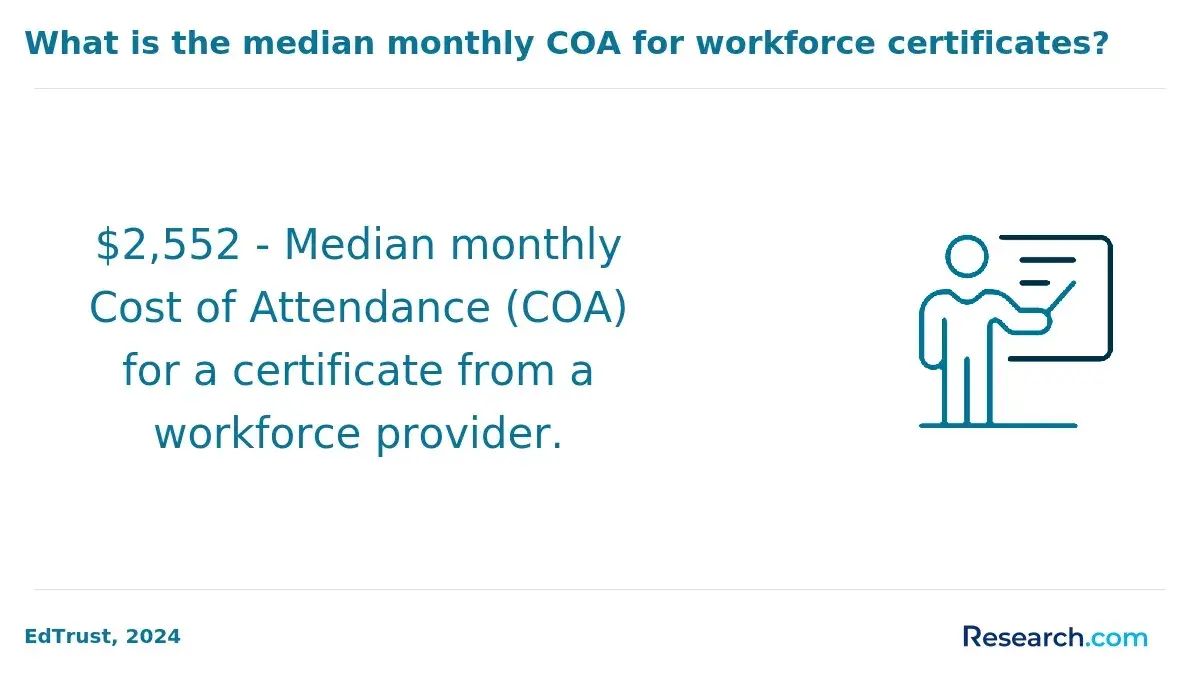
Program length ranges from weeks for a focused noncredit course to roughly two years for many associate degrees. Published tuition is only one part of the cost. A program with year-round starts can reduce waiting time, but it may charge by term, clock hour, course, or package, making direct comparisons difficult.
Compare the complete financial commitment, not just the advertised tuition:
- Tuition and mandatory institutional fees
- Books, software, tools, uniforms, equipment, and supplies
- Certification, licensing, background-check, drug-screen, and examination fees
- Transportation, parking, childcare, and unpaid time required for labs or clinicals
- Interest and repayment obligations if private loans are used
Credit-bearing programs at eligible institutions may offer federal aid to qualifying students; many short noncredit programs do not. Employer tuition assistance, workforce grants, veterans' education benefits, and payment plans may help, but eligibility is program-specific. Learners considering a long academic progression should also compare cheapest online PhD programs only if a doctoral credential is genuinely required for their intended profession.
Which certifications or licenses may these programs require?
Licenses and certifications are separate from completing a training program. A license is legal authorization issued by a state or other government authority. A certification is typically awarded by a professional organization after meeting its standards. A school certificate documents that you completed a curriculum; it may prepare you for an outside exam but does not automatically grant the outside credential.
Common examples include EPA Section 608 certification for technicians who handle refrigerants, NCLEX-based state licensure for nurses, state licensing for many electricians and plumbers, and voluntary or employer-preferred certifications for medical assistants, pharmacy technicians, and sonographers. Requirements can change by state, specialty, and employer.
Before enrolling, identify the exact credential requested in current job postings and verify that the program's curriculum, clinical hours, approval status, and graduate eligibility align with the issuing board or certifying body.
How do you choose a reputable career training program?
A reputable year-round program should be transparent about what students receive, what they must do after completion, and what the full cost includes. The best choice is not always the shortest or cheapest option; it is the one that meets the entry requirements for your intended job without creating unnecessary debt or limiting future mobility.
Use this process before signing an enrollment agreement:
- Start with a target job title, then identify the required education, license, certification, or apprenticeship in your state.
- Compare at least two programs on total cost, completion schedule, lab or clinical access, credential type, and support for job search or apprenticeships.
- Request written confirmation of accreditation or approval claims, refund terms, and all additional fees.
- Review completion, licensure-exam, and employment information carefully, including how the school defines "employed."
- Speak with local employers or recent graduates about whether the credential is recognized and what entry-level hiring actually requires.
Common mistakes include enrolling before checking licensure eligibility, confusing a certificate with a certification, assuming online instruction includes local clinical placement, and comparing tuition without fees or lost-work-time costs. Treat pressure to enroll immediately, vague outcome claims, and refusal to provide written policies as warning signs.
Other Things You Should Know About
Not always. Schools may offer rolling admissions or several starts each year, but cohort-based programs can limit entry because labs, clinical placements, and instructor capacity are scheduled in advance. Ask for the next available start date for your specific program, not the school's general enrollment calendar.
They can shorten the time you wait to begin, but they do not necessarily shorten required instructional hours, clinical rotations, apprenticeships, or licensing steps. Compare the actual completion schedule and post-graduation requirements.
It depends on the occupation and employer. A certificate may support entry-level work in areas such as billing, design, or some trades, while nursing, electrical work, and other regulated fields may require a license, examination, supervised experience, or additional education.
Choose a certificate when you need focused, job-specific training and the target role accepts it. Choose an associate degree when the occupation requires it, when you want broader coursework, or when preserving a pathway to a bachelor's degree matters.
References
- What to Know Before Starting a Career Training Program https://chartercollege.edu/news-hub/know-before-career-training-program/
- Vocational programs and alternative pathways - Institute for Collaborative Education http://www.iceschoolnyc.org/vocational-programs-and-alternative-pathways
- Year-Round Benefits from Summer Jobs https://www.educationnext.org/year-round-benefits-summer-jobs-how-work-programs-impact-student-outcomes/
- Job Training Programs | VA | FastForward https://fastforwardva.org/
- San Antonio Ready to Work https://www.sanantonio.gov/workforce/Programs/Ready-to-Work
- How Much Does Trade School Cost? Less Than You May Think https://www.trade-schools.net/articles/trade-school-cost
- Choosing a Vocational School or Certificate Program | Consumer Advice https://consumer.ftc.gov/articles/choosing-vocational-school-or-certificate-program
- About Accreditation - JRCERT https://www.jrcert.org/about-accreditation/
- NCWC Adult Learner https://nccareers.org/ncwc-adult-learner
- The Career Training Program http://www.teachnycprograms.net/getpage.php