2027 Best Non-Degree Programs for In-Demand Careers

Co-Founder and Chief Data Scientist
Choosing fast career training is difficult when programs use similar labels but lead to very different job options. Non-degree programs can prepare learners for skilled trades, healthcare support, technology, legal services, and creative work without a traditional four-year degree. U.S. Bureau of Labor Statistics projections for 2024-2034 show especially strong growth in healthcare support and several technical occupations.
This guide explains which programs fit specific goals, what credentials employers and licensing boards recognize, and how to compare cost, format, and realistic career outcomes before enrolling.
Key Things You Should Know
- Choose training by the job's actual entry requirement: electricians commonly need apprenticeship training, while many clinical roles require an approved program plus a state-required exam or license.
- For context, BLS projects medical assistant employment to grow 12% from 2024-2034, while electrician employment is projected to grow 9%; demand does not remove the need for required supervised experience.
- Compare total cost, required tools, exam fees, clinical placements, and employer recognition - not tuition alone - because noncredit certificates may not transfer and may have limited financial-aid eligibility.
Top 10 Best Non-Degree Programs for In-Demand Careers
Popular Trade School Programs
Trade programs commonly include HVAC technician, welding, electrical, plumbing, automotive technology, diesel technology, and construction certificates or associate degrees. Certificates usually focus on entry-level technical skills; associate degrees add general education and may be useful for advancement. Apprenticeships are often the better route for electricians, plumbers, and some construction trades because paid supervised work is central to licensing. Choose campus labs or employer-sponsored training when equipment practice is essential. Confirm whether the program prepares you for EPA Section 608 testing, state licensing, or an apprenticeship application rather than assuming completion creates a license.
Healthcare Programs
Common healthcare options include medical assisting, practical nursing, dental assisting, pharmacy technician, phlebotomy, medical billing and coding, surgical technology, and sterile processing. These programs range from short noncredit training to credit-bearing certificates and associate degrees. Clinical training, background checks, immunizations, and CPR certification are often required. Nursing and many allied-health roles have state approval or licensing rules; online coursework alone is rarely enough where hands-on clinical competencies are required. Select a program aligned with the examination or credential your target employer requires, and verify that clinical placements are arranged before paying a deposit.
Criminal Justice / Law Programs
Non-degree legal and public-safety training may cover paralegal studies, legal assisting, court reporting support, security, emergency dispatch, corrections, or police academy preparation. A paralegal certificate can suit people who already hold a degree or have office experience, but it does not authorize independent legal practice. Security licensing, academy eligibility, firearms training, and background standards vary by state and employer. Programs should teach legal research, documentation, ethics, records systems, and communication. Applicants with a felony history should check occupation-specific eligibility rules before investing in regulated public-safety training.
Arts & Design Programs
Graphic design, UX/UI design, digital marketing, photography, video production, animation, and web design certificates can build targeted portfolios without requiring a degree. A certificate shows completed coursework; industry certifications validate a separate platform or tool skill and are not the same credential. Employers often evaluate design candidates through portfolio quality, software fluency, and practical briefs. Online programs can work well for software-based fields when they provide detailed feedback and portfolio reviews. Avoid programs that promise creative employment without showing instructor qualifications, graduate work, software requirements, and intellectual-property policies.
What are non-degree programs and which careers do they best prepare you for?
Non-degree programs are structured learning experiences that award a certificate, diploma, badge, or other completion credential rather than an associate, bachelor's, or graduate degree. They are offered by community colleges, technical schools, employers, unions, private training providers, and universities. Their value depends on whether the credential matches a specific hiring, certification, apprenticeship, or licensing requirement.
They work best when the target role has a clear, skills-based entry path. The comparison below distinguishes common routes so learners do not confuse a school certificate with a professional certification or government-issued license.
| Training route | Best fit | What it usually provides | Important limitation |
| Academic certificate | Career changers and entry-level learners | College coursework; may be credit-bearing or stackable | Transfer credit is never automatic |
| Career-training diploma | Hands-on, occupation-specific preparation | Focused technical instruction and lab practice | Recognition varies by provider and employer |
| Industry certification | Workers proving defined competencies | Credential from a certifying organization, often after an exam | May require renewal, experience, or prerequisites |
| Apprenticeship | Licensed and construction trades | Paid work, mentorship, classroom instruction, documented hours | Admission can be competitive and completion takes longer |
For learners who ultimately need a graduate credential to change fields or advance, an online master degree may be a more appropriate investment than repeatedly stacking unrelated short courses.
How do you compare online vs. campus non-degree programs for career preparation?
Online non-degree programs are strongest for knowledge-based skills such as coding, billing, legal research, project coordination, and digital design. Campus or hybrid formats are generally safer for welding, electrical labs, HVAC troubleshooting, clinical care, and other work requiring observed hands-on competencies. The right format is the one that meets the employer, certification, and licensing requirements for the role - not simply the most convenient schedule.
Use this comparison to identify what to verify before choosing a delivery format.
| Factor | Online program | Campus or hybrid program |
| Schedule | Often asynchronous and flexible | Usually fixed labs, clinicals, or shop sessions |
| Hands-on assessment | May rely on simulations, home kits, or local placements | Direct instructor observation is easier |
| Equipment access | Learner may need a computer, software, or local site | School labs may be included or separately charged |
| Licensure readiness | Must be checked state by state | May simplify required clinical or lab documentation |
| Best use | Digital, administrative, and theory-heavy skills | Clinical, mechanical, and tool-intensive occupations |
Ask whether live attendance is required, who secures practicum sites, and whether graduates in your state have met the relevant exam or license requirements. Veterans and service members comparing flexible formats may also benefit from reviewing military online college options with dedicated support policies.
What accreditation and licensing standards should non-degree career programs meet?
Accreditation, approval, certification, and licensure are different safeguards. Institutional accreditation evaluates a college or school; programmatic accreditation evaluates a specific discipline; state approval may authorize a school to operate; certification validates an individual professional; and licensure is government permission to practice a regulated occupation. Not every non-degree program needs every form of recognition.
For regulated fields, verify the exact standard attached to the job you want. A nursing, dental, surgical technology, or EMS program may need state-board approval or a recognized programmatic accreditor to make graduates eligible for examination. Trade learners should verify apprenticeship registration, licensing-board rules, and whether required classroom hours will count. For nonregulated fields such as digital design, focus more heavily on curriculum, portfolio evidence, instructor experience, and employer feedback.
Before enrolling, take these practical checks:
- Find the target occupation's state licensing board or certifying organization and read its current education rules.
- Ask the school in writing whether its specific program meets those rules in your state.
- Confirm whether examination fees, background checks, clinical hours, tools, and renewals are separate costs.
- Request the school's complaint process, completion data, and refund policy before signing an enrollment agreement.
A major red flag is a provider that says it is "accredited" but cannot name the accreditor, approval body, or scope of recognition. Another is claiming national online availability for a program that leads to a state-regulated license without identifying where it meets requirements.
How long do top non-degree programs take, and what do they typically cost?
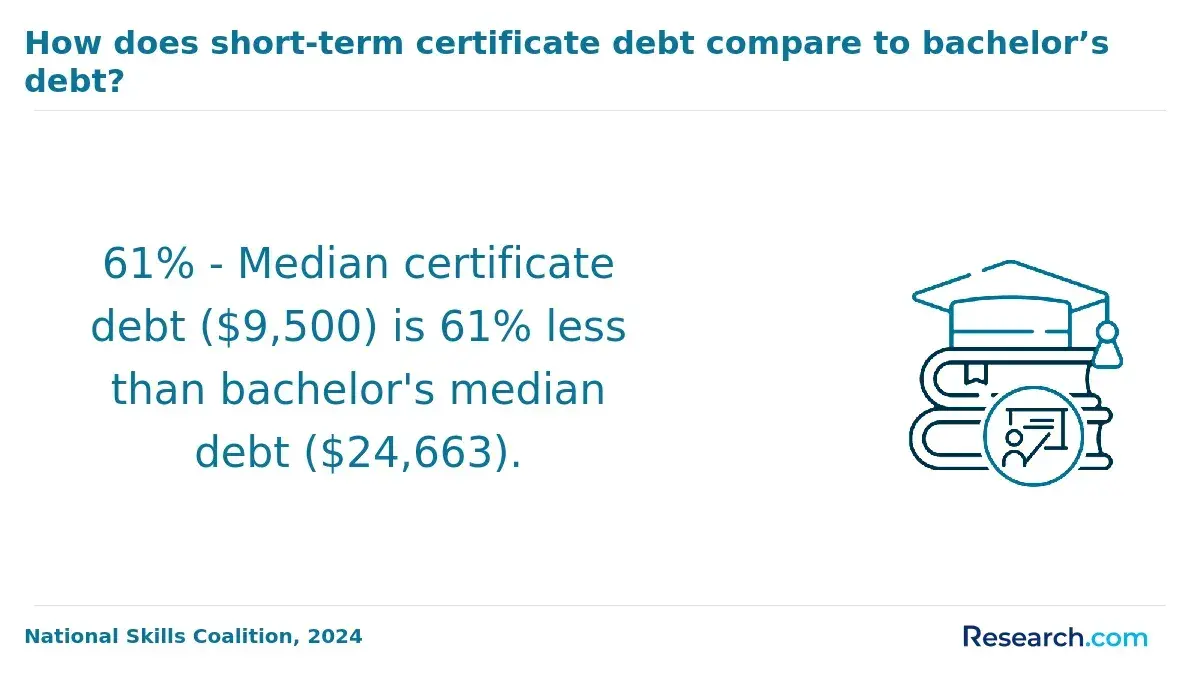
Completion time ranges from a few weeks for narrow workforce training to roughly two years for an associate degree. Cost varies even more because public colleges, private career schools, unions, employers, and online providers use different pricing models. College Board reported average published tuition and fees of $4,050 for in-district students at public two-year colleges in 2024-2025; a short certificate can cost less or more depending on clock hours, labs, and equipment.
The ranges below are planning estimates rather than price guarantees. Request a written total-cost sheet for the exact program and start date.
| Program type | Typical timeline | Common cost drivers | Financial planning note |
| Short workforce certificate | Weeks to several months | Tuition, exam voucher, software, supplies | Often noncredit; aid availability can be limited |
| Technical certificate or diploma | About 6-12 months | Lab fees, tools, uniforms, insurance | May qualify for aid if offered by an eligible institution |
| Credit-bearing certificate | About 1 year | Per-credit tuition and course materials | May stack toward an associate degree |
| Associate degree | About 2 years full time | Tuition, general education, clinical or lab expenses | Can offer broader progression options |
| Registered apprenticeship | Often several years | Tools, dues, transportation, related instruction | Usually includes paid employment while training |
Do not compare tuition alone. Calculate lost work time, commuting, required devices, licensing exams, retest fees, and income during training. Older learners seeking a schedule-compatible degree alternative can compare degrees for older adults when a short program would not meet their longer-term career objective.
What admission requirements do competitive non-degree career programs usually have?
Competitive non-degree programs usually screen for readiness rather than a high college GPA. Requirements vary by provider and occupation. A short online professional certificate may require only payment and basic computer access, while clinical, public-safety, and apprenticeship programs can require substantial screening because students work with patients, equipment, or the public.
Common admission or eligibility requirements include:
- A high school diploma, GED, or equivalent for many technical and college-based programs
- Placement testing or prerequisite coursework for math-, science-, or writing-intensive training
- Criminal background checks, drug screening, immunizations, CPR training, or physical-capacity documentation for clinical placements
- A valid driver's license, age minimum, work authorization, or clean record for some transportation and public-safety pathways
- Interviews, aptitude tests, or prior experience for union apprenticeships and advanced professional certificates
Applicants should not hide a potential eligibility issue. Instead, ask whether it affects admission, clinical placement, exam eligibility, or eventual licensing. A school can admit a learner even when an external licensing board or employer later applies different rules.
What curriculum and skills should high-quality non-degree programs include for in-demand fields?
High-quality programs teach job tasks, not just terminology. They also assess whether learners can perform those tasks safely, communicate with supervisors or clients, and use current workplace technology. AI-enabled software is changing documentation, design, customer service, and administrative work, so programs should teach responsible tool use, quality control, privacy, and how to verify automated output.
Look for curriculum evidence in these areas:
- Hands-on labs, simulations, supervised clinicals, or work-based learning that match actual job conditions
- Industry-standard equipment, software, documentation systems, and safety procedures
- Clear preparation for a named certification examination, license, portfolio, or apprenticeship milestone when relevant
- Communication, customer service, teamwork, ethics, and problem-solving assessed through realistic scenarios
- Career support that includes resume feedback, interview practice, employer introductions, or portfolio review rather than vague placement promises
Ask to see the course sequence, required hours, instructor credentials, and examples of assessed work. For digital programs, review graduate portfolios. For hands-on programs, visit the lab or request a demonstration of equipment access and instructor-to-student supervision.
What entry-level and mid-career roles can non-degree programs help you qualify for?
Non-degree training can open entry-level roles, but progression depends on experience, licensing, employer policies, and sometimes later education. The most durable pathway connects the first job to a documented next step, such as an apprenticeship level, industry certification, credit-bearing certificate, or associate degree.
This comparison shows the difference between a program-supported entry role and roles that usually require more than a short credential.
| Field | Possible entry-level role | Potential next step | Typical additional requirement |
| Skilled trades | Helper, installer, apprentice | Journeyperson or lead technician | Documented work hours, examination, or license |
| Healthcare | Medical assistant, dental assistant, phlebotomist | Specialty technician or supervisory support role | Experience, certification, or further education |
| Legal services | Legal assistant or file clerk | Paralegal or litigation support specialist | Experience; some employers prefer a degree |
| Digital design | Production artist or junior web support worker | Designer, UX specialist, or digital project coordinator | Portfolio, demonstrated results, and advanced skills |
If your goal is a role that routinely requires a bachelor's degree, licensure beyond entry level, or graduate education, a non-degree program can still be a test of career fit - but it should not be presented as a substitute for the required credential. Readers weighing long-term earnings across degree pathways can explore what degrees make the most money before choosing a short-term option.
What salary ranges and job outlook can graduates of non-degree programs expect?
Occupational wage data describes workers in an occupation, not what any certificate graduate will earn. Pay varies by state, industry, shift, experience, union coverage, and whether a role requires a license. The following U.S. Bureau of Labor Statistics figures use May 2024 median annual wages and 2024-2034 employment projections, providing a useful demand benchmark rather than a guarantee.
| Occupation | Median annual wage, May 2024 | Projected growth, 2024-2034 | Credential context |
| Electricians | $62,350 | 9% | Apprenticeship and licensing are commonly required |
| Heating, air conditioning, and refrigeration mechanics and installers | $59,810 | 8% | Certificate training may support entry; EPA credentials are often relevant |
| Medical assistants | $44,200 | 12% | Employers may prefer training and certification; rules vary |
| Dental assistants | $47,300 | 6% | State requirements vary, particularly for expanded duties |
| Paralegals and legal assistants | $61,010 | -1% | Certificate or degree pathways exist; hiring preferences vary |
| Graphic designers | $61,300 | 2% | Portfolio quality is important; some employers prefer a degree |
Use the table to compare occupation-level opportunity, then research local job postings and licensing rules. Faster projected growth can signal demand, but it does not reveal local competition, schedules, entry pay, or whether employers accept a particular provider's credential.
How can you evaluate and choose a reputable non-degree program for your goals?
A reputable non-degree program makes its career purpose, costs, requirements, and limitations easy to verify. The best option is not necessarily the shortest program; it is the least expensive credible route that meets the entry standard for your target job and leaves room for advancement.
Use this process before applying:
- Name a target job, location, and preferred work setting; then review several local job postings for required credentials and skills.
- Identify whether the role requires a license, approved education, industry certification, apprenticeship, portfolio, or degree.
- Compare at least three providers using written total cost, schedule, equipment access, completion requirements, refund terms, and support services.
- Ask whether the credential is credit-bearing, stackable, transferable, or accepted by named employers; get important answers in writing.
- Talk with a program graduate, local employer, union, licensing board, or professional association before making a deposit.
Common mistakes include enrolling based on advertising, assuming a certificate equals certification, overlooking required clinical or apprenticeship hours, and borrowing for a program without checking local demand. Treat promises of guaranteed jobs, unusually high pay, instant licensing, or vague "national accreditation" claims as warning signs. A credible provider explains what completion does - and does not - qualify you to do.
Other Things You Should Know About
They can be worthwhile when they lead directly to an employer-recognized skill, required examination, apprenticeship, or entry-level role. They are less useful when the target occupation normally requires a degree or when the provider cannot show how its training aligns with hiring or licensing standards.
A certificate is typically awarded by a school or training provider after completing coursework. A certification is awarded by a professional or industry organization after meeting its standards, which may include an exam, work experience, and renewal requirements.
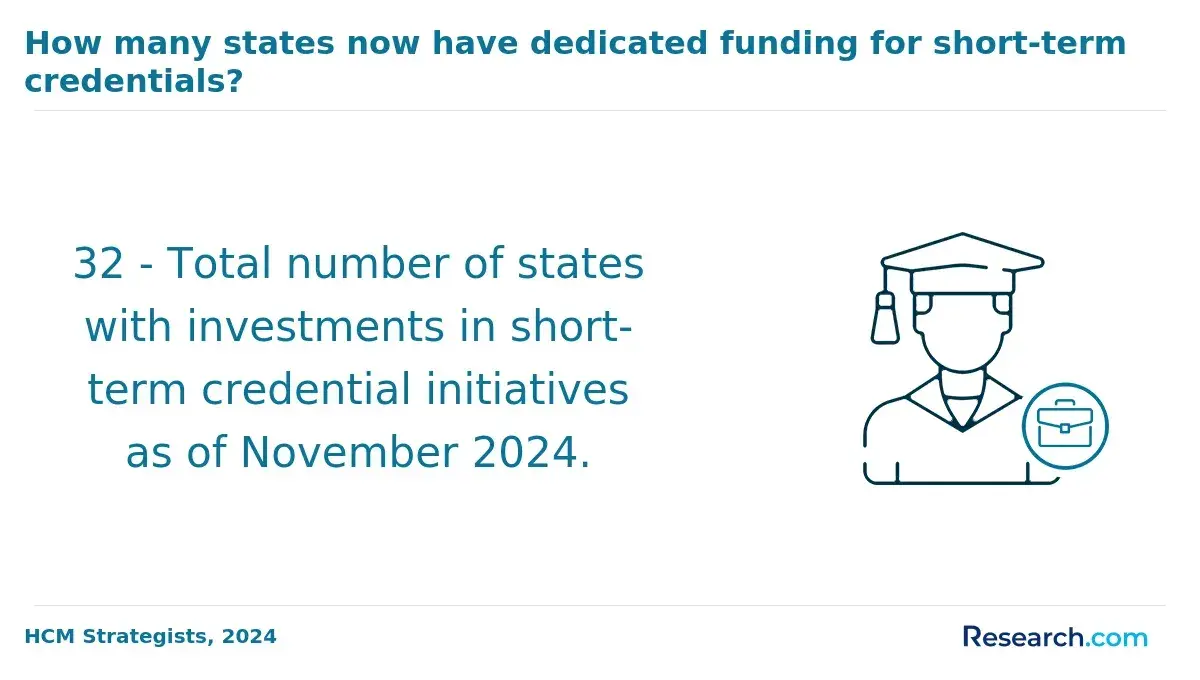
Sometimes. Eligibility depends on the institution, program length, credit status, and federal or state rules. Ask the school whether the specific program - not just the school - qualifies for aid, and also investigate employer tuition assistance, workforce grants, and apprenticeship wages.
It can support preparation, but online coursework alone may not satisfy a licensed occupation's clinical, lab, supervised-practice, or state approval requirements. Verify eligibility with the relevant state licensing board before enrolling.
References
- How does a college degree improve graduates' employment and earnings potential? - APLU https://www.aplu.org/our-work/publicuvalues/employment-earnings/
- Fastest-Growing and Fastest-Declining Industries in United States & Common Jobs in Those Fields - USCI https://www.uscareerinstitute.edu/blog/The-Fastest-Growing-and-Fastest-Declining-Industries-in-the-United-States
- EdAssist | How Employers Can Maximize the ROI of Education Benefits with Degree and Non-Degree Programs https://www.brighthorizons.com/article/employers/how-employers-can-maximize-the-roi-of-education-benefits-with-degree-and-non-degree-programs
- CourseCareers https://coursecareers.com/blog-posts/fastest-growing-careers-no-college-degree
- 20 Jobs That Will Be in Demand in 2026 https://www.aarp.org/work/job-search/in-demand-jobs-2026/
- High-Paying, Fast-Growing Jobs Without a Degree https://www.rockwellinstitute.com/blog/jobs-dont-require-degree/
- Does College Pay Off? A Comprehensive Return On Investment Analysis - FREOPP https://freopp.org/whitepapers/does-college-pay-off-a-comprehensive-return-on-investment-analysis/
- Do you need a college degree? Consider these alternatives https://standtogether.org/stories/future-of-work/do-you-need-a-college-degree-alternative-credentials-offer-another-way
- ROI Of College Majors By Early And Mid-Career Salaries | Bankrate https://www.bankrate.com/loans/student-loans/roi-mid-career-by-major/
- Robot Challenge Screen https://www.edcor.com/blog/credentials-offer-value-to-employers-and-employees/