2027 Best Stackable Credentials With 8-Week Courses

Co-Founder and Chief Data Scientist
Choosing a short program is difficult when "8-week" can describe one course rather than an entire career credential. Stackable credentials let learners complete smaller certificates or credit blocks that may build toward a larger certificate, associate degree, or bachelor's degree.
This matters as employers increasingly assess demonstrable skills: the U.S. Bureau of Labor Statistics projects healthcare support occupations to grow faster than average from 2023 to 2033. This guide helps career changers, working adults, and recent graduates compare pathways, verify recognition, estimate costs, and avoid enrolling in credits that will not advance their goal.
Key Things You Should Know
- An 8-week course is usually one accelerated class. A stackable certificate commonly requires several courses, so verify the full sequence and total completion time before enrolling.
- Credit-bearing credentials offer the clearest path to a later certificate or degree, but transferability is determined by the receiving institution, not by the word "stackable" alone.
- Career value varies sharply by field. BLS projects medical assistant employment to grow 15% from 2023 to 2033, while regulated occupations may require a state-approved program, exam, or license beyond a certificate.
Top 10 Best Stackable Credentials With 8-Week Courses
Popular Trade School Programs
Trade pathways often combine 8-week technical courses with lab work, clinical-style simulations, or paid apprenticeships. Common stackable options include welding, HVAC/R, electrical technology, industrial maintenance, automotive service, and construction management certificates that can apply toward an associate degree.
These suit learners who want hands-on work and local employment, but a fully online format is rarely enough for skills requiring equipment practice. Ask whether the program prepares you for an industry exam, apprenticeship entry, or state licensing requirements; a school certificate alone is not an electrician, HVAC, or contractor license.
Healthcare Programs
Healthcare stacks may begin with medical billing and coding, phlebotomy, patient care, medical assisting, practical nursing prerequisites, or health information courses. They can be useful for people seeking an entry point while preserving a route into an associate degree.
Programs involving direct patient care generally require supervised clinical hours, background checks, immunizations, and sometimes separate certification or licensure. Medical coding certificates can be online, but employers may prefer recognized coding certification. Confirm that clinical placements are arranged locally and that the curriculum meets the requirements of the relevant state board or certifying body.
Criminal Justice / Law Programs
Stackable criminal justice and legal studies options include certificates in paralegal studies, legal research, court reporting support, corrections, homeland security, and cybersecurity fundamentals. An 8-week format can work well for reading-, writing-, and policy-based courses, especially for working adults.
However, police officer hiring, court reporting, and legal support roles may have agency, state, employer, or professional-association requirements beyond coursework. A paralegal certificate is most useful when its curriculum includes legal research and writing; it does not authorize graduates to practice law or provide legal advice independently.
Arts & Design Programs
Design stacks can include graphic design, digital illustration, UX fundamentals, web design, photography, video editing, and motion graphics. Short courses help learners build targeted software and portfolio skills, while a longer certificate or associate degree can add critique, design theory, and production experience. This route fits self-directed learners who can complete portfolio projects outside class.
Employers commonly evaluate portfolios more closely than course titles, so compare programs by the work students produce and the feedback offered. Verify software, hardware, portfolio-review, and studio costs before judging tuition alone.
What are stackable credentials in higher education?
In higher education, stackable credentials are intentionally connected awards. A learner may earn a short certificate first, apply its credits to an advanced certificate, and then apply some or all of those credits toward an associate or bachelor's degree. The key distinction is documented applicability, not simply taking several short courses from the same provider.
A college-issued, credit-bearing certificate is usually the most straightforward stack because it appears on an academic record and has defined course numbers.
A noncredit workforce certificate, bootcamp badge, or professional certificate can still show useful skills, but it may not carry academic credit. Professional certification is different: it is typically awarded by a certifying organization after an exam or other eligibility requirements.
The comparison below identifies the questions that determine whether a short credential actually preserves future options.
| Option | What it usually proves | Best use | Key limitation |
| Credit-bearing college certificate | Completion of for-credit courses | Building toward a degree or changing careers gradually | Acceptance of credits can vary by receiving school |
| Noncredit workforce certificate | Completion of focused job training | Quick skill development or employer-required training | Usually does not transfer as college credit |
| Industry certification | Meeting an external professional standard | Demonstrating verified technical competence | May require an exam, renewal, or prior experience |
| Associate degree pathway | Broader general education and technical study | Roles that value a two-year degree | Requires more time and tuition than a single certificate |
Which 8-week courses lead to the best jobs?
The best 8-week courses lead to jobs when they are part of a recognized sequence, teach a skill employers use, and match the entry requirements of a target role. For most learners, healthcare support, skilled trades, IT support, accounting support, and legal support offer clearer entry pathways than a broad, unstructured collection of short courses.
This comparison uses BLS 2023-2033 employment projections and May 2024 wage data to show labor-market context. Occupational pay is not a promised outcome of any certificate, and some roles require more education, experience, certification, or licensure.
| Pathway | Typical stack | BLS projected growth, 2023-2033 | May 2024 median pay for occupation | Important qualification note |
| Medical assisting | Prerequisites, clinical medical assisting certificate, exam preparation | 15% | $44,200 | Employers may prefer certification; clinical training is commonly required. |
| Electrical work | Electrical fundamentals, safety, apprenticeship-related instruction | 6% | $62,350 | Most electricians qualify through an apprenticeship and state licensure pathway. |
| Paralegal support | Legal research, writing, litigation support certificate | 1% | $61,010 | Employers set education expectations; certificate requirements vary by applicant background. |
| Graphic design | Design software, portfolio, production courses | 2% | $61,300 | A portfolio is central; employers may prefer a degree for some roles. |
Choose a short stack when it fills a specific skills gap or creates a credible entry point. If your target role normally requires a bachelor's degree, compare the certificate's credits with an online accelerated bachelor's degree rather than repeatedly purchasing unrelated short courses.
Are 8-week certificate programs accredited?
Some are accredited, but "8-week" does not establish accreditation. Institutional accreditation applies to a college or university, while programmatic accreditation may apply to particular fields such as nursing or allied health. A short course from an accredited institution can be credit-bearing, but a provider may also offer noncredit training without institutional accreditation.
Verify three separate issues before paying: whether the institution is accredited by an agency recognized by the U.S. Department of Education or Council for Higher Education Accreditation, whether the specific program has required specialized approval, and whether credits will be accepted where you plan to continue.
For licensure-focused healthcare programs, confirm approval directly with the state licensing board. Do not rely solely on a provider's use of terms such as "recognized," "licensed," or "certified."
How do online and campus 8-week programs compare?
Online 8-week programs can be a strong fit for theory-heavy subjects such as business, IT, legal studies, coding, and design. Campus or hybrid delivery is usually better when a program requires labs, equipment, live performance feedback, clinical hours, or trade practice. In either format, accelerated pacing means that missing one week can create a substantial backlog.
The table highlights practical trade-offs rather than assuming one format is superior.
| Factor | Online | Campus or hybrid |
| Schedule | Often flexible, with weekly deadlines and some live sessions | Fixed meeting times and easier real-time structure |
| Hands-on training | Limited unless local labs or placements are arranged | Better access to labs, equipment, and supervised practice |
| Networking | Requires deliberate use of virtual office hours and career events | More informal contact with instructors and peers |
| Best fit | Self-directed learners in knowledge-based fields | Learners needing facilities, coaching, or required practical hours |
Before enrolling online, calculate weekly study time, ask whether exams are proctored, and confirm who secures clinical or internship placements. Convenience is not a substitute for required practical experience.
What admissions requirements do these programs have?
Admissions depend on the provider and level of study. Many entry-level college certificates require a high school diploma, GED, or equivalent and an application.
Some use placement testing or prerequisite courses rather than a minimum GPA. Advanced certificates may require prior college coursework, a degree, work experience, or proof of technical skills. Noncredit providers often have lighter enrollment requirements but may still require equipment, software, or an entrance assessment.
Programs with clinical, public-safety, or regulated components can add requirements after admission. Applicants should expect possible background checks, drug screening, immunization records, CPR training, physical-capability documentation, or state-specific clearances.
Ask for the complete requirement list and deadline calendar before registering for an 8-week session, because delayed paperwork can prevent participation in a required lab or placement.
How much do 8-week stackable credentials cost?
Cost depends more on credit load, institution type, supplies, and required exams than on the eight-week calendar. College Board reported average published tuition and fees of $4,050 for public two-year in-district students in 2024-25. That figure is a useful benchmark for comparing academic routes, but it excludes books, tools, transportation, testing, and living costs.
Use the following cost categories to compare a stack's full price rather than reacting to a low per-course advertisement.
- Tuition and mandatory institutional fees for every course in the sequence
- Books, software licenses, uniforms, tools, safety equipment, and lab charges
- Certification examination, background-check, clinical, or licensing-related fees when applicable
- Income lost from reduced work hours, commuting, childcare, or required in-person attendance
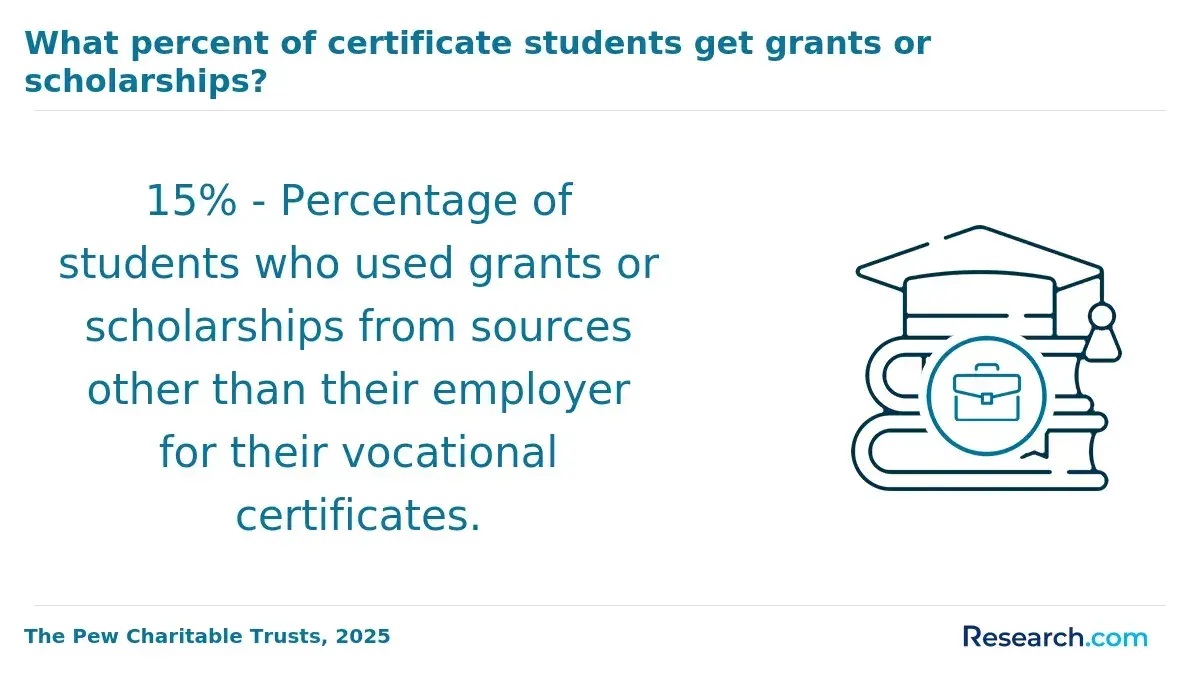
Credit-bearing certificate students at eligible institutions may qualify for federal aid if they meet program and enrollment rules; short noncredit offerings often do not. Compare employer tuition assistance, workforce grants, payment plans, and aid eligibility before borrowing.
Learners considering graduate study after a stack should also compare whether a 6 months masters degree online option better matches an already completed bachelor's degree and career goal.
What careers do stackable credentials prepare you for?
Stackable credentials prepare learners for a progression, not a universal job guarantee. The strongest paths identify an entry role, the next credential, and the experience or licensing milestone needed to advance.
For example, an IT support stack may lead from help-desk training to networking courses and later degree study; a healthcare stack may progress from prerequisites to a patient-care credential and, where appropriate, a licensed program.
These are common career uses and limits of stackable study.
| Career area | Potential entry-level direction | What a later stack can add | Common constraint |
| Healthcare administration | Scheduling, records, billing support | Coding, health information, or associate-degree coursework | Clinical roles require separate hands-on preparation. |
| Skilled trades | Helper, technician trainee, apprentice candidate | Advanced technical instruction and apprenticeship progress | Licensure and supervised hours are often required. |
| IT support | Help desk or desktop support candidate | Networking, cybersecurity, cloud, or degree coursework | Employers may require demonstrated troubleshooting skills. |
| Legal support | Legal assistant or administrative support candidate | Paralegal research and litigation coursework | Work must be supervised; the credential does not permit practicing law. |
A short credential is usually not the right endpoint for careers requiring graduate preparation. If long-term advancement requires doctoral study, review options such as doctoral programs online no dissertation only after confirming that the degree aligns with employer, academic, or licensing expectations in your field.
What salaries do these credentials support?
Salary research should begin with the occupation and local labor market, not a school's promotional wage claim. BLS reported a May 2024 median annual wage of $44,200 for medical assistants and $62,350 for electricians.
These figures describe workers in those occupations nationwide; they do not show what a particular certificate graduate will earn, and experience, location, union status, schedule, licensure, and employer all affect pay.
A practical ROI calculation compares total out-of-pocket cost, time away from work, and the realistic probability of qualifying for an entry role. Favor programs that publish the actual occupations they support and explain additional requirements.
For professionals whose target roles genuinely require doctoral study, the easiest PhD to get is not necessarily the best choice; program rigor, field recognition, and career relevance matter more than speed alone.
How do you choose a reputable credential program?
Choose a reputable credential program by working backward from the job or next degree you want.
First, find several local job postings and identify the recurring education, certification, software, and experience requirements. Then compare each program's curriculum against those requirements, not just its marketing language.
Before submitting an application, take these steps to reduce expensive mistakes.
- Get written confirmation of whether each course is credit-bearing and exactly which later certificate or degree accepts it.
- Verify institutional accreditation and any field-specific approval through the appropriate accreditor, board, or agency.
- Request the complete cost estimate, including tools, exams, clinical expenses, and withdrawal or repeat-course policies.
- Ask who arranges required labs, internships, apprenticeships, or clinical placements and whether placement is guaranteed, competitive, or student-arranged.
- Review curriculum, instructor qualifications, completion policies, and published outcomes with attention to the cohort and time period reported.
Red flags include vague claims that credits "may transfer," pressure to enroll before you see total costs, promises of a license without discussing exams or state rules, and no explanation of practical training. A program can be legitimate yet still be a poor investment if its credits do not fit your next step.
Learners pursuing the highest academic level should assess field fit before selecting an easiest PhD to get; however, the same URL has already been used and should not be repeated.
Other Things You Should Know About the Best Stackable Credentials
Usually, eight weeks covers one accelerated course rather than a full credential. A short certificate may take multiple 8-week sessions, while a degree pathway can take much longer. Check the number of required courses, prerequisites, and whether courses are offered every session.
They can be worthwhile when each completed step has standalone value and documented application toward a larger credential. They are less useful when courses are noncredit, have no employer recognition, or cannot be applied to your intended program.
Sometimes, but only if the program meets state-specific educational and practical-training requirements. Online coursework alone generally cannot replace required clinical hours, labs, supervised experience, examinations, or background clearances.
Choose a certificate when you need a focused skill quickly or want to test a field at lower initial cost. Choose an associate degree when target jobs commonly require broader education, general-education credits, or a stronger foundation for later transfer.
References
- Teacher Training Costs & Financial Aid https://connecticut.teach.org/become/financial-aid/about
- Stackable Credentials: Living Links Between Learning and Work https://www.cael.org/resouces/pathways-blog/stackable-credentials-living-links-between-learning-and-work
- What are Stackable Credentials? https://assess.com/stackable-credentials/
- Rethinking Credentialing in Higher Education for the 21st Century https://moderncampus.com/blog/rethinking-credentialing-for-the-21st-century.html
- 7 in-demand certifications in 2025 | edX https://www.edx.org/resources/in-demand-professional-certifications
- Best Student Loans for Certificate Programs - Credible https://www.credible.com/student-loans/student-loans-for-certificate-programs