2027 Best Online Certifications With Student Success Coaching

Co-Founder and Chief Data Scientist
Choosing an online credential is harder when programs promise flexible schedules but offer uneven career support. Student success coaching can make the difference between enrolling and finishing with a useful next step.
The U.S. Bureau of Labor Statistics projects healthcare support occupations to grow 15% from 2024 to 2034, faster than the average for all occupations. This guide helps career changers, working adults, and first-time learners compare online certificates, industry certifications, and associate programs by coaching quality, recognition, cost, hands-on requirements, and realistic job outcomes.
Key Things You Should Know
- The best online credential is one that matches the job's actual entry requirement: a school certificate, industry certification exam, state license, associate degree, or a combination of these.
- Student success coaching should include proactive check-ins, academic planning, time-management help, career guidance, and clear referrals for tutoring or technical support, not merely an enrollment representative.
- Cost and speed matter, but eligibility matters more: many clinical, skilled-trade, and legal roles require supervised fieldwork, examinations, or state approval that a fully online program may not provide.
Top 10 Best Online Certifications With Student Success Coaching
Popular Trade School Programs
Online trade training is strongest for theory, safety, estimating, codes, and exam preparation; hands-on competencies usually require labs, apprenticeships, or employer training. Common options include HVAC technician certificates, welding certificates, electrical technology certificates, construction management certificates, plumbing pre-apprenticeship training, and automotive technology associate degrees.
Choose a short certificate if you need foundational training or exam preparation. Choose an associate degree when you want broader technical coursework and possible transfer credit. Before enrolling, confirm whether local employers or apprenticeship sponsors recognize the program and whether required practical hours are arranged.
Healthcare Programs
Healthcare certificates can prepare students for administrative, support, or clinical pathways, but clinical eligibility is tightly regulated. Options include medical billing and coding certificates, medical assisting certificates, pharmacy technician certificates, health information technology certificates, and nursing-related associate degrees.
Billing, coding, and health information coursework can often be completed online, while medical assisting and nursing require in-person clinical experiences. A school certificate is not the same as professional certification from an industry body, and neither automatically creates a state license. Verify exam eligibility, clinical placement responsibilities, and state-specific rules before paying a deposit.
Criminal Justice / Law Programs
Online criminal justice certificates and associate degrees commonly cover policing, corrections, homeland security, legal studies, paralegal foundations, and cybersecurity-related investigations. These programs may suit people seeking public-service knowledge, entry-level justice administration work, or preparation for further study.
They generally do not replace academy training for sworn law-enforcement roles, bar admission requirements for attorneys, or state-specific requirements for paralegal work. A legal studies certificate can build vocabulary and research skills, while an associate degree usually adds general education and broader career flexibility. Ask whether coursework aligns with employer expectations in your state.
Arts & Design Programs
Online arts and design credentials are often portfolio-driven. Popular choices include graphic design certificates, UX/UI design professional certificates, digital marketing certificates, web design certificates, animation certificates, photography certificates, and visual arts associate degrees.
A short program can help a learner build targeted software skills and portfolio pieces; an associate degree may provide more critique, design history, and general education. Employers often evaluate portfolios more closely than credential titles, especially in freelance and junior creative roles. Look for instructor feedback, portfolio reviews, current software access, and career coaching rather than choosing solely by completion speed.
What Is Student Success Coaching?
Student success coaching is ongoing, individualized support that helps learners progress through a program and act on their education goals. Unlike an admissions counselor, who helps with enrollment, a coach typically works with an active student on course planning, study routines, obstacles, confidence, and referrals to academic or career services.
For online learners, useful coaching is proactive rather than reactive. A strong model gives students a named contact, scheduled outreach, a practical plan for missed work, and escalation routes when technology, financial, disability-access, or personal issues interfere with learning.
Ask these questions before deciding whether coaching is meaningful or mostly marketing:
- How often will a coach contact me, and can I schedule appointments outside standard work hours?
- Is coaching included in tuition, limited to the first term, or available only after I request help?
- Can the coach help with course sequencing, clinical or externship planning, certification exam preparation, and career services referrals?
- What happens if I fall behind, fail a course, or need a leave of absence?
Coaching is especially valuable for students returning after a long break, balancing caregiving or shift work, learning online for the first time, or completing an accelerated schedule. It cannot compensate for a program that lacks required clinical training, employer recognition, or transparent outcomes.
Which Online Certifications Are Most In Demand?
The most in-demand online credentials tend to align with roles where employers can verify skills through portfolios, recognized exams, supervised practice, or prior work experience. Demand does not mean every short course leads directly to a job; it means the underlying occupational area has durable hiring needs or a clear skill shortage.
The comparison below separates educational certificates from certifications that are awarded by an independent certifying organization. This distinction helps prevent paying for training that does not meet an employer's requested credential:
| Pathway | Typical online fit | What employers may look for | Best for |
| IT support, cloud, cybersecurity | Often fully online for coursework and exam preparation | Industry certification, projects, troubleshooting ability | Career changers willing to build a technical portfolio |
| Medical billing, coding, health information | Often online, with some programs offering optional practice experiences | School certificate plus a recognized certification exam where requested | Detail-oriented learners seeking nonclinical healthcare roles |
| Project management and business operations | Frequently fully online | Applied projects, communication skills, and experience; advanced certifications may require work hours | Workers seeking advancement rather than a regulated license |
| Skilled trades | Online theory commonly paired with local practical training | Apprenticeship, supervised hours, licensing exam eligibility | Learners with access to hands-on training |
| Digital design and marketing | Frequently fully online | Portfolio, software fluency, campaign or design samples | Creative learners who can demonstrate completed work |
Artificial intelligence is changing entry-level task design in technology, design, business, and legal support work. Choose programs that teach judgment, verification, communication, privacy, and responsible use of AI tools alongside job-specific technical skills.
For learners who need a broader credential with extensive online support, compare online degrees for stay at home moms when schedule flexibility and family responsibilities are central to the decision.
How Do Accreditation and Licensing Work?
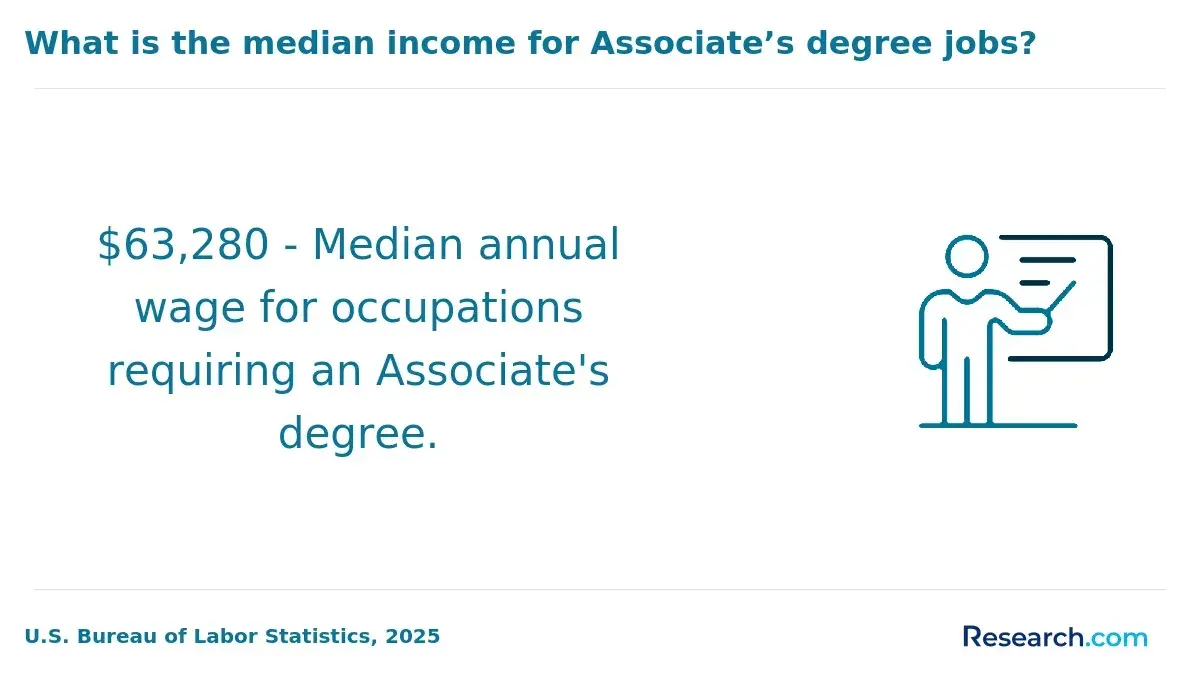
Accreditation evaluates an educational institution or program; licensing is legal permission from a state or other government authority to practice a regulated occupation; certification is a credential issued by a professional organization after its standards are met. They are related but not interchangeable.
Institutional accreditation matters most when a learner wants federal student aid, transfer credit, a degree pathway, or confidence that a college meets recognized quality standards. Programmatic accreditation can be essential in certain healthcare fields because it may affect clinical placement, licensure eligibility, or eligibility for a certification examination.
Short noncredit courses may not be accredited, which is not automatically a problem if an employer values the provider and the course accurately serves its purpose.
Use this sequence before enrolling in a program connected to a regulated career:
- Identify the exact job title and the state where you expect to work.
- Check the relevant state licensing board or employer job postings for education, clinical-hour, examination, and background-check requirements.
- Ask the school in writing whether its program meets educational requirements in your state and whether it arranges required placements.
- Confirm whether the credential is credit-bearing, whether credits may transfer, and whether an independent certification exam is still required.
A major red flag is language such as "prepares you for certification" without naming the certification body, eligibility rules, exam costs, or whether graduates historically qualify to sit for the exam. Another is a school that cannot explain where online students complete clinical or practicum requirements.
What Do These Programs Teach?
Online credentials should teach more than recorded lectures. The right curriculum depends on the pathway, but quality programs connect foundational knowledge to assessed work that resembles entry-level tasks. For example, an IT student may document troubleshooting steps, a coding student may complete claims scenarios, and a design student may revise portfolio work after critique.
This comparison shows what students should expect from different credential levels and what each usually does not provide on its own:
| Credential type | Usually teaches | May include | Important limitation |
| Academic certificate | Focused college coursework in a subject area | Academic credit that may be stackable | Transfer rules vary by receiving institution |
| Professional certificate | Applied skills and job-related projects | Provider-issued completion credential | Employer recognition varies by provider and field |
| Industry certification | Not usually a training program itself | Exam-based validation of knowledge or skills | May require separate training, fees, renewal, or experience |
| Associate degree | Technical major courses plus general education | Broader academic credential and possible transfer pathway | Usually takes longer and can cost more than a short certificate |
Credit-bearing certificates make the most sense for students who may later pursue an associate or bachelor's degree. Noncredit career training can be a better fit for a working adult who needs a specific skill quickly and does not need transferable college credit.
If a degree is your actual goal, compare program pacing and support rather than assuming a certificate is the cheapest route; accelerated online degrees may be more suitable for learners ready for a heavier, structured course load.
What Are the Admission Requirements?
Admission requirements depend on the provider and credential type. Community-college certificates and associate degrees commonly require an application and proof of high school completion or its equivalent.
Selective or advanced certificates may require prior college coursework, a degree, professional experience, or placement testing. Noncredit professional certificates may permit open enrollment, while certification examinations can have their own education or experience rules.
Do not assume that open enrollment means a program is easy to complete or appropriate for beginners. Technical certificates can require comfort with algebra, software, writing, or anatomy, and clinical programs may require immunizations, background checks, drug screening, CPR training, and in-person availability.
Before submitting an application, collect the information that affects both admission and completion:
- Prerequisite courses, required work experience, and technology specifications.
- Whether lectures are live, self-paced, or scheduled at set times.
- In-person lab, clinical, internship, practicum, or proctoring requirements.
- Background-check, health-record, equipment, software, examination, and travel costs.
- Credit-transfer policies and whether previously earned credits can shorten the pathway.
Applicants seeking an advanced credential may find that a graduate program is more efficient than accumulating several unrelated short courses. In that situation, review options for a 1 year masters degree and verify its admissions requirements, workload, and career relevance before treating speed as the deciding factor.
How Long Do Programs Take and Cost?
Completion time ranges from a few weeks for a self-paced professional certificate to roughly two years of full-time study for many associate degrees.
Time-to-completion depends on course sequence, part-time enrollment, prerequisite work, breaks in enrollment, and whether a program requires clinicals or local hands-on training.
Total cost is more than advertised tuition. The table identifies the cost categories learners should compare in writing because some are billed separately or arise only when a student begins fieldwork or sits for an exam:
| Cost category | Why it matters | Questions to ask |
| Tuition and mandatory fees | Determines the core published price | Is the rate per course, per credit, per term, or for the full program? |
| Books, software, and equipment | Can be substantial in technical and creative fields | Are licenses, tools, uniforms, kits, or devices included? |
| Clinical, lab, and travel expenses | Often apply to regulated or hands-on programs | Who locates the site, and how far may I need to travel? |
| Exam and renewal fees | Apply when a separate industry certification is needed | Does tuition include the first exam attempt or renewal costs? |
| Lost work time | May be the largest practical cost of required daytime placements | Can clinicals, labs, or internships be completed around my job? |
Compare the written total program price, not a monthly-payment advertisement. Federal aid may be available for eligible students in qualifying programs at eligible institutions, but many noncredit courses do not qualify.
Employer tuition assistance, workforce grants, veterans' benefits, and payment plans can help, yet each has eligibility limits. Learners prioritizing lower bachelor's-level costs can also explore best affordable online colleges before committing to multiple standalone credentials that may not transfer.
Are Online Programs Better Than Campus Options?
Online programs are not inherently better or worse than campus options. They are better when the format matches the learner's schedule, learning habits, access to practical training, and career requirements.
Campus programs may be better when a student needs structured lab access, in-person networking, immediate instructor feedback, or a local clinical-placement pipeline.
This comparison can help identify which format fits the work rather than choosing based on convenience alone:
| Factor | Online may fit best when | Campus or hybrid may fit best when |
| Schedule | You need asynchronous coursework around work or caregiving | You benefit from fixed class times and routine |
| Hands-on learning | The field accepts online theory and you have local practice access | Equipment, simulations, labs, or supervised practice are essential |
| Support | Coaching, tutoring, and faculty access are clearly scheduled online | You need frequent face-to-face help or immediate technical assistance |
| Networking | The provider offers virtual employer events and relevant projects | Local employer relationships and in-person placements matter most |
| Cost | You avoid commuting or relocation costs | A nearby public institution offers lower tuition or included facilities |
A common mistake is assuming "100% online" means no scheduling constraints. Proctored exams, live sessions, clinical shifts, internships, and group projects can still be mandatory. Request a sample weekly schedule and confirm all in-person obligations before enrolling.
What Jobs Can Graduates Get?
Job outcomes depend on the credential, prior experience, location, employer requirements, and whether a role requires licensure or a separate certification.
A short certificate can strengthen candidacy for entry-level support work or help an experienced worker document a new specialization. It may not substitute for a degree, license, apprenticeship, or experience when those are required.
The following examples show plausible directions rather than guaranteed outcomes:
| Training focus | Potential job directions | Common additional requirement |
| IT support or cybersecurity | Help desk specialist, technical support representative, junior IT support | Portfolio, vendor certification, or hands-on troubleshooting experience |
| Medical billing and coding | Billing specialist, coding support, patient-account representative | Employer-preferred coding certification or prior healthcare experience |
| HVAC or electrical technology | Apprentice, installer helper, maintenance trainee | Apprenticeship, supervised work hours, or local licensing progression |
| Legal studies | Legal administrative assistant, records specialist, intake support | Employer-specific software skills and state-specific expectations |
| Digital design | Junior designer, production artist, content-design assistant | Portfolio, software proficiency, and demonstrated revision skills |
To improve job readiness, build evidence of skill while studying. Save instructor-approved projects, document tools used, request feedback, complete any legitimate work-based learning opportunity, and tailor your résumé to the job titles employers actually use. Be cautious of programs that advertise broad job titles without explaining the experience, licensing, or portfolio requirements behind them.
What Are the Salary and Job Outlook?
Salary and outlook data describe occupations, not the earnings of every certificate holder. They are useful for assessing a field's scale and direction, but they cannot account for geography, shift differentials, experience, union status, specialization, or whether a learner meets all hiring requirements.
According to U.S. Bureau of Labor Statistics projections for 2024-2034, healthcare support occupations are projected to grow 15%, substantially faster than the average for all occupations.
That growth supports careful exploration of healthcare pathways, but prospective students should still verify whether their preferred role requires clinical training, professional certification, or state licensure beyond an online certificate.
When evaluating return on investment, compare the local entry-level job requirements with the program's full cost and time commitment. A credential is more defensible when it fills a clearly stated employer requirement, leads toward a recognized next credential, or helps an incumbent worker qualify for duties already available at their workplace. It is less defensible when the provider cannot identify the credential's recognition, practical requirements, or likely entry points.
Other Things You Should Know About
An online certificate is typically awarded by a school or training provider after coursework is completed. A professional certification is usually awarded by an independent certifying organization after a person meets eligibility standards and passes an exam or assessment. Some certificate programs prepare students for a separate certification exam.
They can be worthwhile when they teach a skill employers request, fit the requirements of a specific role, and have transparent total costs. They are less useful when a target job requires a license, degree, apprenticeship, or supervised clinical hours that the program does not provide.
Some do, but the level of support varies widely. Confirm whether coaching includes scheduled check-ins, academic planning, tutoring referrals, career support, and assistance with clinical or certification steps. Ask whether these services remain available through completion.
Usually not through online coursework alone. Many regulated healthcare and trade roles require in-person labs, supervised clinicals, apprenticeships, examinations, or state licensing. An online program may cover theory or exam preparation, but you should verify every practical and licensing requirement in the state where you plan to work.
References
- What certifications can help boost your career prospects? - MSU Denver https://www.msudenver.edu/innovative-lifelong-learning/blog/what-certifications-can-help-boost-your-career-prospects/
- Which College Students Could Benefit Most from Success Coaching? - TimelyCare https://timelycare.com/blog/which-college-students-could-benefit-most-from-success-coaching/
- InsideTrack Coaching Certifications and Micro-credentials https://www.insidetrack.org/programs-certifications
- The 5 Best Coaching Certification Programs in 2026 https://coaching.success.com/blog/best-coaching-certification-programs-2026
- The Effects of Student Coaching in the United States | The Abdul Latif Jameel Poverty Action Lab https://www.povertyactionlab.org/evaluation/effects-student-coaching-united-states
- Coaching Certificate - Beacon College https://www.beaconcollege.edu/college-readiness-programs/certificate-program/
- Academic Life Coach Training | Life Coach Schools Online https://www.coachtrainingedu.com/academic-life-coach-training/
- Online Schools with Success Coaches: Finding the Right Support for Adult Learners https://lakewood.edu/online-schools-with-success-coaches-finding-the-right-support-for-adult-learners/
- Coach Certification | Academic Coach Certification by ACTP https://myactp.com/coach-certification/
- "Student Success Coaching: Holistic Support Model for At-Risk Student Retention" https://resources.rework.com/libraries/higher-education-growth/student-success-coaching