2027 Best Online Non-Degree Programs With 2.0 GPA Admission

Co-Founder and Chief Data Scientist
A 2.0 GPA can narrow traditional college options, but it does not automatically block access to online career training. Many non-degree certificates, workforce programs, and open-enrollment courses evaluate applicants differently or do not use GPA at all.
This guide explains which online options may fit, what "accepts a 2.0 GPA" really means, and how to avoid credentials that will not meet employer or licensing requirements. The U.S. Bureau of Labor Statistics projects healthcare occupations to grow much faster than average from 2024 to 2034, making program fit and eligibility especially important.
Key Things You Should Know
- A 2.0 GPA may meet minimum admission standards at some certificate or associate programs, but many noncredit career-training providers use open enrollment and do not review GPA.
- For licensed fields such as practical nursing, medical assisting, cosmetology, and some skilled trades, program approval and state eligibility matter more than a low-GPA admission policy.
- BLS projects healthcare occupations to grow much faster than average from 2024 to 2034; choose a program based on the credential employers or licensing boards actually require, not admission ease alone.
Top 10 Best Online Non-Degree Programs With 2.0 GPA Admission
Popular Trade School Programs
Online trade programs are usually best for related theory, safety training, estimating, codes, and exam preparation; hands-on skills generally require local labs, employer training, or apprenticeships. Options that may accept a 2.0 GPA include HVAC technician certificates, electrical technology certificates, welding technology programs, construction management certificates, and plumbing pre-apprenticeship training. Choose a credit-bearing community-college certificate if you may later pursue an associate degree. Choose a noncredit workforce course when you need targeted job skills quickly. Confirm whether required clinical, lab, or shop hours can be completed near you.
Healthcare Programs
Potential options include medical billing and coding certificates, pharmacy technician training, medical office administration, patient care technician training, and health information technology certificates. Some online programs use a 2.0 GPA minimum, while noncredit providers may require only a high school diploma or equivalent. Programs involving direct patient care commonly include clinical placements, background checks, immunizations, and drug screening. A school certificate is not the same as national certification, and it does not automatically meet state licensure rules. Before enrolling, verify whether the curriculum prepares you for the appropriate certification examination.
Criminal Justice / Law Programs
Online criminal justice certificates, paralegal studies certificates, legal office administration programs, and homeland security courses can be practical choices for students with a 2.0 GPA. Entry requirements vary widely: a college certificate may require transcripts, while continuing-education programs may have open enrollment. Paralegal training can support entry-level legal support work, but employers may prefer programs approved by the American Bar Association or credentials with strong local employer recognition. Police officer, corrections, and court roles can also require background investigations, physical standards, academy training, or agency-specific testing beyond academic admission.
Arts & Design Programs
Graphic design, digital photography, web design, video editing, UX fundamentals, and digital marketing certificates often emphasize a portfolio more than GPA. Online coursework can teach software workflows and project development, but students should confirm access to required software, hardware, and critique opportunities. A credit-bearing certificate can be useful if you may continue to an associate or bachelor's program; a noncredit professional certificate may suit career changers seeking focused skills. For creative roles, employers frequently evaluate work samples, so prioritize programs that produce portfolio-ready projects and provide instructor feedback.
What online certificates accept a 2.0 GPA?
Online certificates that may accept a 2.0 GPA generally fall into two groups: academic certificates offered by colleges and noncredit workforce credentials offered by continuing-education units or training providers. An academic certificate awards college credit and may have a stated GPA minimum. A noncredit certificate documents program completion but usually does not create transferable college credit.
The following comparison helps distinguish programs that are realistic for applicants with a lower GPA from those that may require additional academic preparation.
| Program type | How GPA is commonly used | Best fit | Key caution |
| College credit certificate | May require a 2.0 GPA or admission review | Students who may stack credits into a degree | Course prerequisites can be stricter than overall admission |
| Community-college workforce certificate | Often open enrollment or placement-based | Career-focused learners needing short training | Transferability may be limited |
| Professional certificate | Usually no college GPA review | Skill building in technology, business, or design | Employer recognition varies by provider |
| Licensure-preparation program | May use GPA plus health, testing, or background requirements | Students pursuing regulated occupations | State approval is essential |
For shorter, skills-focused alternatives, compare quick certifications that pay well with school-based certificates. The former may lead to an industry examination or employer-recognized credential, while the latter may provide structured instruction and academic credit.
Are online non-degree programs accredited and transferable?
Online non-degree programs can be accredited, but accreditation applies differently depending on the provider and credential. A college may hold institutional accreditation while its noncredit division offers courses that do not carry academic credit. In regulated programs, institutional accreditation alone may not be enough; the program may also need specialized approval for graduates to pursue certification or licensure.
Transferability is never automatic. Credit-bearing certificates can sometimes transfer into an associate or bachelor's degree at the same institution, especially when explicitly described as stackable. Another college decides independently whether to accept transfer credit. Noncredit certificates typically do not transfer as academic credit, although employers may value the skills gained.
If your long-term goal is a degree, compare the certificate's course numbers, credit totals, and written transfer pathway before paying. Students planning beyond a short credential may also want to review best bachelors degrees to identify degree paths that align with their intended occupation.
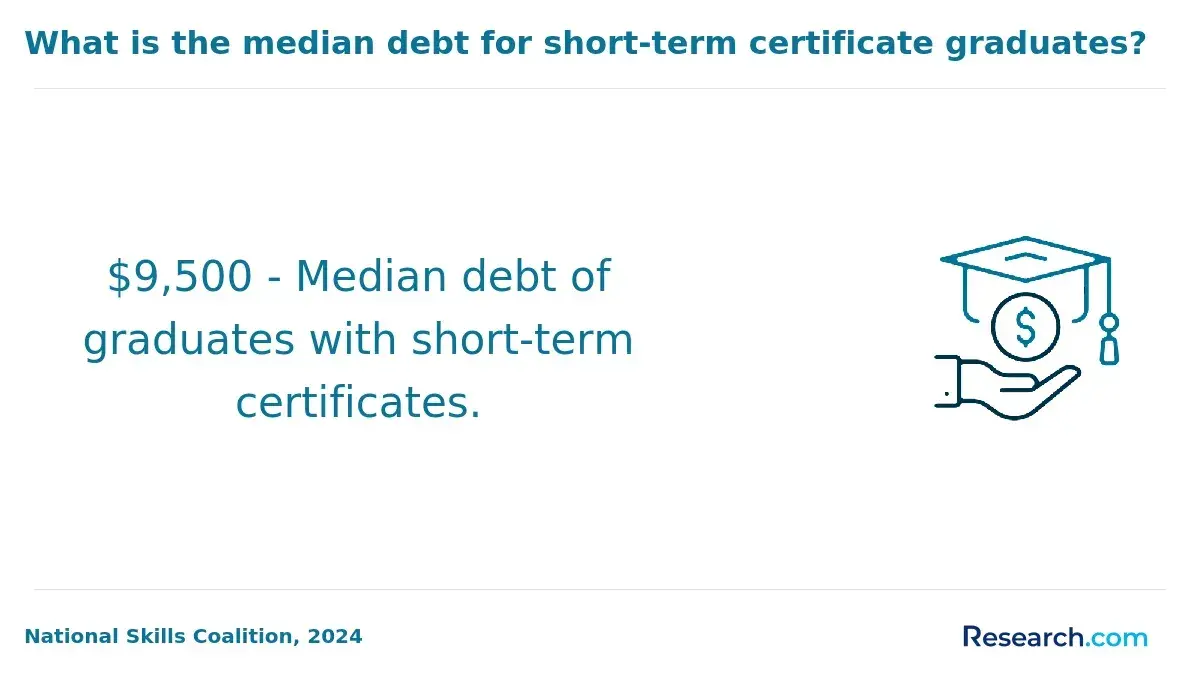
How do online and campus certificate programs compare?
Online and campus certificates can cover similar content, but their practical value depends on whether the occupation requires supervised practice. Fully online delivery works well for billing, coding theory, office administration, legal research, business software, and digital design. Campus or hybrid delivery is often stronger for programs requiring equipment, instructors observing technique, or clinical and shop hours.
This comparison highlights the trade-off between flexibility and access to hands-on learning.
| Factor | Online format | Campus or hybrid format |
| Scheduling | Often flexible and suitable for working adults | Usually fixed meeting times |
| Hands-on practice | May require a local placement or separate lab | Direct access to labs, equipment, and supervision |
| Networking | Can require extra effort through virtual events | More in-person contact with classmates and employers |
| Best use cases | Knowledge-based and digital-skill programs | Clinical, technical, and equipment-intensive programs |
Do not assume "online" means self-paced. Some programs use live sessions, proctored exams, group projects, attendance requirements, or scheduled local internships. Ask for a sample course calendar before enrolling.
What courses are included in these certificate programs?
Coursework depends on the field and whether the program is credit-bearing, noncredit, or designed for a certification examination. Most programs combine introductory theory with field-specific tools, communication, ethics, and employability skills. A lower GPA does not reduce the academic or technical standards students must meet after enrollment.
Common course patterns include the following, but schools use different names and sequences.
- Trade certificates may include workplace safety, blueprint reading, basic mathematics, electrical concepts, building codes, and equipment maintenance.
- Healthcare certificates may include medical terminology, anatomy basics, privacy rules, billing systems, patient communication, and supervised clinical practice when applicable.
- Legal and criminal justice programs may cover legal terminology, criminal procedure, report writing, ethics, records management, and introductory law.
- Arts and design programs may include visual principles, software applications, typography, digital media production, portfolio development, and client communication.
Review individual course descriptions, not just the program title. For example, a medical billing certificate may teach coding concepts but may not include the content, practicum, or examination preparation needed for a particular employer or certification body.
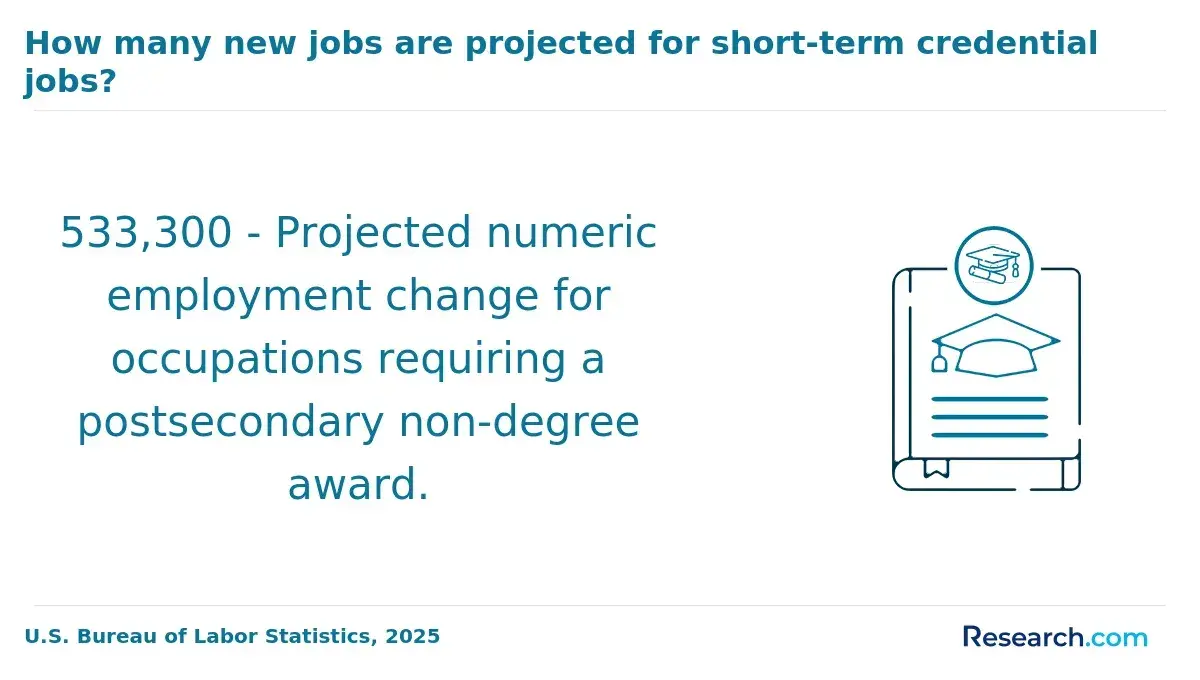
What are the admission requirements besides GPA?
Besides GPA, schools and providers may evaluate readiness, identity, prior education, and eligibility for hands-on placements. Requirements vary by institution, so a 2.0 GPA should be treated as a starting point for inquiry rather than a promise of admission.
Before applying, gather the documents and clear the conditions most likely to affect enrollment.
- Request the published admission policy and ask whether the 2.0 GPA is cumulative, transferable, high-school, or college GPA.
- Confirm whether you need a high school diploma, GED, placement assessment, prerequisite course, résumé, essay, or interview.
- For clinical or public-safety programs, ask about immunizations, background checks, drug screening, CPR training, physical requirements, and placement availability.
- Ask whether probationary admission, developmental coursework, or a conditional enrollment period applies to applicants below the preferred GPA.
- Get in writing whether completion makes you eligible for a certification exam, licensure application, or only a school-issued certificate.
A common mistake is confusing admission to the institution with admission to a selective program. You may be admitted to a college with a 2.0 GPA yet still need higher grades, testing, or prerequisites to enter nursing, radiography, or another limited-enrollment track.
How long do online non-degree programs take and cost?
Completion time ranges from a few weeks for a noncredit online course to about one year for many college certificates. Associate degrees generally take longer because they include general education credits. Tuition is only one cost: account for technology, books, software, supplies, examination fees, required uniforms, clinical compliance, transportation, and missed work time.
This cost-and-time framework can help you compare offers without assuming that the lowest advertised tuition is the lowest total investment.
| Option | Typical pace | Cost factors to compare | When it makes sense |
| Noncredit online certificate | Weeks to months | Course fee, software, exam fee | You need a focused skill and do not need college credit |
| College credit certificate | Several months to about one year | Per-credit tuition, fees, books, labs | You may transfer or stack credits later |
| Hybrid clinical or trade program | Several months to more than one year | Tuition, labs, equipment, travel, compliance costs | You need supervised practical preparation |
| Associate degree | Often about two years full time | Tuition, general education, materials, living costs | The target occupation or advancement path requires a degree |
Federal financial aid is generally tied to eligible programs at qualifying institutions; many noncredit courses do not qualify. Ask the financial-aid office about eligibility, scholarships, workforce grants, employer tuition assistance, payment plans, and the full program cost before borrowing. If a future graduate credential is your objective, a short certificate is rarely a substitute for a degree; explore a 1 year masters degree only after confirming its bachelor's-degree and admission prerequisites.
Which jobs can these programs help you qualify for?
These programs can help build job-relevant skills, but the credential alone may not qualify you for every role advertised in a field. Employers may require experience, a portfolio, an industry certification, a license, a background check, or a degree. The strongest choice begins with a specific job target and works backward to its minimum requirements.
Potential entry-level directions include medical records or billing support, pharmacy technician work where state requirements are met, administrative assistant roles, legal assistant support, junior graphic design work, customer service, construction office support, and trade apprenticeships. For hands-on trades, a certificate can supplement - not replace - employer-sponsored apprenticeship training.
Use job postings in your local area to identify recurring requirements. If postings consistently ask for an associate or bachelor's degree, a non-degree program may still build skills but is unlikely to be a complete substitute. Learners whose goals extend to research-intensive leadership or academic careers should recognize that a doctorate without dissertation is a later-stage option requiring substantial prior education, not a direct next step from a basic certificate.
What salaries and job outlooks apply to these careers?
Occupation-level wage and outlook data can provide useful context, but it does not show what every certificate holder earns. Pay varies by state, employer, experience, schedule, certifications, and whether the role requires additional education or licensure. Use these figures to compare career fields, then verify local job requirements.
The U.S. Bureau of Labor Statistics reported the following national median annual wages for 2024 and projected employment changes for 2024 to 2034.
| Occupation | 2024 median annual wage | Projected 2024-2034 outlook | Certificate relevance |
| Medical records specialists | $48,780 | Faster than average growth | Billing, coding, and health-information certificates can be relevant |
| Paralegals and legal assistants | $61,010 | Little or no change | Certificate or associate preparation may be preferred by employers |
| Graphic designers | $61,300 | Slower than average growth | Portfolio quality and software skills are important |
| HVAC mechanics and installers | $59,810 | Faster than average growth | Certificate, apprenticeship, and local licensing requirements may apply |
Automation and AI tools are changing administrative, design, and documentation workflows, increasing the value of learners who can verify output, protect confidential information, communicate clearly, and use field-specific software responsibly. In creative work, a portfolio showing original process and practical client-ready skills can matter more than a course-completion badge alone.
How do you choose a reputable program?
A reputable online non-degree program is transparent about admissions, total costs, instructional format, credential type, and career limitations. The best option is not necessarily the easiest program to enter; it is the one that meets the requirements of your intended job, certification body, or licensing board.
Use this screening process before submitting an application or paying a deposit.
- Match the program to a specific job title and confirm the job's education, certification, experience, and licensing requirements.
- Verify the institution's accreditation when academic credit, federal aid, transfer, or licensure is relevant, and separately verify specialized program approval when required.
- Ask whether the credential is credit-bearing, whether credits are stackable, and which receiving schools have accepted them previously.
- Request the full cost of attendance, including labs, examinations, software, supplies, travel, and mandatory compliance expenses.
- Confirm how practical requirements work online, including clinical placements, labs, internships, equipment access, and supervision.
- Review withdrawal, refund, attendance, and job-placement policies; avoid providers that promise employment, licensing, or unusually high earnings.
Red flags include vague accreditation claims, pressure to enroll immediately, missing instructor information, no published curriculum, unclear exam eligibility, and marketing that treats a certificate as guaranteed professional certification. If your GPA is close to a cutoff, ask admissions whether recent coursework, placement testing, or conditional admission can strengthen your application.
Other Things You Should Know About
Possibly. Some college certificates use a 2.0 GPA minimum, while many noncredit online programs use open enrollment and may not review GPA. Check the specific program because prerequisites and selective-track standards can be different from general admission rules.
It can build relevant skills and demonstrate training, but outcomes depend on the occupation, employer, portfolio, experience, licensing rules, and any required industry certification. Start by checking requirements in local job postings.
Only credit-bearing coursework may be transferable, and the receiving college makes the final decision. Ask whether the certificate is formally stackable into an associate degree and obtain the policy in writing.
Some may support eligibility, but validity depends on the occupation, state, program approval, clinical requirements, and examination rules. Confirm requirements directly with the relevant state licensing board or certification organization before enrolling.
References
- Getting a job without a 4-year degree. Prospects increase with a certificate. https://www.luminafoundation.org/resource/non-degree-credentials-provide-value-for-adults-in-the-labor-market/
- Colleges That Accept Low GPA Scores | Find Options https://www.educationconnection.com/resources/colleges-that-accept-low-gpa/
- The Non-Degree Market: Oasis or Mirage? https://www.encoura.org/resources/wake-up-call/the-non-degree-market-oasis-or-mirage/
- Aid for Non-Traditional Students - Finaid https://finaid.org/otheraid/nontraditional/
- What Non-Completers Want From Higher Ed https://www.wgulabs.org/posts/bridging-the-gap-what-non-completers-need-from-higher-ed
- New Research Shows Community Colleges are a Great Way To Boost Career Prospects - Without Getting a Degree https://www.calbright.edu/newsroom/blog/new-research-shows-community-colleges-are-a-great-way-to-boost-career-prospects-without-getting-a-degree/