2027 Best Stackable Credentials for Work-Life Balance

Co-Founder and Chief Data Scientist
Choosing training that improves your career without overwhelming your schedule is the central challenge for working adults. Stackable credentials let learners earn smaller certificates that can build toward a larger certificate, associate degree, bachelor's degree, or industry certification.
This matters as employers increasingly evaluate demonstrable skills alongside degrees. The U.S. Bureau of Labor Statistics projects healthcare support occupations to grow faster than average from 2023 to 2033. This guide compares flexible pathways, explains realistic costs and outcomes, and helps you identify credentials that fit your job goal, family responsibilities, and budget.
Key Things You Should Know
- Choose a credit-bearing stack only when the school documents exactly how each certificate applies to the next credential; noncredit training can be useful but may not transfer.
- For schedule flexibility, administrative healthcare, IT support, bookkeeping, digital design, and paralegal support often offer more predictable hours than clinical, emergency-response, or shift-based pathways.
- Compare total cost, required exams, equipment, clinical placements, and state licensing rules - not tuition alone. Public two-year colleges charged average published tuition and fees of $4,050 for in-district students in 2024-25, according to College Board.
Top 10 Best Stackable Credentials for Work-Life Balance
Popular Trade School Programs
Trade stacks can begin with an OSHA safety course, basic construction certificate, or electrical foundations certificate and progress to an associate degree, apprenticeship, or employer-specific training.
HVAC, welding, industrial maintenance, and electrical programs can suit hands-on learners, but work-life balance varies: emergency HVAC calls, construction deadlines, and apprenticeships may involve early, evening, or overtime hours. Choose a program only after confirming whether it prepares you for a required license, apprenticeship entry, or recognized certification exam in your state.
Healthcare Programs
Healthcare stacks may move from medical billing and coding or medical assisting certificates into health information technology, nursing prerequisites, or an associate degree. Administrative pathways can offer remote or daytime possibilities, while direct-care roles commonly require clinical hours and may involve shifts.
It's important to note that a certificate is not the same as professional certification. Coding employers may prefer a separate credential such as one earned through an industry certifying body.
Before enrolling, verify clinical-placement requirements, background checks, immunizations, and state-specific licensing rules.
Criminal Justice / Law Programs
Criminal justice and law-related stacks can include legal studies, paralegal, court reporting support, public safety administration, or cybersecurity certificates that lead into an associate or bachelor's degree.
Paralegal work may offer more regular office schedules than patrol, corrections, or emergency dispatch. However, a paralegal certificate does not authorize independent legal practice. Students should confirm whether employers in their region prefer an American Bar Association-approved paralegal program, a degree, prior legal-office experience, or a separate professional credential.
Arts & Design Programs
Creative stacks often start with digital design, UX fundamentals, video editing, web content, or marketing certificates and can build into an associate or bachelor's degree. These pathways may work well for adults because portfolios can demonstrate skill and some work can be project-based or remote.
Flexibility is not automatic: freelance income can be uneven, and agency deadlines can be demanding. Prioritize programs that include portfolio reviews, current software instruction, accessibility basics, and feedback from working professionals.
What are stackable credentials and why do they support better work-life balance?
Stackable credentials are intentionally connected learning milestones. A learner might complete a short certificate, apply its coursework toward a longer certificate or degree, then add an industry certification when it fits the occupation. The "stack" may be academic credit, noncredit badges with employer recognition, or a combination; schools should clearly state which type it is.
They can support work-life balance because they reduce the all-or-nothing commitment of starting a multi-year degree. You can pause after a useful milestone, test whether a field fits, and return later. They are not automatically easier: an accelerated online certificate can demand more weekly work than a part-time campus course, and clinical or lab requirements remain fixed.
A stack is most useful when each step has standalone value and a documented next step. Consider these comparisons before choosing a pathway.
| Pathway type | Best for | Work-life balance trade-off | Key verification |
| Credit-bearing college certificate | Adults who may pursue a degree later | Usually follows academic terms; may be slower | Written transfer and degree-application policy |
| Noncredit workforce certificate | Fast, targeted skill development | May offer short, flexible modules | Employer recognition and whether credit is available |
| Industry certification preparation | Workers pursuing a defined technical standard | Exam preparation can be self-paced | Exam eligibility, renewal, and total testing costs |
| Apprenticeship-linked credential | People seeking paid, supervised training | Earn while learning but work hours are employer-led | Registered status, wages, and required schedule |
Do not enroll based on the word "stackable" alone. Ask for a program map showing course numbers, credits, expiration dates for prior coursework, grade requirements, and the destination credential.
Which stackable credential fields offer the most flexible, family-friendly career paths?
The most family-friendly field is usually the one that combines stable demand, work that can be planned in advance, and an entry route that fits your existing responsibilities. Administrative and technology-enabled roles often provide more schedule control than occupations dependent on patient coverage, job sites, or emergency response.
For learners who want longer-term flexibility, compare short stacks with the career range available through best bachelor degrees. A bachelor's degree can widen advancement options, but it is not necessary for every first career move.
The following comparison highlights the practical schedule issues behind common stackable fields.
| Field | Common first stack | Potential flexibility | Important limitation |
| IT support and cybersecurity | Help desk, networking, or security fundamentals | Hybrid and remote roles exist; troubleshooting may require coverage hours | Entry-level competition can be strong, and certifications may need renewal |
| Bookkeeping and payroll | Accounting software, bookkeeping, payroll certificate | Part-time, seasonal, and remote work may be available | Deadlines concentrate around payroll and tax periods |
| Health information | Medical billing, coding, records, or revenue-cycle certificate | Some office-based and remote opportunities | Hiring requirements differ by employer and role |
| Human resources support | HR administration or payroll certificate | Typically business-hour work | Advanced HR roles often require experience or a degree |
| Digital marketing or design | Content, analytics, UX, or design certificate | Project-based and remote work can be possible | Portfolio quality and market conditions affect opportunities |
Fields with the strongest fit for predictable family schedules are not necessarily the fastest to enter. Decide whether you need remote access, fixed daytime hours, part-time enrollment, or the ability to stop after one credential, then eliminate fields that conflict with that requirement.
How do online stackable credential programs compare to campus options for busy adults?
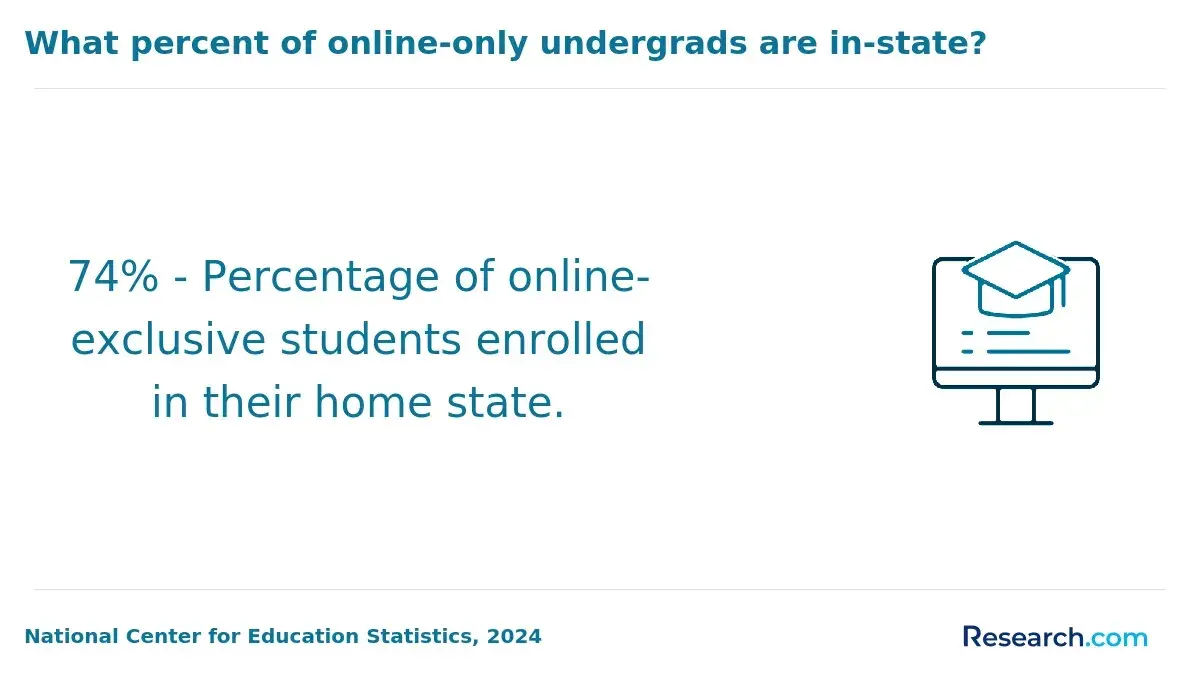
Online stackable programs can reduce commuting and let adults complete readings, lectures, and assignments around work. They are especially practical for software-based, business, information technology, and administrative coursework. Campus or hybrid options are often better when training requires labs, equipment, supervised practice, or direct networking with local employers.
Adults who need maximum control over pacing may also explore a self-paced bachelor's degree, but self-paced study is not the same as an online stackable certificate. Self-paced programs may use competency-based progress rules, while many online certificates still have weekly deadlines and cohort schedules.
Use this comparison to match delivery format with your real constraints.
| Format | Usually works best when | Potential drawback |
| Fully online asynchronous | You need flexible study hours and the curriculum is theory or software based | Requires strong time management; limited live support may be available |
| Online synchronous | You value structure and can protect recurring meeting times | Live sessions can conflict with shifts, caregiving, or time zones |
| Hybrid | You need labs, demonstrations, or local peer contact | Travel and fixed attendance dates reduce flexibility |
| Campus-based evening or weekend | You learn best in person and have reliable transportation | Course choices may be limited by term and location |
Before paying a deposit, request a sample weekly calendar. Confirm whether exams are proctored, whether clinical or lab days occur during business hours, whether internships are required, and whether online students receive the same advising and career support as campus students.
What accreditation and licensing requirements should stackable credential programs meet?
Accreditation matters most when you want federal student aid, transferable college credit, a regulated profession, or employer confidence in an academic credential. For credit-bearing colleges, check institutional accreditation recognized by the U.S. Department of Education or the Council for Higher Education Accreditation. Programmatic accreditation may also matter in fields such as nursing, allied health, engineering technology, and legal education.
Licensing is separate from accreditation. A school may be accredited while its curriculum does not meet your state board's education, clinical-hour, examination, or background-check requirements. This is particularly important for nursing, cosmetology, electrical work, HVAC, teaching, and other regulated occupations.
Use these checks before you commit.
- Identify the exact job title and the state where you expect to work.
- Read the relevant state licensing board's education and examination requirements.
- Ask the program for written confirmation of how its curriculum aligns with those requirements.
- Verify institutional and programmatic accreditation independently, rather than relying on marketing language.
- Confirm whether the credential prepares you for a certification exam or awards a certificate only.
Red flags include vague claims that a program is "accredited" without naming the accreditor, promises of licensure without a state-specific disclosure, and a refusal to explain whether credits transfer. For noncredit and vendor training, assess industry recognition, instructor expertise, exam alignment, and employer partnerships instead of assuming traditional academic accreditation applies.
What admission criteria and prior education are typically required for stackable credentials?
Admissions requirements depend on the credential type and provider. Short noncredit courses may require only registration and payment. College certificates commonly require an application and high school completion or an equivalent credential, though placement, prerequisites, or prior coursework may apply. Advanced certificates may require a prior degree, existing license, or work experience.
GPA and standardized tests are often less central for short workforce credentials than for selective degree programs, but competitive healthcare programs may use prerequisite grades, entrance testing, background screening, or health clearances. Industry certification programs may instead require documented work experience before you can take an exam.
Ask admissions staff these questions in writing because the answers affect both completion time and cost.
- Is this credential credit-bearing, and how many credits will apply to the next program?
- Which prerequisites must be completed before the first course, clinical placement, or exam?
- Are prior-learning assessments, military training, employer training, or transfer credits accepted?
- What minimum grade is needed for stackability, and is there a time limit on applying credits?
- Are background checks, software, tools, uniforms, vaccinations, or travel required?
A practical alternative for applicants missing prerequisites is to start with a foundational certificate that is explicitly embedded in the larger pathway. Avoid taking unrelated low-cost courses merely because they sound relevant; they may not meet program requirements or transfer.
How long do stackable credential programs take, and what do they cost?
Completion time ranges from a few weeks for a focused noncredit course to roughly one year for many college certificates, with longer timelines for associate-degree stacks, clinical programs, and part-time enrollment. The fastest option is not always the lowest-risk choice: compressed courses can leave little room for work emergencies, caregiving, or retaking a required class.
Cost depends on residency, delivery, credits, tools, exams, and required placements. College Board reported average published tuition and fees of $4,050 for in-district students at public two-year colleges in 2024-25. That is a useful benchmark, not a price for any specific certificate; out-of-district tuition, technology, supplies, and testing can substantially change the total.
For students considering a larger credential after an initial stack, compare the time commitment of short programs with online master's programs. A master's program is usually appropriate only after you have the required undergraduate education and a role that benefits from graduate-level study.
Build a full-cost estimate before enrolling.
| Cost category | Why it changes the investment | What to confirm |
| Tuition and mandatory fees | May vary by residency, credit load, and term | Published per-credit and program total |
| Books, software, and equipment | Can be significant in technical and design programs | Required versus optional items |
| Exams and certification fees | Often paid separately from tuition | Whether one attempt is included |
| Clinical, lab, and travel costs | Can limit the value of a low-tuition program | Site location, parking, uniforms, and schedule |
| Lost work time | May be the largest cost for required daytime training | Attendance and practicum hours |
Eligible credit-bearing programs may qualify students for federal aid, but eligibility depends on the institution, program length, enrollment, and individual circumstances. Ask the financial-aid office whether the specific certificate is aid-eligible; do not assume a college's degree-level aid applies to every short program.
What courses and skill-building experiences are included in stackable credential pathways?
A well-designed stackable pathway develops skills in a deliberate sequence: foundational knowledge first, applied practice next, then advanced coursework, a capstone, supervised experience, or preparation for an external exam. The right curriculum depends on the occupation, not on whether a provider labels a program "career ready."
In technical and digital programs, look for current tools, troubleshooting, documentation, cybersecurity awareness, and portfolio or project work. In healthcare and public-facing fields, look for ethics, privacy, communication, documentation, and supervised practice where required.
AI tools are changing many office and creative workflows, so programs should teach learners how to verify outputs, protect confidential data, and use automation responsibly rather than treating AI as a substitute for foundational skills.
The following signals distinguish a coherent stack from a collection of unrelated courses.
| Curriculum feature | Why it matters | Evidence to request |
| Mapped prerequisites | Prevents repeating content and unexpected delays | Course sequence and catalog descriptions |
| Applied projects or simulations | Helps demonstrate competence to employers | Sample assignments and grading criteria |
| Employer-relevant tools | Improves practical relevance | Current software, equipment, or platform list |
| Advising at transition points | Supports movement into the next credential | Named advisor and documented progression rules |
| Exam or licensure alignment | Clarifies whether training supports a required next step | Eligibility disclosure and pass-through expectations |
Be cautious of programs that emphasize a badge but provide no syllabus, instructor information, assessment method, or explanation of what learners will be able to do. A recognizable credential is valuable only when it reflects skills employers or licensing bodies can understand and verify.
What jobs, salaries, and career advancement can stackable credentials realistically lead to?
Stackable credentials can help candidates qualify for entry-level work, demonstrate a specialized skill, meet a prerequisite, or advance from support work into a degree pathway. They do not guarantee employment, a promotion, or a particular wage. Outcomes depend on local hiring, experience, licensure, portfolio quality, employer requirements, and the full combination of credentials a worker holds.
Occupation-level wage data provides context, not a promise for certificate completers. For example, the U.S. Bureau of Labor Statistics reported a May 2024 median annual wage of $61,280 for computer user support specialists. Some employers hire candidates with relevant certificates and demonstrated skills, while others may prefer an associate or bachelor's degree; the occupation's median includes workers with varied education and experience.
Graduate study can be worthwhile when a target occupation clearly requires it, but it should follow - not replace - an entry plan. Review graduate degrees that are worth it only after confirming the degree aligns with your intended role and likely return on investment.
This pathway view helps set realistic expectations.
| Starting point | Possible next move | Career-value evidence to seek |
| Foundational certificate | Entry-level support role or next academic certificate | Local job postings and documented credit transfer |
| Certificate plus portfolio or exam preparation | Specialized junior role or contract work | Required tools, sample work, and exam eligibility |
| Certificate plus experience | Advanced certificate, supervisory preparation, or associate degree | Employer promotion criteria and wage ranges |
| Associate or bachelor's stack destination | Broader role access or graduate-school preparation | Completion rate, debt, and occupation requirements |
Search local postings before enrollment and record the most common requirements. If employers consistently request a license, a degree, or experience beyond the certificate, treat the credential as one step in a longer plan rather than a standalone solution.
How can students choose reputable, high-return stackable credential programs in the U.S.?
A reputable, high-return stackable program makes its outcomes, costs, curriculum, and progression rules easy to verify. "High return" should mean that the program's total investment is reasonable for your target job, not simply that it is short or heavily advertised.
Start with a target occupation and a nonnegotiable work-life requirement, such as evening study, no daytime clinical hours, a local practicum, or remote-compatible work. Then compare at least three providers using the same criteria.
- Collect local job postings for your intended role and identify recurring education, software, certification, and schedule requirements.
- Confirm whether the first credential is credit-bearing, what it stacks into, and the minimum grade or deadline needed to progress.
- Calculate total cost, including tuition, fees, equipment, exams, transportation, and unpaid required hours.
- Check accreditation, licensing alignment, and certification-exam eligibility when those apply to the field.
- Ask for retention, completion, job-placement, and debt information for the specific program, while recognizing that outcomes can vary by student and labor market.
- Choose the smallest credible first step that advances your goal and preserves a documented option to continue.
Common mistakes include mistaking a completion certificate for a professional certification, assuming online delivery means fully flexible scheduling, and trusting broad salary claims that do not match local job descriptions. Also avoid providers that pressure you to enroll before giving a written tuition breakdown or transfer policy. A good program welcomes careful questions because its pathway is designed to be understood.
Other Things You Should Know About
They can be worthwhile when each credential has clear labor-market value and applies toward your next goal. They are less useful when the provider cannot document transferability, employer recognition, or the skills the program develops.
Some can. Credit-bearing certificates may apply toward an associate or bachelor's degree, but transfer rules, minimum grades, residency requirements, and time limits vary by institution. Get the pathway in writing before enrolling.
A certificate is usually awarded by a school or training provider after completing coursework. A certification is generally awarded by a professional organization after meeting its standards, which may include an examination, work experience, and renewal requirements.
IT support, bookkeeping, payroll, health information, digital marketing, and design may offer remote-compatible roles. Availability depends on the employer and experience level, so review local and remote job postings before selecting a program.
References
- 6 Things to Know About Stackable Credentials https://www.devry.edu/blog/6-things-about-stackable-credentials.html
- Burnout in the Workplace: A Systematic Review of Causes, Consequences, and Interventions https://ijmpr.in/article/burnout-in-the-workplace-a-systematic-review-of-causes-consequences-and-interventions-3562/
- Employee Burnout Statistics 2026: Global & Workplace Insights - Meditopia for Work https://meditopia.com/en/forwork/articles/employee-burnout-statistics
- Stackable Credentials: How Do You Stack Up? https://www.1stsource.com/advice/stackable-credentials-how-do-you-stack-up/
- What Are Stackable Credentials and Why Do They Matter? https://www.pltw.org/blog/what-are-stackable-credentials
- ISQOLS https://isqols.org/Work-Life-Balance-Certification
- Stackable Credentials: Living Links Between Learning and Work https://www.cael.org/resouces/pathways-blog/stackable-credentials-living-links-between-learning-and-work
- Stackable Certificates & Credentials - Complete College America https://completecollege.org/our-approach/structure/stackable-certificates-credentials/
- Top Employers Institute - Build a better World of Work https://www.top-employers.com/us/