2027 Best Online Stackable Credentials With Open Enrollment

Co-Founder and Chief Data Scientist
Choosing training that starts soon but still leads somewhere can be difficult. Online stackable credentials let learners earn smaller certificates that may build toward a larger certificate, industry certification, or degree. This matters as employers increasingly evaluate demonstrable skills: the U.S. Bureau of Labor Statistics projects healthcare support occupations to grow 15% from 2023 to 2033.
This guide helps career changers, working adults, and recent graduates compare open-enrollment options, verify whether credits stack, estimate total costs, and avoid credentials with limited labor-market value.
Key Things You Should Know
- Open enrollment usually means a program has rolling or simplified entry requirements; it does not mean every course, clinical placement, licensure pathway, or advanced credential has no prerequisites.
- The strongest stackable pathways document exactly how each certificate applies to the next award. Credit-bearing college certificates may be more transferable than noncredit microcredentials, but transfer is never automatic.
- For career context, BLS projects healthcare support employment to grow 15% from 2023 to 2033, while many skilled-trade and technology pathways depend heavily on local employer demand, state rules, and hands-on training access.
Top 10 Best Online Stackable Credentials With Open Enrollment
Popular Trade School Programs
Open-enrollment trade pathways often begin with short certificates in welding, HVAC fundamentals, electrical systems, industrial maintenance, construction safety, or automotive service. Many community colleges let students complete introductory online coursework before attending required labs. A stackable route can progress from a basic certificate to an advanced certificate or associate degree. Choose this format if the school clearly identifies lab hours, equipment access, apprenticeship connections, and preparation for recognized exams. Fully online trade training is best for theory; it generally cannot replace supervised practical training required by employers or licensing authorities.
Healthcare Programs
Common stackable healthcare options include medical billing and coding, pharmacy technician preparation, medical assisting coursework, health information technology, and nursing prerequisites. Entry certificates may be open enrollment, but clinical programs commonly require background checks, immunizations, drug screening, placement testing, and site availability. A certificate is educational training; it is not automatically a professional certification or state license. Learners should confirm whether a program prepares them for a specific exam, whether clinical experience is included, and whether credits apply to an associate degree. Avoid programs that imply online coursework alone qualifies someone for patient-care licensure.
Criminal Justice / Law Programs
Students can stack introductory certificates in criminal justice, legal studies, cybersecurity basics, paralegal support, or public safety administration into an associate degree at some colleges. These programs can suit administrative, records, compliance, or entry-level justice-system support goals. They do not automatically qualify graduates as police officers, attorneys, paralegals in every employer setting, or licensed private investigators. Academy standards, hiring rules, background investigations, and state regulations vary. Before enrolling, match the curriculum to the intended role and ask whether the credential is academic credit, professional development, or preparation for a separate certification examination.
Arts & Design Programs
Graphic design, digital media, UX fundamentals, photography, animation, and web design certificates can be stacked into portfolios, advanced certificates, or associate degrees. Open enrollment can make these programs accessible to beginners, but a portfolio matters more than the credential name alone for many creative roles. Compare software access, instructor feedback, project briefs, portfolio reviews, and intellectual-property policies. Short noncredit courses work well for learning a tool or updating skills; credit-bearing sequences may be better for learners who want a longer academic pathway. AI-enabled design tools also make ethical use, editing judgment, and original work increasingly important.
What are online stackable credentials with open enrollment and how do they work?
Online stackable credentials are smaller learning awards designed to build on one another. A learner might complete an introductory certificate, apply those credits toward a career certificate, and later apply eligible credits toward an associate degree. "Open enrollment" usually describes access: students may be able to begin frequently, register without a competitive admissions process, or enroll without a declared major.
Stackability can take several forms. The distinction matters because providers use the same marketing language for very different products.
| Pathway type | What stacks | Best use | Important limitation |
| Credit-bearing college certificate | Course credits toward a related certificate or degree | Learners who may continue to college | Receiving institutions set transfer rules |
| Noncredit workforce credential | Modules or provider-issued badges | Fast job-specific skill building | Usually does not create college credit |
| Industry certification preparation | Training plus an external exam pathway | Fields where employers recognize a certifying body | Completing training does not award certification by itself |
| Employer-aligned microcredential | Short skill units within a provider ecosystem | Targeted upskilling | Recognition can be narrow or employer-specific |
Before paying, obtain the catalog description or written pathway map. It should state the exact credential awarded, credit value if any, expiration rules, minimum grade needed to advance, and whether previous courses are guaranteed to count later.
How do online stackable credentials compare to traditional degrees and campus programs?
Stackable credentials are not simply "faster degrees." They are a staged option for learners who want to test a field, gain a near-term skill, or spread education costs over time. A traditional degree is usually the better choice when a target occupation requires a bachelor's degree, broad general education, graduate-school eligibility, or a specific license.
This comparison shows the practical trade-offs between common formats.
| Factor | Stackable online credential | Traditional campus degree |
| Entry timing | Often rolling, frequent, or short-term starts | Usually term-based application cycles |
| Commitment | One course, module, or certificate at a time | Multi-year academic plan |
| Learning format | Often asynchronous theory with possible local labs or clinicals | More scheduled instruction and campus services |
| Transfer value | Varies by issuer and written articulation agreement | Typically clearer within the same institution |
| Career fit | Defined technical or entry-level skill goals | Roles requiring broader academic preparation |
An online sequence is especially useful for working adults who can manage self-paced coursework and need an incremental route. Learners seeking broad remote-career options may also compare best degrees for work from home jobs before choosing a short credential that may be too narrow for their long-term goal.
Online delivery does not remove practical requirements. Programs in welding, healthcare, automotive technology, or some public-safety areas may combine online lectures with fixed lab sessions, simulations, clinical rotations, internships, or proctored exams. Ask for the weekly schedule before assuming a program is fully flexible.
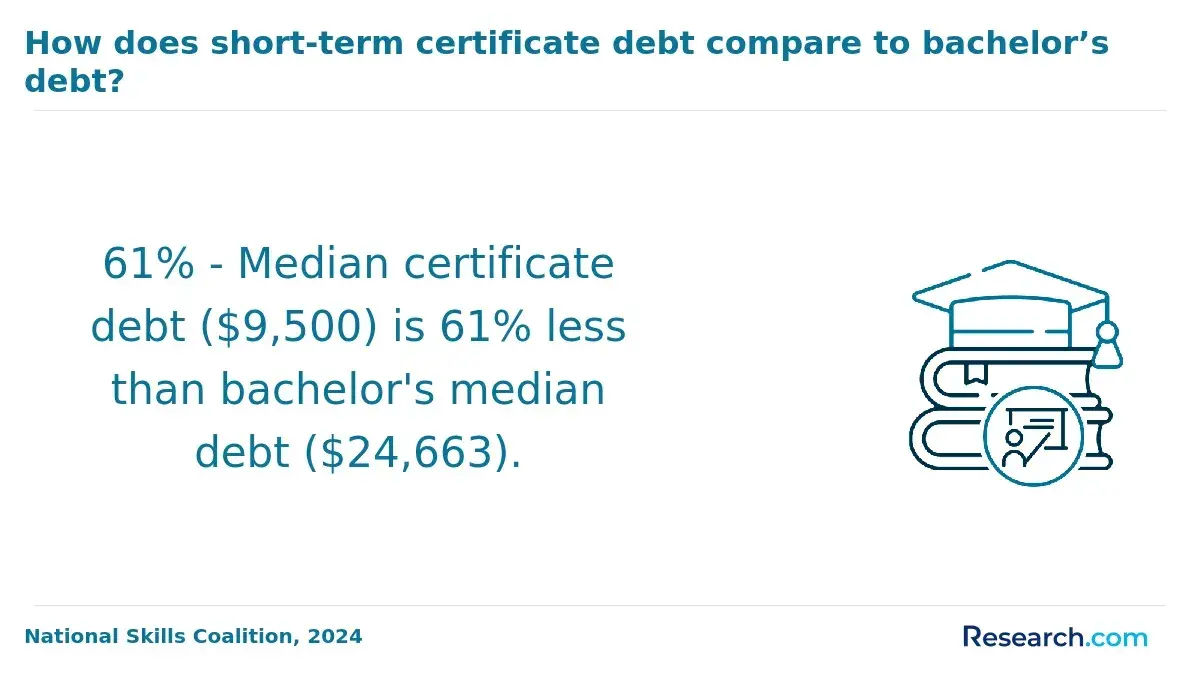
What accreditation and quality standards should online stackable credential programs meet?
Quality checks should match the credential type. For a credit-bearing college program, verify that the institution holds institutional accreditation recognized by the U.S. Department of Education or the Council for Higher Education Accreditation and that the certificate appears in the official catalog. For career training, inspect the provider's curriculum, instructor qualifications, assessment process, refund policy, and evidence of employer recognition.
Programs leading toward regulated work need an additional level of scrutiny. The following checks help distinguish a legitimate pathway from attractive but vague marketing.
- Confirm whether the program itself needs specialized approval, such as nursing, medical assisting, surgical technology, or paralegal program recognition, and verify it with the relevant state board or professional body.
- Ask whether online students receive the same supervised lab, clinical, practicum, or fieldwork opportunities required of campus students.
- Request the name of any external certification exam the curriculum prepares students to take, then separately review that exam's eligibility rules and fees.
- Check whether credits have a course number, transcript record, and documented transfer or articulation agreement rather than relying on verbal assurances.
Accreditation is not a universal quality stamp for every noncredit microcredential, and an accredited college can still offer a weakly aligned program. Use accreditation as one screen, then evaluate outcomes, curriculum relevance, and progression rules.
What admission requirements and prior experience do stackable credential programs typically expect?
Open enrollment commonly lowers barriers at the first step, but admission requirements rise as students move into advanced coursework. A beginner noncredit course may require only payment and basic technology access. A credit-bearing certificate may require a high school diploma or equivalent, placement assessment, identity documentation, and residency information. Selective clinical or cohort-based stages can add prerequisites and limited-seat admission.
Applicants should separate "eligible to enroll" from "eligible to finish the pathway." These questions reveal the real entry standard.
- What is required to register for the first course, and what is required to enter the next credential?
- Are prior courses, minimum grades, placement scores, or work experience required before advanced modules?
- Do background checks, physical requirements, immunizations, drug screening, or a driver's license apply to externships or clinical placement?
- Can a student proceed if a required lab, clinical site, or capstone is unavailable locally?
Students with significant prior learning should ask about credit for prior learning, military training, articulated high-school coursework, or industry certifications. Do not assume a provider will award credit; policies, documentation standards, and maximum transferable credits vary.
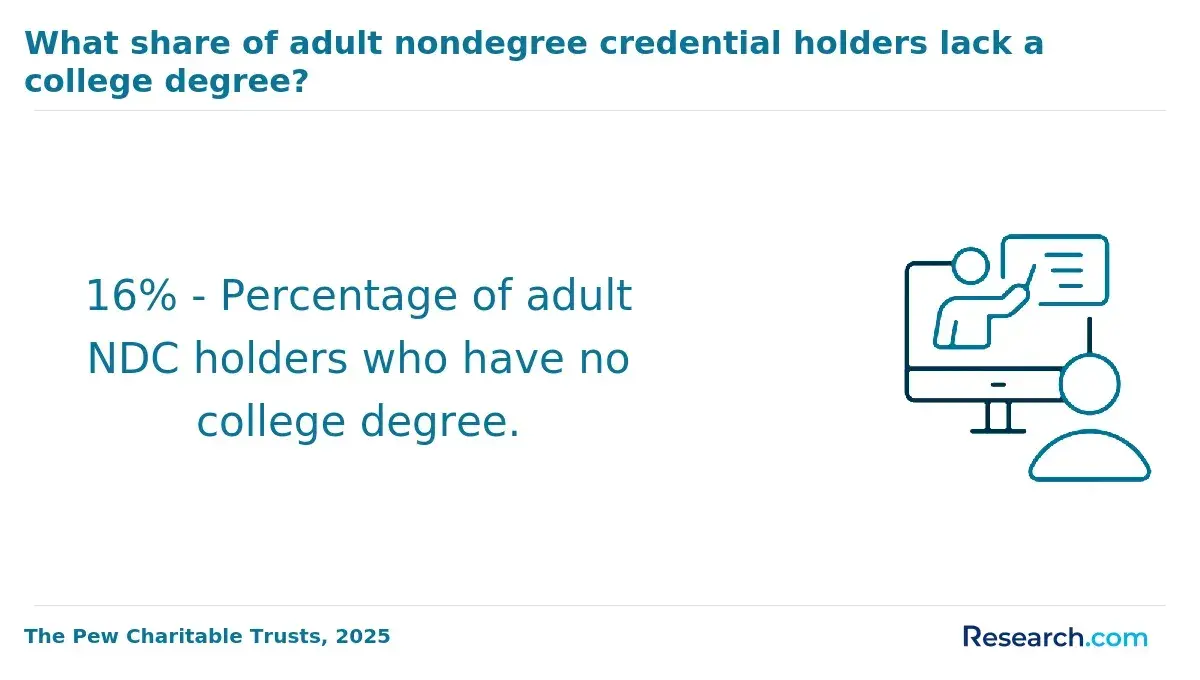
How long do stackable credentials take to complete and how are they structured?
Completion time depends less on the word "online" than on course sequence, prerequisites, term length, required practical experiences, and a student's weekly capacity. A single microcredential may take weeks, while a multi-certificate academic route can extend across several terms. Open enrollment may let students start sooner, but it does not always let them finish sooner if later courses run only once per term.
A well-designed sequence makes the timeline transparent. The table highlights what to check before relying on an advertised accelerated pace.
| Structural feature | Potential advantage | Question to ask |
| Rolling starts | Less waiting to begin | Are all required courses available after I start? |
| Self-paced modules | Flexible study timing | Are there completion deadlines or instructor response limits? |
| Accelerated terms | Fewer weeks per course | How many study hours are expected each week? |
| Fixed cohort courses | Peer support and scheduled instruction | What happens if I must pause or repeat a course? |
| Clinical or lab requirement | Applied practice | Who secures placement, and can it delay completion? |
Working learners should plan conservatively. An accelerated course compresses reading, assignments, and exams; it does not reduce the underlying learning required. If a bachelor's degree is the actual goal, compare the stackable route with an accelerated bachelor's degree to see whether a structured degree completion program offers a clearer endpoint.
What do students learn in common stackable credential pathways and course sequences?
Common pathways begin with foundational knowledge, progress to applied tools and procedures, then culminate in supervised practice, a portfolio, capstone, or external certification preparation. Good programs show this sequence in course titles and learning outcomes rather than simply grouping unrelated short classes under one badge.
For example, an information technology pathway may move from computer and networking fundamentals to operating systems, security concepts, and vendor-neutral certification preparation. A healthcare administration pathway may start with medical terminology and privacy rules before moving to coding systems, reimbursement, and claims workflows. A skilled-trade sequence may cover safety, measurement, and technical theory before required shop practice.
Look for assessments that resemble real work: troubleshooting exercises, documented projects, simulated records, design briefs, case analyses, or supervised demonstrations. AI tools are increasingly present in office, technology, and design work, so valuable curricula teach verification, privacy, prompt judgment, and accountable use rather than treating automated output as finished work.
What careers, job roles, and industry pathways do stackable credentials lead to?
Stackable credentials can support entry into a field, a move into a specialized task area, or progression to a larger academic award. They are strongest when the target job has identifiable skills and employers recognize either the issuing school, an associated certification, or the work samples produced. They are weaker substitutes for occupations that legally require a degree, license, apprenticeship, or extensive supervised experience.
This table connects common pathways to realistic role categories without implying that one credential alone guarantees employment.
| Pathway area | Possible entry or support roles | Likely next step |
| IT support and cybersecurity fundamentals | Help desk support, technical support, junior IT operations | Industry certification, portfolio, associate or bachelor's degree |
| Medical billing and coding | Billing support, claims processing, coding trainee roles | Experience and, where useful, external certification |
| HVAC or electrical fundamentals | Installer helper, maintenance support, apprentice-track work | Apprenticeship, supervised hours, state-required licensing steps |
| Digital design | Production design, content support, junior freelance work | Stronger portfolio and specialized design training |
| Criminal justice administration | Records, dispatch-support, compliance, administrative roles | Agency-specific hiring process or associate degree |
Students whose long-term goal is research, university teaching, or high-level specialized practice should not expect a short stack to replace graduate education. Those goals may eventually require PhD online programs or other advanced study, depending on the profession.
What salary ranges and advancement opportunities are associated with stackable credential careers?
Salary research should begin with the occupation, location, experience level, and employer - not the credential's marketing page. The BLS reported a May 2024 national median annual wage of $49,210 for HVAC mechanics and installers and $48,780 for medical records specialists. These are occupation-wide medians, not expected earnings for certificate completers, and they include workers with different education levels, locations, and experience.
The comparison below shows why job requirements matter more than a generic "high-paying certificate" claim.
| Career factor | How it affects advancement | What to verify |
| License or certification | May be required for practice or preferred for hiring | Eligibility, exams, renewal, and state applicability |
| Documented experience | Often determines movement beyond entry-level work | Whether the program includes supervised practice |
| Geographic market | Pay and openings differ substantially by area | Local postings, employers, and wage data |
| Degree progression | Can open roles with broader responsibility | Written credit-transfer and completion options |
Consider total cost alongside earnings potential: tuition, registration, books, software, tools, exam vouchers, travel, uniforms, background checks, and lost work hours can materially change the investment. Federal student aid may be available for eligible students in qualifying programs, but many short noncredit offerings do not qualify. Ask the provider for a complete cost sheet and confirm aid eligibility directly.
How can students choose reputable stackable credential programs and avoid low-value options?
A reputable program makes its value testable before enrollment. It identifies the exact award, total price, learning format, instructors, required equipment, completion conditions, and the next credential in the sequence. It also explains what it cannot do, including limits on transfer, licensing, job placement, or certification eligibility.
Use this screening process before making a deposit.
- Start with one target role and review several local job postings to identify required skills, licenses, degrees, and certifications.
- Choose credit-bearing study when you may need an associate or bachelor's degree later; choose noncredit training when a short, clearly recognized skill is the actual goal.
- Get written confirmation of which courses count toward the next certificate or degree, the minimum grade required, and any deadline for using those credits.
- Calculate the full cost, including exams, materials, travel, labs, and required practical placements, rather than comparing tuition alone.
- Verify institutional accreditation, specialized approval where relevant, and whether an online learner can complete every required hands-on component.
- Speak with admissions and, when possible, an employer or licensing board about the credential's fit for the exact role you want.
Major red flags include promises of guaranteed employment or licensing, unclear course-credit policies, pressure to pay immediately, missing instructor information, vague "industry recognized" language, and no explanation of practical training. Learners who need a broader, lower-risk academic route may also compare easy bachelor degrees online, while recognizing that "easy" should never replace checking career relevance and academic quality.
The best online stackable credential is therefore not necessarily the shortest or cheapest. It is the one with a documented next step, a credible connection to the work you want, manageable delivery requirements, and a total cost you can justify without relying on promised outcomes.
Other Things You Should Know About
Some noncredit courses may have few formal entry requirements, but credit-bearing certificates and advanced pathways commonly require a high school diploma, GED, or equivalent. Clinical, licensure, and degree-level stages may have additional requirements.
They can, but only when the courses are credit-bearing and the school accepts them under a written policy or articulation agreement. A digital badge or noncredit certificate does not automatically transfer as college credit.
Eligibility depends on the institution, program length, credit status, and federal aid rules. Some qualifying college certificate programs may be eligible, while many short noncredit programs are not. Confirm with the school's financial-aid office before enrolling.
Neither is universally better. A stackable certificate is useful for lower-cost exploration, immediate skill building, or gradual progress. An associate degree may be better when employers require broader coursework, a larger credential, or a clear transfer route to a bachelor's degree.
References
- Building Stackable Credentials That Truly Deliver Value and Economic Mobility: 7 Steps for Success https://mcacs.talentfirst.net/building-stackable-credentials-that-truly-deliver-value/
- Partners of TEACH California - Recruiting Teachers | TEACH California https://www.teachcalifornia.org/partners
- Six Types of Credentials Non-Traditional Students Want https://laurelridgeworkforce.com/six-types-of-credentials-non-traditional-students-want/
- Unlocking Success with Micro-Credential Stackable Credentials: Micro Programs - Huge Possibilities https://ubisglobal.com/blog/ubis-micro-credentials/
- What Are Stackable Credentials and Why Do They Matter? https://www.pltw.org/blog/what-are-stackable-credentials
- Rethinking Credentialing in Higher Education for the 21st Century https://moderncampus.com/blog/rethinking-credentialing-for-the-21st-century.html
- Stackable Credentials Explained https://diplomasafe.com/stackable-credentials/
- 15 Best Online Learning Platforms for Professionals, and Lifelong Learners In 2025 https://buddyboss.com/blog/best-online-learning-platforms-for-professionals-and-learners/
- The Best Guide to Stackable Micro Credentials for Career Advancement https://sertifier.com/blog/stackable-micro-credentials-building-career-success-through-flexible-learning-pathways/
- Stackable credentials can open doors to new career opportunities | Brookings https://www.brookings.edu/articles/stackable-credentials-can-open-doors-to-new-career-opportunities/