2027 Best Certifications With Credit for Life Experience

Co-Founder and Chief Data Scientist
If you have military training, workplace expertise, licenses, or industry credentials, paying to repeat material can delay your next career move. Credit for prior learning (CPL), also called prior learning assessment (PLA), lets eligible colleges evaluate documented learning for academic credit.
The U.S. Bureau of Labor Statistics reported that workers with postsecondary nondegree awards had a 2024 median weekly earning of $1,020, compared with $930 for high school graduates. This guide explains where experience credit can help, where it cannot replace hands-on training or licensure, and how to compare credible options.
Key Things You Should Know
- Prior learning credit is academic credit awarded after an evaluation; it is not a degree, certificate, or professional certification, and schools decide how much credit applies.
- Trade, healthcare, criminal justice, and design programs can recognize relevant work experience, but regulated occupations may still require approved clinical hours, exams, background checks, or state licensure.
- Use occupation-level pay data carefully: 2024 median weekly earnings were $1,020 for workers with postsecondary nondegree awards, but a credential alone does not guarantee employment or pay.
Top 10 Best Certifications With Credit for Life Experience
Popular Trade School Programs
Credit-bearing certificates and associate degrees in welding, HVAC/R, electrical technology, automotive service, industrial maintenance, and construction management may recognize apprenticeship instruction, military occupations, manufacturer training, or challenge exams. These paths fit experienced technicians who need a formal credential or faster route to an associate degree.
They are a poor shortcut for workers who still need supervised hours for a trade license. Compare whether credit applies to the credential, whether labs remain mandatory, and whether the program prepares you for EPA Section 608, ASE, NCCER, or a state-specific licensing exam.
Healthcare Programs
Healthcare certificates and associate degrees may evaluate prior coursework, military medic training, active licenses, and employer training. Practical nursing, medical assisting, health information technology, phlebotomy, and medical coding are common areas, but clinical education is tightly controlled. An experienced aide may receive limited general education or elective credit yet still need approved clinical hours.
Choose a program only after confirming that its curriculum meets your state board's requirements and, where relevant, eligibility rules for certification exams such as CMA, CPC, or RHIT. Patient-facing credentials rarely accept experience alone.
Criminal Justice / Law Programs
Criminal justice certificates and associate degrees can be useful for corrections, security supervision, emergency management, court support, and public-safety administration. Police academy coursework, military service, dispatch training, and documented agency training may be reviewed for prior learning.
Paralegal certificates may also recognize college-level legal coursework, although employers often value programs approved by the American Bar Association where available. Experience credit does not confer police authority, attorney status, private-investigator licensing, or access to restricted roles. Verify background standards, academy requirements, and agency hiring rules before choosing a program.
Arts & Design Programs
Graphic design, digital media, photography, web design, and interior design certificates may assess professional portfolios, software certifications, client work, and prior coursework. Portfolio-based credit is most useful when work demonstrates learning outcomes such as typography, visual communication, production workflow, or user-centered design. It is less likely to replace foundational studio courses or specialized software training.
For design careers, a current portfolio generally matters more to employers than the number of credits awarded. Check whether credits stack into an associate or bachelor's degree and whether the program teaches tools employers currently request.
What are certifications with credit for life experience and how do they work?
Certifications with credit for life experience usually describe college certificate or degree programs that award academic credit for verified prior learning. The more accurate term is prior learning assessment: a college evaluates what you know against course outcomes, then may post transfer, elective, or course-equivalent credit. A professional certification, by contrast, is issued by an industry body after meeting its rules, often including an exam.
Schools commonly use several assessment methods. The method matters because it affects price, transcript value, and the likelihood that credit will satisfy a required course.
| Assessment route | Evidence evaluated | Best use | Important limitation |
| Official training evaluation | Military, corporate, apprenticeship, or industry training records | Structured training with clear hours and objectives | Credit depends on the receiving college's policy |
| Standardized examination | Subject-matter exam score | General education or introductory subjects | Not available for every technical course |
| Portfolio assessment | Work samples, resume, supervisor verification, and reflective narrative | Documented college-level learning from work | Usually carries an assessment fee and is not guaranteed |
| Challenge examination | Local departmental exam or skills demonstration | Specific course competencies | May not transfer to another institution |
Ask whether awarded credits are graded or pass/fail, whether they count toward residency requirements, and whether a future transfer school will accept them. Learners comparing short, employment-focused options can also review online courses with certificates, but confirm whether each option is credit-bearing before assuming it can apply to a degree.
Which careers benefit most from certifications with prior learning credit?
The strongest candidates are workers whose experience maps directly to defined course outcomes and who need an academic credential for advancement, not merely a résumé line. Experienced technicians, service members, public-safety personnel, IT support specialists, medical administrative workers, and creative professionals may have evidence that an assessor can evaluate.
Prior learning credit is most valuable when it shortens a credential that employers or licensing pathways actually recognize. The comparison below separates promising matches from situations where a different route is often better.
| Career situation | Why CPL may help | When to choose another route |
| Skilled trades worker seeking an associate degree | Apprenticeship or employer training may cover technical coursework | Choose an apprenticeship if supervised license hours are still needed |
| IT worker with vendor credentials | Documented training may fulfill select technical or elective requirements | Choose a current industry certification when a job posting specifically requires it |
| Military veteran moving to civilian work | Service schools and occupational experience may have evaluated learning | Choose a regulated program if clinical or state-approved instruction is required |
| Healthcare support worker | Relevant coursework may reduce nonclinical requirements | Complete approved clinical education for patient-care licensure |
For learners deciding between a focused credential and a longer academic route, highest paying majors can help frame whether completing an associate or bachelor's degree after using CPL is worth the added time. Do not select a program solely because it awards the most credit; select one that advances the required credential for your target role.
How do you verify accreditation and quality for experience-based certification programs?
Verify the institution first, then verify the program's career relevance. For credit-bearing college certificates and degrees, confirm institutional accreditation through the U.S. Department of Education or Council for Higher Education Accreditation databases and check that the accreditor is recognized for the institution's location and type. For career programs tied to a license, also check the relevant state licensing board; institutional accreditation alone may not establish eligibility.
Use these checks before paying an application, portfolio, or enrollment fee.
- Find the school in an official accreditation directory and confirm its current status, not just a logo on its website.
- Read the catalog's prior-learning policy for maximum credits, eligible assessments, fees, residency rules, and transfer treatment.
- Ask the program director whether the exact credential meets employer, certification-exam, or state-board requirements for your goal.
- Request the total cost in writing, including assessments, labs, equipment, examinations, clinical requirements, and graduation fees.
- Speak with a licensing board or prospective employer when the occupation is regulated or security-sensitive.
Red flags include a school promising a degree "based solely on life experience," refusing to name its accreditor, or guaranteeing a license, job, or salary. Legitimate PLA requires evidence and academic evaluation; it does not sell a credential for a résumé alone.
What are the admission and documentation requirements for earning life experience credit?
Requirements vary by provider and assessment type. Credit-bearing colleges generally require an application and official transcripts before they evaluate prior learning. Noncredit career-training providers may have simpler enrollment rules but usually cannot award transferable academic credit.
A strong evidence file makes it easier for an assessor to match your learning to a course. Prepare the following materials before applying.
- Official transcripts from colleges, military schools, apprenticeships, and approved training providers
- Current licenses, industry certifications, examination score reports, and continuing-education records
- A detailed résumé showing duties, tools, systems, dates, and increasing responsibility
- Work samples, redacted project records, performance evaluations, and supervisor verification where permitted
- A portfolio narrative that explains what you learned, how you applied it, and how it matches course outcomes
Do not submit confidential client, patient, employer, or law-enforcement material. Ask the assessor how to anonymize evidence. Applicants should also ask whether a portfolio is reviewed before enrollment, whether unsuccessful assessments can be appealed, and whether fees are refundable.
How do online and campus certification programs differ when awarding experience credit?
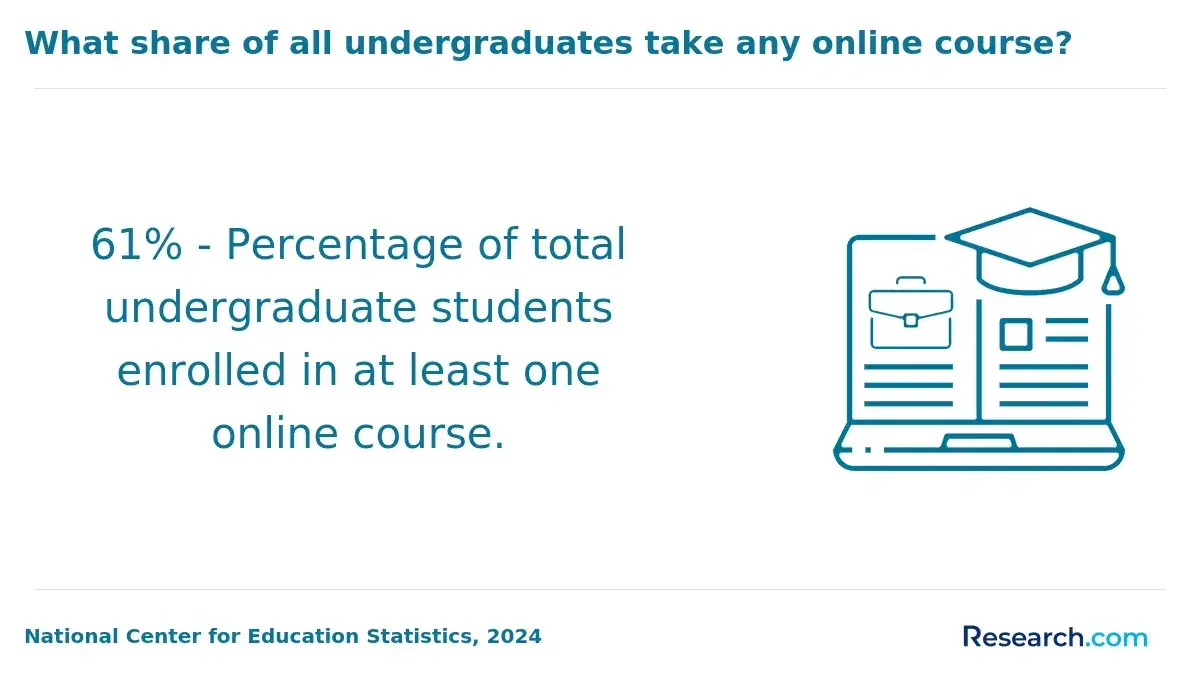
Online and campus programs can both award prior learning credit, because assessment is usually based on evidence, examinations, or faculty review rather than seat time. The key difference is how remaining requirements are delivered. Fully online study suits theory-heavy business, IT, criminal justice, and design coursework; campus or hybrid delivery is often necessary for equipment use, labs, studios, and clinical practice.
This comparison helps experienced learners choose a format without overlooking hands-on requirements.
| Factor | Online program | Campus or hybrid program |
| PLA review | Often submitted digitally through transcripts, portfolios, or remote proctoring | May include in-person skills demonstrations |
| Schedule | Usually more flexible for working adults | Fixed labs, studios, or clinical shifts may apply |
| Best fit | Academic, administrative, and digital skills | Hands-on trades, patient care, and equipment-intensive training |
| Main risk | Assuming online delivery meets state licensure rules | Underestimating commute, scheduling, and facility costs |
Before enrolling online, obtain written confirmation about proctoring, required residencies, clinical placements, state authorization, and whether you can complete practical requirements near home. A program can be legitimate online yet still be unsuitable for licensure in your state.
How long do these certification programs take and what do they typically cost?
Completion time depends on how much credit the school accepts and which requirements cannot be bypassed. A short certificate may take months, while an associate degree typically takes longer; prior learning can reduce remaining coursework but rarely eliminates required labs, capstones, clinical rotations, or residency credits. Portfolio review can also add weeks before registration.
Costs are equally variable. Tuition is only one component, and PLA may be charged per portfolio, assessment, course, or credit awarded. Compare the full remaining cost rather than treating "credit for experience" as free credit. Learners prioritizing speed should compare fast track programs with PLA-friendly options, because an accelerated calendar can raise weekly workload even when it reduces calendar time.
Ask for a written estimate showing tuition after anticipated credit, assessment fees, books, software, tools, uniforms, background checks, exams, travel, and lost work time for required in-person sessions. Federal aid eligibility depends on the institution, program, enrollment status, and student eligibility; it generally does not pay simply because a school evaluates life experience.
What coursework, assessments, or portfolios are required alongside life experience credit?
Life experience credit normally complements coursework rather than replacing every requirement. Faculty assess whether your documented learning meets the same outcomes as a course, including current knowledge, safety standards, communication skills, and practical competence. Programs may require a capstone, supervised practicum, updated technical coursework, or a final skills assessment even after awarding substantial credit.
Build a plan around the requirements most likely to remain.
- Map each transcript, credential, and work example to a specific catalog course outcome rather than making general claims about experience.
- Complete required placement tests or challenge exams early so you do not register for a course you could test out of.
- Prioritize mandatory labs, clinicals, fieldwork, and residency credits because these are often not replaceable through PLA.
- Keep certifications current when a portfolio relies on vendor, safety, healthcare, or trade credentials.
- Get a degree audit in writing before paying for a portfolio assessment or committing to a schedule.
If your goal is rapid entry rather than academic credit, compare the curriculum, exam preparation, and employer recognition of certificate programs that pay well. A noncredit program may be faster, but it usually will not create transferable college credit.
What licenses or professional certifications can these programs help you qualify for?
These programs may support eligibility for a separate license or professional certification, but they do not automatically award it. A college certificate in HVAC may prepare students for EPA Section 608 testing; a medical coding certificate may prepare students for an industry exam; and a practical nursing program may prepare graduates to seek authorization for the NCLEX-PN. Each external credential has its own eligibility rules.
Before choosing a program, identify the end credential first: state license, national certification, employer-required vendor certification, or academic certificate. Then confirm that the curriculum, clinical hours, practicum, background checks, and institutional approvals match that endpoint. This is especially important in nursing, allied health, electrical work, cosmetology, law enforcement, teaching, and legal services, where state rules can differ.
Experience credit may reduce classroom work but generally cannot waive requirements imposed by a licensing board.
What salary gains and job outlook can you expect after earning these certifications?
Prior learning credit can improve return on investment by reducing repeated coursework, but salary depends on the occupation, location, experience, employer, shifts, licensing, and labor-market conditions - not on PLA itself. Use occupation data as a benchmark and compare it with the total remaining cost and time away from work.
The following U.S. Bureau of Labor Statistics May 2024 median annual wage figures illustrate the range across occupations commonly connected to these pathways. They are not graduate salary promises and some roles require more than a certificate or associate degree.
| Occupation | 2024 median annual wage | Credential caution |
| Electricians | $62,350 | Licensure and apprenticeship requirements vary by state or locality |
| HVAC mechanics and installers | $59,810 | Employers may require EPA Section 608 certification |
| Paralegals and legal assistants | $61,010 | Requirements vary by employer; a certificate may be preferred or required |
| Medical records specialists | $50,250 | Employer preferences for coding credentials vary |
| Graphic designers | $61,300 | A portfolio is central, and a bachelor's degree is common |
Evaluate ROI with a conservative question: will the credential remove a documented barrier to the job or promotion you want? If not, a targeted industry certification, apprenticeship, portfolio refresh, or employer-funded training may deliver better value than enrolling solely to collect credit.
Other Things You Should Know About
Legitimate colleges generally do not award a certificate or degree solely for life experience. They may award limited academic credit after evaluating verified learning, but you must still meet the credential's remaining academic, residency, and program requirements.
Not always. The receiving institution decides whether to accept transfer credit, especially portfolio-based or locally examined credit. Obtain the policy in writing if you may transfer later.
No. Many colleges review military transcripts and may award credit, but the amount and course equivalency depend on the institution, program, and your documented training.
Usually not. State boards and certifying organizations often require approved education, supervised clinical practice, examinations, or background checks that a college's PLA process cannot waive.
References
- How to Bring Industry-Recognized Credentials (IRCs) to K-12 https://www.edmentum.com/articles/industry-recognized-credentials-from-high-school-to-high-demand-careers/
- College Credit for Your Work and Life Experience | University of Phoenix https://www.phoenix.edu/tuition-financial-aid/prior-learning-assessment.html
- Weighing the Value of Industry-Based Certifications against Their Costs https://www.nasbe.org/weighing-the-value-of-industry-based-certifications-against-their-costs/
- How Attaining Industry-Recognized Credentials in High School Shapes Education and Employment Outcomes https://fordhaminstitute.org/national/research/industry-recognized-credentials
- Decoding Certifications: What You Need to Know About Industry-Recognized Credentials https://learn.toolingu.com/blog-start/2025/september/decoding-certifications-what-you-need-to-know-about-industry-recognized-credentials/
- Eligibility Pathways for Professional Certification https://assess.com/eligibility-pathways-certification/