2027 Fastest Online Certificate Programs

Co-Founder and Chief Data Scientist
Choosing a fast online certificate can be difficult because "fast" does not always mean employer-recognized, transferable, or suitable for licensure. These programs range from self-paced noncredit training completed in weeks to college certificates requiring several months of coursework.
The U.S. Bureau of Labor Statistics projects healthcare support occupations to grow faster than average from 2024 to 2034, making short, job-focused training especially relevant for career changers. This guide compares the quickest certificate paths, their limits, costs, and next steps so you can invest in training that matches your actual goal.
Key Things You Should Know
- Fast online certificates can take from a few weeks to about 12 months, but the shortest options are usually noncredit and may not qualify graduates for regulated occupations or college credit.
- For career-focused choices, confirm whether the program leads to an industry certification exam, meets state licensing rules, or is offered by an institution with appropriate accreditation before paying tuition.
- According to U.S. Bureau of Labor Statistics projections for 2024-2034, healthcare support occupations are expected to grow faster than the average for all occupations, but many hands-on healthcare roles still require clinical training that cannot be completed entirely online.
Top 10 Fastest Online Certificate Programs
Popular Trade School Programs
Fast online trade-related certificates commonly cover HVAC fundamentals, electrical theory, construction estimating, welding safety, plumbing basics, automotive service preparation, and industrial maintenance. Theory-heavy coursework can often be completed online in weeks or months, while welding, electrical, HVAC, and automotive work usually require lab practice, apprenticeships, or supervised field training.
Choose a short online program for foundational knowledge or exam preparation; choose a hybrid trade school or registered apprenticeship when you need hands-on competence, employer connections, or state-required hours. Ask whether the credential is credit-bearing and whether it prepares you for an industry exam.
Healthcare Programs
Healthcare certificates include medical billing and coding, pharmacy technician preparation, medical assisting, dental assisting, sterile processing, and health information support. Billing, coding, and administrative coursework may be available fully online, although employers can prefer candidates with an industry certification.
Clinical roles such as medical assisting, phlebotomy, practical nursing, and dental assisting normally require in-person labs or externships. A fast online program is best for administrative healthcare work or prerequisite learning, not as a substitute for clinical placement. Confirm that an online program meets your state's rules before pursuing a regulated role.
Criminal Justice / Law Programs
Online certificates in criminal justice, legal studies, paralegal studies, homeland security, corrections, and cybercrime can often be completed in one or two terms. They are useful for learning legal terminology, report writing, court processes, or public-safety administration.
However, a certificate does not automatically qualify someone to work as a police officer, attorney, investigator, or licensed paralegal where local rules apply. Paralegal employers may value programs approved by recognized professional bodies or credentials paired with experience. Students seeking sworn law-enforcement roles should check agency fitness, academy, and background requirements first.
Arts & Design Programs
Fast online arts and design certificates often focus on graphic design, digital illustration, UX design, web design, photography, animation, video editing, or social media content. These programs can be practical for building software skills and a portfolio quickly.
Their value depends less on seat time than on the quality of completed work, instructor feedback, and whether the curriculum reflects tools employers use. A short certificate can help an entry-level creative professional or small-business owner, but competitive design roles may also require a strong portfolio, relevant experience, and sometimes a degree.
Which online certificate programs are fastest to complete?
The fastest online certificate programs are usually self-paced, noncredit professional certificates and short career-training courses. Learners may finish introductory programs in information technology support, bookkeeping, project coordination, digital marketing, customer service, medical billing, or office software in weeks when they can study consistently. Completion time depends on prior knowledge, weekly hours, required assessments, and whether an externship is included.
Use this comparison to distinguish a genuinely short program from one that merely advertises flexible scheduling. The quickest option is not always the best option if your target job requires academic credit, a license, clinical hours, or an employer-recognized examination.
| Program type | Typical fast completion range | Best for | Important limitation |
| Self-paced professional certificate | Weeks to several months | Job-specific software or business skills | Usually noncredit and transferability is limited |
| Community college workforce certificate | One or two terms | Structured career training | May have fixed start dates and prerequisites |
| Credit-bearing undergraduate certificate | About 6-12 months full time | Stacking toward a degree | Usually longer than noncredit training |
| Clinical or skilled-trade certificate | Several months or longer | Roles requiring supervised practice | Cannot usually be completed fully online |
For a broader look at short programs with employment value, compare quick certifications that pay well with academic certificates. Remember that a certification is awarded by a certifying organization, while a certificate is awarded after completing an educational program.
Are online certificate programs accredited and employer-recognized?
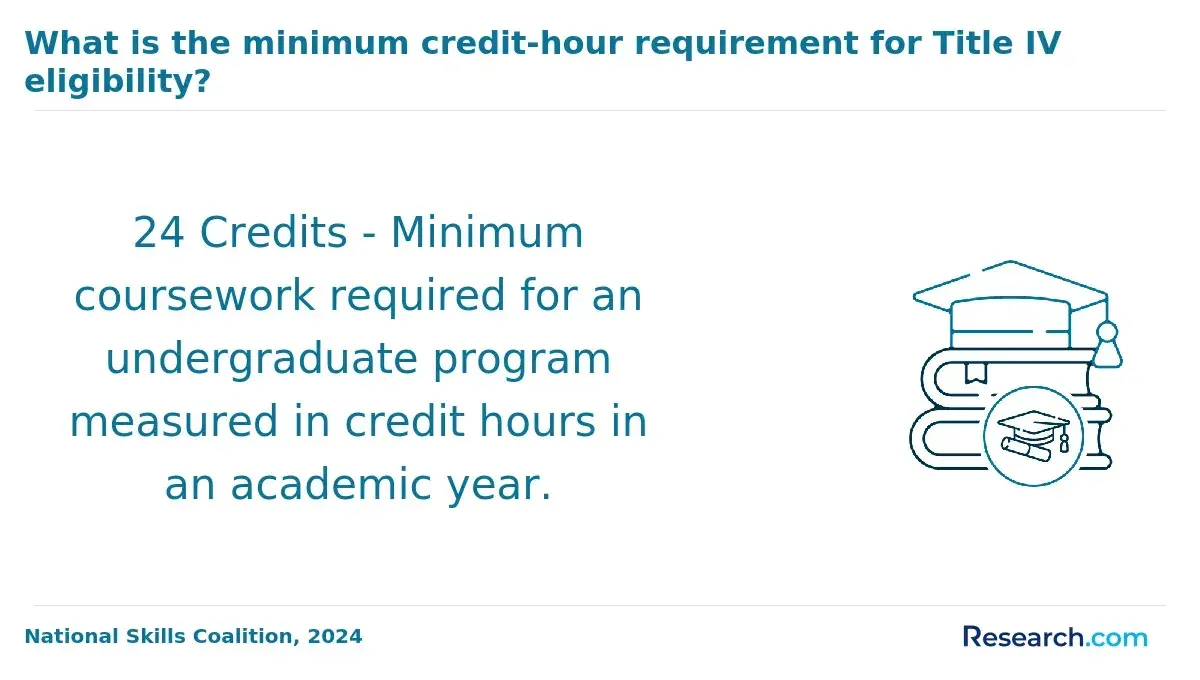
Some online certificate programs are offered by accredited colleges, while others are provided by training companies, professional associations, or online learning platforms. Institutional accreditation matters most when you need federal financial aid eligibility, college credit, transfer options, or a credential from a recognized postsecondary institution. A noncredit provider may still be useful when its curriculum is current and its credential is valued by employers in a particular field.
Employer recognition is role-specific. For example, an IT employer may prioritize a vendor certification and demonstrated skills, while a healthcare employer may expect an approved training pathway and a separate certification exam. Do not assume a school's institutional accreditation means every program meets professional approval or state licensure requirements.
Before enrolling, verify these points directly with the provider and, where relevant, the employer or licensing board:
- Whether the certificate is credit-bearing, noncredit, or eligible to stack into a degree
- Which accreditor, programmatic approval, or industry body is relevant to the target occupation
- Whether the curriculum prepares students for a named certification examination
- Whether online students receive required labs, clinical placements, proctored exams, or instructor support
- Whether local employers recognize the credential for entry-level hiring
What are the admission requirements for online certificate programs?
Admission requirements vary more by credential type than by delivery format. Short noncredit certificates may require only registration, payment, and basic technology access. College-issued certificates may require a high school diploma or equivalent, an application, placement testing, prerequisite courses, or minimum grades in specific subjects. Graduate certificates generally require a bachelor's degree and may require relevant professional preparation.
Programs connected to healthcare, public safety, or regulated technical work can add background checks, immunizations, drug screening, CPR training, physical-capability standards, or proof of placement eligibility. These requirements may apply before an externship rather than at admission.
Applicants should contact admissions before enrolling if they are changing careers, transferring credits, or planning to use the certificate toward a degree. Ask whether prior learning, military training, or industry certifications can reduce required coursework; never assume credits will transfer automatically.
How long do online certificate programs take to finish?
A fast online certificate may take anywhere from four weeks to a year. A self-paced program can be shorter for learners with prior experience and substantial weekly study time. In contrast, cohort-based college certificates follow academic calendars, and programs with clinicals, labs, externships, or state-mandated instructional hours have a minimum timeline regardless of how quickly students complete online modules.
The practical comparison is workload, not marketing language. A six-month certificate may require 10 hours weekly, while an eight-week accelerated course can require 15 to 25 hours weekly. Working adults should look for asynchronous coursework, predictable due dates, recorded instruction, and a clear policy for missed clinical or lab sessions.
If your long-term goal is a degree rather than immediate skills training, an accelerated bachelor's degree online accredited program may be a better fit than stacking unrelated short courses. Choose a credit-bearing certificate when the school confirms that credits can apply to the intended degree.
How much do fast online certificate programs cost?
Costs range widely because "online certificate" includes free introductory courses, subscription-based professional training, and college programs charging tuition by credit. Total cost is more important than advertised tuition. Include application fees, technology, textbooks, exam vouchers, background checks, supplies, lab fees, clinical uniforms, and any travel required for in-person components.
This cost framework helps compare a lower-priced program with one that includes assessment, advising, or certification preparation. Obtain a written estimate before committing, especially when a program uses monthly payments or a financing partner.
| Cost factor | Why it matters | Questions to ask |
| Tuition or subscription | May be charged per course, credit, term, or month | Is the quoted price the total amount needed to finish? |
| Required exam fees | Industry certifications often require separate testing fees | Is an exam voucher included, and is a retake covered? |
| Materials and technology | Software, equipment, books, and proctoring can add costs | What hardware and paid software are required? |
| Experiential requirements | Labs, externships, and travel can affect the real budget | Are placement, transportation, and insurance costs included? |
Federal aid is generally tied to eligible programs at qualifying institutions, not every online course or platform. Ask the financial-aid office about eligibility, employer tuition assistance, veterans' education benefits, and payment plans before borrowing. Learners exploring academic progression can also compare costs with online master degree programs, although graduate study serves a different purpose and usually has higher admission requirements.
Which careers can you pursue with a certificate?
A certificate can support entry-level employment, career advancement, or a transition into a specialized area, but the outcome depends on the program and occupation. Certificates are strongest when they teach a clearly defined skill, align with a job posting requirement, and include work samples, a practicum, or preparation for a recognized industry exam.
The following examples show how certificate pathways commonly relate to work. They are not guarantees of employment, and some roles require additional experience, examinations, or state approval.
| Certificate focus | Possible entry-level direction | May need additional requirement |
| IT support or cybersecurity fundamentals | Help desk or technical support | Vendor certification, portfolio, or practical troubleshooting experience |
| Medical billing and coding | Billing, claims, or coding support | Industry certification preferred by some employers |
| Bookkeeping | Accounts payable, receivable, or bookkeeping support | Accounting software proficiency and experience |
| Paralegal studies | Legal assistant or paralegal support | Employer-specific education and experience expectations |
| Digital design | Production artist or content-design support | Portfolio and current software skills |
People seeking a rapid, nondegree path should compare program outcomes, not just program names. This overview of certificates online can help identify options that match a specific occupation rather than enrolling in a broad credential with unclear career relevance.
What salaries do certificate holders earn?
A certificate does not have a single salary because pay is set by occupation, location, experience, employer, schedule, and professional credentials. Use occupational wage data as a benchmark for the job you want, not as a promise of earnings after a short program. Entry-level pay can be lower than an occupation's median, particularly when employers prefer experience.
For context, the U.S. Bureau of Labor Statistics reported a May 2024 median annual wage of $48,780 for all occupations. This figure is a broad labor-market reference, not a certificate-holder salary. Compare it with wage data for your target role and local area, then subtract the full education cost and estimate how long it could take to recover that investment.
Certificates may improve employability when they document skills that employers need immediately, but a degree, apprenticeship, license, or portfolio can be more influential in other fields. Be cautious of providers that advertise salary outcomes without explaining job titles, geography, sample sizes, placement definitions, or whether graduates had prior experience.
Do online certificate programs lead to licensure or certification?
Sometimes, but not automatically. A certificate program is education completed through a school or provider. A professional certification is a separate credential typically awarded after passing an examination or meeting standards established by a certifying organization. Licensure is legal permission from a state or other government authority to practice a regulated profession.
An online certificate may prepare you for a certification examination, but you must verify the exam's eligibility requirements yourself. In healthcare, education, trades, counseling, and other regulated fields, a fully online program may not meet requirements for supervised practice, clinical hours, laboratory instruction, or local approval.
Before enrolling in a license-oriented program, follow this sequence:
- Identify the state or jurisdiction where you intend to work.
- Review the licensing board's education, examination, and supervised-practice rules.
- Ask the school in writing whether its program meets those rules for online students.
- Confirm who arranges clinicals, labs, or fieldwork and what happens if placement is unavailable.
- Budget separately for exams, fingerprints, background checks, applications, and continuing education.
How do you choose a reputable online certificate program?
Choose the program backward from your intended job. Start with job postings and state requirements, then compare credentials that teach the requested skills. A reputable program clearly states its curriculum, total cost, delivery format, instructors, assessment methods, student-support services, withdrawal policy, and whether its credential is academic, noncredit, or industry-aligned.
Use these checks to avoid common mistakes such as paying for an unrecognized credential, overlooking required in-person training, or assuming a certificate transfers into a degree:
- Match the program to a specific job target rather than choosing only by short completion time.
- Confirm institutional accreditation when you need college credit, aid eligibility, or later transfer.
- Verify programmatic approval and state eligibility for clinical, technical, or licensed occupations.
- Request the complete cost of attendance, including exam, materials, and externship expenses.
- Ask whether credits are transferable or stackable, and get the answer in writing.
- Review local job postings to see whether employers request the program's skills, certificate, or a separate certification.
- Compare weekly workload and required live sessions with your work and caregiving schedule.
A very short program is worthwhile when it closes a defined skill gap at a reasonable total cost. Consider an associate or bachelor's degree, apprenticeship, or longer approved training program when the occupation requires extensive hands-on practice, licensure, or advancement beyond entry-level work.
Other Things You Should Know About
Yes, some self-paced noncredit certificates can be completed in about a month, especially in software, business, or introductory technical subjects. Programs with college credit, scheduled terms, clinicals, labs, or externships generally take longer.
They can be worthwhile when the program teaches a skill requested in your target jobs and the total cost is proportionate to the likely career benefit. They are less useful when a role requires a degree, license, apprenticeship, or substantial hands-on experience.
Some credit-bearing certificates from colleges can apply toward an associate or bachelor's degree. Noncredit certificates usually do not transfer. Confirm the receiving school's written transfer policy before enrolling.
Many employers accept online learning when the provider is credible and the applicant can demonstrate relevant skills. Acceptance is more likely when the certificate aligns with a recognized industry exam, portfolio, practicum, or specific job requirement.
References
- QM Program Certification Overview https://www.qualitymatters.org/qm-reviews-certifications/program-reviews
- Explore Online Certificate Programs Approved by FAFSA https://www.edumed.org/online-schools/fafsa-approved-certificate-programs/
- Financial Aid Guide for Students at Online Colleges - OnlineColleges.net https://www.onlinecolleges.net/for-students/financial-aid-online-students/
- The Value of Certificates vs. Degrees: What's Right for You? https://www.calmu.edu/the-value-of-certificates-vs.-degrees-whats-right-for-you
- 2025's Best Online Graduate Certificate Programs in the U.S. https://www.onlinemastersdegrees.org/graduate-certificate-programs/
- Online Certificate Programs | Certifications Programs https://www.uscareerinstitute.edu/online-certificate-programs
- Best Student Loans for Certificate Programs - Credible https://www.credible.com/student-loans/student-loans-for-certificate-programs
- Short-term credentials and the labor market: Who stands to benefit? https://fedcommunities.org/short-term-credentials-labor-market-who-stands-benefit/
- Evaluating Online Education: Key Criteria for Genuine E-Learning Platforms https://elqn.org/evaluating-the-quality-of-online-education-key-criteria/
- Best online certificates for career growth | edX https://www.edx.org/certificates