2027 Best Online Stackable Credentials With Credit for Work Experience

Co-Founder and Chief Data Scientist
Choosing training that recognizes what you already know can reduce both time and tuition. Online stackable credentials combine short, credit-bearing certificates with prior-learning assessment, allowing eligible students to apply documented work experience toward a larger certificate, associate degree, or bachelor's degree.
The U.S. Bureau of Labor Statistics projects healthcare occupations to grow much faster than average from 2024 to 2034, making efficient, career-aligned training especially relevant. This guide helps working adults compare pathways, verify whether credits will count, and avoid paying for credentials that do not support their target role.
Key Things You Should Know
- Credit for work experience is not automatic: colleges commonly require a portfolio, employer documentation, challenge exam, military transcript, or recognized industry certification before awarding prior-learning credit.
- The best stackable path starts with a credit-bearing certificate whose courses are explicitly embedded in an associate or bachelor's degree; noncredit badges may build skills but usually do not transfer as college credit.
- For context, BLS projects healthcare occupations to add about 1.9 million jobs from 2024 to 2034, but licensure-dependent roles still require state-approved education, clinical training, and often an exam.
Top 10 Best Online Stackable Credentials With Credit for Work Experience
Popular Trade School Programs
Credit-bearing trade credentials often stack from a basic certificate into an associate degree in fields such as welding, HVAC/R, electrical technology, industrial maintenance, automotive service, and construction management. Experienced workers may receive credit through demonstrated competencies, apprenticeship records, military training, or industry certifications.
Choose a program tied to the license or employer standard in your state; online coursework can cover theory, but labs and supervised hands-on training are usually in person. A short certificate can support entry-level advancement, while an associate degree may broaden supervisory or technical options.
Healthcare Programs
Stackable healthcare options include medical billing and coding, health information technology, medical assisting, practical nursing prerequisites, and nursing pathways. Schools may evaluate prior allied-health training, military medical experience, or current credentials, but clinical programs have strict rules.
Online delivery is most suitable for administrative and health-information coursework; clinical skills, background checks, immunizations, and placements cannot generally be completed fully online. Confirm that the program meets requirements for the certification exam or state license you want. Credit for experience can shorten general education or elective requirements but may not replace mandated clinical hours.
Criminal Justice / Law Programs
Common stackable options include certificates in criminal justice, corrections, homeland security, legal studies, paralegal studies, and public safety administration that can lead into an associate degree. Relevant military, law-enforcement, corrections, or emergency-management training may qualify for prior-learning review.
A legal studies certificate is not the same as attorney licensure, and paralegal hiring requirements vary by employer and state. Online study works well for law, ethics, report writing, and policy, but programs should clearly identify whether credits apply to a degree and whether any internship is required.
Arts & Design Programs
Graphic design, digital media, UX design, photography, web design, and animation certificates can stack into associate or bachelor's programs when offered for academic credit. Work samples may support portfolio-based prior-learning assessment, particularly for learners with professional design experience.
However, colleges usually award credit only when the portfolio demonstrates course-level learning outcomes, not simply years on the job. Online formats suit software, theory, and critique courses, while a polished portfolio remains the central hiring tool. Verify ownership rules, software costs, and whether the credential includes portfolio review or an internship.
What are stackable credentials with credit for work experience and how do they work?
Online stackable credentials are short educational awards designed to build on one another. A student might earn a 12-credit business certificate, apply those same credits to a 30-credit diploma or 60-credit associate degree, and later transfer eligible coursework toward a bachelor's degree. "With credit for work experience" usually means the school evaluates prior learning rather than granting credit merely because an applicant has held a job.
Prior-learning assessment can be valuable when it is documented, priced clearly, and mapped to a course. Common methods include:
- Faculty-reviewed portfolios showing projects, duties, training, and evidence of mastery
- Credit-by-exam options, including institutionally accepted standardized examinations
- Evaluation of military training through official service transcripts
- Course credit based on approved industry certifications, licenses, or employer training
- Challenge assessments for a specific course or competency
Credit awarded this way may reduce required coursework, but policies differ substantially. Ask whether the credit appears on the transcript, counts toward program residency requirements, applies to your major, and can transfer to the next institution. A college certificate is an educational award; an industry certification is a separate credential issued by a professional body, often after an exam.
How can you use online stackable credentials to build toward a degree or license?
Use a backward-planning approach: begin with the degree, license, or job requirement you ultimately need, then select the smallest credential that is formally included in that destination program. This matters more than speed alone. A short credential with no documented degree pathway may be useful for skills but can leave you repeating coursework later.
The following sequence helps protect transfer value before you enroll:
- Identify the target occupation and determine whether it requires a degree, state license, clinical hours, apprenticeship, or industry certification.
- Request a written curriculum map showing which certificate courses apply to the next credential and the maximum prior-learning credit allowed.
- Submit work records, licenses, certifications, military transcripts, and portfolio evidence before registering for courses you may be able to challenge.
- Compare residency rules, because many colleges require a minimum number of credits to be completed directly through that institution.
- Save syllabi, course descriptions, transcripts, and assessment results for future transfer evaluations.
People aiming for broad advancement may also compare these pathways with online degrees that pay well. A degree can be the better first choice when employers or licensing boards require one, while a stackable certificate is often a lower-risk entry point for learners testing a field.
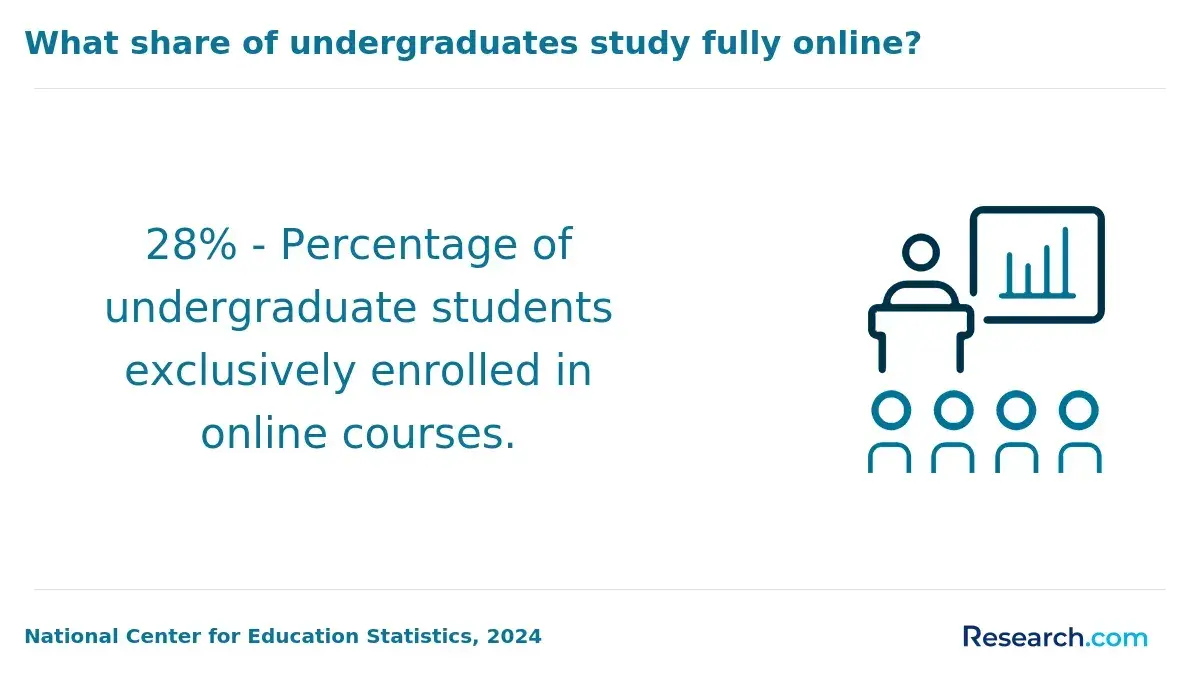
How do online stackable credential programs compare to campus options for flexibility and support?
Online stackable programs can offer asynchronous lessons, multiple start dates, and the ability to progress one credential at a time. They are often a strong fit for experienced adults who can document prior learning and manage independent study. Campus or hybrid formats may be better when the field depends on equipment, live skills practice, clinical placements, studio critique, or immediate tutoring.
This comparison highlights the practical trade-off between flexibility and hands-on support.
| Factor | Online-first program | Campus or hybrid program |
| Scheduling | Often asynchronous, with fixed deadlines | Scheduled meetings and labs |
| Best for | Administrative, business, IT, and theory-heavy learning | Trades, clinical skills, and equipment-intensive training |
| Prior-learning support | Portfolio review may be conducted remotely | May offer in-person advising and demonstrations |
| Networking | Virtual events and employer connections vary | More direct access to local employers and facilities |
| Main risk | Assuming online means self-paced or license-eligible | Less scheduling flexibility and possible commuting costs |
Do not confuse online with self-paced. Many online college courses have weekly deadlines, group assignments, proctored exams, and required live sessions. Learners whose primary concern is pacing can compare the cheapest self-paced online college options after confirming that self-paced courses fit their transfer and licensure plan.
What accreditation and quality standards should online stackable credential programs meet?
For college credit to carry weight, prioritize an institution accredited by an agency recognized by the U.S. Department of Education or the Council for Higher Education Accreditation. Institutional accreditation is especially important if you may seek federal student aid, transfer credits, or continue into a degree. Programmatic accreditation can be equally important in regulated fields such as nursing, medical assisting, and certain technical programs.
Check these quality signals before paying an application fee:
- The school's institutional accreditation and the accreditor's current recognition status
- Whether the certificate is credit-bearing and the exact number of semester or quarter credits awarded
- A published articulation agreement or degree map rather than a verbal promise that courses "may transfer"
- State approval, clinical eligibility, or programmatic accreditation required for a target license or certification exam
- Faculty access, proctoring rules, technical support, student complaint procedures, and withdrawal policies
A red flag is a provider that markets "accreditation" without naming an accreditor, or uses vague language about transferable credit. Another is a career-training company presenting a completion certificate as though it were college credit. These options can still teach useful skills, but their value and transferability should be evaluated as noncredit training.
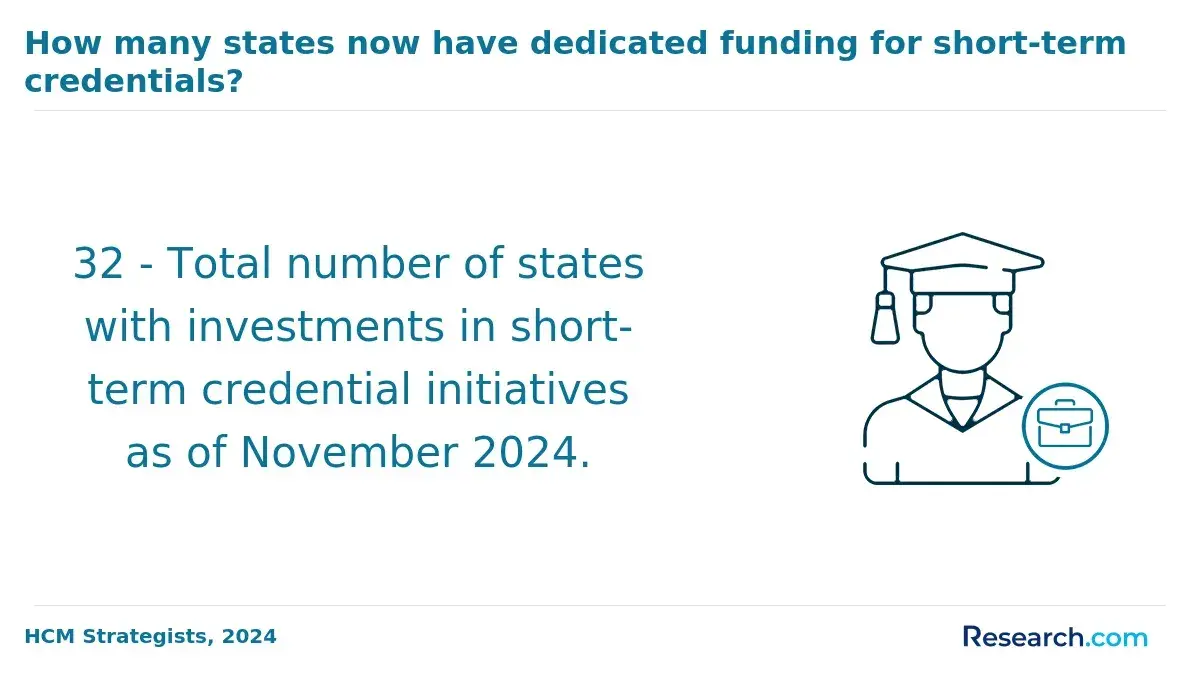
What admission requirements and prior learning assessments apply to work-experience credit?
Admission requirements depend on the credential and provider. A community-college certificate may require an application, identity records, placement measures, and a high school credential or equivalent. A noncredit professional certificate may require only registration. Selective healthcare or clinical programs can add prerequisite courses, background checks, drug screening, immunizations, CPR training, and minimum grades.
Prior-learning credit typically requires evidence that matches a particular course. Schools may charge an assessment fee, limit how many credits can be awarded, and exclude some core courses. The comparison below shows why applicants should distinguish academic admission from credit evaluation.
| Requirement area | What to verify | Why it matters |
| General admission | Application, education history, placement, and prerequisites | Determines eligibility to enroll |
| Portfolio review | Required evidence, rubric, fee, and faculty evaluator | Determines whether work experience earns course credit |
| External learning | Accepted licenses, certifications, military training, or exams | May be faster than taking a duplicate course |
| Credit limits | Maximum PLA credit and residency minimum | Limits how much time and tuition can actually be saved |
| Transfer policy | Receiving school's written evaluation process | Prevents assuming credits will move later |
Prepare a concise evidence file with job descriptions, supervisor verification, training certificates, work products with confidential information removed, and current licenses. Experience alone is strongest when it can be connected to measurable learning outcomes.
How long do online stackable credential programs take and what do they cost?
Completion time ranges from a few months for a focused certificate to roughly two years for an associate degree, depending on credits, term length, course load, prior-learning awards, and required fieldwork. A stackable design can let you pause after a milestone, but it does not guarantee a faster finish if required courses are offered only in sequence or clinical placements are limited.
Total cost is more than tuition. Compare the full cost categories below because low advertised tuition can exclude mandatory expenses.
| Cost factor | What it may include | Decision impact |
| Tuition and fees | Per-credit tuition, technology, registration, and graduation fees | Compare the published total for required credits |
| Prior-learning assessment | Portfolio review, challenge exam, or transcript evaluation fees | Compare fee against the tuition avoided |
| Required materials | Books, software, tools, uniforms, kits, and exam proctoring | Can materially change an online program's total cost |
| Licensure or certification | Exam, application, background-check, and renewal charges | Necessary for some regulated career paths |
| Field requirements | Travel, clinical attire, insurance, and placement-related expenses | Often unavoidable in healthcare and trades |
Ask about federal aid only for eligible programs at eligible institutions; many short or noncredit credentials do not qualify. Employer tuition assistance, workforce grants, veterans' benefits, and payment plans may be relevant, but availability varies. If cost is central, compare credit price, assessment fees, and likely transfer value rather than choosing solely by the shortest advertised timeline.
What courses, projects, and assessments are typical in stackable credential curricula?
Curricula should progress from foundational knowledge to job-relevant application. In a stackable academic pathway, introductory courses may count toward the first certificate and reappear as required courses in the associate degree plan. Programs aimed at working adults often use competency-based projects that allow students to demonstrate existing knowledge while still meeting course standards.
Typical learning and assessment components include:
- Foundational courses in communication, mathematics, digital literacy, ethics, and field terminology
- Technical courses aligned with the first credential, such as coding, electrical systems, business operations, or legal procedure
- Applied projects, case studies, simulations, lab work, or portfolio artifacts
- Quizzes, proctored exams, skills demonstrations, and instructor feedback
- Capstone, practicum, internship, clinical, or work-based learning requirements when the field requires supervised practice
Review actual course descriptions, not just program titles. In design and technology, a project portfolio may matter more to employers than the credential name. In licensed healthcare and skilled-trade fields, competency validation and supervised hours may be nonnegotiable even for applicants with extensive experience.
What careers, industries, and roles do stackable credentials with experience credit lead to?
Stackable credentials can support entry, advancement, or career transition, but outcomes depend on the occupation's formal requirements and the learner's existing experience. They are especially practical in fields where employers value demonstrable technical skills and where a shorter credential can lead into a larger academic award.
This overview connects common pathways with realistic role types and limits.
| Pathway area | Possible roles | Important limitation |
| IT and business | Help desk support, junior data support, bookkeeping, operations coordination | Employers may also expect a portfolio, software proficiency, or industry certification |
| Skilled trades | Technician helper, apprentice, maintenance technician, service representative | State licensing, union rules, apprenticeship, and hands-on training can apply |
| Healthcare administration | Medical records, billing, scheduling, patient-access support | Clinical occupations generally have additional education and licensure requirements |
| Public safety and legal support | Corrections support, dispatch-related roles, records, legal assistant support | Agency hiring standards and background requirements vary |
| Creative technology | Junior designer, content production, web-content support | Hiring commonly depends on portfolio quality and current software skills |
Automation and AI are changing task expectations in administrative, technical, and creative work. Choose programs that teach judgment, communication, data handling, documentation, and tool-specific workflows - not only a single platform. For broader degree planning, reviewing the most profitable majors can help place a short credential within a longer-term education strategy.
What salary ranges and job outlook can graduates expect from these credentials?
Salary information should be treated as occupational context, not as a promise from any certificate. Pay varies by location, employer, shift, union status, experience, degree level, and licensure. The BLS Occupational Outlook Handbook reports national median pay and projected employment change; those figures describe workers in an occupation, many of whom may hold education beyond a short credential.
The examples below illustrate why readers should match the credential to the entry requirements of the role rather than choosing based only on a salary headline.
| Occupation | 2024 U.S. median pay | Projected change, 2024-2034 | Credential context |
| Medical records specialists | $50,250 | 7% | A certificate or associate pathway may be relevant; employer requirements vary. |
| Heating, air conditioning, and refrigeration mechanics and installers | $59,810 | 8% | Training, apprenticeship, and local licensing requirements may apply. |
| Paralegals and legal assistants | $61,010 | 0% | Employers may prefer an associate degree or bachelor's degree plus legal studies preparation. |
| Web developers and digital designers | $95,380 | 7% | Education requirements vary; demonstrable skills and portfolios are important. |
These BLS figures are national medians, not starting pay and not certificate-graduate salaries. Compare local job postings with the program's curriculum, then identify the minimum education, license, certification, and experience commonly requested. Learners seeking a quick, exam-oriented option can also evaluate easy certifications to get online, while remembering that ease does not establish employer demand or licensure eligibility.
Other Things You Should Know About
Usually no. Colleges typically require a portfolio, exam, official training record, military transcript, or approved certification showing that your knowledge matches a specific course. Ask for the written prior-learning assessment policy before enrolling.
No. Credits may stack within the same institution but transfer differently elsewhere. Regional or institutional accreditation, course equivalencies, grades, residency rules, and the receiving college's policies all affect transfer decisions.
Only if the program meets the licensing board's education and clinical or practical-training requirements. Many fully online certificates do not meet requirements for occupations that require supervised clinical work, labs, or apprenticeships.
A certificate is often better for a focused skill, a quick entry point, or testing a new field. An associate degree may be better when employers prefer broader education, when licensure requires it, or when you want a more reliable bridge to a bachelor's degree.
References
- USHE initiative helps students earn meaningful credentials on their way to a degree - Utah System of Higher Education https://ushe.edu/stackable-credentials-help-students-earn-credentials-on-their-way-to-a-degree/
- Stackable Certificates & Credentials - Complete College America https://completecollege.org/our-approach/structure/stackable-certificates-credentials/
- What are Stackable Credentials? https://assess.com/stackable-credentials/
- Stackable Credentials: Living Links Between Learning and Work https://www.cael.org/resouces/pathways-blog/stackable-credentials-living-links-between-learning-and-work
- What Are Stackable Credentials and Why Do They Matter? https://www.pltw.org/blog/what-are-stackable-credentials