2027 Best Online Career Training Programs With 2.5 GPA Admission

Co-Founder and Chief Data Scientist
A 2.5 GPA can narrow some college options, but it does not prevent you from building job-ready skills online. This guide is for applicants seeking practical career training, certificates, diplomas, or associate-level pathways with more flexible admission practices. The U.S. Bureau of Labor Statistics projects healthcare occupations to grow 8% from 2024 to 2034, faster than the average for all occupations.
Learn which programs may review applicants holistically, what credentials lead to realistic entry-level opportunities, and how to avoid paying for training that does not fit your goal.
Key Things You Should Know
- A 2.5 GPA is often acceptable for open-admission, noncredit, diploma, and some certificate programs, but selective healthcare and licensure tracks may impose higher prerequisite-grade standards.
- Online career training can be flexible, but hands-on fields such as medical assisting, HVAC, electrical work, and dental assisting usually require in-person labs, clinicals, externships, or supervised practice.
- Compare total cost, institutional accreditation, state licensing rules, certification-exam eligibility, and employer recognition before enrolling; a low GPA admission decision alone does not establish career eligibility.
Top 10 Best Online Career Training Programs With 2.5 GPA Admission
Popular Trade School Programs
Online trade training commonly covers HVAC fundamentals, electrical theory, welding concepts, construction management, appliance repair, and CAD drafting. Programs may award a noncredit diploma, a school certificate, or college credit; these are not the same as a state license or industry certification. A 2.5 GPA may be workable for introductory or open-admission options, while apprenticeships and credit-bearing associate programs can add placement tests or prerequisite requirements. Choose hybrid training when the occupation requires lab practice, tools, safety assessment, or supervised fieldwork.
Healthcare Programs
Possible online or hybrid options include medical billing and coding certificates, pharmacy technician training, medical assisting, dental assisting, health information support, and patient care technician programs. Fully online coursework is most realistic for administrative roles; patient-facing programs require clinical placement and may have vaccination, background-check, drug-screening, and minimum-course-grade rules. A school may admit a 2.5 GPA applicant while a competitive clinical cohort uses separate selection criteria. Confirm whether the curriculum meets eligibility requirements for a certification examination and your state's rules before paying a deposit.
Criminal Justice / Law Programs
Online legal studies, paralegal studies, criminal justice, corrections, security management, and court-reporting support programs can suit learners seeking legal-services or public-safety-adjacent work. Certificates may teach legal research, writing, procedure, ethics, and records management, but they do not authorize someone to practice law. Entry standards are often more flexible than those for law school, though employers may prefer an associate or bachelor's degree for some roles. Check whether a paralegal program has appropriate institutional recognition and whether local employers require particular software, internships, or credentials.
Arts & Design Programs
Graphic design, web design, UX fundamentals, digital marketing design, photography, animation, and video-editing certificates often emphasize a portfolio more than GPA. A short online program can help beginners learn software and produce work samples, but it may not replace a degree for roles requiring broad design theory or advanced technical production. Admission may be open or based on a high school credential rather than a 2.5 GPA. Before enrolling, review the project list, software costs, instructor feedback, portfolio ownership, and whether the curriculum reflects current employer tools.
What online career training programs accept a 2.5 GPA?
Online career training programs that may accept a 2.5 GPA generally fall into three categories: open-admission college certificates, career-school diplomas, and holistic-review programs. "Accept" can mean the GPA meets a published minimum, the program has no stated GPA cutoff, or the school evaluates coursework and readiness beyond the cumulative GPA. It does not mean every specialization has the same standard.
This comparison shows why applicants should identify the credential type before assuming that a GPA rule applies.
| Program type | Typical admission approach | What to verify |
| Noncredit career training | Often requires a diploma or equivalent rather than a college GPA | Employer recognition, refund terms, exam eligibility |
| Credit-bearing certificate | May use open admission or a minimum GPA | Prerequisites, transferability, financial-aid eligibility |
| Associate degree pathway | May admit broadly but restrict high-demand cohorts | Program-level selection and clinical or lab requirements |
| Professional certificate course | Usually skill- or experience-based, not GPA-based | Whether it is academic credit, a certificate, or preparation for certification |
Ask admissions to state in writing whether the 2.5 GPA applies to initial enrollment, the specific program, and progression into required clinicals or capstones. If your transcript has weak grades in math, science, English, or technology, ask whether placement testing, a preparatory course, or recent work experience can strengthen your application.
Which accredited schools offer online career training with low GPA admission?
Accredited community colleges, nonprofit online universities, and distance-education institutions may offer flexible-entry career certificates, but policies vary by program and can change. A college can be institutionally accredited while a particular nondegree course is noncredit, and a school's overall admission policy may not apply to a selective nursing, radiography, or clinical cohort.
Start with schools that publish their catalog, credential level, tuition, and program-specific requirements. Applicants who want mission-driven institutions can also compare non profit schools and then confirm the admission rule directly with the department.
Use these checks before treating a school as a viable 2.5 GPA option:
- Confirm institutional accreditation through the accreditor listed by the school and verify that the credential is issued by the accredited institution.
- Read the program page and catalog for separate GPA, prerequisite, placement-test, background-check, and residency requirements.
- For licensed occupations, verify that online coursework, clinical placement, and curriculum meet the requirements of the licensing board in the state where you intend to work.
- Request the full cost of tuition, technology, books, tools, exams, uniforms, insurance, and required travel before enrolling.
What career training fields are easiest to enter with a 2.5 GPA?
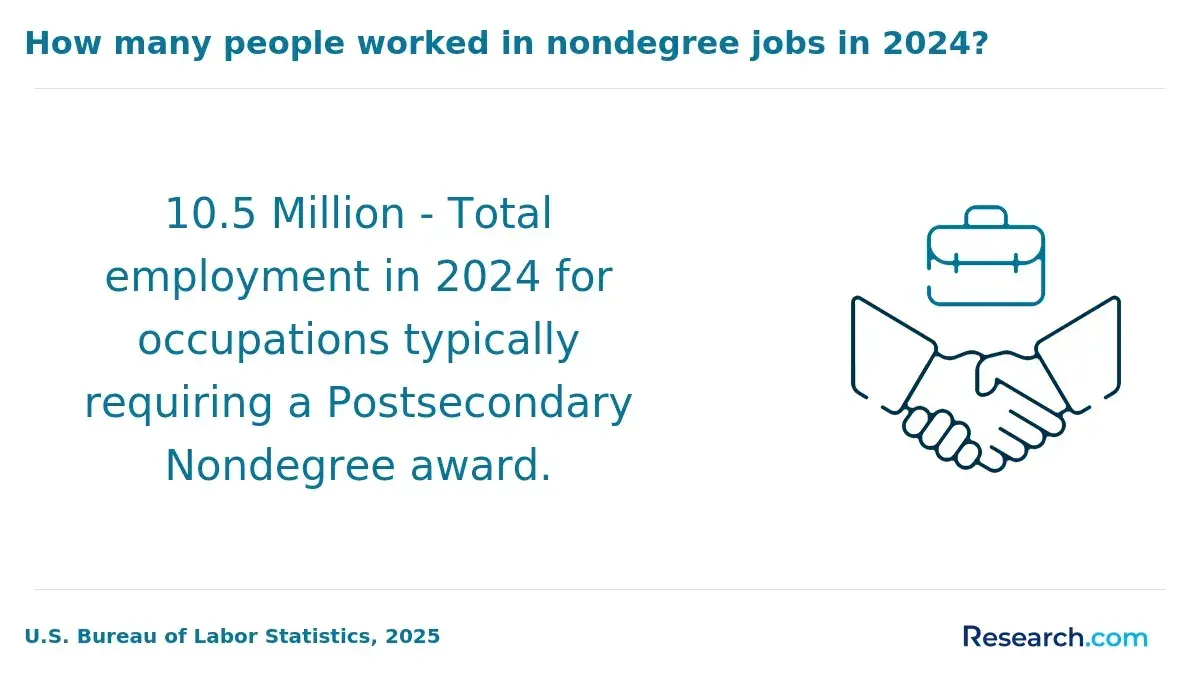
The easiest fields to enter with a 2.5 GPA are usually those that prioritize basic readiness, a portfolio, a short skills assessment, or a high school diploma over competitive academic screening. Administrative healthcare, digital design, IT support, bookkeeping, customer support, logistics, and entry-level trades theory are often more accessible than limited-seat clinical programs.
Short training can be a sensible first move when you need a quick skills signal, but it should match a real local job target. Review 6-month certificate programs that pay well alongside local job postings to see whether employers request the credential, a separate certification, experience, or an associate degree.
Accessibility should not be confused with low standards. Medical, electrical, and legal-support work can still require accurate documentation, safety knowledge, confidentiality, technical ability, and reliable communication. If you struggled academically because of schedule, caregiving, or a prior school environment, a self-paced program may help; if you need frequent feedback or equipment access, a structured hybrid program may be the better investment.
How do online and campus career training programs compare?
Online and campus career training differ most in how they deliver practice, support, and scheduling - not necessarily in the name of the credential. The best format depends on whether your target role can be learned through software, simulations, and projects or requires equipment, patient contact, and supervised performance.
The comparison below helps separate convenience from career fit.
| Factor | Online or hybrid training | Campus-based training |
| Schedule | Often flexible for lectures and assignments | Usually fixed meeting times |
| Hands-on practice | May require local labs, externships, or intensives | Typically integrated into scheduled labs |
| Support | Requires proactive use of virtual tutoring and advising | Offers easier in-person access to instructors and equipment |
| Best fit | Administrative, digital, theory-heavy, and working-adult pathways | Equipment-heavy, clinical, and highly supervised skill development |
An online credential can be credible when the provider is legitimate, outcomes are transparent, and required practice is properly supervised. However, avoid programs that promise online-only preparation for a role your state requires to include campus labs or clinical hours. If you eventually need a broader degree, compare whether 2 year accelerated bachelor degrees online align with your completed credits and long-term career plan.
What admission requirements matter besides GPA?
Besides GPA, schools and training providers may evaluate whether you can begin and complete the specific program safely and successfully. Requirements are especially important in healthcare, trades, and programs with externships because a provider may need to place you with a clinical or employer partner.
Common requirements that can affect admission or progression include:
- A high school diploma, GED, or equivalent documentation.
- Placement testing or proof of recent coursework in English, math, science, or computer skills.
- Prerequisite courses with a minimum grade, particularly for clinical healthcare tracks.
- A background check, drug screen, immunizations, physical exam, CPR training, or health insurance for clinical placement.
- Technology access, identity verification, attendance at live sessions, and the ability to complete an externship or lab requirement.
- A portfolio, interview, entrance assessment, or work experience for design and advanced technical programs.
A common mistake is focusing on the initial application and overlooking continuation requirements. Ask, "What could prevent me from entering the clinical, externship, apprenticeship, or capstone portion after I enroll?" Obtain the answer before committing to financing.
How long do online career training programs take?
Completion time depends on the credential, your pace, required prerequisites, and whether a placement site is available. A noncredit online course may take weeks, while a career diploma can take several months; credit-bearing certificates commonly take about one academic year when studied part time or full time. Associate degrees generally require more time because they include general education and program coursework.
Accelerated schedules are useful only when you have enough weekly time for assignments, practice, and required placement hours. Programs marketed as fast may still take longer if clinical rotations, licensing paperwork, failed prerequisites, or employer-site availability delay completion.
Before choosing an accelerated format, compare the published calendar with your work and family responsibilities. A fast credential may be appropriate for an entry-level skill upgrade, while a longer credit-bearing option may make more sense if you expect to stack courses toward an associate or bachelor's degree.
How much do online career training programs cost?
Cost varies more by provider and delivery model than by your GPA. Public community colleges may offer lower tuition for residents, while private career schools may bundle digital content, coaching, or exam preparation into a higher advertised price. The National Center for Education Statistics reported that average undergraduate tuition and fees at public 2-year institutions were $4,050 for in-state students in 2022-23; that is a sector-wide reference point, not a quote for any online certificate.
Compare the full price rather than the monthly payment. Your estimate should include:
- Tuition and mandatory institutional fees.
- Books, software subscriptions, laptops, tools, uniforms, and safety equipment.
- Certification-exam, licensing, background-check, immunization, and fingerprinting costs when applicable.
- Travel, lodging, childcare, or lost work time for labs, intensives, clinicals, and externships.
- Interest and total repayment if you use private financing.
Credit-bearing programs at eligible institutions may qualify for federal student aid if the student and program meet applicable rules; many noncredit courses do not. Ask about grants, workforce-agency funding, employer tuition assistance, payment plans, cancellation deadlines, and whether unused course modules are refundable. Never assume a low upfront payment means the lowest total cost.
What jobs can you get after career training?
Career training can support entry-level employment, but employers hire for a combination of skills, experience, legal eligibility, and local demand. A certificate may help you pursue roles such as medical records specialist, billing support worker, pharmacy technician, HVAC helper, electrical apprentice, CAD drafter, junior graphic designer, legal assistant, or customer-support specialist. Some roles require a separate certification, apprenticeship, license, or degree.
Build a job-search plan while studying. Save job descriptions from employers in your area, identify recurring software or certification requests, and use projects, externships, volunteer work, or supervised practice to demonstrate competence. For long-term advancement into leadership, teaching, research, or specialized practice, a short credential may be a starting point rather than the final credential; compare affordable pathways such as cheap doctoral programs only when a doctoral degree is genuinely required for your eventual profession.
Be wary of providers that advertise a credential as a guaranteed job. Ask for the job titles the curriculum was designed for, whether career services are included, and whether reported outcomes distinguish completers from all enrolled students.
What salaries and job outlooks are typical after training?
Occupational data can help you assess demand, but it does not show what any individual certificate graduate will earn. The figures below are U.S. Bureau of Labor Statistics occupational medians from May 2024 and projected employment change from 2024 to 2034. They describe workers in each occupation at all experience levels and education backgrounds.
| Occupation | Median annual pay | Projected growth | Training caution |
| Medical assistants | $44,200 | 4% | Employers may prefer recognized training or certification; scope rules vary. |
| Paralegals and legal assistants | $61,010 | 0% | A certificate may be useful, but many employers prefer an associate or bachelor's degree. |
| Graphic designers | $61,300 | 2% | Portfolio quality and software skills strongly affect entry opportunities. |
| Heating, air conditioning, and refrigeration mechanics and installers | $59,810 | 8% | Hands-on training, apprenticeship, and refrigerant-related requirements may apply. |
| Electricians | $62,350 | 9% | Most enter through an apprenticeship; licensing is state or local. |
Use pay data as a market benchmark, not a promise. For example, HVAC and electrical occupations show stronger projected growth than paralegal work, but they also require practical training and may involve physical demands, variable schedules, or multi-year apprenticeship progression. Compare the job's entry barrier, local openings, and total training cost with your own timeline.
Other Things You Should Know About
Often, yes. Many open-admission, noncredit, diploma, and introductory certificate programs may accept a 2.5 GPA or may not use GPA at all. Confirm whether your chosen specialization has separate prerequisite, placement-test, or cohort-selection requirements.
Not necessarily. It may be enough for general admission, but limited-seat programs such as nursing, radiography, and some clinical tracks frequently rank applicants using prerequisite grades, entrance exams, and other criteria. Administrative healthcare programs may have fewer barriers.
Some are offered by institutionally accredited colleges, while others are noncredit training products or provider-issued certificates. Check the school's accreditation, whether the credential carries academic credit, and whether the curriculum meets any certification or licensure requirements relevant to your target job.
Choose a certificate when you need targeted, faster training for a specific entry-level skill and the employer demand is clear. Choose an associate degree when the occupation commonly expects broader coursework, you want transferable credit, or you may continue toward a bachelor's degree.
References
- Ed2Go Online Career Training Courses https://www.tsc.edu/academics-and-career-programs/ed2go-online-career-training-courses/
- Thanks for reaching out! https://careertraining.shastacollege.edu/training-programs/career-counselor/
- Student Training & Employment Program (STEP) - Foundation for California Community Colleges https://foundationccc.org/our-work/workforce-development/increasing-opportunities-for-apprenticeships-internships-and-skill-building/student-training-employment-program-step/
- Financial Aid for Trade Schools - Online or On-Campus Programs - PCI https://www.pcitraining.edu/admissions/financial-aid
- Indiana Launches Virtual Career Coaching Program for Workers in Transition https://www.insidetrack.org/news/indiana-launches-virtual-career-coaching-program-for-workers-in-transition
- Improving College Access and Success through Dual Enrollment - Public Policy Institute of California https://www.ppic.org/publication/improving-college-access-and-success-through-dual-enrollment/
- Career and College Prep - North Carolina Virtual Academy https://ncva.k12.com/academics/career-college-prep/
- Career Outcome Rate - Blackburn College https://blackburn.edu/about/policies-information/career-outcome-rate/
- Best Online Degrees for Working Adults in 2026 https://www.straighterline.com/blog/degreecompletion-best-online-degrees-for-working-adults-in-2026
- High-Paying, Fast-Growing Jobs Without a Degree https://www.rockwellinstitute.com/blog/jobs-dont-require-degree/