2027 Best Certificate Programs With Credit for Military Experience

Co-Founder and Chief Data Scientist
Military training can shorten a civilian certificate, but only when a school maps your Joint Services Transcript, ACE recommendations, and occupational experience to its own requirements. This matters because the U.S. Bureau of Labor Statistics projects electrician employment to grow 6% from 2023 to 2033, faster than the average for all occupations.
This guide helps veterans, service members, and military spouses compare credit-bearing certificates, evaluate career fit, verify approvals, and avoid paying for coursework they may already have mastered.
Key Things You Should Know
- Military credit is not automatic. Schools decide whether ACE-recommended credit, a Joint Services Transcript, or military occupational training fits a specific certificate's learning outcomes.
- Credit-bearing certificates in skilled trades, health information, cybersecurity, logistics, and public safety can be faster than starting from zero, but clinical and state-licensed programs may still require in-person coursework, labs, or supervised practice.
- Compare total net cost, not tuition alone. Confirm GI Bill approval, required tools and exam fees, transfer-credit limits, and whether the certificate leads to a recognized certification, license pathway, or stackable degree.
Top 10 Best Certificate Programs With Credit for Military Experience
Popular Trade School Programs
Trade certificates can suit veterans whose maintenance, engineering, construction, transportation, or equipment experience aligns with civilian coursework. Common options include electrical technology, HVAC/R, welding, industrial maintenance, automotive service, diesel technology, and construction management certificates.
A school may award elective or technical credit for documented training, but hands-on lab requirements usually remain. Choose a program that prepares for the relevant state license, apprenticeship, or industry exam; a short certificate alone does not automatically authorize electrical, plumbing, or HVAC work where licensing rules apply.
Healthcare Programs
Healthcare certificates may recognize military medical, administrative, pharmacy, or logistics experience, especially in medical billing and coding, health information technology, pharmacy technology, sterile processing, emergency medical services, and medical assisting. Clinical credentials are more regulated than many other certificates.
A veteran medic may receive prior-learning credit, yet still need anatomy, supervised clinical hours, background checks, immunizations, and state-specific approvals. Confirm whether the program prepares graduates for a voluntary certification exam or a required license before assuming military healthcare experience transfers directly.
Criminal Justice / Law Programs
Certificates in criminal justice, homeland security, emergency management, paralegal studies, corrections, and cybersecurity can build on military police, intelligence, security, or incident-response experience. Credit may apply to electives, leadership, or introductory public-safety courses.
However, police officer eligibility, peace-officer academy requirements, bar rules, and security-clearance decisions are controlled by employers or government agencies, not by a certificate alone. For paralegal work, prioritize programs with clear employer recognition and instruction in legal research, writing, ethics, and jurisdiction-specific procedure.
Arts & Design Programs
Veterans with public affairs, audiovisual, mapping, technical illustration, web, or communications backgrounds may consider certificates in graphic design, digital media, photography, UX design, animation, or web development. Prior military work can support portfolio development and sometimes elective credit, although schools commonly require current software-based projects.
Select a credit-bearing certificate when future degree transfer matters; select a focused noncredit portfolio program when immediate skill-building matters more. Employers generally evaluate creative work through portfolios, practical skills, and role-specific experience rather than the certificate title alone.
What are certificate programs with credit for military experience and how do they work?
A certificate program with credit for military experience is usually a short, structured college program that awards an academic certificate after required courses are completed. It is different from a professional certification, which is typically granted by an industry body after an exam, verified experience, or both. Some workforce providers also offer noncredit certificates; these may teach useful skills but normally do not accept academic transfer credit or create college credit.
At credit-bearing institutions, the process usually begins with an official military transcript. The Joint Services Transcript documents training for most Army, Marine Corps, Navy, and Coast Guard personnel.
Air Force personnel generally use the Community College of the Air Force transcript. Schools review these records alongside ACE credit recommendations, course descriptions, dates of training, and their own residency and program rules.
The comparison below shows why the credential type matters before applying.
| Option | What military credit may do | Best fit | Key limitation |
| College certificate | May replace electives or required courses | Students seeking academic credit or a stackable pathway | School controls equivalencies and residency rules |
| Noncredit workforce certificate | May recognize experience through placement or waiver | Fast skill refreshers and employer-focused training | Usually does not transfer as college credit |
| Industry certification preparation | May reduce study time through prior knowledge | Workers pursuing an exam-based credential | Training completion does not guarantee exam eligibility or passing |
Ask for a written transfer evaluation before enrolling. Verbal estimates of "up to" a certain number of credits are not a guarantee that those credits will apply to your chosen certificate.
How can veterans compare online vs campus certificate programs that honor military credits?
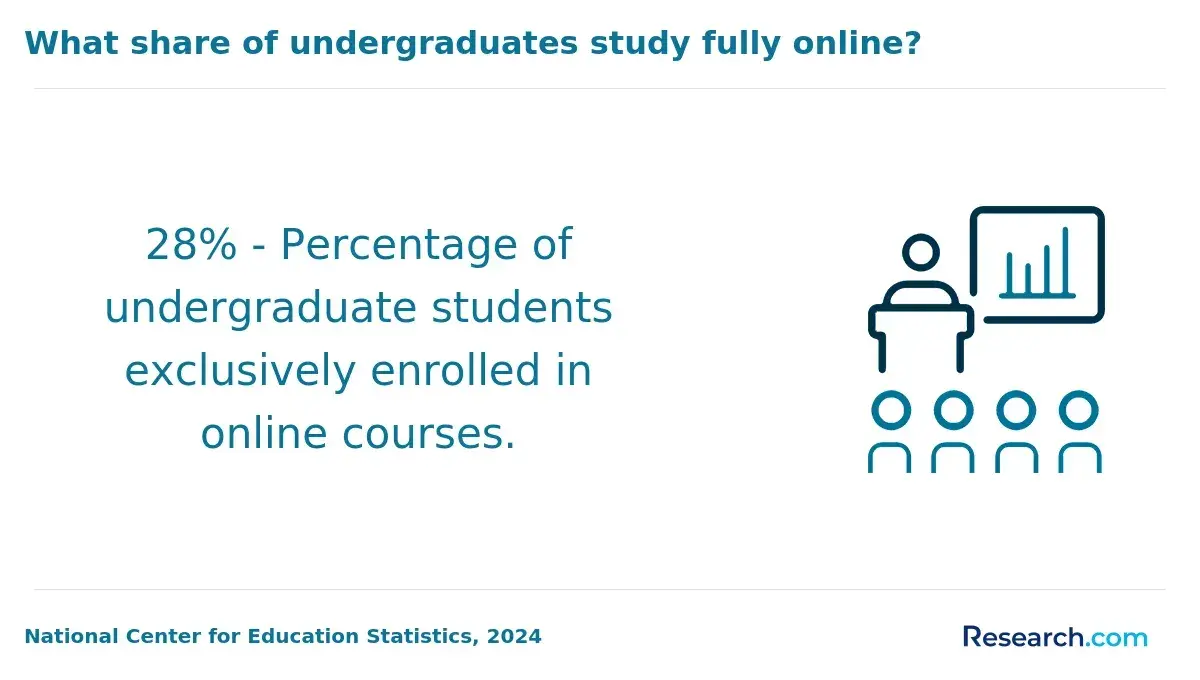
Online and campus certificates can both honor military learning, but delivery format changes the practical value of the program. Online study can work well for logistics, IT support, business, health information, and some criminal justice coursework.
Campus or hybrid delivery is often necessary for welding, electrical labs, clinical training, and programs requiring equipment, simulations, or supervised fieldwork.
Use this comparison to match format to the training you actually need rather than selecting online delivery solely for convenience.
| Decision factor | Online certificate | Campus or hybrid certificate |
| Best for | Theory-heavy, computer-based, or administrative fields | Hands-on trades, labs, clinical practice, and equipment training |
| Military-credit review | Often completed electronically before registration | May include department review or skills demonstration |
| Schedule | More flexible, but may have weekly deadlines | Set lab and meeting times; potentially stronger structure |
| Hidden consideration | Proctoring, software, reliable internet, and local placement needs | Commuting, tools, uniforms, parking, and fixed attendance |
For veterans who expect to continue beyond a certificate, compare whether the institution offers 1 year master's programs in a related field later. That option is relevant only after meeting the bachelor's-degree and admission requirements of a graduate program; a certificate by itself is not normally a substitute.
Before committing, request the course sequence after military credit is posted. A program advertised as fully online may still require local clinical placement, a brief residency, or a proctored skills assessment.
What accreditation and licensing requirements should military students verify before enrolling?
Institutional accreditation, programmatic accreditation, state authorization, and licensing eligibility are separate checks. For a credit-bearing college certificate, verify that the institution is accredited by a recognized institutional accreditor.
For regulated fields, also verify the specialized approval that applies to the program, such as nursing, EMS, radiologic technology, aviation maintenance, or a state electrical-board pathway.
The most important questions to ask depend on the intended occupation.
- Is the school approved to enroll and certify VA education-benefit students for this exact location and program?
- Does the certificate meet the educational requirements for the state license or certification exam I plan to pursue?
- Are clinical, practicum, lab, internship, or apprenticeship hours included, and can they be completed where I live?
- Will military credit reduce required courses without disqualifying me from programmatic accreditation, clinical eligibility, or exam requirements?
A common mistake is assuming institutional accreditation makes every program license-qualifying. It does not. Licensing boards and certifying organizations set their own eligibility rules, which can vary by state and change over time. Obtain confirmation from the relevant board or employer before using GI Bill benefits for a program built around a specific license.
Which certificate fields most effectively translate military experience into civilian job roles?
The strongest military-to-civilian certificate match is usually based on demonstrated competencies, not the job title alone.
Technical maintenance, information systems, supply operations, medical administration, emergency response, intelligence analysis, and leadership experience can translate well when the civilian program identifies comparable outcomes and helps students document them for employers.
The following fields often offer a practical connection between military experience and civilian training, although credit awards vary by institution.
| Certificate field | Military experience that may be relevant | Civilian role examples | Important qualification check |
| Information technology and cybersecurity | Networks, communications, cyber operations, help desk, intelligence systems | IT support specialist, network technician, security analyst trainee | Employers may also expect vendor certifications and current technical skills |
| Logistics and supply chain | Transportation, inventory, procurement, fleet, warehouse operations | Logistics coordinator, dispatcher, inventory specialist | Confirm software and civilian compliance training |
| Industrial technology | Mechanical, electrical, aviation, power-generation, equipment maintenance | Maintenance technician, quality technician, field-service trainee | Check licensing, union, or manufacturer requirements |
| Health information | Medical administration, records, pharmacy, patient support | Medical records specialist, billing support, pharmacy technician trainee | Clinical roles may require separate credentials or state approval |
For context, the BLS reports that information security analyst employment is projected to grow 33% from 2023 to 2033. That outlook supports interest in cybersecurity, but it does not mean an entry-level certificate alone qualifies someone for analyst roles, which often require experience, a degree, certifications, or all three.
How do schools evaluate military training and ACE credits for certificate program admission?
Schools generally evaluate military training after admission or during application review, but procedures differ. ACE recommendations are advisory evaluations of military learning; they are not transfer-credit guarantees.
The receiving school decides whether a recommendation matches its curriculum, how many credits it will accept, and whether those credits meet a required course, an elective, or only general graduation credit.
Take these steps early so the credit review supports your intended certificate instead of becoming an afterthought.
- Order your official Joint Services Transcript or Community College of the Air Force transcript and check it for accuracy.
- Apply to the specific certificate rather than assuming a general admission evaluation will cover every program requirement.
- Submit course descriptions, training records, licenses, and portfolio evidence when the school permits prior-learning assessment.
- Request a written evaluation showing accepted credits, waived requirements, remaining courses, and the expected completion term.
- Ask whether accepted military credit will transfer into an associate or bachelor's degree if you later continue.
Programs with external accreditation may limit substitutions in technical, clinical, or capstone courses. That restriction can be appropriate: it protects required hands-on training and ensures students meet current industry or regulatory standards.
How long do certificate programs using military credit take and what do they cost?
Completion time depends less on the certificate label than on required credits left after evaluation, course scheduling, prerequisite sequences, and labs or clinicals. A short workforce certificate may take months, while a credit-bearing certificate with sequential technical courses can take a year or longer. Military credit can reduce the schedule, but it may not eliminate residency, capstone, practicum, or minimum-credit requirements.
Cost should be evaluated as a total educational expense, not merely posted tuition. The College Board's 2024-25 average published tuition and fees at public two-year colleges was $4,050 for in-district students. Your actual cost can be substantially different because of residency status, military tuition policies, books, tools, uniforms, exam fees, transportation, and benefit eligibility.
Compare these cost questions before using benefits or personal savings.
- How many required credits remain after the written military-credit evaluation?
- Does the published tuition apply to in-state, online, military-affiliated, or out-of-district students?
- Which charges are mandatory: labs, kits, equipment, background checks, clinical screenings, licensing exams, or certification exams?
- Will VA education benefits, Federal Tuition Assistance, scholarships, employer assistance, or payment plans apply to this exact program?
If your long-term target requires graduate education, compare certificate spending against the eventual degree path. Readers considering an advanced degree can also review the most affordable masters degrees online, while recognizing that graduate programs have separate tuition, admission, and prerequisite requirements.
What courses and competencies are typically included in certificates built on military experience?
Certificates built on military experience typically combine prior learning with civilian standards that employers, licensing bodies, and transfer institutions expect. The goal is not simply to repeat service training; it is to document current, civilian-recognized competencies and address gaps in terminology, regulations, technology, and workplace practice.
Depending on the field, coursework may include the following components.
- Technical foundations, such as electrical theory, networking, equipment diagnostics, coding systems, or design software.
- Civilian regulations and safety practices, including OSHA concepts, privacy rules, documentation, ethics, quality control, or state code requirements.
- Communication and employability skills, such as report writing, customer interaction, project coordination, and translating military accomplishments into civilian language.
- Applied assessment through labs, simulations, portfolios, internships, clinical experiences, or capstone projects.
- Preparation for a separate certification or licensing examination when the program explicitly identifies one.
Review the course list against job postings in your target area. If employers request software, licenses, portfolios, or certifications that the certificate does not address, plan how you will obtain those qualifications rather than assuming prior military experience fills every gap.
What careers, salaries, and advancement options follow certificates with military credit?
A military-credit certificate can help signal a focused transition into civilian work, especially when paired with a recognizable industry certification, portfolio, apprenticeship, or relevant experience.
It is not a universal replacement for an associate or bachelor's degree. Advancement potential depends on occupation, employer practices, security-clearance eligibility, licensing rules, and the depth of the credential.
The BLS reported a 2023 median annual wage of $60,810 for computer support specialists and $61,550 for medical records specialists. These are occupation-wide figures, not expected salaries for certificate completers; education and experience requirements differ among employers and specialties.
Think about the certificate as one step in a broader career strategy.
| Goal | Useful next step after a certificate | When a different route may be better |
| Fast entry into a technical role | Add a recognized industry exam, portfolio, or apprenticeship | Choose an associate degree if employers in your target role routinely require one |
| Career change into a regulated field | Complete required clinical, supervised, or state-approved training | Choose a license-qualifying degree when a short certificate cannot meet board rules |
| Promotion in a current field | Document competencies and ask employers about tuition support | Pursue a degree if promotion policies specify degree-level education |
| Long-term management or specialist work | Use stackable credits toward an associate or bachelor's degree | Consider graduate study only after meeting degree and experience prerequisites |
For a later-career decision, explore what masters degrees are worth it. A master's degree should be evaluated against the requirements of a specific target role, not chosen simply because it is the next credential level.
How can veterans choose reputable, GI Bill-approved certificate programs that fit their goals?
The best GI Bill-approved certificate is the one that accepts the military learning you have, teaches the civilian competencies you still need, and meets the requirements of your intended job or license. Approval to receive VA education benefits is important, but it is not evidence that a program is low-cost, accredited for every purpose, or aligned with local hiring demand.
Use this practical screening process before enrolling.
- Choose one target job and identify its usual education, license, certification, and experience expectations from employers and state boards.
- Shortlist schools that offer the exact certificate in your preferred format and can serve students where you live.
- Ask each school for a written military-credit evaluation, remaining-course plan, all mandatory fees, and expected completion timeline.
- Verify institutional accreditation and, where relevant, programmatic accreditation or board approval directly with the appropriate authority.
- Confirm VA certification, benefit usage, withdrawal rules, and whether repeated or transferred courses affect your benefit plan.
- Compare outcomes that matter for your field, such as licensure eligibility, placement support, lab access, employer partnerships, and transfer options.
Red flags include pressure to enroll before your transcript is reviewed, vague claims about "maximum" military credit, unclear fees, promises of guaranteed jobs, and programs that cannot explain licensing eligibility.
If your goal ultimately calls for doctoral-level study, understand that certificates generally do not shorten doctoral requirements. Review 1 year PhD programs online no dissertation carefully for their distinct admissions standards, institutional recognition, and career fit.
Other Things You Should Know About the Best Certificate Programs
It can, but the school decides. Submit an official military transcript and request a program-specific evaluation. ACE recommendations may inform the review, but they do not require a college to award credit.
Many approved certificate programs may be eligible, but availability depends on the school, program, location, enrollment status, and your individual benefits. Confirm eligibility with the school's VA certifying official before registering.
Usually not. Military medical training can support admission or transfer credit, but civilian licenses often require state-approved education, clinical hours, examinations, and background or documentation requirements.
A certificate can be better when you need a focused skill quickly and the target job accepts it. An associate degree may be better when you need broader general education, stronger advancement options, or credits that transfer toward a bachelor's degree.
References
- Military Students - Indiana Commission for Higher Education https://transferin.net/military-students/
- 2025 Best Military-Friendly Online Colleges https://www.onlineu.com/online-schools/military-friendly
- Army COOL | U.S. Army https://www.goarmy.com/benefits/while-you-serve/education-training/certifications-and-credentials
- Job Training Programs for Veterans - Hire Heroes USA https://www.hireheroesusa.org/training-partners/
- College Credit for Heroes: Accelerating Degree Completion | Journal of Veterans Studies https://journal-veterans-studies.org/articles/10.21061/jvs.v8i1.264
- Other Options for College Credit https://www.ccfasttrack.org/OtherOptions/CollegeCreditforMilitaryExperience
- Veterans Students https://itransfer.org/veterans/
- Turn Military Experience into College Credits & Earn Your Degree https://www.militaryeduadvisors.com/fast-track-your-degree-how-to-turn-military-experience-into-college-credits/
- Best Practices for Facilitating Credentialing https://www.credentialingexcellence.org/Resources/Military-and-Veterans/Best-Practices