2027 Best Stackable Credentials With Transfer-Friendly Policies

Co-Founder and Chief Data Scientist
Choosing a short program is risky when its credits cannot move into a higher credential later. Stackable pathways let learners earn usable milestones while building toward certificates, associate degrees, or bachelor's degrees. The U.S. Bureau of Labor Statistics projects healthcare occupations to grow much faster than average from 2023 to 2033, adding about 1.9 million jobs.
This guide helps career changers, working adults, and recent graduates compare credit-bearing programs, transfer rules, costs, delivery formats, and realistic next steps before enrolling.
Key Things You Should Know
- Choose credit-bearing credentials with a written articulation agreement. A school's general statement that credits "may transfer" is not a guarantee.
- For career mobility, prioritize pathways that lead from an entry certificate to an associate or bachelor's degree, while confirming whether a separate certification or state license is required.
- Compare total cost, not tuition alone. College Board reported average published in-district community-college tuition and fees of $4,050 for 2024-25, before books, tools, exams, transportation, and lost work time.
Top 10 Best Stackable Credentials With Transfer-Friendly Policies
Popular Trade School Programs
Credit-bearing trade certificates often stack into an applied associate degree. Common examples include HVAC/R, welding, electrical technology, industrial maintenance, automotive service, construction management, and CNC machining. Apprenticeships may be a better fit for electricians and many construction occupations because they combine paid work with structured instruction.
Ask whether lab courses transfer, whether the curriculum aligns with local licensing rules, and whether tools, safety gear, exam fees, or employer sponsorship add to the price. A short certificate can build job-ready skills, but it does not automatically confer a journeyman license.
Healthcare Programs
Healthcare ladders commonly begin with nursing assistant, medical assisting, phlebotomy, emergency medical technician, or practical nursing coursework and may lead to associate-level nursing, health information, or allied-health degrees. Programs must be evaluated against state rules and employer expectations, especially for nursing, radiologic technology, and respiratory care.
Clinical placements usually require immunizations, background checks, drug screening, and schedule flexibility. Online coursework can be useful, but required labs and clinical experiences are generally in person. Confirm whether a certificate prepares you for a separate certification examination or licensure process.
Criminal Justice / Law Programs
Stackable options include criminal justice certificates, corrections certificates, paralegal studies, legal support, cybersecurity for public safety, and associate degrees in criminal justice. These programs can support entry-level administrative, records, compliance, or public-safety-adjacent work, but requirements for sworn law-enforcement roles are set by agencies and states.
Paralegal education is not a law license, and certificate value depends heavily on curriculum, local hiring practices, and opportunities to build legal research and writing skills. Learners planning a bachelor's degree should confirm that general education and major courses transfer as intended.
Arts & Design Programs
Graphic design, digital media, UX design, photography, animation, web production, and interior design certificates can stack into associate or bachelor's programs when offered for academic credit. Portfolio quality often matters as much as the credential for creative roles, so review student work and software access before enrolling.
Noncredit bootcamps may teach current tools quickly but frequently do not transfer into degrees. For regulated fields such as interior design, requirements vary by state and employer. Choose a pathway with documented course equivalencies, portfolio feedback, and clear ownership of your completed work.
What are stackable credentials and how do transfer-friendly policies work?
Stackable credentials are intentionally connected educational awards that let a learner complete a smaller milestone first and apply its learning or academic credit toward a larger credential. A pathway might move from a one-semester certificate to an advanced certificate, then an associate degree, and sometimes a bachelor's completion program.
Transfer-friendly policies describe how an institution evaluates previous coursework and recognizes it toward another program. The strongest evidence is not marketing language; it is a published transfer map, signed articulation agreement, degree audit example, or written evaluation from the receiving school.
Academic credit is more likely to transfer when courses are credit-bearing, graded, aligned in content and level, and earned at an appropriately accredited institution. Noncredit badges, vendor training, and employer certificates may still have hiring value, but they do not automatically become college credit.
Before selecting a first credential, identify the final destination. The comparison below shows why the distinction matters.
| Pathway type | Typical first milestone | Best use | Main transfer risk |
| College credit pathway | Academic certificate | Learners who may pursue an associate or bachelor's degree | Credits are elective rather than major requirements |
| Industry certification pathway | Exam-based certification | Workers needing employer-recognized skills validation | Certification may not carry academic credit |
| Noncredit workforce pathway | Completion certificate or badge | Fast skill development or employer training | Receiving colleges may not evaluate it for transfer |
How do accredited stackable credential programs differ from traditional degrees?
Accredited stackable programs differ from traditional degrees mainly in sequencing, not necessarily academic quality. A traditional degree generally requires students to complete a full prescribed curriculum before receiving the degree. A stackable pathway awards meaningful interim credentials, allowing a student to pause, work, and return without losing all progress.
Institutional accreditation matters most when students want federal aid eligibility, broadly recognized academic credit, or later degree transfer. Programmatic accreditation may also matter in fields such as nursing and allied health. Accreditation does not itself guarantee transfer; the receiving institution decides whether particular coursework fulfills its requirements.
Stackable study suits learners who need an earlier employment milestone or cannot commit to a full degree immediately. A conventional degree can be simpler when the learner already knows the required end credential and can attend continuously.
Graduate-level progression has different admission rules; applicants exploring online graduate schools with low GPA requirements should still verify prerequisite courses, minimum GPA policies, and whether prior credentials meet program-specific standards.
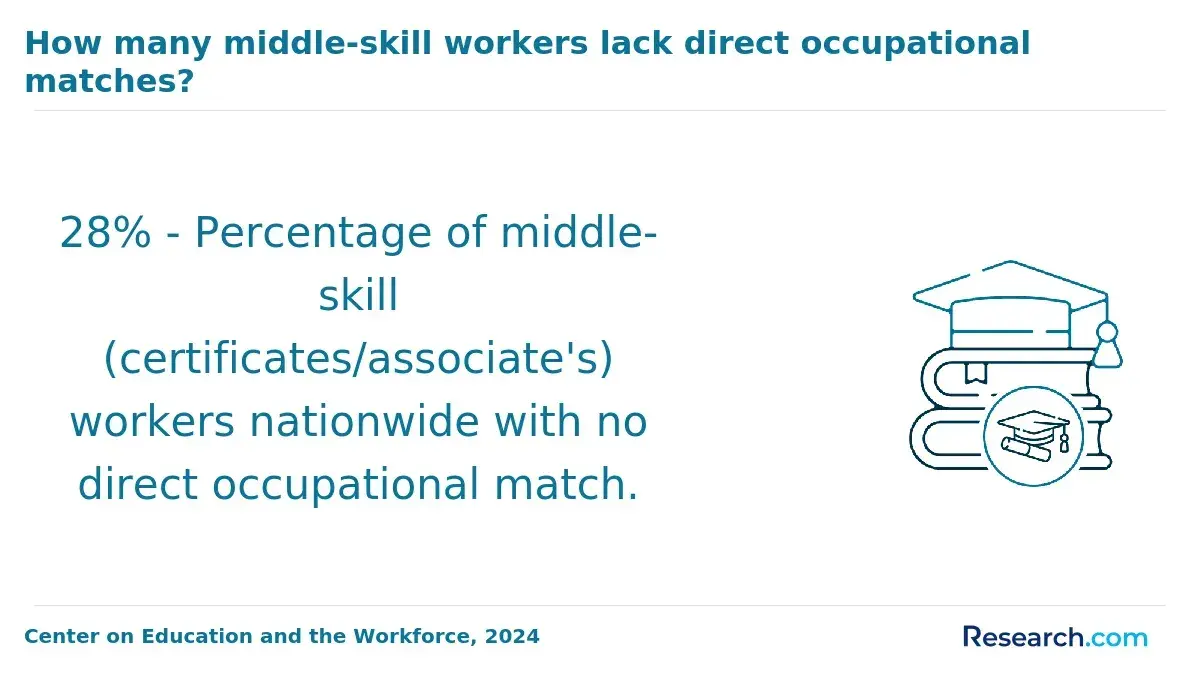
Which fields offer the most valuable stackable credentials for career advancement?
The most valuable stackable credentials are usually those tied to a clearly defined job ladder, recognized skills standards, and a documented route to a higher credential.
Healthcare, information technology, skilled trades, business operations, and public-service support roles often offer practical ladders, but value depends on regional employers, licensing rules, and the learner's starting education.
The U.S. Bureau of Labor Statistics projects employment of information security analysts to grow 33% from 2023 to 2033. That outlook supports sustained demand for cybersecurity skills, but an entry certificate alone may not meet employer expectations for analyst roles; experience, a degree, portfolio evidence, and industry certifications can also matter.
Use career field fit, not headline earnings, as the first filter.
| Field | Common stack | Good fit for | Important limitation |
| Healthcare | Entry certificate to advanced certificate or associate degree | People comfortable with clinical, patient-facing, or administrative work | Clinical eligibility and state requirements can limit flexibility |
| IT and cybersecurity | College certificate plus industry certifications to degree completion | Career changers able to build hands-on technical evidence | Vendor certificates may not transfer as academic credit |
| Skilled trades | Technical certificate to apprenticeship or applied associate degree | Hands-on learners seeking local employment | Licensing and apprenticeship rules differ by state and trade |
| Business and operations | Short certificate to associate or bachelor's degree | Workers seeking supervisory or administrative advancement | Employers may value experience as much as coursework |
Salary data should be treated as occupational context, not a promise from a credential. Readers comparing broader earnings pathways can also review the highest paying jobs alongside actual entry requirements for their target role.
What admission requirements and prior learning credits apply to stackable credential programs?
Admission rules depend on whether the first credential is credit-bearing, noncredit, undergraduate, graduate, or delivered by an industry provider.
Community-college certificates may require a high school diploma or equivalent and placement evaluation, while selective clinical programs can require prerequisite science courses, minimum grades, background clearance, and competitive admission. Industry certificates may instead require only registration and payment.
Prior learning assessment can reduce repeated coursework, but it must be confirmed in writing. Schools may award credit for standardized examinations, military training, evaluated workplace learning, or approved industry certifications. They may set limits on the number of credits accepted and require a minimum number of credits to be completed in residence.
Use this sequence before applying:
- Ask the receiving degree program which courses from the first credential satisfy named degree requirements.
- Request an official transfer-credit review or a written preliminary evaluation before paying a deposit.
- Compare course numbers, credit hours, grades required, expiration rules, and residency requirements.
- Keep syllabi, catalog descriptions, transcripts, certification records, and any articulation agreement.
A common mistake is assuming that admission to a certificate guarantees admission to the next rung. Treat each competitive program, especially clinical programs, as a separate decision.
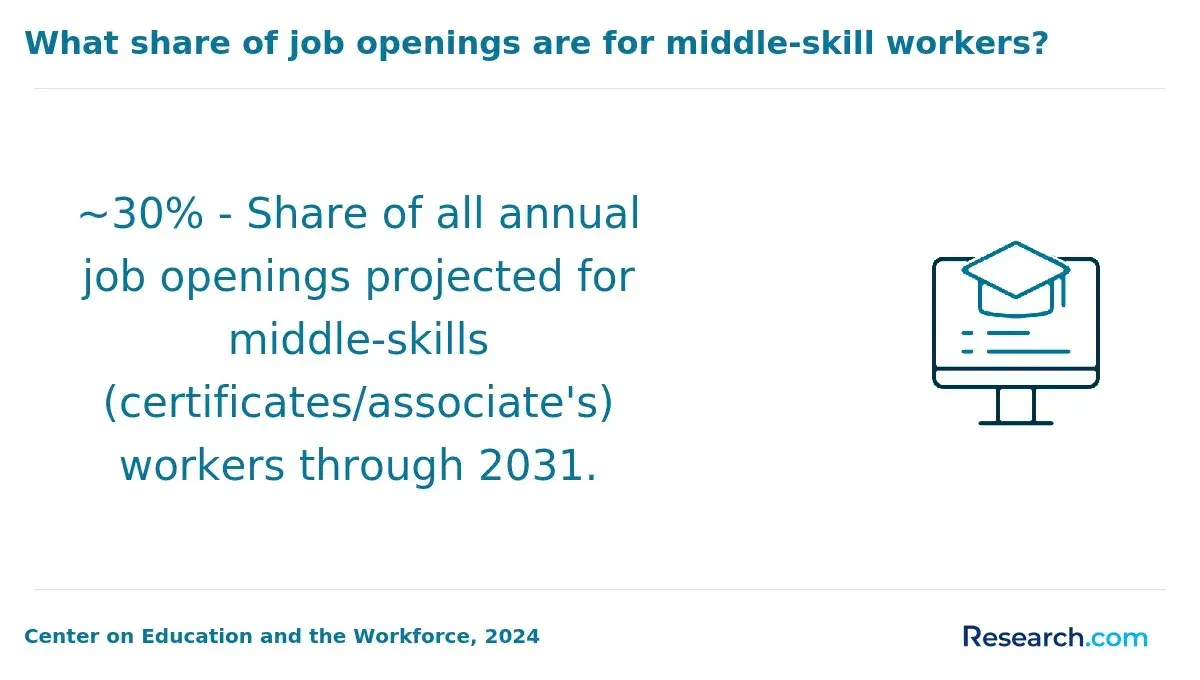
How do online stackable credential programs compare with campus-based options?
Online stackable programs can make it easier to study around work, but convenience should not be confused with automatic transferability or professional eligibility. The key question is whether the online credential uses the same credit-bearing courses, faculty standards, assessment methods, and transcript notation as the institution's campus pathway.
Online delivery works especially well for general education, business, IT theory, health administration, and some legal-support coursework. Campus or hybrid formats are often necessary for trade labs, clinical education, studio critique, equipment training, and proctored performance assessments.
Learners who need frequent entry points may find online colleges with frequent start dates useful, but should check whether accelerated terms create a manageable workload and fit the required course sequence.
This comparison highlights the practical trade-off.
| Factor | Online or hybrid pathway | Campus-based pathway |
| Scheduling | Often more flexible for lectures and assignments | Usually fixed meeting and lab times |
| Hands-on learning | May require local placements or scheduled intensives | Direct access to labs, studios, and equipment |
| Transfer review | Depends on academic credit and course equivalency | Depends on academic credit and course equivalency |
| Best fit | Working adults with strong self-management | Learners needing structured practice and in-person support |
What do students typically study in stackable credential pathways and bridge programs?
Students in stackable pathways study foundational knowledge first, then add technical depth, supervised practice, or specialization. A well-designed bridge program avoids unnecessary repetition by matching introductory courses to the requirements of the next credential.
For example, an IT pathway may begin with networking, operating systems, scripting, and security fundamentals before moving into cloud, data, or cybersecurity specialization. A healthcare pathway may start with anatomy, terminology, patient safety, and communication before clinical courses. Trade pathways typically combine safety, measurements, blueprint reading, tools, and hands-on competencies before advanced diagnostic or installation work.
Bridge programs are most useful when they include both academic alignment and career support. Look for advising that explains course sequencing, tutoring for gateway courses, portfolio or clinical preparation, and a clear plan for the next application cycle. Do not assume a "bridge" label means all credits apply; verify exactly how many credits count and toward which requirement.
How long do stackable credential programs take and what do they cost?
Completion time varies more by course sequence and attendance pattern than by the word "certificate." A short noncredit credential may take weeks, a college certificate commonly takes months to about a year, and an associate-degree pathway usually requires substantially more study. Part-time schedules extend the calendar but can make work and family obligations more manageable.
Cost depends on residency, institution type, required materials, clinical or lab fees, testing, and whether courses transfer without duplication. College Board reported average published 2024-25 in-district tuition and fees of $4,050 at public two-year colleges. That benchmark is useful for comparison, but an individual certificate may cost less or more depending on credit load and local fees.
Review the full budget, not only the tuition quote.
| Cost category | Why it matters in stackable pathways | Question to ask |
| Tuition and mandatory fees | Repeated enrollment fees can raise the cost of separate milestones | Is the per-credit rate the same at every level? |
| Books, software, tools, and uniforms | Technical and clinical programs can require substantial supplies | Which purchases are required before the first term? |
| Exams, background checks, and licensing | These may be required outside the academic program price | Which third-party costs are not included? |
| Transferred credits | Accepted credits can reduce duplicated classes and time | How many credits will apply to the final credential? |
Federal aid generally applies only to eligible programs at eligible institutions, and employer tuition assistance may have service requirements. If a long-term academic goal includes doctoral study, compare the actual progression requirements rather than selecting a short route based solely on perceived difficulty.
This overview of the easiest PhD to get can help frame the difference between accelerated study and admission standards.
What careers, certifications, and licenses can stackable credentials lead to?
Stackable credentials can lead to entry-level work, advancement within a current employer, preparation for a separate certification examination, or progress toward a degree. The outcome depends on the field and credential level.
A college certificate is evidence of completed education; an industry certification is awarded by a certifying body under its own eligibility and exam rules; a license is issued by a government authority where required.
Potential outcomes should be evaluated against actual job postings and state regulations.
| Pathway area | Possible next step | Credential distinction to verify |
| Medical assisting | Clinical support or administrative healthcare roles | Employer preferences and national certification eligibility |
| Practical nursing | Eligibility to pursue state licensure after an approved program | State board approval and examination requirements |
| Cybersecurity | Help desk, support, or junior security-related work | Whether an industry certification requires a separate exam |
| HVAC/R | Technician trainee or apprenticeship-related work | EPA, local, or state requirements for specific tasks |
| Paralegal studies | Legal assistant or paralegal-support work | Employer expectations; program completion is not legal licensure |
For any regulated occupation, check the relevant state board or agency before enrolling, particularly if you plan to study online or relocate. Also review whether employers in your area request a degree, experience, portfolio, apprenticeship hours, certification, or all of these in addition to a certificate.
How can students evaluate and choose reputable, transfer-friendly stackable credential programs?
The best transfer-friendly program is the one that documents how your first credential advances your specific end goal. Begin with the receiving institution or licensing authority, then work backward to identify acceptable feeder programs. A lower initial price is not a bargain if credits later fail to apply and you must repeat coursework.
Ask each school for evidence, not assurances. The following checks help distinguish a real pathway from a loosely related collection of courses.
- Request the current curriculum map showing each certificate course and its equivalent requirement in the next credential.
- Confirm institutional accreditation and, where relevant, programmatic approval or accreditation for licensure-oriented fields.
- Ask whether transfer is guaranteed, conditional, or evaluated course by course, and get the answer in writing.
- Calculate total costs through the final credential, including supplies, exams, travel, and courses that may not transfer.
- Check whether online students can complete required labs, internships, clinical placements, or apprenticeships in their location.
- Review local job postings and speak with employers about the credentials they actually recognize.
Red flags include vague promises of "universal transfer," pressure to enroll before receiving written policies, missing course numbers or credit hours, unapproved clinical pathways, and claims that a short credential guarantees a license or high-paying role. A reputable provider clearly separates completion certificates, academic credit, certification preparation, and licensure eligibility.
Other Things You Should Know About the Best Stackable Credentials
No. Stackability may exist only within one institution, system, or formal partner agreement. Ask which exact courses apply to which degree requirements and whether grade, time-limit, or residency rules apply.
It can be better for learners who need an earlier milestone, want to test a field, or must study in stages. An associate degree may be more efficient if your target job already requires it and you can complete the full sequence without stopping.
Sometimes, but not automatically. A college may review prior learning, industry certifications, portfolios, or standardized exams. Obtain a written policy before treating a noncredit program as a pathway to a degree.
Ask, "If I complete this program with the required grade, exactly how many credits will apply to my intended next credential?" Request the answer in writing with the applicable catalog year.
References
- What Are Stackable Credentials and Why Do They Matter? https://www.pltw.org/blog/what-are-stackable-credentials
- Are Online Courses Better Than Community College? https://www.straighterline.com/blog/online-courses-better-than-community-colleges
- Stackable Credentials: Living Links Between Learning and Work https://www.cael.org/resouces/pathways-blog/stackable-credentials-living-links-between-learning-and-work
- Stackable Credentials in Career Education at California Community Colleges https://www.ppic.org/publication/stackable-credentials-in-career-education-at-california-community-colleges/
- Stackable Credentials | Learn & Work Ecosystem Library https://learnworkecosystemlibrary.com/topics/stackable-credentials/
- Top Online Schools That Accept Transfer Credits https://www.edvisorly.com/student-guides/online-schools-that-accept-transfer-credits
- Transfer Credit | ACE https://ace.edu/tuition-and-admissions/transfer-credit/
- Explaining Stackable Credentials https://knowledge.umassfive.coop/paying-for-college/saving/article/explaining-stackable-credentials