2027 Best Online Career Training Programs for Veterans

Co-Founder and Chief Data Scientist
Choosing online training after military service can be difficult: a short program may build job-ready skills, but it may not meet licensing rules or qualify for GI Bill payment. Veterans need options that fit deployment histories, work schedules, and civilian career goals. The U.S. Bureau of Labor Statistics projects healthcare occupations to grow faster than average from 2023 to 2033, making targeted training especially relevant. This guide explains program types, quality checks, funding, timelines, and realistic career paths so you can compare options before using earned education benefits.
Key Things You Should Know
- Online career training is best when the program matches a specific civilian role, includes required hands-on or clinical components, and leads to a recognized certificate, degree, license pathway, or industry certification exam.
- Veterans should verify benefit eligibility before enrolling: GI Bill approval, school participation in VA education programs, program modality, tuition, fees, equipment, and required in-person training can all affect the actual out-of-pocket cost.
- Short certificates can support entry-level transitions, but regulated fields often require more: BLS projects healthcare occupations to grow faster than average from 2023 to 2033, yet many clinical roles still require state-approved education and licensure.
Top 10 Best Online Career Training Programs for Veterans
Popular Trade School Programs
Online trade training commonly covers construction management, HVAC fundamentals, electrical theory, welding safety, automotive service, logistics, and industrial maintenance. A certificate teaches a focused course of study; it is not the same as a trade certification issued by an industry body.
Veterans seeking electrician, HVAC, welding, or automotive work should confirm whether local employers require an apprenticeship, supervised hours, state licensing, or in-person labs. An online certificate is most useful for foundational knowledge, test preparation, or advancement in an existing trade - not as a substitute for required hands-on competency.
Healthcare Programs
Healthcare options include medical billing and coding certificates, pharmacy technician training, medical assisting, health information technology, and associate degrees in nursing or allied health. Fully online study is more realistic for administrative programs; patient-facing roles usually require campus labs, clinical placements, background checks, immunizations, and state-specific approval.
Coding and billing certificates may prepare learners for an optional certification examination, while nursing and many technician roles have separate licensure or credentialing rules. Veterans should choose an approved program only after checking employer expectations and their state board's requirements.
Criminal Justice / Law Programs
Online criminal justice certificates and associate degrees can develop knowledge of policing, corrections, emergency management, legal terminology, court processes, and cybersecurity policy. Paralegal certificates may suit veterans who already hold a degree, but programmatic approval and employer preferences vary by market.
These programs can complement military police, intelligence, security, or investigative experience, yet they do not automatically qualify a graduate for police employment, legal practice, or a security clearance. Applicants should review physical standards, background requirements, academy training, and state or employer hiring rules before enrolling.
Arts & Design Programs
Online arts and design training includes graphic design, digital marketing, user experience design, web design, photography, animation, and video production certificates. These programs are often portfolio-driven rather than license-driven, so finished work, software fluency, and client-facing communication can matter as much as the credential.
A short certificate can be a practical starting point for veterans changing careers, while an associate degree may offer broader design foundations and general education courses. Compare software costs, portfolio review opportunities, instructor feedback, and whether coursework produces work you can show employers.
What types of online career training programs are best suited for veterans?
The best online career training program for a veteran is not necessarily the shortest one. It is the one that translates prior military experience into a specific civilian target, fits benefit rules, and provides the credential employers or regulators actually recognize.
Use this comparison to match the training format to your goal. Credit-bearing academic certificates are commonly offered by colleges and may stack into a degree. Noncredit career training can be faster and highly practical, but transferability and federal aid eligibility may be limited.
Industry certifications are separate credentials awarded by certifying organizations, usually after an exam or other requirements.
| Program type | Best for | Typical delivery reality | Important limitation |
| College certificate | Focused academic or technical preparation | Online, hybrid, or campus-based | May not meet licensure requirements alone |
| Associate degree | Career entry requiring broader technical study | Often online with labs or clinicals | Usually takes longer than a certificate |
| Noncredit career training | Rapid skill-building or exam preparation | Often fully online | May not transfer for college credit or qualify for all aid |
| Industry certification preparation | IT, project management, logistics, and similar fields | Often self-paced online | Training completion is not the certification itself |
Veterans with a clear target in IT support, project coordination, supply chain, cybersecurity, or business operations may benefit from industry-aligned training that recognizes prior technical experience. Those exploring a broader academic direction can compare majors in college before committing benefits to a longer credential.
A short program may be a poor fit if your intended occupation requires an associate degree, bachelor's degree, apprenticeship, clinical placement, or state license. In those cases, choose a program that explicitly includes the required next step rather than paying twice for disconnected training.
How do online veteran-focused programs compare to campus-based training options?
Online veteran-focused programs and campus-based training can lead to similar credentials, but they solve different problems. Online learning is often stronger for veterans balancing employment, caregiving, disability-related needs, or frequent moves. Campus training is often stronger when equipment, direct supervision, clinical placements, studio work, or cohort networking are central to the occupation.
The table highlights the trade-offs to evaluate before selecting a format. "Online" should not be assumed to mean entirely remote: many credible programs require scheduled labs, proctored exams, practicums, internships, or clinical rotations.
| Decision factor | Online training | Campus-based training |
| Schedule | Often asynchronous or flexible | Usually fixed meeting times |
| Hands-on learning | May require local placements or intensives | Direct access to labs and equipment |
| Peer and employer access | Requires intentional virtual networking | Often easier through local events and services |
| Location | Can reduce relocation needs | May be best for local licensing or employers |
| Support needs | Needs responsive remote advising and tutoring | Provides more face-to-face access |
For a degree path, compare tuition, residency policies, technology requirements, and student services - not just advertised online convenience. Veterans seeking lower-cost degree options can review affordable online colleges alongside benefit calculations.
A common mistake is selecting a national online program without checking whether its practicum, clinical placement, or curriculum is accepted in the state where you plan to work. Ask for a written explanation of local eligibility before enrolling.
Which accreditation and military-friendly designations should veterans look for in programs?
Accreditation and military-friendly designations answer different questions. Institutional accreditation indicates that a college meets recognized quality standards and can affect transfer credit and federal aid eligibility. Programmatic accreditation matters in selected fields, particularly healthcare and other regulated professions.
A military-friendly label can signal veteran services, but it is not a substitute for accreditation, VA approval, or licensing-board acceptance. Check the following items in sequence because each protects a different part of your investment.
- Confirm the school's institutional accreditation through an accreditor recognized by the U.S. Department of Education or the Council for Higher Education Accreditation.
- For regulated careers, confirm required programmatic approval or accreditation with the relevant state board, licensing agency, or employer.
- Ask whether the specific program, location, and online modality are approved for VA education benefits; school-level approval alone may not answer the question.
- Review veteran support services, including a School Certifying Official, credit evaluation for military learning, disability accommodations, career coaching, and withdrawal policies.
Be cautious when a provider emphasizes "military friendly" marketing but will not clearly identify its accreditor, disclose licensing outcomes, or explain who awards the final credential. For noncredit providers, institutional accreditation may not apply; focus instead on the issuer's reputation, exam alignment, employer recognition, refund terms, and verifiable curriculum.
What are typical admission requirements for online career training programs for veterans?
Admission requirements depend on whether you are entering a college certificate, associate degree, noncredit course, or certification-preparation program. Many short noncredit programs require only identification, payment arrangements, basic technology, and any stated prerequisite knowledge.
College-based certificates and associate degrees generally require an application, prior education records, and placement or prerequisite review, though policies vary.
Before applying, gather documents that may help the school evaluate your background. Veterans should ask whether prior learning assessment, Joint Services Transcript review, CLEP scores, or transfer credit can reduce duplicate coursework; no school is required to award credit, so obtain the decision in writing.
- Government-issued identification and contact information
- High school completion documentation or prior college transcripts when required
- Joint Services Transcript or other military-training records for possible credit review
- Prerequisite coursework, placement results, or skills assessments for technical programs
- Background checks, health records, drug screening, or immunizations for certain clinical placements
Applicants who want a degree program but wish to limit upfront application costs can compare online college no application fee options. Do not confuse easier application processes with guaranteed admission, transfer credit, program approval, or benefit eligibility.
How long do online veteran career training programs take, and what do they cost?
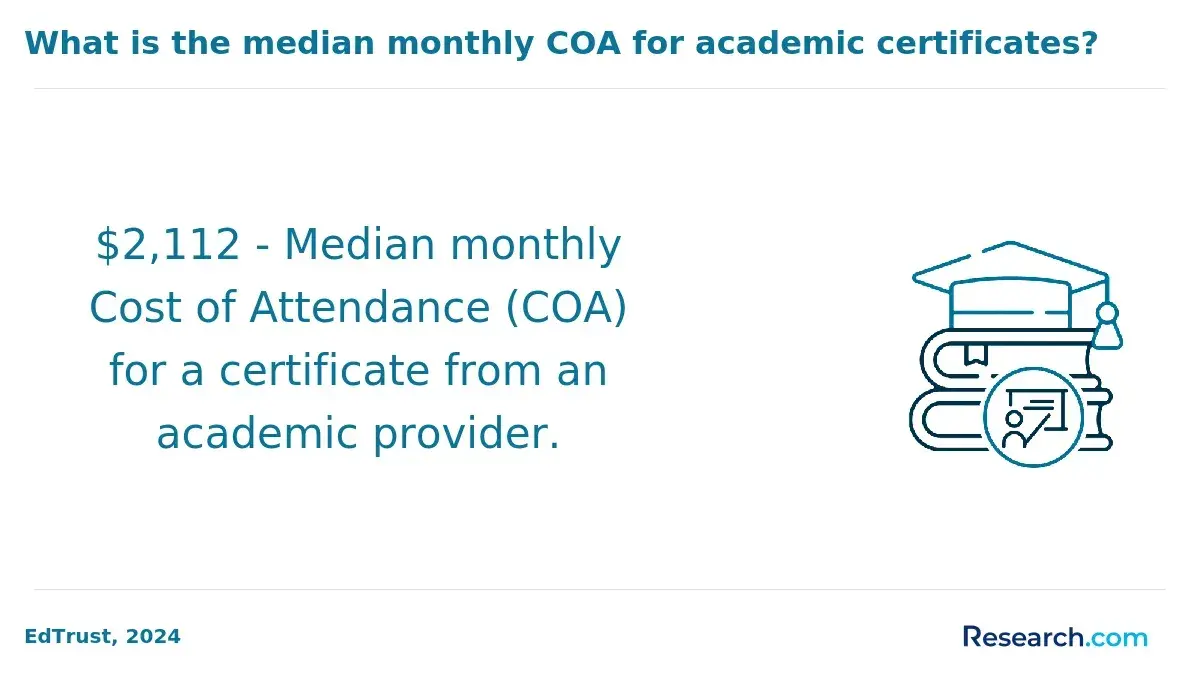
Completion time ranges from weeks for a self-paced noncredit course to roughly two years for a full-time associate degree. Cost also varies sharply based on provider type, residency, credit load, lab requirements, exam vouchers, software, tools, clinical fees, and required travel. The useful comparison is total cost to reach your actual employment or licensing goal - not tuition alone.
This table gives planning ranges rather than price promises. Confirm the school's current published charges and ask which costs are included before using benefits or signing a payment agreement.
| Training route | Common timeline | Cost factors to verify | Best use case |
| Noncredit online course | Weeks to several months | Tuition, subscription, exam voucher, software | Focused skill or certification preparation |
| College certificate | Several months to about one year | Per-credit tuition, fees, books, labs | Entry-level technical or academic foundation |
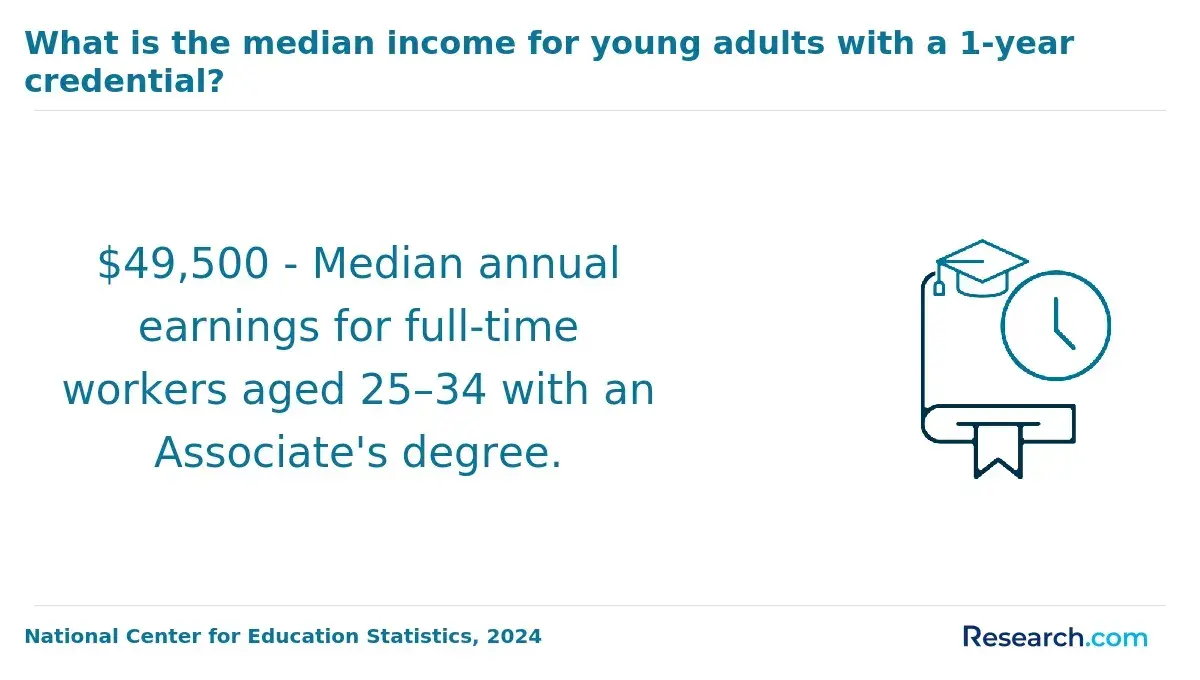
| Associate degree | About two years full time | Credits, general education, equipment, clinicals | Roles needing broader education or licensure preparation |
| Apprenticeship-linked training | Often multiple years | Tools, union or program fees, travel | Skilled trades requiring supervised experience |
Accelerated study can reduce time away from the workforce, but a compressed schedule may be difficult alongside work or medical appointments.
Veterans who eventually need graduate-level advancement should first confirm that their undergraduate credential meets entry requirements; a fastest masters degree pathway is relevant only after the appropriate bachelor's degree and prerequisites are in place.
Red flags include unclear refund policies, vague claims about "all-inclusive" tuition, pressure to borrow before benefit counseling, and promises that a short course alone will meet a licensing requirement.
What curriculum, coursework, and support services do top online veteran programs offer?
Strong online veteran programs combine career-specific coursework with reliable support. The curriculum should name the skills, tools, assessments, and final credential clearly. For example, IT training may include networking, operating systems, security basics, ticketing systems, and certification exam preparation; healthcare administration may include coding systems, privacy, reimbursement, and electronic records.
Look for evidence that the program supports both learning and transition to civilian employment.
- Courses mapped to employer-used tools, recognized standards, or a clearly identified certification examination
- Live or recorded instruction with accessible tutoring, technical support, and predictable response times
- Career services that translate military occupational experience into civilian resumes, portfolios, and interview language
- A dedicated VA School Certifying Official for programs using VA education benefits
- Accommodations processes, mental health referrals, and flexible policies appropriate for military-connected learners
- Transparent information about internships, clinical placement responsibility, and whether placement is guaranteed, assisted, or entirely student-arranged
Ask to see a sample syllabus and the exact credential title before enrolling. The strongest evidence is not a broad claim of job readiness; it is a curriculum that matches real entry requirements and explains what graduates can - and cannot - do next.
Which high-demand careers can veterans pursue with online training certificates?
Online training certificates can help veterans move toward high-demand careers, especially where employers value technical competence, documented skills, and prior experience. However, the certificate alone may not qualify a person for every role. Employers may also require a degree, industry certification, portfolio, clearance eligibility, experience, clinical hours, or a state license.
The following examples show how to connect a training choice to realistic next steps. Job-growth information refers to occupational projections, not to outcomes guaranteed by any program.
| Career direction | Useful online training | Common additional requirement | Veteran experience that may transfer |
| IT support or cybersecurity support | Networking, systems, security, cloud fundamentals | Industry certification, portfolio, or experience | Communications, intelligence, technical maintenance |
| Medical billing and coding | Medical terminology, coding, reimbursement | Employer-preferred professional certification | Healthcare administration, records management |
| Logistics and supply chain | Procurement, inventory, transportation, analytics | Relevant software and employer experience | Supply, transportation, operations planning |
| Project coordination | Scheduling, budgeting, risk, agile methods | Demonstrated project experience or certification | Team leadership, operations, planning |
| Skilled trades | Technical theory and safety instruction | Apprenticeship, supervised hours, or license | Mechanical, electrical, construction experience |
AI and automation are increasing the value of workers who can verify outputs, secure systems, manage workflows, communicate with clients, and apply field-specific judgment. Choose training that includes applied assignments rather than only passive video content.
What salary ranges and advancement opportunities can veterans expect after training?
Salary expectations should be based on the occupation, location, employer, experience level, and required credentials - not on a training provider's marketing. The U.S. Bureau of Labor Statistics reported a May 2024 median annual wage of $124,910 for information security analysts and $59,190 for medical records specialists.
These figures describe workers in those occupations nationwide; they do not mean a short certificate qualifies a new entrant for either role or produces that pay level.
Advancement is usually strongest when training becomes part of a stack: entry-level experience, documented projects, employer-recognized certification, and additional education where needed.
An IT support certificate may lead toward systems administration or cybersecurity work; a coding credential may support movement into auditing or revenue-cycle roles; trade coursework may support apprenticeship progression.
Compare local job postings for required education and pay ranges before enrolling. If most target postings require a degree or license, treat a short certificate as a first step and budget for the complete pathway.
Avoid schools that use an occupation's high median wage without disclosing that many workers reached the role through experience, degrees, licensing, or multiple credentials.
How can veterans use GI Bill and other benefits to pay for online training?
Veterans may be able to use GI Bill education benefits for approved programs, but eligibility and payment depend on the benefit chapter, remaining entitlement, school and program approval, enrollment level, modality, and personal circumstances. The VA generally pays benefits based on certified enrollment; confirm details with the school's VA School Certifying Official and the VA before committing to a start date.
Take these practical steps to protect your benefits and reduce avoidable costs.
- Define the target job and identify whether it requires a degree, certificate, certification exam, apprenticeship, or license.
- Ask the school whether the exact online program is approved for VA education benefits and request a written estimate of tuition, fees, books, equipment, and required travel.
- Submit the appropriate VA education-benefit application and provide the school documents it needs to certify enrollment.
- Compare military tuition assistance, state veteran benefits, employer education assistance, scholarships, and Federal Student Aid options where applicable; do not assume every noncredit program qualifies.
- Review withdrawal, attendance, satisfactory-progress, and repeat-course rules because changes in enrollment can affect benefit payments or create a debt.
The Post-9/11 GI Bill may include tuition and fee payments and, for eligible students, housing and book support, but payment rules differ for distance learning and enrollment intensity. Never rely on a recruiter's verbal estimate. Request individualized counseling and keep copies of approvals, cost disclosures, and certification records.
Other Things You Should Know About
Possibly. The school and the specific program generally need VA approval, and your benefit amount can depend on your chapter, enrollment status, remaining entitlement, and whether required instruction is online or in person. Confirm eligibility with the VA and the school's School Certifying Official before enrolling.
They can be, particularly when the provider is reputable and the curriculum aligns with recognized tools, certifications, or licensing requirements. Employers usually care most about the relevance of the credential, demonstrated skills, prior experience, and any required professional certification or license.
Noncredit training and certification-preparation courses can sometimes be completed in weeks or months, but the fastest option is not always the best investment. Select the shortest program that meets the actual requirement for your target role, including any exam, clinical, apprenticeship, or licensing step.
Choose a certificate for focused, lower-commitment training when the target role accepts it. Choose an associate degree when employers, licensing boards, or advancement goals require broader coursework, general education, or a credential that may transfer toward a bachelor's degree.
References
- Financial Aid for Military & Veterans - Accounting.com https://www.accounting.com/resources/financial-aid-for-veterans/
- How Veterans Can Lead the Future of Work and Learning https://www.higheredtoday.org/2025/11/04/how-veterans-can-lead-the-future-of-work-and-learning/
- Best Trade Careers for Military Veterans in the United States | Skillit https://skillit.com/the-best-trade-careers-for-military-veterans-in-the-united-states-1
- Best Careers for Veterans: High-Paying Jobs and Top Opportunities https://mysalesplatoon.com/blog/b/best-careers-for-veterans
- Free Online Courses for Veterans & Certifications for Military Spouses https://careerrecon.com/free-online-courses-certifications-veterans-military-spouses/
- 2025 Best Military-Friendly Online Colleges https://www.onlineu.com/online-schools/military-friendly
- Education & Training https://www.goarmy.com/benefits/while-you-serve/education-training
- Training or Certification Programs https://www.vetctap.org/resource-categories/training-or-certification-programs
- Financial Aid for Military & Veterans - OnlineMBA.com https://www.onlinemba.com/resources/financial-aid-and-military-veterans/
- NVEST - Student Veterans of America® https://studentveterans.org/research/nvest/