2027 How to Explain a Career Change in a Data Science Master's Statement of Purpose

Co-Founder and Chief Data Scientist
A career-change statement of purpose must do more than explain why data science sounds appealing. It must show how your previous work led to a specific analytical goal, what you have done to prepare, and why graduate study is the right next step.
This guide helps applicants from nontraditional backgrounds decide which experiences to emphasize, how to discuss technical gaps honestly, and whether a particular program supports the transition they want to make.
Key Things You Should Know
- Build a clear chain from a problem you encountered in your previous career to the data science work you want to do; avoid presenting the change as a sudden discovery.
- Support your interest with specific coursework, projects, or work examples, and address technical gaps without claiming that informal study fulfills a program's formal prerequisites.
- Match your goal to the program's curriculum rather than to the field's popularity. The U.S. Bureau of Labor Statistics projects 35% employment growth for data scientists from 2025 to 2035, but that outlook does not predict any applicant's outcome.
How should career changers explain their motivation for a data science master's?
Start with an experience from your existing occupation: a decision that depended on incomplete evidence, a recurring question you could not answer with your current tools, or an analytical task you wanted to pursue more deeply. Then explain why data science methods, not simply a different job title, would help you address that kind of problem.
A teacher, for example, might describe trying to understand which students benefited from an intervention and discovering the limits of a simple before-and-after comparison. That is a stronger starting point than saying that artificial intelligence is exciting. It identifies a real question, acknowledges a methodological limitation, and gives the proposed career change a direction.
Keep the tone forward-looking. You can say that your current role offers limited opportunities to build statistical models without criticizing your employer or portraying your previous career as wasted time.
The strongest explanation shows continuity. Your domain experience generated the question; your preparation tested your interest; the master's would help you develop capabilities you do not yet have.
What makes a career-change story credible in a data science statement of purpose?
A credible story contains evidence of action between the initial interest and the application. A completed quantitative course, a reproducible project, or an analytical responsibility at work says more than a declaration of passion. Explain what you did, what judgment the task required, and what you learned, not just which software appeared on your résumé.
Specificity also makes ambition believable. "I want to evaluate interventions using appropriate comparison groups" is more informative than "I want to use data to make an impact." If a project produced uncertain or disappointing results, briefly explaining how you checked assumptions can demonstrate maturity.
A common mistake is to claim expertise from a short tutorial or to describe a routine dashboard as a machine-learning system. Use accurate terms and identify the limits of your contribution. Admissions readers can then distinguish genuine preparation from inflated claims without needing you to have worked under the title "data scientist."
How can applicants connect past experience to data science career goals?
Connect three things: the domain you know, the analytical work you have actually done, and an adjacent role you can plausibly pursue. The examples below illustrate different kinds of continuity; they are not prerequisites or promised career outcomes.
| Previous work | Relevant experience | Possible adjacent goal |
| Operations | Investigating bottlenecks and measuring process changes | Operations or product analytics |
| Healthcare administration | Working with service metrics and understanding workflow constraints | Healthcare analytics |
| Teaching | Interpreting assessment results and understanding student needs | Education analytics or program evaluation |
In the statement, make your own contribution precise. "I defined the service metric and identified inconsistent records" establishes more than "I worked with data." Then name the technical capability you need to move from describing what happened to answering a harder question, such as testing a hypothesis or evaluating a predictive model.
If your goal is primarily reporting and decision support rather than model development, compare master's in data analytics study options before assuming a data science degree is the best fit. Your statement should reflect the work you actually want to do, not the broadest-sounding credential.
What structure should a career-change statement of purpose follow?
Follow the program's prompt and word limit first. Within those constraints, a career changer needs a sequence that lets the reader see both motivation and readiness. The following order prevents a long autobiography from crowding out the case for admission.
- Open with a specific problem or responsibility from your current or former field that led to an analytical question.
- Show how you explored that question through work, coursework, or a project, including what remained beyond your present skills.
- Describe a focused career goal and the data science capabilities it requires.
- Connect those needs to verified features of the particular program, then close with the perspective you would bring to its learning community.
For example, an applicant moving from operations could write: "While tracking shipment delays, I learned that our reports described where failures occurred but could not reliably distinguish seasonal variation from process changes."
"I used Python to clean historical records and built a baseline analysis, which exposed gaps in my statistical training. I now want to study experimental design and predictive methods so I can evaluate operational decisions more rigorously." The example works because each sentence advances the case; applicants should replace its details with their own verifiable experience.
Which technical and professional skills should career changers highlight?
Highlight skills relevant to your proposed goal that you can substantiate. Programming, statistics, data cleaning, and visualization matter when they appear in actual work or projects. Equally valuable are skills from your first career: framing stakeholder questions, recognizing data-quality problems, explaining uncertainty, and understanding the consequences of a recommendation.
Choose depth over a long tool inventory. Rather than listing Python, SQL, and several libraries, describe one task: the dataset, your individual contribution, how you assessed the result, and what you would improve. If your work involved sensitive records, describe methods and lessons without disclosing private data.
Distinguish collaboration from technical ownership. It is fair to say you helped define the problem for an analytics team; it is misleading to imply you built its model if you did not. That distinction makes your transferable professional experience an asset rather than a substitute for technical evidence.
How should applicants address gaps in mathematics, programming, or statistics?
State a gap briefly, then show what you have done about it and what remains. For example: "My economics coursework covered introductory statistics, and I have since completed a programming course and applied it in a small analysis. I am preparing for graduate-level probability work through additional coursework." This is more persuasive than either apologizing at length or claiming full readiness without evidence.
Separate preparation for study from fulfillment of an admissions requirement. A self-directed project can show initiative, but a program that requires graded calculus coursework may not accept that project in its place. Check each school's current prerequisite policy and ask admissions staff whether planned or completed courses satisfy it before submitting the statement.
If several essential prerequisites remain unfinished, consider completing them before applying or selecting a program with an appropriate preparatory pathway. The statement can explain an active plan; it cannot replace the foundational knowledge needed to succeed in the curriculum.
How can applicants explain why a specific data science program fits their goals?
Name features you have confirmed on the program's current website or in its catalog, and explain what each would enable you to learn. A course in causal inference is relevant if your goal involves evaluating interventions; access to substantial applied projects matters if you need evidence of independent technical work. A course title alone does not establish its depth, so review descriptions and project requirements.
Focus on the features that resolve your transition's gaps. If entering a new field depends heavily on meeting practitioners, investigate career support and alumni networking as a factor in AI master's selection as a comparison point, while verifying what the data science program itself offers. If you already have strong industry contacts, technical depth or an applied capstone may deserve more space in the statement.
Avoid praising rankings or repeating marketing language. Write a fit sentence that links a verified program feature to a named learning need and a realistic career goal. If you cannot make that connection without generic wording, reconsider whether the program belongs on your application list.
What admission requirements matter for career changers applying to data science programs?
Before drafting, confirm whether each program requires a statement of purpose, sets a word limit or specific questions, and asks for particular mathematics or programming preparation.
Requirements vary. A polished narrative does not waive formal prerequisites. Recommendation-letter instructions also matter because a supervisor may be better placed than an instructor to verify your analytical work, depending on the program's policy.
If writing a statement is a major obstacle, no-essay admissions for online machine learning master's programs provide an alternative to investigate, not evidence that those programs have the same curriculum or admissions standards as a data science master's. Check the current application instructions for every program you consider.
Treat the statement as one part of a consistent application. Projects, transcripts, résumé claims, and recommendations should support the experience and readiness you describe. If an application offers an optional explanation of unusual grades or employment gaps, use the space designated by that school rather than letting the issue dominate your purpose statement.
How should applicants discuss online, campus-based, and part-time study plans?
Mention format only when it supports your academic plan. A part-time applicant might explain that remaining in an operations role will provide continuing exposure to problems they hope to study.
A campus-based applicant might identify a relevant research or project opportunity. Neither format demonstrates commitment on its own; the statement should show how you will engage with the learning it makes possible.
Check scheduling, course sequencing, and any in-person requirements before promising to maintain full-time work or finish on a particular timetable. If speed is a deciding factor, AI master's options for a shorter study schedule may be worth comparing, but a shorter AI curriculum is not automatically a substitute for the data science preparation your goal requires.
Keep logistical detail proportional to the prompt. "The part-time structure would let me continue working with operational data while developing stronger statistical methods" advances your argument; an extended account of your commute or weekly calendar usually does not.
Which data science careers and outcomes should applicants reference in their goals?
Name a role close enough to your background to explain the transition and specific enough to guide program selection. A healthcare administrator might aim for a healthcare analytics role before describing a longer-term interest in data science research.
An operations specialist might target analytics work involving forecasting or process evaluation. You need not promise an exact job title after graduation.
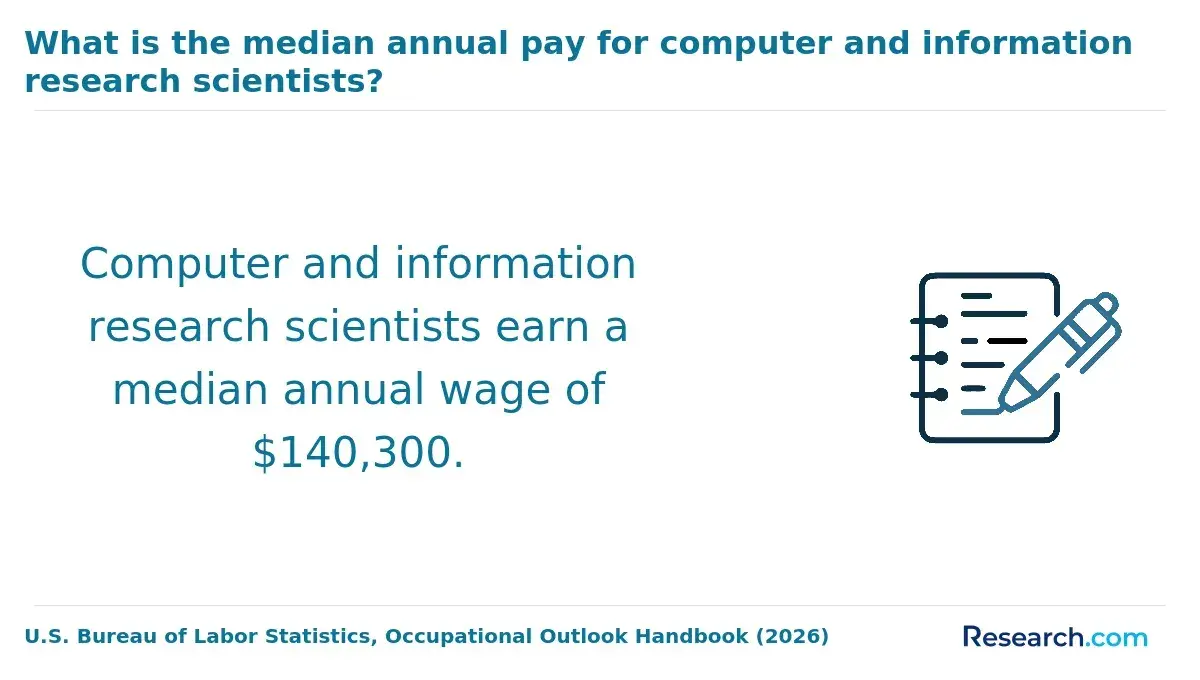
The U.S. Bureau of Labor Statistics reports a May 2025 median annual wage of $120,230 for data scientists. That figure describes workers in the occupation, not the expected starting salary or salary increase for a new master's graduate. In a statement of purpose, methods, responsibilities, and domain fit make a more credible goal than a salary target.
Use the broader picture of data science degrees and growing data occupations to explore possible paths, then compare actual job descriptions with your skills. If the target work is already accessible through projects and targeted coursework, a master's may not be necessary.
If it demands deeper quantitative training, substantial applied practice, or a structured transition you cannot readily obtain elsewhere, explain that need directly.
Other Things You Should Know About Data Science Programs
Yes, if you can discuss the problem, your methods, and your contribution without revealing protected information. Remove identifying details and follow your employer's confidentiality rules; use a public or synthetic example if the project cannot be described safely.
Follow the program's instructions. When either is acceptable, choose someone who can provide specific evidence about the abilities your application claims, such as analytical judgment, academic preparation, or growth on a demanding project.
Check each program's application policy. If permitted, use editing assistance without inventing experiences or letting generated language replace your own account; you are responsible for the accuracy and authenticity of the submitted statement.
You can reuse your core career-change story where application rules allow, but revise the program-fit portion and answer each school's actual prompt. Check names, course references, and word limits before submitting.
References
- The role of data science in healthcare advancements - PMC https://pmc.ncbi.nlm.nih.gov/articles/PMC9308575/
- Prerequisite Key Topics - UVA School of Data Science https://datascience.virginia.edu/pages/prerequisite-key-topics
- Do You Need a Master's Degree for Data Science? Reasons to Consider | Stevens Online https://online.stevens.edu/blog/do-you-need-a-master-degree-for-data-science/
- What preparations do I need for graduate education? | Statistics & Data Science Graduate Interdisciplinary Program https://stat.arizona.edu/what-preparations-do-i-need-graduate-education
- What Can I Do With a Degree in Data Science? Career Paths & Skills | Harvard SEAS https://seas.harvard.edu/news/what-can-i-do-degree-data-science-career-paths-skills
- Why a Master's in Data Analytics is a Strong Career Transition | NMSU Global Campus https://global.nmsu.edu/blog/sciences/career-transition-with-data-analytics-degree/
- Admissions Requirements | Applied Mathematics | Student Support & Advising Services https://www.colorado.edu/amath/academics/ms-applied-math-track-stats-data-science/admissions-requirements
- Writing a killer Statement of Purpose | Rice University https://graduate.rice.edu/current-news/writing-killer-statement-purpose
- What You Can Do with a Master's in Data Science and Artificial Intelligence | Harvard Extension School https://extension.harvard.edu/blog/what-you-can-do-with-a-masters-in-data-science-and-artificial-intelligence/
- Graduate Students | imstat.org https://imstat.org/ims-groups/ims-new-researchers-group/survival-guide/career/graduate-students/