2027 Best Online Microcredentials for Transfer Students

Co-Founder and Chief Data Scientist
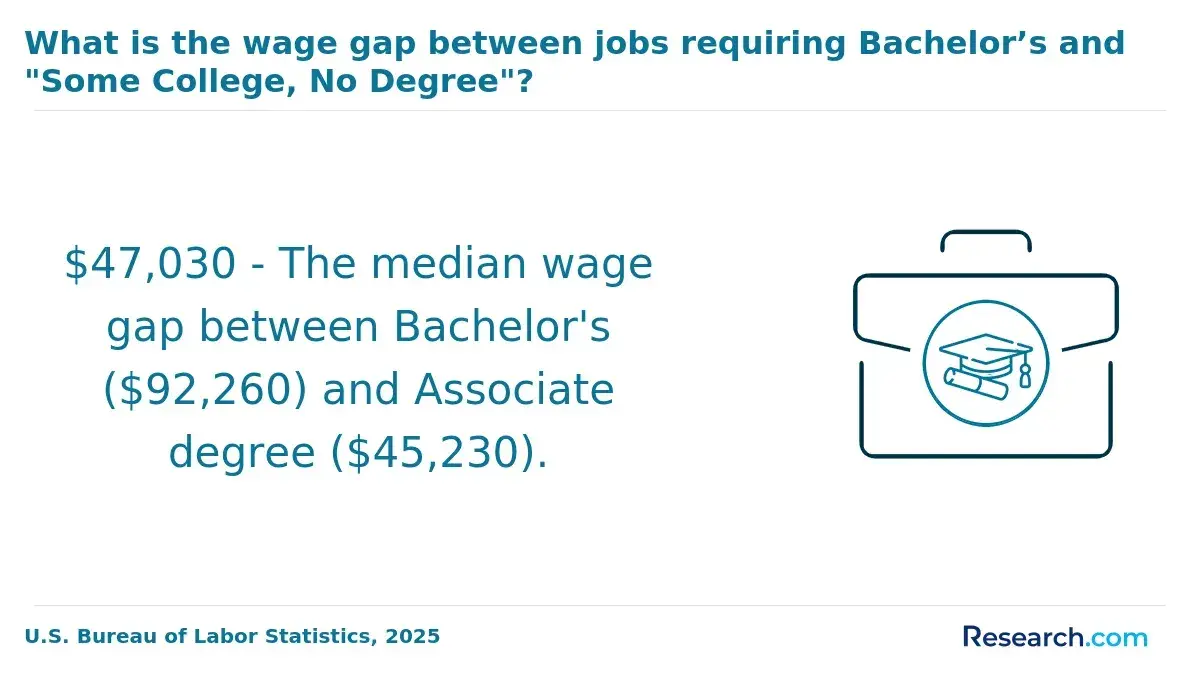
Transfer students need short programs that add value without creating credits their next school will reject. Online microcredentials can build targeted skills, satisfy prerequisites, or strengthen a degree pathway, but only some carry college credit. The U.S. Bureau of Labor Statistics reported that workers with an associate degree had median weekly earnings of $1,099 in 2024, compared with $930 for high school graduates.
This guide explains how to identify transferable online microcredentials, compare providers, control costs, and connect a credential to a realistic academic or career goal.
Key Things You Should Know
- Choose a credit-bearing microcredential from an institutionally accredited college when transfer is the priority; noncredit badges may demonstrate skills but usually do not transfer as academic coursework.
- Get written preapproval from the receiving college before enrolling. Transfer decisions commonly depend on course equivalency, grades, level, learning outcomes, and residency rules - not the credential's marketing label.
- Use short credentials strategically: they can cover prerequisites, create stackable credit, or document job skills, but they do not automatically meet licensure, professional certification, or degree requirements.
Top 10 Best Online Microcredentials for Transfer Students
Popular Trade School Programs
Transfer-friendly trade options may include credit certificates or associate-level courses in welding technology, HVAC/R, electrical technology, automotive service, construction management, and industrial maintenance. Laboratory-intensive programs can offer theory online but normally require campus, partner-site, or employer-based practical training. Choose a college certificate when you want technical credits that may apply toward an Associate of Applied Science degree. Choose an apprenticeship or manufacturer training program when hands-on employment is the immediate goal. Verify whether local licensing rules require supervised hours, an exam, or an approved program.
Healthcare Programs
Online healthcare microcredentials commonly cover medical terminology, health informatics, medical billing and coding foundations, pharmacy terminology, public health, and healthcare administration. These can be useful transferable electives or prerequisites when offered for college credit. Clinical programs such as nursing, radiologic technology, dental hygiene, and medical assisting generally require in-person skills practice and may have state approval requirements. A short certificate can prepare a learner for a separate certification examination in some fields, but it is not itself a professional certification. Confirm employer recognition and certification-exam eligibility before paying.
Criminal Justice / Law Programs
Credit-bearing online options include criminal justice foundations, corrections, policing studies, homeland security, legal studies, paralegal studies, and victim advocacy. These programs can fit transfer students seeking general-education, elective, or lower-division major credit. A legal studies certificate is educational preparation, not a law license, and paralegal employment standards vary by employer and state. Students interested in law school should prioritize transferable academic coursework and strong grades over a narrowly vocational badge. Ask whether courses transfer into a criminal justice, legal studies, public administration, or related associate or bachelor's degree.
Arts & Design Programs
Digital design, UX foundations, graphic design, web design, photography, animation, and digital media certificates can help transfer students build both credit and a portfolio. Credit transfer depends on course content, while employers often focus heavily on demonstrated work. Select programs that include software access, instructor feedback, project ownership, and a portfolio review process. A noncredit platform certificate may be useful for learning a tool quickly, but a college-issued, credit-bearing option is usually safer when a future degree is the main objective. Check whether portfolio files remain accessible after the program ends.
What Are Online Microcredentials?
An online microcredential is a focused, short-form learning credential that verifies completion of a defined set of courses, competencies, or assessments. Colleges, universities, professional associations, and private training providers may issue them. They vary substantially: one may be a digital badge after a noncredit course, while another is a transcripted undergraduate certificate that can stack into a degree.
For transfer students, the most useful distinction is whether the learning is recorded as academic credit. The comparison below separates common options by their likely transfer value.
| Credential type | Typical provider | Academic credit status | Best use for a transfer student |
| Credit-bearing microcredential or certificate | College or university | Usually transcripted; acceptance still varies | Prerequisites, electives, or stackable degree progress |
| Digital badge | College, employer, or platform | Often noncredit | Documenting a discrete skill or co-curricular learning |
| Professional certificate | University extension or training provider | May be noncredit | Career exploration or applied skill development |
| Professional certification | Certifying body | Not college credit by itself | Meeting an employer or industry standard when eligible |
A certificate reflects completion of education or training. A certification is awarded by a certifying organization after an individual meets its standards, which may include an exam, work experience, continuing education, or all three. Do not assume either one transfers simply because it is recognized by an employer.
How Do Transfer Credits Work?
Transfer credit is evaluated by the institution you plan to attend, not guaranteed by the institution that issued the microcredential. Receiving colleges generally compare an official transcript, course descriptions, credit hours, academic level, grade earned, and documented learning outcomes against their own curriculum. Some schools accept courses but apply them only as electives, which may not shorten time to degree completion.
Before enrolling, follow these steps to reduce the chance of paying for unusable credits.
- Identify the exact degree, major, and receiving institution you intend to enter.
- Ask the receiving registrar or department whether each course will meet a named requirement, elective category, or prerequisite.
- Request the decision in writing and save the course syllabus, catalog description, assignments, and transcript.
- Confirm the minimum transferable grade and the school's maximum transfer-credit and residency limits.
Students still exploring majors should favor broad, lower-division coursework that aligns with a likely best degree to get pathway rather than a highly specialized noncredit badge. A statewide articulation agreement can help, but it does not necessarily apply to every certificate or private provider.
Which Accredited Schools Offer Them?
Look first for a college or university with institutional accreditation recognized by the U.S. Department of Education or the Council for Higher Education Accreditation. Institutional accreditation matters because it is a central factor receiving schools consider when reviewing academic transfer credit. Programmatic accreditation may also matter in regulated fields such as nursing or certain technical disciplines, but it does not replace institutional accreditation.
Strong candidates for transfer students generally have an official registrar, a public catalog, course numbers, stated credit hours, faculty oversight, and an official transcript process. Ask whether the microcredential is undergraduate or graduate level and whether its courses are part of an established certificate or degree curriculum.
If your academic record needs rebuilding before graduate study, review online graduate schools with low GPA requirements separately. A microcredential may demonstrate recent academic readiness, but it does not override an individual program's published admissions standards.
How Do Online and Campus Options Compare?
Online study is often the better fit when you need scheduling flexibility, already understand the subject, and can manage independent deadlines. Campus or hybrid study is often stronger when the credential requires labs, clinical practice, specialized equipment, studio critique, or immediate access to instructors and peers. The best format is the one that delivers the required learning experience and is accepted by your target school or licensing authority.
This comparison highlights the practical trade-offs transfer students should evaluate before selecting a format.
| Factor | Fully online | Hybrid or campus-based |
| Schedule flexibility | Usually highest, especially in asynchronous courses | Set meeting times or required site visits |
| Hands-on learning | Limited unless arranged through approved local sites | Better access to labs, equipment, and supervised practice |
| Transfer documentation | Strong when transcripted with clear course records | Also strong when transcripted with clear course records |
| Best fit | General education, business, technology, and theory-based skills | Clinical, trade, laboratory, and studio-based requirements |
A common mistake is assuming "online" means self-paced. Many college courses have weekly attendance expectations, proctored exams, group work, and fixed term dates. Review the course schedule before committing.
What Admission Requirements Apply?
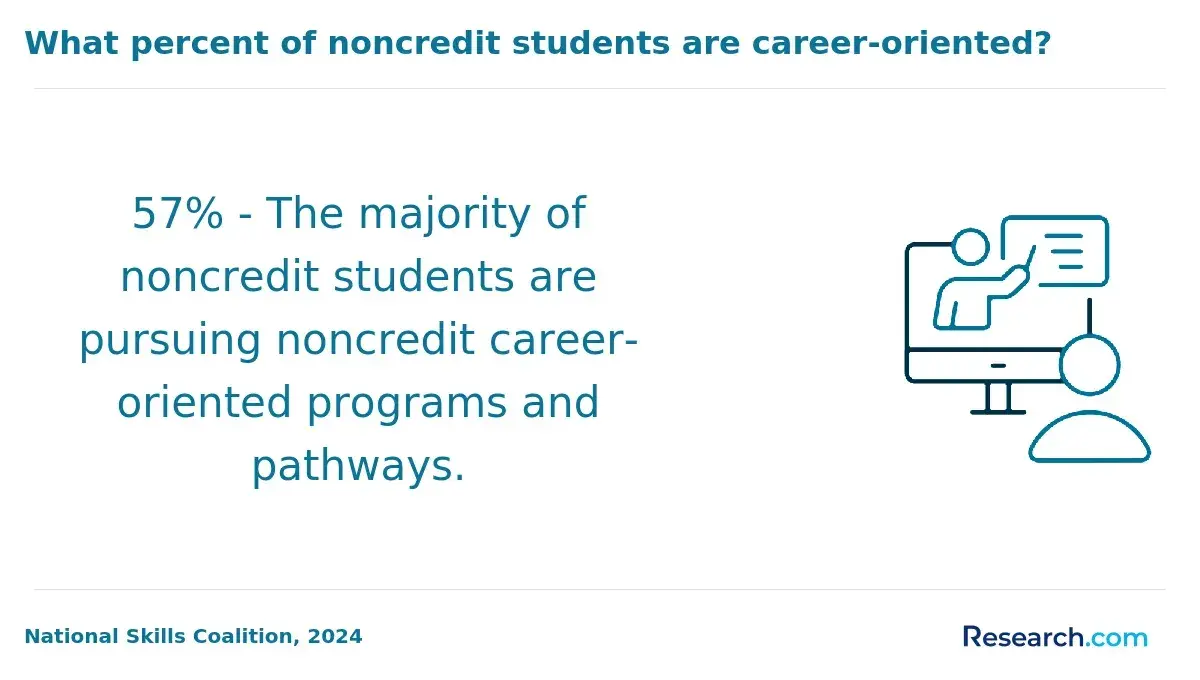
Admissions requirements depend on the provider and whether the microcredential is credit-bearing. Noncredit programs may require only registration and payment. College-credit programs can require an application, identity verification, placement assessment, prerequisite courses, or prior college transcripts. Graduate-level credentials may require a completed bachelor's degree and minimum GPA.
Transfer students should focus on the requirements that affect both admission and later credit acceptance.
- Ask whether you are enrolling as a nondegree student, certificate student, or degree-seeking student, because status can affect aid eligibility and advising access.
- Check prerequisite sequencing, especially for math, science, coding, clinical, and upper-division courses.
- Confirm whether prior credits satisfy entry requirements or whether the provider requires its own placement process.
- Request accessibility, technology, background-check, immunization, or site-placement requirements early when the field involves clinical or practical training.
Older learners returning to education may also compare flexible options through this guide to degrees for seniors. Age alone is rarely an admissions barrier, but program-specific prerequisites still apply.
How Long Do Programs Take?
Completion time ranges from a few hours for a noncredit badge to one or more academic terms for a credit-bearing certificate. A microcredential composed of one or two courses may fit into a semester; a stackable certificate with multiple courses can take longer, particularly when prerequisites are involved. Accelerated formats reduce calendar time but do not reduce the work required to master the material.
Estimate your timeline by dividing total credit hours by the number of credits you can take per term, then add time for prerequisites, course availability, and any required practicum. Part-time online study is practical for working students, but a course offered only once a year can delay completion. If transfer is the goal, choose timing that allows the receiving college to evaluate the transcript before its application or registration deadline.
How Much Do They Cost?
Cost varies more by provider and credit status than by the word "microcredential." Noncredit options may charge a single enrollment fee, while college programs usually charge per credit plus institutional, technology, materials, examination, and proctoring fees. A lower advertised tuition figure is not necessarily the lower total cost if credits will not transfer.
Compare these cost categories in writing before enrolling.
| Cost factor | Why it matters | Question to ask |
| Tuition or enrollment fee | Determines the base price | Is pricing per course, per credit, or for the full credential? |
| Mandatory fees | Can materially change total cost | Are technology, registration, lab, or student-service fees included? |
| Materials and software | Common in technical and design programs | Do I need equipment, subscriptions, uniforms, tools, or supplies? |
| Assessment and licensure expenses | May be separate from instruction | Does tuition include required examinations, background checks, or clinical clearances? |
| Transfer value | Affects the investment's academic return | Will the receiving school apply these credits to my degree plan? |
Federal student aid is generally tied to eligible programs and enrollment rules, so many short noncredit offerings do not qualify. Ask about employer tuition assistance, workforce grants, payment plans, and institutional aid, but do not borrow based on an assumed salary increase or assumed transfer award.
What Jobs Can They Lead To?
Online microcredentials can support entry-level job searches, career exploration, or advancement in an existing role, especially when paired with prior education, a portfolio, work experience, or an industry certification. They are most useful when the curriculum maps directly to a job task: data analysis, project coordination, digital design, medical billing processes, IT support, or business operations, for example.
A credential alone may be insufficient for regulated, clinical, licensed, or highly technical roles. For long-term planning, compare the credential's skills with the education employers request and with an academic pathway toward a highest paying degree. This prevents a short program from becoming an expensive detour when a degree, apprenticeship, or approved licensure program is the actual requirement.
Review job postings in your area before enrolling. Note the recurring requirements, software tools, experience levels, degree expectations, and whether employers name a particular certification. Then select a microcredential only if it closes a documented gap.
What Salary and Outlook Can Students Expect?
Salary and outlook depend on the occupation, location, experience, employer, and required education - not simply on earning a microcredential. The Bureau of Labor Statistics reported a 2024 median annual wage of $99,510 for computer and information technology occupations and projected faster-than-average growth for the occupational group from 2023 to 2033. That broad figure signals demand for technical work, but it does not mean a short online credential alone qualifies someone for those roles.
Use occupational data as context rather than a promise. Compare the education usually required for the target role, identify whether the microcredential supplies a specific skill employers value, and calculate whether the credential can transfer into a larger credential with stronger labor-market relevance. Be cautious of providers that advertise salary outcomes without explaining the occupation, geographic area, experience level, or methodology.
Other Things You Should Know About
They can, but transfer is most likely when the credential consists of transcripted college courses from an institutionally accredited school. The receiving college decides whether credits apply to a specific requirement, elective category, or not at all.
No. A microcredential is typically a smaller, focused credential that may be credit-bearing or noncredit. A certificate is an educational award that usually represents completion of a defined program. Either may or may not transfer.
Usually not as your primary strategy. A noncredit badge can build skills or a portfolio, but it normally does not create academic credits. Choose it only when your target college confirms it has value or when job-ready skill development matters more than transfer.
Ask your intended receiving institution: "Will this exact course, from this provider, apply to my degree plan, and where will it apply?" Request the answer in writing before paying tuition.
References
- Best Online Schools for Transferring Credits [2026 Guide] https://www.straighterline.com/blog/transfer-best-online-schools-for-transferring-credits
- Micro-Credentials | NEA https://www.nea.org/professional-excellence/professional-learning/micro-credentials
- State Policy Center: Ensuring Credit Transfer to Meet the Promise of Early College Opportunities | All4Ed https://all4ed.org/state-policy-center-meeting-the-promise-of-early-college-opportunities-through-strong-transparent-credit-transfer-policies/
- How Microcredentials Are Revolutionizing the Higher-Education Business Model https://manhattan.institute/article/how-microcredentials-are-revolutionizing-the-higher-education-business-model
- Seamless Success: Transforming College Transfer in Illinois https://partnershipfcc.org/publications/seamless-success/
- Top Online Schools That Accept Transfer Credits https://www.edvisorly.com/student-guides/online-schools-that-accept-transfer-credits
- Microcredentials: Empowering Modern Learners & Employers https://evolllution.com/microcredentials-empowering-modern-learners-employers
- How the College Credit Transfer Process Works and How it Can Be Improved | ACE Blog https://ace.edu/blog/how-the-college-credit-transfer-process-works-and-how-it-can-be-improved/
- Microcredentials and Higher Education: Your Questions, Answered | Blog https://www.ellucian.com/blog/microcredentials-and-higher-education-your-questions-answered
- Explore Microcredentials for Career Growth | HirePaths https://hirepaths.com/blog/2024/09/02/explore-microcredentials-career-growth