2027 Best Online Non-Degree Programs With Transfer-Friendly Policies

Co-Founder and Chief Data Scientist
Choosing a short online program is risky when credits may not count toward your next credential. Transfer-friendly non-degree programs can reduce duplicated coursework, but only when the receiving college accepts the credit.
The U.S. Bureau of Labor Statistics projects healthcare occupations to grow much faster than average from 2023 to 2033, making targeted training especially relevant. This guide explains credit-bearing certificates, transfer rules, costs, accreditation, career limits, and the questions to ask before enrolling so you can choose a program that supports - not delays - your next step.
Key Things You Should Know
- Choose a credit-bearing academic certificate when future college transfer matters; a noncredit career-training certificate may build skills but usually has no college credits to transfer.
- Transfer is never automatic: the receiving institution decides equivalencies, residency limits, grade minimums, and how many credits apply to a major.
- BLS projects employment in healthcare occupations to grow much faster than average from 2023-2033, but many regulated roles still require state-approved education, exams, and licensure beyond a short online program.
Top 10 Best Online Non-Degree Programs With Transfer-Friendly Policies
Popular Trade School Programs
Transfer-friendly trade options commonly include certificates in welding technology, HVAC/R, electrical technology, construction management support, industrial maintenance, and automotive service. Community colleges may award semester credits that can stack into an applied associate degree, while private training providers often issue noncredit completion certificates.
Hands-on fields require labs, tools, supervised practice, or local clinical-style placements, so "online" usually means theory online plus in-person requirements. Choose a credit-bearing program if you may pursue an associate degree; choose focused training when immediate skill development matters more than academic transfer.
Healthcare Programs
Common online or hybrid healthcare pathways include medical billing and coding, health information technology, pharmacy technician preparation, medical assisting coursework, and practical nursing prerequisites. A college certificate may contain transferable anatomy, medical terminology, and general education credits; a vendor course may not.
Clinical and licensure-track programs normally require approved in-person training and can have state-specific rules. Verify whether the program prepares you for a separate industry certification examination, such as coding certification, rather than assuming the school certificate itself is a professional certification or license.
Criminal Justice / Law Programs
Transfer-oriented options include certificates in criminal justice, legal studies, paralegal studies, homeland security, corrections, and court administration. Introductory law, ethics, writing, and criminal justice courses may transfer more readily when issued for college credit by an accredited institution.
However, a short certificate does not itself authorize legal practice, qualify someone as an attorney, or guarantee paralegal employment. Students targeting law school generally need a bachelor's degree first, while aspiring paralegals should compare employer expectations and, where relevant, program approval standards.
Arts & Design Programs
Online certificates in graphic design, digital media, UX design foundations, photography, web design, animation, and visual communication can develop portfolios while supplying transferable art or technology credits when offered by a college. Portfolio quality often matters as much as the credential for creative hiring.
Software access, hardware, project critique, and portfolio hosting can add to tuition. A stackable college certificate fits learners planning an associate or bachelor's degree; a short noncredit course may fit working professionals who need one software skill but do not need academic credit.
What are online non-degree programs with transfer-friendly policies and who are they for?
An online non-degree program is a structured course sequence that awards a certificate, diploma, badge, or other credential without awarding an associate or bachelor's degree. "Transfer-friendly" usually means the program offers college credit, documents course content and contact hours, and has established processes for evaluating prior learning or sending transcripts. It does not mean every college will accept every course.
These programs are most useful for learners who want an affordable first step toward a degree, adults returning with prior credits, military-connected students who may relocate, and workers testing a field before committing to a longer program. They are less suitable for students who need a license immediately in a regulated profession or who need a credential universally recognized by employers.
The distinction below determines whether transfer is a realistic goal.
| Program type | What the learner earns | Transfer potential | Best fit |
| Credit-bearing college certificate | Academic certificate and transcripted credits | Possible, subject to receiving-school review | Students planning to stack credits into a degree |
| Noncredit workforce certificate | Institutional completion credential | Usually not transferable as college credit | Workers seeking focused skill training |
| Industry certification preparation | Training that may prepare for an external exam | Rarely academic transfer by itself | Learners pursuing a recognized professional certification |
| Microcredential or digital badge | Verified short-form skill achievement | Varies widely by issuer and agreement | Professionals building a targeted skills record |
Start with your destination. If you know the degree program or employer credential you want, ask that destination - not only the program provider - what it will recognize.
How do transfer-friendly online certificate programs compare to campus-based options?
Online and campus certificates can carry the same academic credit when they use the same catalog course, faculty standards, learning outcomes, and transcript. The meaningful difference is not the screen; it is whether the course is credit-bearing and accepted by the institution you plan to attend next.
Online delivery can work well for general education, business, IT theory, billing, legal studies, and design software instruction. Campus or hybrid delivery is often stronger for lab-intensive trades, clinical training, and equipment-based learning.
Use this comparison to match format to the skills and transfer evidence your goal requires.
| Factor | Online certificate | Campus or hybrid certificate |
| Schedule | Often asynchronous, with fixed deadlines | Scheduled meetings and possible commuting |
| Hands-on training | May require local placements or intensives | Usually easier access to labs and equipment |
| Transfer documentation | Strong when courses appear on an official college transcript | Strong when courses appear on an official college transcript |
| Best use | Theory, flexible study, and geographically mobile learners | Clinical, shop, studio, and equipment-heavy learning |
Students who intend to turn a certificate into a bachelor's degree should also compare accelerated degree programs online. Acceleration can save time only if transferred credits apply cleanly to required courses rather than entering as unused electives.
What accreditation should online non-degree programs have to ensure credits transfer?
For academic credit transfer, institutional accreditation is usually the starting point. A college accredited by an agency recognized by the U.S. Department of Education or the Council for Higher Education Accreditation is generally easier for other colleges to evaluate. Accreditation still does not compel another school to accept a course, because faculty and registrars review equivalency, level, grade, recency, and fit with the receiving program.
Programmatic approval matters in some career areas, but it serves a different purpose. Nursing, allied health, and other regulated pathways may need state-board approval or specialized accreditation for licensure eligibility. A general institutional accreditation claim is not enough if your goal requires clinical eligibility, supervised hours, or a licensing examination.
Before enrolling, verify these records directly with both schools.
- Confirm that the credential is issued by the college and that completed courses appear on an official transcript with credit hours and grades.
- Ask whether the receiving college has a published transfer agreement, course equivalency, or prior decision for each course.
- For regulated careers, confirm that the exact online or hybrid format meets the rules of the state where you expect to work.
- Save the catalog description, syllabus, learning outcomes, and lab or clinical-hour documentation in case a transfer appeal is needed.
A red flag is a provider that promises "universally transferable credits." Legitimate schools describe their policies carefully because the receiving institution has final authority.
What admission requirements and prior credits do transfer-friendly online programs typically accept?
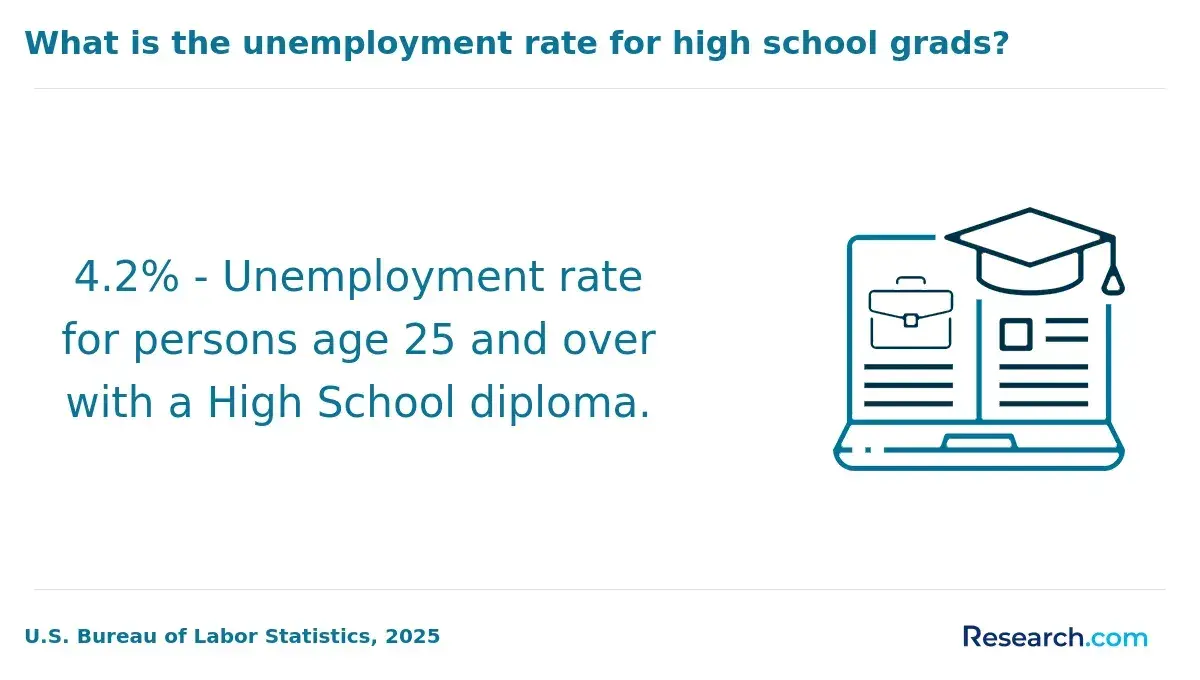
Requirements vary by credential level. Many entry-level college certificates require a high school diploma or equivalent and an application, while selective healthcare or advanced technical certificates may require placement testing, prerequisite coursework, background checks, immunizations, or minimum grades in foundational classes. Noncredit programs may have simpler enrollment but generally offer fewer transfer protections.
Prior credits are commonly evaluated through official transcripts. Schools may also consider military training, standardized examinations, portfolios, or validated prior learning, but acceptance varies by institution and program. A transferred course can count as a direct requirement, an elective, or no credit at all.
Military families should prioritize portable records, predictable course schedules, and schools experienced with transfer evaluation. Comparing military spouse-friendly online colleges can help learners assess options designed around relocation and changing duty-station schedules.
Apply strategically rather than assuming every old credit will fit.
- Request official transcripts from every prior college before applying.
- Compare each completed course with the destination program's degree map and catalog descriptions.
- Ask for a written preliminary transfer evaluation and identify credits that will meet major requirements.
- Check the receiving school's residency rule, which may require completing a minimum number of credits there.
How long do transfer-friendly online non-degree programs take and what do they cost?
Academic certificates often require roughly 12 to 36 semester credits, so completion can range from one term to about a year or more depending on course load, sequencing, and required practica. Noncredit programs may be shorter, but their lower duration should not be mistaken for transferable college credit. Clinical, shop, and exam-preparation requirements can extend the calendar even when lecture courses are online.
Costs depend on residency, public versus private control, per-credit tuition, technology charges, books, tools, proctoring, travel, and required exams. College Board's 2024-25 published average tuition and fees for public two-year in-district students was $4,050. That benchmark is useful for comparison, but a particular online certificate may cost more after fees or less through local residency rates.
The cost categories below reveal why advertised tuition alone is not a complete comparison.
| Cost category | Why it matters | Transfer-related consideration |
| Tuition per credit | Drives the base cost of academic certificates | Paying for transcripted credit may have future value |
| Mandatory fees | May include online learning, lab, and technology charges | Compare the full program estimate, not one course price |
| Materials and equipment | Common in trades, design, and healthcare | Some items may remain useful in later coursework |
| External exams and licensing | May be separate from tuition | Confirm whether the program actually meets exam eligibility rules |
Eligible credit-bearing programs may participate in federal aid, but eligibility depends on the institution, program length, enrollment status, and student circumstances. If aid is essential, compare an online college that accepts FAFSA and verify directly with its financial-aid office that the specific certificate qualifies. Do not assume FAFSA availability for a noncredit course or third-party bootcamp.
What curriculum and coursework do top transfer-friendly online certificate programs include?
Strong transfer-friendly certificates use recognizable college-level courses with stated learning outcomes, credit values, qualified instructors, and official transcript records. The best curriculum for you is not necessarily the shortest one; it is the one that covers prerequisites for your intended degree or employer-recognized next step.
Many stackable programs combine broad foundation courses with field-specific instruction.
| Program area | Common transferable coursework | Applied component to verify |
| Business and technology | College writing, spreadsheets, databases, programming, project management | Software access, project portfolio, proctored assessments |
| Healthcare administration | Medical terminology, anatomy basics, coding systems, health records | Certification-exam alignment and any practicum expectations |
| Trades and technical fields | Technical math, safety, blueprint reading, electrical or mechanical theory | Required labs, tools, shop time, and local attendance |
| Criminal justice and legal studies | Criminal law foundations, ethics, report writing, legal research | Research platform access and jurisdiction-specific content |
| Design and media | Design principles, typography, digital imaging, web fundamentals | Portfolio reviews, software licenses, and original project work |
Ask whether every course has a catalog number, credit value, and syllabus. Those details give a receiving evaluator evidence to compare content. Programs built solely around videos, attendance, or vendor modules may still be useful, but they are a different investment from an academic, stackable certificate.
What careers can online non-degree programs with transferable credits lead to?
Transferable credits can lead to entry-level work, advancement in a current role, or a faster route into an associate or bachelor's program. Outcomes depend on the field, local employers, experience, portfolio quality, licensing rules, and whether the certificate includes required practice. In regulated healthcare and skilled-trade occupations, a certificate alone may not meet legal or employer requirements.
These examples show how a certificate can function as either a job-focused credential or a stepping stone.
| Certificate focus | Possible entry-level direction | When further education may be needed |
| Medical billing and coding | Billing support, coding support, revenue-cycle roles | Employers may prefer industry certification or experience |
| IT support or data fundamentals | Help desk, technical support, junior operations roles | Advanced cybersecurity and software roles often require deeper training |
| HVAC or electrical theory | Apprentice or helper pathways | Licensure, apprenticeship hours, and supervised practice may be required |
| Paralegal studies | Legal assistant or administrative legal support | Employer preferences and state-specific expectations vary |
| Graphic or digital design | Production design, content support, freelance projects | Portfolio depth can matter more than additional credentials |
A certificate is worth considering when it fills a known skill gap or applies to a mapped degree requirement. Consider an associate degree, apprenticeship, or longer approved program instead when your target occupation requires extensive supervised training, broad general education, or licensure.
What salary ranges and job outlook are associated with careers from these programs?
Occupation data is useful for evaluating a career direction, not for predicting what a certificate graduate will earn. The U.S. Bureau of Labor Statistics reported a 2023 median annual wage of $48,780 for medical records specialists and projected 9% employment growth for that occupation from 2023 to 2033. This can make health-information training worth investigating, but employers may still require experience, coding knowledge, or a preferred certification.
Salary varies substantially by state, industry, shift, experience, union status, and job duties. The following figures are occupational medians from the BLS 2023 data, not earnings promises tied to a particular online program.
| Occupation | 2023 U.S. median annual wage | Education and credential context |
| Medical records specialists | $48,780 | Postsecondary training is common; employer requirements vary |
| Paralegals and legal assistants | $60,970 | Many employers seek an associate degree or certificate plus relevant preparation |
| Graphic designers | $58,910 | Portfolio and design capability are important; a degree is often preferred |
| Heating, air conditioning, and refrigeration mechanics and installers | $57,300 | Usually requires technical education plus on-the-job training; state rules vary |
Use occupational data as a screening tool. Compare local job postings, required licenses, and the exact credential employers request before calculating return on investment. A lower-cost certificate can be a good value when it removes a specific barrier; it is a poor value when it does not satisfy the next employer or college requirement.
How can students evaluate and choose reputable transfer-friendly online non-degree programs?
Evaluate transferability before paying an application fee. Start with the degree, license, or job you want after the certificate, then work backward to identify required courses, recognized providers, and practical training. Rankings and marketing claims can help you find options, but they cannot replace a written transfer evaluation from the receiving institution.
Use this process to compare programs consistently.
- Identify whether you need academic credits, employer-recognized skill training, an industry certification, or state licensure preparation.
- Confirm institutional accreditation and check whether the exact certificate is credit-bearing and transcripted.
- Send course numbers and syllabi to your intended receiving college for a written transfer assessment.
- Calculate total cost, including fees, books, equipment, travel, exams, and lost work time.
- Verify online attendance requirements, labs, clinicals, internships, and proctoring before committing.
- Compare the certificate map with longer accelerated programs if your ultimate goal is a degree rather than a short-term skill upgrade.
Common mistakes include treating a completion certificate as college credit, relying on verbal transfer promises, ignoring residency rules, and assuming an online program meets every state's licensing standards. Avoid these problems by getting key answers in writing, keeping course documentation, and checking the destination school's rules before enrollment.
Other Things You Should Know About
No. Even credits from an accredited college can be denied, accepted only as electives, or excluded because of grade, age, course-level, major, or residency requirements. The receiving college makes the final decision.
Usually not as standard college credit. Some institutions may award prior-learning credit after an assessment, but this is not guaranteed. If transfer matters, confirm that courses are transcripted with academic credit before enrolling.
No. A certificate is typically issued after completing an educational program. A professional certification is awarded by a certifying organization after meeting its standards, which may include an examination, work experience, or continuing education.
Sometimes. Federal aid eligibility depends on the school, the specific program, program length, enrollment status, and your individual eligibility. Ask the financial-aid office whether the exact certificate is eligible before you enroll.
References
- Accredited vs. Credit-Recommended vs. Transfer Policy: What It All Means for Your College Credits https://www.straighterline.com/blog/transfer-accredited-vs-credit-recommended-vs-transfer-policy-what-it-all-means-for-your-college-credits
- They aren't colleges. But they promise fast, cheap college credits. https://www.washingtonpost.com/education/2026/06/23/colleges-are-accepting-transfer-credits-online-platforms-that-arent-schools/
- For-Profit Colleges: What Every Student Should Know | OnlineColleges.net https://www.onlinecolleges.net/for-students/for-profit-colleges-student-guide/
- Top Online Schools That Accept Transfer Credits https://www.edvisorly.com/student-guides/online-schools-that-accept-transfer-credits
- Non-Traditional Credit & Experiences https://www.towson.edu/admissions/undergrad/transfer/credit/non-traditional.html
- Common Questions https://utahtransferguide.org/Common-Questions
- What Documents Do You Need to Transfer College Credits? https://www.sophia.org/blog/higher-education/what-documents-do-you-need-to-transfer-college-credits/
- How Do Transfer Credits Work? A Guide for Adult Learners | Whitworth Online https://online.whitworth.edu/news-articles/how-do-transfer-credits-work-when-you-go-back-to-school/
- Programs for Non-Degree Seeking Students | University of Phoenix https://www.phoenix.edu/blog/non-degree-seeking-student.html
- Nonprofit vs For-Profit Universities: What's the Difference? | CSU-Global https://csuglobal.edu/blog/nonprofit-vs-profit-universities-whats-difference