2027 Best Online Stackable Credentials for In-Demand Careers

Co-Founder and Chief Data Scientist
Choosing a short online program is risky when its credits, employer value, or licensing alignment are unclear. Stackable credentials let learners earn smaller certificates that can build toward larger credentials or degrees. This matters in fields with measurable demand: the U.S. Bureau of Labor Statistics projects employment of wind turbine service technicians to grow 50% from 2024 to 2034.
This guide helps career changers, working adults, and recent graduates compare credential paths, verify quality, estimate costs, and select training that supports a realistic next career step.
Key Things You Should Know
- Choose a stackable pathway only after confirming in writing which certificates apply to the next credential, whether they carry academic credit, and whether transfer limits or expiration rules apply.
- Demand varies sharply by occupation. BLS projects 50% growth for wind turbine service technicians from 2024 to 2034, but many regulated healthcare and legal roles still require state approval, an exam, or supervised practice beyond a certificate.
- Compare total cost, required equipment, clinical or lab travel, exam fees, and employer recognition before choosing an online certificate, associate degree, industry certification, or apprenticeship.
Top 10 Best Online Stackable Credentials for In-Demand Careers
Popular Trade School Programs
Online trade pathways commonly begin with certificates in HVAC fundamentals, electrical theory, welding technology, construction management, industrial maintenance, or renewable-energy support. Lecture-heavy content can be online, but welding, electrical labs, refrigerant handling, and safety competencies usually require campus intensives, an employer site, or an approved local lab.
A certificate may stack into an associate degree in applied science; it does not replace an apprenticeship or state-required journey-worker license. Choose this route if the school documents hands-on hours, tool costs, and local employer partnerships.
Healthcare Programs
Healthcare stackable routes may combine medical billing and coding, medical assisting, health information, pharmacy technician, practical nursing prerequisites, or allied-health certificates with an associate degree. Online coursework is most suitable for terminology, coding, administration, and health information; direct patient-care programs require in-person clinical placements.
Verify that a program meets the requirements of the relevant certifying body or state board before enrolling. For example, a coding certificate can prepare a learner for an optional industry exam, while nursing licensure requires an approved nursing program and state eligibility.
Criminal Justice / Law Programs
Common online options include criminal justice certificates, homeland security certificates, legal studies certificates, paralegal studies, and associate degrees in criminal justice. These programs can build writing, research, records-management, ethics, and procedural knowledge.
They are useful for administrative, compliance, corrections-support, or entry-level public-safety pathways, but they do not automatically qualify graduates to become police officers, attorneys, or licensed investigators. Paralegal candidates should check local employer expectations and whether a program has appropriate institutional recognition or paralegal-focused approval, especially when pursuing law-firm work.
Arts & Design Programs
Stackable arts and design options often start with certificates in graphic design, UX design, digital media, web design, animation, photography, or video production and can lead to an associate degree or portfolio-based specialization. Online delivery works well for software instruction and critiques, but students need current hardware, licensed software, and time to build original work.
Employers commonly evaluate portfolios alongside credentials. Choose a credit-bearing sequence when you may pursue an associate or bachelor's degree later; choose a focused professional certificate when you need a specific tool or portfolio skill quickly.
What are stackable credentials and how do online programs typically structure them?
A stackable credential is a deliberately connected sequence of smaller educational credentials. A learner may complete a short certificate first, use those courses toward an advanced certificate or associate degree, then add an industry certification or bachelor's completion program. The key feature is documented progression, not simply earning several unrelated badges.
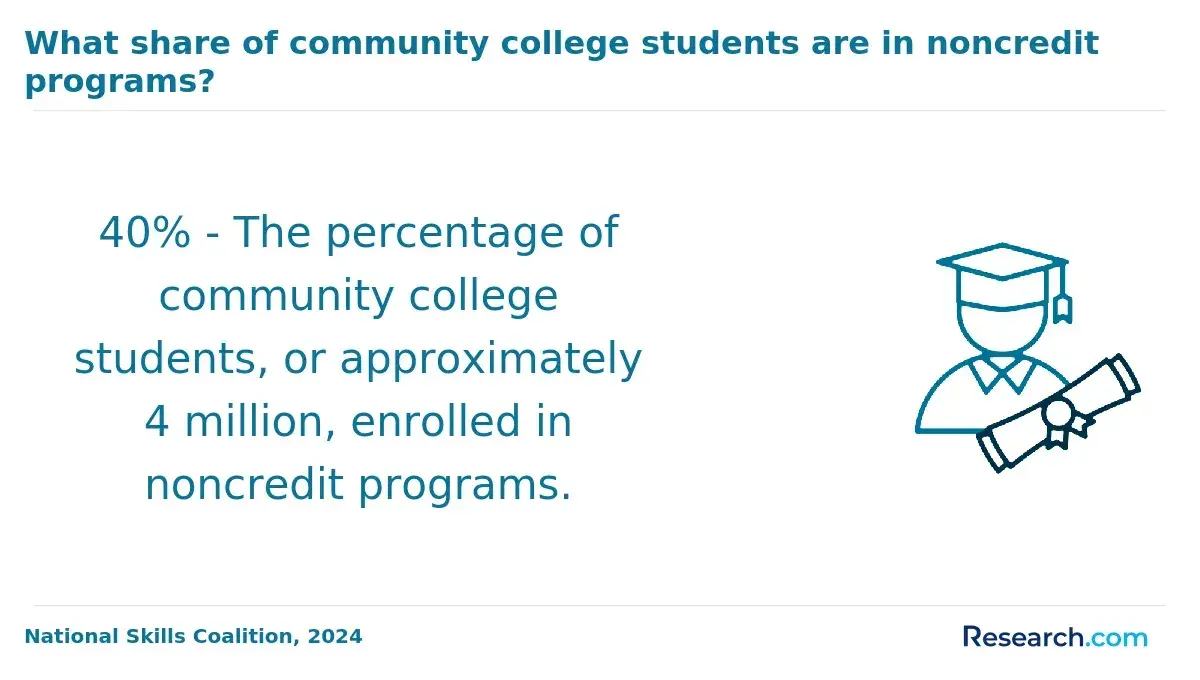
Online structures vary. Community colleges commonly offer credit-bearing certificates whose courses may apply to an associate degree. Universities may offer undergraduate or graduate certificates with defined credit requirements. Workforce providers often issue noncredit certificates or digital badges.
These can demonstrate learning but may not transfer as college credit. Learners comparing accelerated formats can also review 6 week courses online when a compressed schedule fits their workload.
Ask the provider to identify the exact credential awarded, its credit value, the next credential in the sequence, and the written policy governing application of completed courses. "Stackable" is meaningful only when the next step is available and credits are accepted under current policy.
How do online stackable credential programs compare to campus-based options for flexibility and outcomes?
Online stackable programs can be a strong fit for employed adults because asynchronous coursework reduces commuting and can allow part-time enrollment. They are less suitable when the target occupation depends on frequent supervised labs, clinical rotations, equipment practice, or local networking.
Online learning is a delivery method, not evidence of weaker or stronger outcomes; outcomes depend on curriculum, student support, placement access, and employer recognition.
The comparison below highlights the practical trade-offs readers should evaluate before choosing a format.
| Factor | Mostly online pathway | Campus or hybrid pathway |
| Scheduling | Usually better for work and caregiving schedules | Requires set meeting times but provides routine |
| Hands-on training | May require local placements or short residencies | Labs and equipment are usually built into delivery |
| Peer and employer access | Depends on virtual support and local partnerships | Often easier through campus events and local faculty ties |
| Best fit | Administrative, IT, business, coding, and theory-heavy study | Clinical, skilled-trade, studio, and equipment-intensive training |
If speed matters more than seat time, competency-based options may be worth comparing. Learn what is a competency based masters degree before assuming that a self-paced model is available at the certificate or associate level.
What accreditation and quality standards should online stackable credential programs meet?
Quality review should match the credential type. For a credit-bearing college certificate or degree, verify institutional accreditation recognized by the U.S. Department of Education or the Council for Higher Education Accreditation.
For career training, also check whether the program has programmatic approval, employer acceptance, clinical-placement agreements, or alignment with an external certification exam.
These checks help distinguish a credible sequence from a credential with limited use.
- Confirm the institution, not just the program website, and verify its accreditation status through official directories.
- For regulated fields, confirm that the curriculum meets the requirements of the relevant state board, agency, or exam sponsor.
- Request course descriptions, faculty qualifications, student-support details, and the written stackability or transfer policy.
- Ask whether students must arrange their own clinical site, practicum, lab, proctoring, equipment, or background check.
A red flag is a provider that promises licensure, employment, transfer credit, or certification eligibility without naming the approving authority. Another is a noncredit program marketed as equivalent to a college certificate without clearly stating that it awards no academic credit.
What admission requirements and prior experience are needed for most online stackable credentials?
Admission requirements depend on the level and provider. Many entry-level college certificates require a high school diploma or equivalent and placement steps, while noncredit professional certificates may have only basic technology or experience expectations. Advanced certificates may require prior college coursework, a degree, portfolio review, employment experience, or an active license.
Prior learning can matter, but it should not be assumed. Applicants with completed college work may compare policies alongside the best associate degrees if an associate pathway is the intended next stack. Credit may be awarded through transfer evaluation, standardized exams, military training review, or prior-learning assessment, but each institution sets its own limits.
Before applying, confirm prerequisites, minimum grades for progression, technical requirements, background-check rules, immunizations for clinical placements, and whether a local placement is required. Do not enroll on the assumption that prior work experience automatically substitutes for academic prerequisites.
How long do online stackable credential programs take and what do they cost?
Completion time ranges from a few weeks for a narrow noncredit course to about one year for many college certificates, with associate degrees commonly requiring about two years of full-time study.
Part-time enrollment, prerequisite courses, clinical scheduling, and course sequencing can extend that timeline. A stackable design can reduce duplicated coursework, but only when the next credential accepts the earlier courses.
Cost should be evaluated as a complete pathway rather than a promotional monthly payment. The following categories show why two programs with similar tuition can have very different total costs.
| Cost factor | Why it changes the investment |
| Tuition and mandatory fees | May be charged per credit, course, term, or program |
| Equipment and software | Can be substantial in design, IT, trades, and clinical programs |
| Exams and credentials | Industry certification, licensing, fingerprinting, and proctoring may be separate |
| In-person requirements | Travel, lodging, uniforms, tools, and unpaid clinical time may add costs |
| Lost work time | Externships, labs, and fixed clinical shifts can affect earnings while enrolled |
Eligible credit-bearing programs may allow federal student aid for qualified students, while many noncredit offerings do not. Employer tuition assistance, workforce grants, and payment plans can help, but compare their conditions.
Learners considering a long academic ladder should also assess the cheapest doctoral programs only if a doctorate is genuinely relevant to their eventual profession.
What courses and skill areas are commonly included in stackable credentials for high-demand fields?
High-demand stackable pathways generally combine occupational knowledge with durable skills employers can observe. The exact curriculum should follow the job target rather than a broad interest area.
For example, a medical coding route should include coding systems, reimbursement, privacy, and electronic records; an IT route should include networking, operating systems, security, cloud fundamentals, and troubleshooting.
Across fields, programs commonly build these skill areas:
- Digital fluency, including industry software, data handling, cybersecurity awareness, and responsible use of AI-enabled tools.
- Applied communication, documentation, customer or patient interaction, and professional ethics.
- Role-specific technical practice through simulations, projects, labs, portfolios, internships, or supervised placements.
- Career preparation such as résumé development, interview practice, exam preparation, and evidence of competency.
AI is changing task design in administrative, design, and technical roles, so favor programs that teach verification, privacy, judgment, and workflow integration rather than training students to rely on one software tool. Request a current course sequence and compare it with recent job postings in your target location.
What careers and job roles do stackable credentials most frequently prepare students to enter?
Stackable credentials most often support entry or advancement roles where employers value defined skills, documented coursework, and relevant certifications. They can also provide a lower-risk starting point before an associate or bachelor's degree. Whether a credential is enough depends on the employer, local labor market, experience, and legal requirements.
This comparison separates roles where a short credential may be relevant from roles that commonly need further authorization or education.
| Career area | Potential entry or support roles | Important limitation |
| Healthcare administration | Medical records specialist, billing support, patient-access representative | Clinical roles require separate education and authorization |
| Information technology | Help-desk technician, technical support specialist, junior IT support | Projects, certifications, and experience often influence hiring |
| Skilled trades | Apprentice helper, maintenance trainee, solar or wind support roles | Hands-on training and state or employer requirements may apply |
| Legal support | Legal assistant, records clerk, compliance support | A certificate does not authorize legal practice |
| Design and media | Production artist, junior designer, content-production support | Portfolio quality is often decisive |
Use job postings as a reality check: note recurring education, certification, software, schedule, and experience requirements before paying for training. A pathway is a better investment when its first credential qualifies you for a plausible next job while also moving you toward the next credential.
What salary ranges and advancement opportunities are typical for careers using stackable credentials?
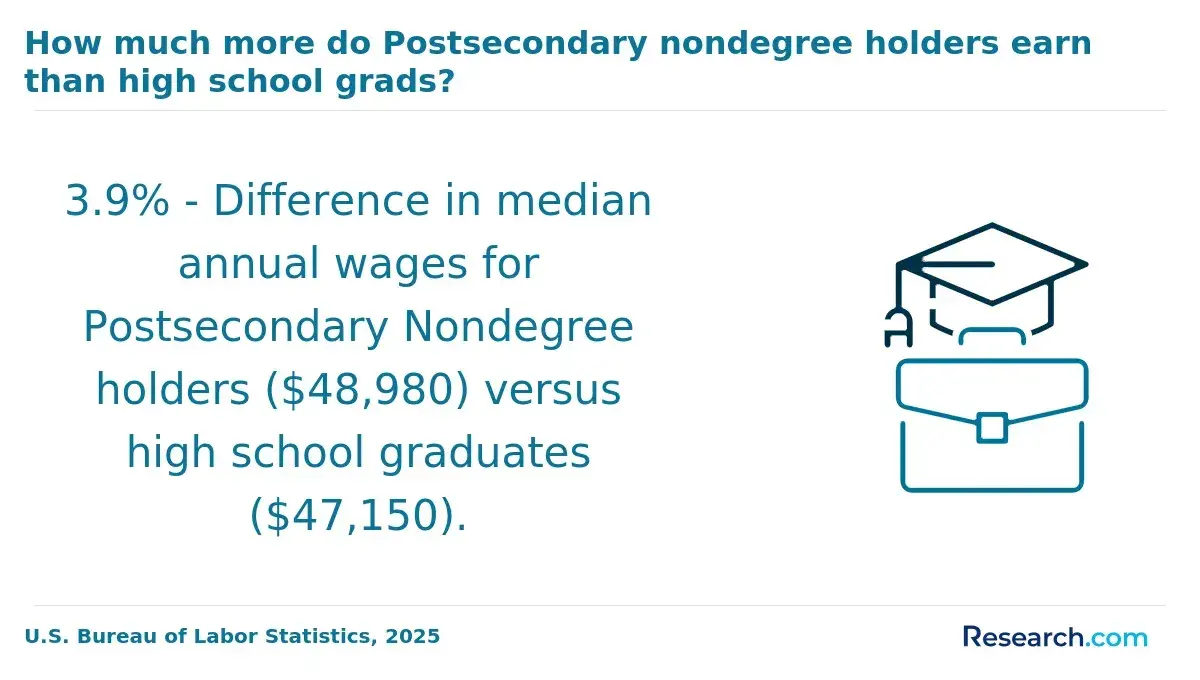
Occupational salary data describes workers in an occupation, not what a certificate holder will earn. Pay varies by state, experience, industry, shift, union status, and degree level. Still, BLS data can help readers assess whether a career field has enough earnings potential to justify its total training cost.
The latest BLS national median annual wage figures below are for occupations, using 2024 wage data.
| Occupation | 2024 median annual wage | 2024-2034 projected employment change |
| Medical records specialists | $50,250 | 7% |
| Paralegals and legal assistants | $61,010 | -1% |
| Graphic designers | $61,300 | 2% |
| Wind turbine service technicians | $62,580 | 50% |
| Web developers and digital designers | $95,380 | 8% |
These figures are national medians and do not establish that any particular program leads to a role. Advancement often comes from adding supervised experience, an industry certification, a portfolio, an associate or bachelor's degree, or a license where required. Compare local job listings and entry-level pay before calculating return on investment.
How do stackable credentials align with licenses, certifications, and professional exam requirements?
A certificate, certification, and license serve different purposes. A certificate is awarded by an education provider after completing a course sequence.
A certification is awarded by a professional organization after meeting its standards, which may include an examination, education, and experience. A license is legal authorization from a government body to practice a regulated occupation.
Use this sequence to avoid enrolling in training that does not meet your actual goal:
- Identify the exact job title and the state where you intend to work.
- Check whether the role requires a license, certification, registration, background check, or supervised hours.
- Ask the school whether its curriculum meets the relevant eligibility requirements and whether exam fees are included.
- Confirm directly with the licensing board or certification sponsor because rules can change and may differ by state.
- Keep course syllabi, transcripts, clinical records, and completion documents for future applications.
Common mistakes include assuming an online program is automatically approved for licensure, confusing exam preparation with exam eligibility, and treating a school-issued certificate as an industry certification. The safest choice is a program that clearly states what it awards and what additional steps remain.
Other Things You Should Know About the Best Online Stackable Credentials
They can be worthwhile when the first credential has standalone labor-market value and clearly applies to a larger credential you may need later. They are less compelling when transferability, employer recognition, or licensing alignment is unclear.
Sometimes. Credit-bearing certificates from the same college are often designed to apply toward an associate degree, but transfer is never automatic. Obtain the current written program map and ask whether completed courses have time limits or grade requirements.
Many employers focus on the provider's reputation, the skills demonstrated, relevant certifications, projects, and experience rather than delivery format alone. For hands-on fields, employers may also expect documented lab, clinical, or apprenticeship experience.
Only if the specific program satisfies the applicable state board's education requirements, and most licenses also require examinations, supervised experience, or other steps. Verify eligibility directly with the licensing authority before enrolling.
References
- What Are Stackable Credentials and Why Do They Matter? https://www.pltw.org/blog/what-are-stackable-credentials
- Rethinking Credentialing in Higher Education for the 21st Century https://moderncampus.com/blog/rethinking-credentialing-for-the-21st-century.html
- Build a Bridge Between Education and Industry with Credentials https://www.nga.org/futureworkforce/pathways/build-a-bridge-between-education-and-industry-with-credentials/
- Stackable Credentials in Career Education at California Community Colleges https://www.ppic.org/publication/stackable-credentials-in-career-education-at-california-community-colleges/
- USHE initiative helps students earn meaningful credentials on their way to a degree - Utah System of Higher Education https://ushe.edu/stackable-credentials-help-students-earn-credentials-on-their-way-to-a-degree/
- Stackable Certificates & Credentials - Complete College America https://completecollege.org/our-approach/structure/stackable-certificates-credentials/
- Stackable Credentials | Learn & Work Ecosystem Library https://learnworkecosystemlibrary.com/topics/stackable-credentials/