2027 Best Certifications for Students With Some College Credit

Co-Founder and Chief Data Scientist
Students with unfinished college credits often need a faster, lower-risk route to a credential that employers recognize. The best option depends on whether you need academic credits, a license pathway, or an industry certification - not simply the shortest program.
The U.S. Bureau of Labor Statistics projects employment to add about 3.1 million jobs from 2024 to 2034, with many openings tied to healthcare, skilled trades, technology, and support occupations. This guide compares practical certificate and certification paths, explains what prior credits may do for you, and helps you assess cost, flexibility, career fit, and legitimacy before enrolling.
Key Things You Should Know
- A credit-bearing college certificate can build toward an associate or bachelor's degree, while a professional certification usually verifies industry knowledge through an exam, assessment, or experience requirement.
- Students with some college credit should prioritize programs that evaluate transfer coursework; general education credits may shorten an academic certificate or associate degree, but rarely waive industry certification exams.
- High-demand options vary widely: BLS 2024-2034 projections favor several healthcare and trade roles, but licensure, clinical training, apprenticeships, and employer experience may still be required beyond a certificate.
Top 10 Best Certifications for Students With Some College Credit
Popular Trade School Programs
Electrical, HVAC/R, welding, automotive technology, and industrial maintenance certificates suit students who want hands-on work and a direct entry point. College credits may satisfy English, math, or safety requirements in credit-bearing programs. Electrician training commonly leads to an apprenticeship rather than immediate independent licensure.
HVAC certificates can prepare students for EPA Section 608 refrigerant certification, while welding programs build process-specific skills employers test in practice. Choose campus or hybrid training when labs are essential; avoid programs that promise trade licensure without documenting required supervised hours.
Healthcare Programs
Healthcare certificates can include medical assisting, dental assisting, pharmacy technology, practical nursing prerequisites, medical billing and coding, and phlebotomy. They differ sharply in regulation. A medical coding certificate may prepare a learner for an optional industry certification exam, while nursing and many clinical roles require state-approved education and licensure.
Prior anatomy, terminology, and general education credits may transfer into college-based programs. Confirm clinical-placement arrangements before enrolling, especially online. A short noncredit course can teach skills, but it may not meet employer, certification, or state eligibility rules.
Criminal Justice / Law Programs
Paralegal studies, legal assistant, court reporting support, homeland security, corrections, and forensic science technician certificates can complement prior college coursework. A paralegal certificate is an educational credential; it is not a law license and does not authorize independent legal practice.
Students with an associate or bachelor's degree in another field may find a post-baccalaureate paralegal certificate especially efficient. For police, corrections, and security careers, academy standards, background checks, physical requirements, and state rules can matter more than a general certificate. Ask whether the curriculum aligns with local employers and courts.
Arts & Design Programs
Graphic design, UX/UI design, digital media, web production, photography, animation, and interior design certificates can help students convert previous coursework into a portfolio-focused path. These programs are strongest when they provide current software training, project critiques, and work samples rather than only lectures.
A certificate can demonstrate focused study, but hiring commonly depends on portfolio quality and relevant experience. Some interior design roles have state-specific title or licensing considerations. Students who already hold art, communications, or computer credits may prefer a stackable college certificate that also advances toward an associate or bachelor's degree.
Which types of certifications are best for students with some college credit?
The best certifications for students with some college credit are usually those that match a specific job target and use prior learning efficiently. Start by deciding whether you need an academic credential from a college, an employer-recognized professional certification, or both. For example, a community-college IT certificate may award credits, while CompTIA A+ is a separate vendor-neutral certification earned by passing exams.
This comparison separates common paths by what they can realistically do for a partial college completer.
| Credential path | Best for | How prior college credit may help | Important limitation |
| Credit-bearing certificate | Entry-level career training and future degree completion | May transfer general education or prerequisite courses | Transfer acceptance is determined by the receiving institution |
| Associate degree | Roles needing broader coursework, clinical preparation, or advancement options | Can reduce remaining credits substantially after transcript review | Usually takes longer than a focused certificate |
| Industry certification | IT, project support, cloud, cybersecurity, bookkeeping, and technical specialties | Prior coursework can help with exam preparation | Usually does not create college credit or replace work experience |
| License-preparation program | Regulated healthcare and skilled-trade paths | May satisfy prerequisites | Program completion alone may not meet all state licensing conditions |
A stackable, credit-bearing certificate is often the strongest fit if finishing a degree remains a goal. A professional certification can be the better immediate choice when an employer specifically requests it and you already have the underlying knowledge.
What admission requirements do certification programs typically have for partial college completers?
Admission requirements depend on the provider. Credit-bearing college certificates and associate degrees typically require an application, identity or residency information, and official transcripts for transfer evaluation. Open-access community colleges may not require a competitive GPA for general admission, but selective healthcare programs can require prerequisite grades, placement testing, immunizations, background checks, or entrance exams.
Noncredit career programs and industry certification exams often have simpler entry rules. They may require only a payment, a high school credential, minimum age, or foundational knowledge. Do not assume "no admissions requirement" means an employer will recognize the credential.
Before applying, assemble the information schools and certifying bodies are most likely to request.
- Official transcripts from every college attended, even if you did not earn a degree
- Course descriptions or syllabi for older, unusual, technical, or disputed transfer courses
- Documentation of prerequisites, licenses, immunizations, or background-check eligibility when the field requires them
- A written transfer-credit evaluation showing which requirements remain
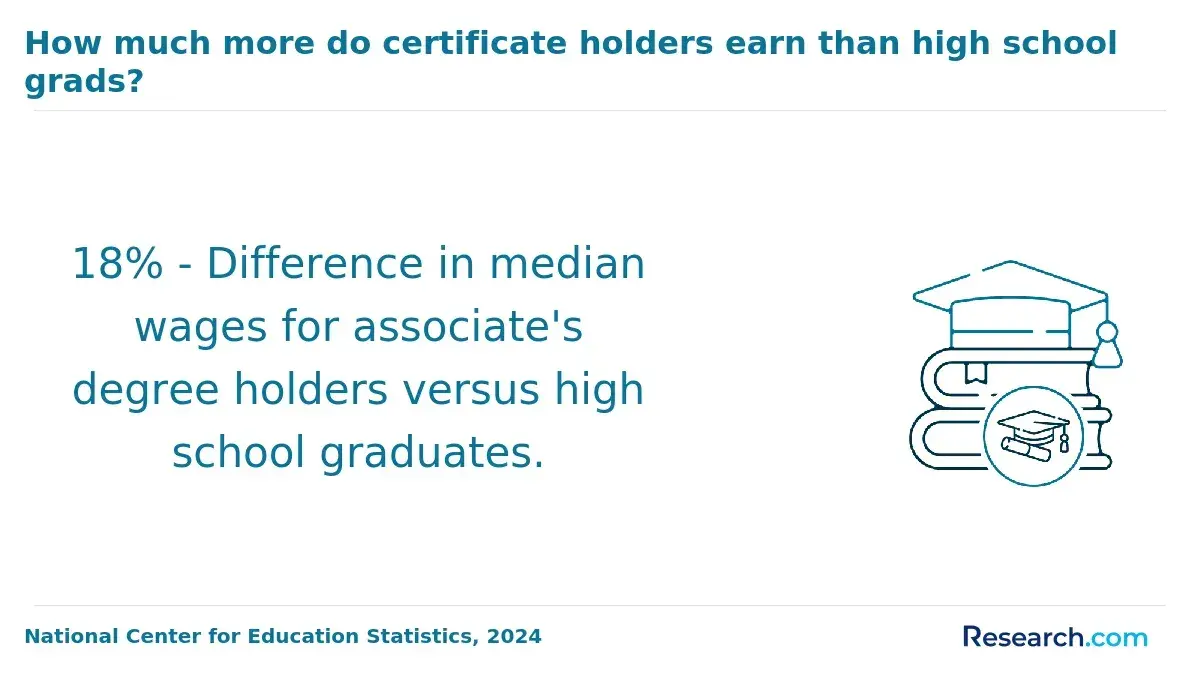
For credit-bearing programs, ask whether aid eligibility applies to your exact enrollment status and program length. Students comparing aid options can review FAFSA-approved online certificate programs, but should verify that the specific certificate is eligible before counting on federal aid.
How do online and campus-based certification programs compare for flexibility and quality?
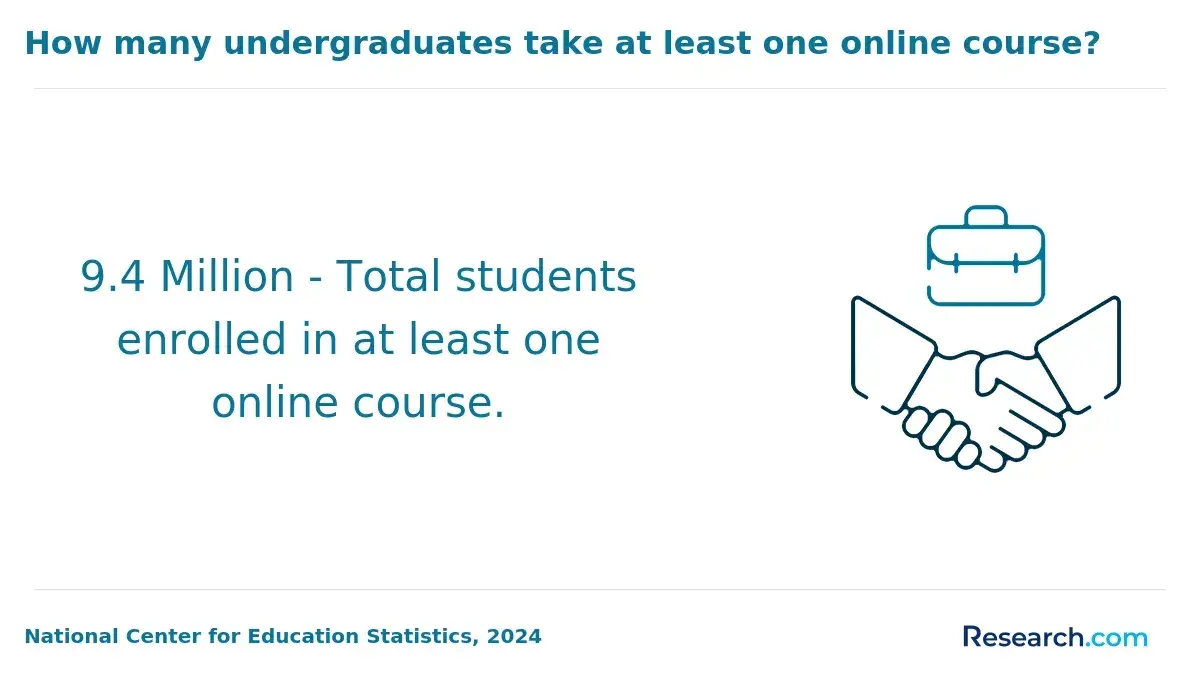
Online programs can be high quality when the curriculum is designed for online learning, instructors are accessible, assessments are meaningful, and required practical experiences are arranged locally. They are especially useful for IT, coding, billing and coding, project management, business software, and academic coursework. Campus-based or hybrid formats are generally safer for welding, HVAC, dental assisting, phlebotomy, electrical labs, and other skills requiring equipment, supervised practice, or clinical contact.
The central trade-off is not "online versus in person"; it is whether the delivery method can validate the skill employers or regulators expect.
| Factor | Online or mostly online | Campus or hybrid |
| Schedule | Often better for asynchronous study and work schedules | Usually fixed lab, clinic, or class times |
| Hands-on learning | Appropriate for simulations and theory, with limits | Better for equipment use, coaching, and supervised competencies |
| Networking | May require deliberate virtual outreach | Can offer direct access to instructors, peers, and local employers |
| Licensure preparation | Must be checked carefully by state | Often easier to document required lab or clinical hours |
Working learners should also compare pacing, proctoring, live-session expectations, and access to tutoring. Online degrees for working adults can provide a useful benchmark for evaluating accelerated schedules, but acceleration is only worthwhile when you can sustain the workload.
What accreditation and industry standards should these certification programs meet?
Accreditation matters most for credit-bearing college programs, financial-aid eligibility, transferability, and regulated professions. Verify institutional accreditation through the U.S. Department of Education or the Council for Higher Education Accreditation, then check whether a program needs specialized approval. Examples include nursing approval by a state board, medical-assisting accreditation relevant to certification eligibility, and programmatic standards for certain technical or legal fields.
Industry certifications require a different check: identify the certifying organization, exam version, renewal cycle, continuing-education rules, and whether employers in your target area actually request it. Vendor certifications can be valuable for jobs using that vendor's tools, while vendor-neutral certifications may travel more broadly.
These warning signs usually justify a pause before paying a deposit.
- The provider cannot state whether the credential is credit-bearing, noncredit, a certificate, or a professional certification
- Advertising claims a license or certification is "guaranteed" without naming the external exam or state authority
- The school will not provide completion, licensure-exam, placement, or withdrawal information when those measures apply
- Clinical sites, equipment fees, exam vouchers, or required tools are excluded from the quoted price
How long do common certification programs take and what do they cost?
Program length ranges from a few weeks for exam preparation to two years for an associate degree. Credit-bearing certificates commonly run one or two academic terms, while apprenticeship-linked trade training and licensure pathways may take longer because supervised work hours are part of the route. The College Board reported average published tuition and fees of $4,050 for in-district students at public two-year colleges in 2024-25; this is a national benchmark, not a complete program price.
The comparison below shows why tuition alone is not enough when judging affordability.
| Option | Typical time pattern | Main cost factors | Best use case |
| Noncredit career certificate | Weeks to months | Tuition, materials, exam voucher, tools | Targeted skill training with no need for academic credit |
| College certificate | About one to three terms | Per-credit tuition, fees, books, labs, transportation | Students seeking transferable or stackable credits |
| Industry certification | Preparation varies by experience | Training, exam, retake, renewal, continuing education | Workers needing a recognized competency signal |
| Associate degree | Usually four or more terms before transfer credit | Tuition, fees, supplies, clinical or lab costs | Careers needing broader preparation or a degree credential |
Request a written, all-in estimate and compare net price after grants, employer reimbursement, and eligible aid. Learners focused on minimizing tuition can also compare cheapest online colleges, while confirming that online delivery meets any lab, clinical, or licensing requirement.
What coursework and skills do students gain from leading certification options?
Leading certificate options should produce evidence of usable skills, not merely course completion. In trades, that may mean reading blueprints, following safety procedures, troubleshooting equipment, using diagnostic tools, and documenting work. Healthcare programs often emphasize medical terminology, privacy, infection control, electronic records, patient communication, and role-specific procedures. Legal and criminal justice programs may develop legal research, writing, records management, ethics, and evidence-handling awareness.
Technology and design credentials increasingly emphasize digital workflows. Employers may expect learners to show project files, portfolios, spreadsheets, dashboards, support tickets, code repositories, or simulated case work. Artificial intelligence is changing task design in many office, design, and technical jobs, so programs should teach judgment, verification, privacy, and responsible tool use - not only software prompts.
Ask each provider how it assesses competency. Strong answers include supervised demonstrations, externally reviewed portfolios, clinical checkoffs, practical exams, and projects based on realistic workplace problems.
Which high-demand careers are accessible with certifications plus some college credit?
Some college credit can strengthen applications for careers where employers value both foundational education and job-specific training. It is most useful when paired with a credential that maps directly to the work, such as a technical certificate plus an apprenticeship, a coding certificate plus a recognized coding exam, or IT coursework plus an industry certification.
BLS 2024-2034 projections show particularly fast growth for several healthcare support and information-related occupations, but growth does not eliminate local competition or employer requirements. Use job postings in your area to confirm common credentials, software, schedules, and experience expectations.
| Career area | Potential entry route | Credential considerations |
| IT support | Prior college coursework plus an IT certificate or entry-level certification | Employers may prioritize troubleshooting ability and customer service experience |
| Medical records and coding | College certificate or career program with coding preparation | Certification preferences vary; coding accuracy and payer knowledge matter |
| HVAC technician | Trade certificate plus supervised field training | EPA Section 608 certification is required for regulated refrigerant work |
| Paralegal or legal assistant | Paralegal certificate, often after prior college study | Hiring standards vary by employer and jurisdiction |
| Graphic or digital design support | Design certificate plus a portfolio | Portfolio quality can carry more weight than the credential title |
If your target role normally requires a bachelor's degree, a short credential may still help you test the field or gain an entry-level support role, but it should not be treated as an equivalent replacement for the required degree.
What salary ranges and advancement opportunities come with these certifications?
Salary data describes occupations, not what every certificate holder earns. Pay varies by location, experience, shift, union coverage, employer, and whether a role requires a license or degree. In May 2024, BLS reported median annual wages of $62,350 for electricians, $59,810 for heating, air conditioning, and refrigeration mechanics and installers, $61,010 for paralegals and legal assistants, and $50,250 for medical records specialists.
These figures help compare occupational upside, but they do not prove that a particular certificate leads to the occupation. For example, electricians typically complete an apprenticeship, and a paralegal certificate may be only one part of an employer's preferred background.
Advancement usually comes from combining credentials with experience. A trade worker may move into specialized systems, estimating, supervision, or contracting where permitted. A healthcare support worker may add a specialty certification or complete an associate degree. In technology, foundational certifications can lead to networking, cloud, security, or systems roles after hands-on experience. Students weighing a longer academic path can compare fields among high-paying degrees before deciding whether a certificate is a final credential or a first step.
How can students evaluate and choose a reputable certification program?
A reputable program is one that clearly connects its credential, curriculum, delivery format, cost, and outcomes to your goal. Do not select solely because it accepts transfer credit or advertises fast completion. A cheaper program that does not qualify you for the needed exam, clinical experience, or employer screening can be the more expensive choice.
Use this process to make a defensible decision before enrolling.
- Name the exact job, license, or certification exam you want to pursue and review local job postings for recurring requirements.
- Decide whether you need transferable college credit, a short skills program, an industry certification, or a combination.
- Send official transcripts and obtain a written evaluation of accepted credits, remaining courses, and expiration rules for old coursework.
- Compare total costs, including supplies, testing, background checks, clinical travel, software, and retake fees.
- Confirm institutional accreditation and any programmatic, state-board, or certifying-body approval relevant to your goal.
- Ask for outcome data, practical-training details, student support, refund terms, and the exact credential printed upon completion.
Be especially cautious of high-pressure enrollment tactics, vague claims about "national accreditation," and promises of employment or licensure. A program representative should be able to answer questions in writing and explain what happens if transfer credits, clinical placement, or exam eligibility do not work out as expected.
Other Things You Should Know About
Possibly. Credit-bearing colleges decide transfer credit after reviewing official transcripts, course content, grades, and how long ago the course was completed. General education credits are often more transferable than specialized technical courses.
No. A certificate usually shows that you completed an educational program. A certification is typically awarded by an independent professional organization after you meet its requirements, often including an exam. Some programs prepare students for certification, but do not award it themselves.
Some eligible, credit-bearing certificate programs can qualify for federal student aid, but not all short, noncredit, or third-party training programs do. Confirm eligibility with the school's financial-aid office before enrolling.
The fastest useful option is the one requested for your target entry-level role. For some IT jobs, an industry certification may be faster than college coursework; for healthcare and trades, required clinical training, licensing, or apprenticeships may make a longer program necessary.
References
- 7 in-demand certifications in 2025 | edX https://www.edx.org/resources/in-demand-professional-certifications
- Six Types of Credentials Non-Traditional Students Want https://laurelridgeworkforce.com/six-types-of-credentials-non-traditional-students-want/
- Transferable Industry Certifications Credit https://www.broward.edu/admissions/credit-for-prior-learning/industry-certifications/
- After college: Outcomes and opportunities for Potential Completers https://texas2036.org/news-analysis/after-college-outcomes-and-opportunities-for-potential-completers/
- Certifications Offer Workers With No Degree a Pathway to Good Jobs https://www.luminafoundation.org/resource/professional-certifications-offer-workers-with-no-college-degree-a-pathway-to-good-jobs/
- Types of Pathways - The Education Trust-New York https://newyork.edtrust.org/types-of-pathways/
- How does a college degree improve graduates' employment and earnings potential? - APLU https://www.aplu.org/our-work/publicuvalues/employment-earnings/
- Research Summary: Education and Lifetime Earnings https://www.ssa.gov/policy/docs/research-summaries/education-earnings.html
- The Top 5 Certificate Programs for Jobs With Growth Potential | CourseStorm https://www.coursestorm.com/blog/top-certificate-programs-for-jobs
- 10 Quick Certifications That Lead To High-Paying Jobs | Become With Lantern https://www.learnhowtobecome.org/career-resource-center/quick-certifications-that-pay-well/