2027 Best Career Training Programs With Subscription Tuition

Co-Founder and Chief Data Scientist
Choosing career training is difficult when a low monthly payment may hide a long enrollment period, exam fees, or a credential employers do not recognize. Subscription tuition can make training more flexible, but it is not a standard credential category or a guarantee of affordability.
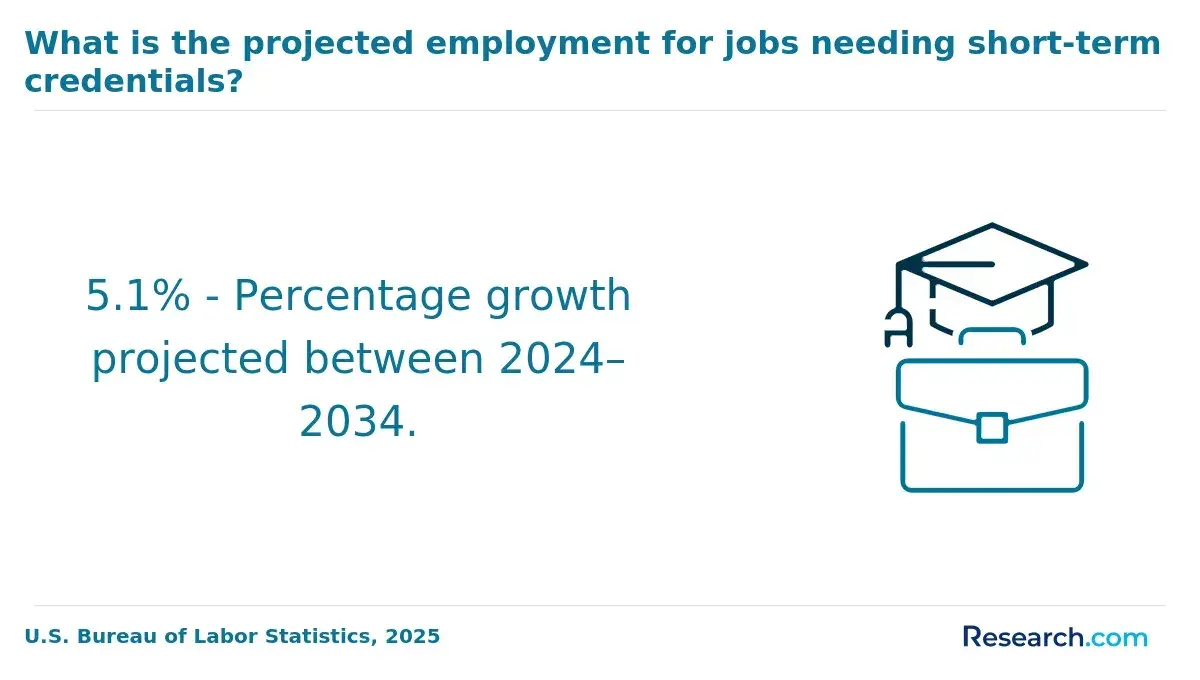
U.S. Bureau of Labor Statistics projections for 2024-2034 show faster-than-average growth in several healthcare, skilled-trade, and technology-related occupations. This guide helps prospective learners compare subscription models, verify program quality, estimate total cost, and select training that fits a specific job target.
Key Things You Should Know
- Subscription tuition usually means recurring monthly or term-based payments for access to training; calculate the likely total cost by multiplying the payment by a realistic completion timeline and adding supplies, exams, and licensing fees.
- Accreditation matters most when training leads to academic credit, federal aid eligibility, transfer options, or regulated healthcare education; industry recognition and state approval may matter more for noncredit career training.
- BLS employment projections for 2024-2034 point to continued demand in many healthcare and skilled-trade roles, but job eligibility depends on the occupation, state licensing rules, supervised experience, and employer requirements - not tuition format alone.
Top 10 Best Career Training Programs With Subscription Tuition
Popular Trade School Programs
Common subscription-friendly trade training includes HVAC technician certificates, electrical pre-apprenticeship certificates, welding certificates, plumbing fundamentals, industrial maintenance, and commercial driver license preparation. These are usually nondegree career-training programs, although community colleges may offer credit-bearing certificates or associate degrees. Hands-on trades require lab time, equipment, clinical-style practical assessments, or apprenticeships, so fully online training alone may not meet employer or licensing expectations. Choose a program only after confirming local apprenticeship pathways, required classroom hours, safety training, and whether its credential prepares you for the specific exam or job you want.
Healthcare Programs
Healthcare options may include medical billing and coding certificates, pharmacy technician training, medical assisting certificates, patient care technician training, and health information programs. Medical billing can be taught online, while medical assisting and patient care roles commonly require supervised externships. A school certificate is not the same as professional certification from an industry organization, and either may be separate from state authorization. Before enrolling, verify that externship placement is available where you live, that the curriculum meets employer expectations, and that any programmatic accreditation or board approval required for your intended role is in place.
Criminal Justice / Law Programs
Career-focused legal programs include paralegal certificates, legal administrative assistant certificates, court reporting training, and private security coursework. A paralegal certificate can build legal research, writing, and case-management skills, but it does not authorize independent legal practice. Court reporting and security work may involve state-specific testing, background checks, or licensing. Subscription payment models can suit learners completing software-based legal training part time, but compare instructor feedback, practical assignments, and local employer recognition. For careers requiring peace-officer authority, separate academy, agency, and state standards generally apply.
Arts & Design Programs
Graphic design, UX design, digital marketing design, photography, animation, and web design certificates are common creative-training options. These programs can be noncredit, credit-bearing, or portfolio-based professional certificates. A recurring tuition plan may work well for learners who can consistently build projects, but time-based billing can become expensive if portfolio completion stalls. Employers often review work samples more closely than a course title, so prioritize programs with critique, accessible design tools, rights-cleared portfolio projects, and career-relevant software. Check whether software subscriptions, hardware, and portfolio hosting are included or billed separately.
What is subscription tuition for career training?
Subscription tuition for career training is a payment structure in which a learner pays a recurring amount - often monthly, quarterly, or by a defined learning period - instead of one large upfront tuition charge. The payment may provide access to coursework until completion, access for a fixed period, or a set number of courses. It does not automatically mean "all-inclusive," "self-paced," or "lower cost."
The central trade-off is flexibility versus time risk. A learner who finishes quickly may spend less under a time-based model; a learner delayed by work, family obligations, failed assessments, or externship scheduling may pay more than expected. Some providers describe installment financing as subscription tuition, even though the full program price is fixed. Ask whether payments stop automatically after program completion and whether pausing, withdrawing, or returning later changes the amount owed.
Subscription tuition can be a reasonable fit for adult learners who need predictable monthly budgeting and can maintain a steady study pace. It is less suitable when a program has uncertain clinical placement dates, extensive required in-person hours, or a strict licensing deadline. Learners seeking a traditional academic pathway should also compare quick online degrees, especially when an associate or bachelor's degree is the stronger long-term requirement for the target occupation.
Which career training programs offer accredited subscription tuition?
An accredited subscription program is not a single product category. Institutional accreditation applies to eligible colleges and universities, while programmatic accreditation may apply to specific fields such as allied health. Many private career-training providers offer useful noncredit instruction but are not accredited colleges. Their value depends instead on curriculum quality, instructor expertise, employer recognition, exam alignment, and any state authorization required for the occupation.
Use the following distinctions to compare providers accurately. They help prevent the common mistake of assuming that any program labeled "certificate" carries academic credit or licensing eligibility.
| Program type | What the learner earns | What to verify before paying |
| Accredited college certificate | Academic certificate; may carry credit | Institutional accreditation, credit transfer policy, aid eligibility, and program-specific approval where relevant |
| Competency-based college program | Usually a degree or academic credential completed in a flat-rate term | Term length, assessment pace, transfer evaluation, and whether the occupation requires more than the credential |
| Private career-training program | School completion certificate or diploma, often noncredit | State authorization, total payment obligation, practical training, placement terms, and employer recognition |
| Industry certification preparation | Training intended to prepare for a separate certification exam | Exam eligibility rules, exam fees, required experience, and whether the certification is valued locally |
For regulated careers, start with the licensing board or employer requirement, then work backward to the appropriate school. Institutional accreditation alone does not prove a medical assisting, nursing-adjacent, court reporting, or trade program meets every state requirement. Conversely, a noncredit course can be useful for software skills without needing college accreditation. If salary advancement is the goal, compare the course with recognized certificate jobs that pay well and identify which credential employers actually request.
How do online and campus subscription programs compare?
Online and campus subscription programs can cover similar theory, but they are not interchangeable. Online delivery is often strongest for coding, billing, legal technology, project-based design, and foundational trade theory. Campus or hybrid delivery is usually stronger when learners need labs, equipment, instructor observation, clinical practice, or direct access to local employers.
This comparison shows which format typically fits common training needs. The best option is the one that can document required practical experience, not simply the one with the lowest advertised recurring payment.
| Factor | Online subscription program | Campus or hybrid subscription program |
| Schedule | Often flexible and asynchronous | Usually tied to labs, cohort meetings, or clinical schedules |
| Practical learning | May require learners to arrange local practice or externships | May provide labs, equipment, and supervised practice |
| Best use cases | Digital skills, theory courses, working adults with self-direction | Hands-on trades, patient-facing healthcare, equipment-intensive skills |
| Cost considerations | May reduce commuting costs but can add software, proctoring, or local placement costs | May include facilities but can add transportation, tools, uniforms, and parking |
| Main risk | Assuming online completion satisfies hands-on or licensing requirements | Paying recurring tuition while waiting for required placements or course availability |
Before choosing online study, request the written policy for proctored assessments, lab kits, externships, instructor availability, and state authorization. A program that is easy to access is not necessarily an easy college degrees online alternative; career training can be demanding when it includes competency tests, portfolio reviews, or supervised practical work.
What careers can subscription tuition programs prepare you for?
Subscription tuition can fund training for entry-level or career-transition roles, but the training must match the hiring standard for the job. It is most useful when a short program teaches a defined skill set, prepares for a recognized exam, or provides a portfolio and practical experience. It is less useful when employers consistently require a degree, a registered apprenticeship, substantial supervised hours, or a state license.
The following career paths illustrate the difference between educational preparation and occupational qualification.
| Career direction | Training that may help | Important limitation |
| HVAC, welding, electrical support | Trade certificate, pre-apprenticeship, safety training | Journey-level work commonly requires apprenticeship progression, experience, or local licensing |
| Medical billing and coding | Certificate coursework and coding exam preparation | Employers may prefer experience or a separate professional certification |
| Medical assisting | Certificate or diploma with clinical preparation | State rules and employer expectations vary; supervised practice may be essential |
| Paralegal support | Paralegal certificate or legal support training | Does not permit independent legal services or attorney practice |
| Graphic or UX design | Portfolio-based design certificate | Hiring commonly depends on demonstrated work, software ability, and role-specific experience |
AI tools are changing entry-level work in design, administrative support, and coding-related fields. That makes applied judgment, quality control, client communication, safety, and an authentic portfolio more important - not less. If your goal requires broader general education, internships, or advancement into management, a degree may be a better investment than a short program. Readers weighing that route can compare options through this guide to the easiest bachelor's degree, while still checking that "easiest" does not replace career relevance.
What admissions requirements do these programs usually have?
Admissions requirements depend on the provider and credential type. Noncredit online career courses may require only age eligibility, a payment method, and basic computer access. College certificates can require a high school diploma or equivalent, placement steps, transcripts, or prerequisite courses. Healthcare and public-safety-adjacent programs may also require immunizations, drug screening, background checks, CPR training, physical capability documentation, or criminal-history review before placement.
Do not assume a low-barrier enrollment process means you can enter the intended occupation. A security course may have a separate licensing application; an IT training course may prepare for an exam with its own eligibility rules; and a clinical program may have placement requirements that are stricter than admission requirements.
Before signing an enrollment agreement, take these steps to identify avoidable barriers:
- Find job postings for the role in your intended city and note the education, license, software, and experience requirements that recur.
- Confirm whether the program award is academic credit, a school certificate, a diploma, or preparation for a separate certification examination.
- Ask for written details on prerequisites, background-check policies, clinical or externship placement, and refund rules.
- Verify that the program is authorized to enroll learners in your state and meets any applicable board or agency requirements.
- Confirm whether previously completed coursework, military training, or work experience can reduce time to completion.
How long do subscription tuition programs usually take?
Completion time varies more under subscription tuition than under fixed-cohort tuition because billing often continues while the learner remains active. Short self-paced technology or design courses may take months, while trade and healthcare programs can take longer because they depend on labs, cohort sequencing, clinical hours, externships, or licensing milestones. A credit-bearing certificate may follow an academic calendar even when tuition is charged by term.
Use the provider's completion estimate as a planning starting point, not a promise. Ask for the median or typical completion range for learners with a schedule similar to yours, then build in time for retakes, scheduling, portfolio revisions, and required fieldwork. A fast completion claim is meaningful only if the program allows continuous progress and all required experiences are available when needed.
Working adults should estimate weekly study capacity honestly. If a program expects 15 hours each week and you can sustain only 6, a lower monthly payment may still produce a higher total cost. Part-time pacing can be sensible, but choose a plan that permits pauses without excessive re-enrollment or extension fees.
What do subscription tuition programs typically cost?
Subscription tuition typically costs a recurring payment rather than a single published total. The true price is the payment amount multiplied by the number of billing periods, plus required expenses. A fixed-price program with monthly installments is different from an open-ended subscription: the first has a known overall price, while the second depends heavily on completion speed.
Compare total cost rather than the first monthly charge. The table identifies expenses that commonly change the financial picture.
| Cost component | Why it matters | Question to ask |
| Recurring tuition | Can increase if completion takes longer than planned | Is there a maximum total tuition amount or a completion deadline? |
| Enrollment and administrative fees | May be charged separately or upon re-enrollment | Which mandatory fees are excluded from the advertised payment? |
| Books, tools, software, and uniforms | Hands-on and creative programs often need additional materials | Which items are required, and can they be purchased elsewhere? |
| Certification, licensing, and background checks | Often required to pursue the occupation but not included in tuition | Which external fees will I owe before I can apply for work? |
| Travel and placement costs | Clinical, lab, and externship requirements may create local expenses | Who arranges the placement, and where could it be located? |
Federal student aid generally applies only to eligible programs at eligible institutions and is not automatically available because a provider offers recurring payments. Employer tuition assistance, workforce grants, veterans' education benefits, and state workforce funding may be available in some cases, but eligibility is program-specific. Get the total-cost disclosure, refund policy, cancellation process, and financing terms in writing before paying. Avoid providers that cannot explain the maximum likely cost or treat an installment plan as evidence of affordability.
Which certifications or licenses may be required?
A certificate of completion, a professional certification, and a license serve different purposes. A school awards a certificate after coursework. A certifying body awards a certification after a candidate meets its standards, which can include an exam, education, and experience. A government agency or licensing board grants a license or registration that may be legally required to perform certain work.
Trade roles may require apprenticeship hours, local permits, or specialty credentials. Healthcare roles can require state approval, national certification preferred by employers, background screening, and clinical competency. Legal support professionals generally do not receive a license to practice law through a paralegal certificate, while court reporters and private security personnel may face state-specific rules. Design roles rarely require licensure, but software proficiency and a portfolio are often decisive.
To avoid paying for training that does not meet your goal, confirm the requirement in this order: the state licensing board or regulating agency, the certification organization, and local job postings. Then ask the school whether completion makes you eligible for the exam or application, whether exam preparation is included, and what additional requirements remain. Never rely solely on phrases such as "certification-ready" or "industry-aligned."
What salary and job outlook can graduates expect?
Career outlook should be evaluated by occupation, not by a provider's marketing claim or by the payment method used for training. The U.S. Bureau of Labor Statistics reports national occupational wage and employment-projection data, but those figures include workers with varying education levels, locations, experience, and employers. They are useful for comparing directions, not for predicting an individual outcome.
For example, BLS projections covering 2024-2034 indicate especially strong growth in many healthcare support and skilled technical occupations, while demand differs substantially by metropolitan area and licensing environment. A short certificate may help a candidate enter a support role, but it may not meet requirements for higher-level technician, supervisory, or licensed roles. Local job postings are often the best test of whether a particular credential is enough.
Estimate return on investment by comparing total training cost, realistic time away from paid work, local entry-level job requirements, and advancement options. Be cautious when a provider advertises salary figures without explaining geography, job title, sample size, or whether earnings are independently verified. A stronger program can show how its curriculum connects to job tasks, provide transparent outcome definitions, and explain what graduates still need to do after completion.
Other Things You Should Know About
It can be, but only when you finish within the expected timeframe and the plan has limited additional fees. Compare the full estimated cost, not just the monthly payment. A fixed total paid in installments is usually easier to budget than an open-ended monthly subscription.
Possibly, but not automatically. Federal aid generally requires an eligible program at an eligible institution. Private career schools may offer payment plans, employer reimbursement support, or other financing that is not federal financial aid.
Some are legitimate, but legitimacy and career usefulness are separate questions. Verify the provider's authorization, the credential awarded, instructor support, refund terms, practical-training arrangements, and whether employers or licensing bodies recognize the preparation.
Choose a certificate when the target role accepts focused short-term training and you need faster entry. Choose an associate degree when employers commonly require college credit, you want broader advancement options, or you may transfer into a bachelor's program later.
References
- High Quality, In-Demand Careers You Can Start With a Registered Apprenticeship - Apprenti https://apprenticareers.org/high-quality-in-demand-apprenticeship-careers/
- Subscription-Based Learning Platforms: The Smarter Way to Learn in 2026 https://www.nplus.global/blogs/subscription-based-learning-platforms/
- Why Employment Outcome Rates Matter | ACI Learning https://www.acitechacademy.com/blog/why-employment-outcome-rates-matter-a-guide-for-students-and-employers/
- Are Universities Ready for a Subscription Model? - ListEdTech https://www.listedtech.com/blog/are-universities-ready-for-a-subscription-model/
- EdAssist | Understanding college pricing models https://www.brighthorizons.com/resources/blog/edassist/understanding-college-pricing-models
- Job Training in New York City - New York City Employment and Training Coalition https://nycetc.org/membership/full-member-list/job-training-programs-in-new-york-city/
- CourseCareers https://coursecareers.com/blog-posts/7-best-online-career-training-programs-for-beginners
- Year Up https://evidencebasedprograms.org/programs/year-up-program-workforce-training-for-economically-disadvantaged-young-adults
- Top Highest-paying Trade School Careers Explained https://tidewatertechtrades.edu/blog/highest-paying-trade-school-careers/
- San Antonio Ready to Work - Train for a Great Job and Earn More https://readytoworksa.com/