2027 Best Online Career Training Programs With Tutoring Support

Co-Founder and Chief Data Scientist
Choosing online career training is difficult when providers promise flexibility but say little about live help, licensing, or job readiness. This guide compares practical online certificate and associate-level pathways with tutoring support for career changers, recent graduates, and working adults. U.S. Bureau of Labor Statistics projections show healthcare support occupations are expected to grow faster than average from 2024 to 2034, but program quality and state rules vary sharply by field.
Learn what tutoring should include, how to verify recognition, and when an online program is - and is not - the right investment.
Key Things You Should Know
- Choose tutoring as a measurable service: ask about subject-specialist availability, response times, appointment access, exam preparation, and whether support covers evenings or weekends.
- Online training can teach theory efficiently, but regulated careers often still require approved clinical hours, labs, background checks, or supervised fieldwork before employment or licensure.
- For cost context, College Board reported average published in-district tuition and fees of $4,150 at public two-year colleges for 2025-26; compare total program expenses, not tuition alone.
Top 10 Best Online Career Training Programs With Tutoring Support
Popular Trade School Programs
Common online or hybrid trade pathways include HVAC technician certificates, electrical technology certificates, welding certificates, industrial maintenance certificates, and construction-management associate degrees. Online coursework can cover safety, codes, estimating, diagnostics, and blueprint reading; skill-based trades still need in-person labs, apprenticeships, or employer-supervised practice. Tutoring is especially useful for applied math, electrical theory, and certification-exam preparation. Choose a program tied to local employer needs and verify whether it meets apprenticeship or state licensing prerequisites. A fully online program is usually a poor fit when hands-on competency testing is required.
Healthcare Programs
Options include medical billing and coding certificates, pharmacy technician certificates, medical assistant certificates, dental assisting certificates, health information technology certificates, and associate degrees in allied health fields. Billing and coding may be largely online, while medical assisting, dental assisting, and similar patient-facing programs require clinical experiences. A school certificate is not the same as an industry certification such as a coding credential, and it may not satisfy state-specific licensing rules. Look for tutoring in anatomy, medical terminology, dosage math, and certification-exam preparation, plus documented clinical-placement support.
Criminal Justice / Law Programs
Online choices include criminal justice certificates, legal studies certificates, paralegal certificates, crime-scene investigation certificates, and associate degrees in criminal justice. These programs can build knowledge of courts, legal research, report writing, ethics, and evidence procedures. They do not automatically qualify a learner to practice law, become a police officer, or meet every employer's paralegal preference. Tutoring is valuable for legal citation, research databases, writing assignments, and scenario analysis. Students targeting paralegal work should check whether employers prefer American Bar Association-approved education or a bachelor's degree plus a specialized certificate.
Arts & Design Programs
Popular online options include graphic design certificates, UX/UI design certificates, digital media certificates, web design certificates, animation certificates, and associate degrees in visual communication. These programs typically emphasize software workflows, design principles, portfolio development, and client-style projects. Tutoring should include critique sessions and technical help, not only writing-center support. A portfolio generally matters more than the certificate title for entry-level creative roles, so review graduate work and confirm students receive individualized feedback. Consider a credit-bearing associate degree if you may later pursue a bachelor's degree; noncredit training may be faster but is less transferable.
What defines a high-quality online career training program with tutoring support?
A high-quality program combines career-relevant instruction with accessible academic and practical support. Tutoring should be a defined service - not a vague promise of "student success" - and should match the subject matter. For example, coding students may need anatomy and classification-system help, while electrical students may need applied mathematics and theory support.
Use the following indicators to distinguish meaningful support from marketing language:
- Qualified tutors who understand the course content, software, technical standards, or certification exam rather than offering only general study coaching.
- Scheduled and on-demand access, with published hours, realistic appointment availability, and response expectations for asynchronous questions.
- Structured feedback on assignments, practice exams, portfolios, and competency gaps before a high-stakes assessment or clinical placement.
- Clear escalation routes to instructors, disability services, career coaches, and field-placement coordinators when tutoring alone cannot solve the problem.
- Transparent outcomes information, including completion policies, required externships, equipment costs, and the credential awarded at the end.
Programs can be credit-bearing college certificates or associate degrees, noncredit workforce certificates, or provider-issued career training. Credit-bearing programs may be more transferable, but transfer is never automatic. Noncredit programs can be shorter and more focused, yet employers and licensing boards may evaluate them differently. Match the credential type to the job requirement before paying a deposit.
How do online career training programs compare to campus-based options for student support?
Online programs can work well for learners who need flexible scheduling, recorded lessons, and repeatable practice materials. Campus-based programs usually make it easier to access equipment, labs, spontaneous instructor contact, and peer study groups. The better option depends less on format alone than on whether the program can deliver the supervised practice your target role requires.
This comparison highlights the support trade-offs that matter most when evaluating a program.
| Decision factor | Online or hybrid program | Campus-based program |
| Tutoring access | May offer evening virtual appointments and recorded resources | May offer walk-in help and face-to-face study sessions |
| Hands-on practice | Often requires local labs, externships, or scheduled intensives | Usually integrated into campus labs and facilities |
| Schedule control | Often stronger for working adults, though deadlines still apply | Usually follows fixed class and lab times |
| Networking | Requires deliberate use of virtual events and local placements | Often easier through classmates, instructors, and campus employers |
| Best fit | Theory-heavy training or learners with reliable self-management | Skills needing frequent equipment access or in-person coaching |
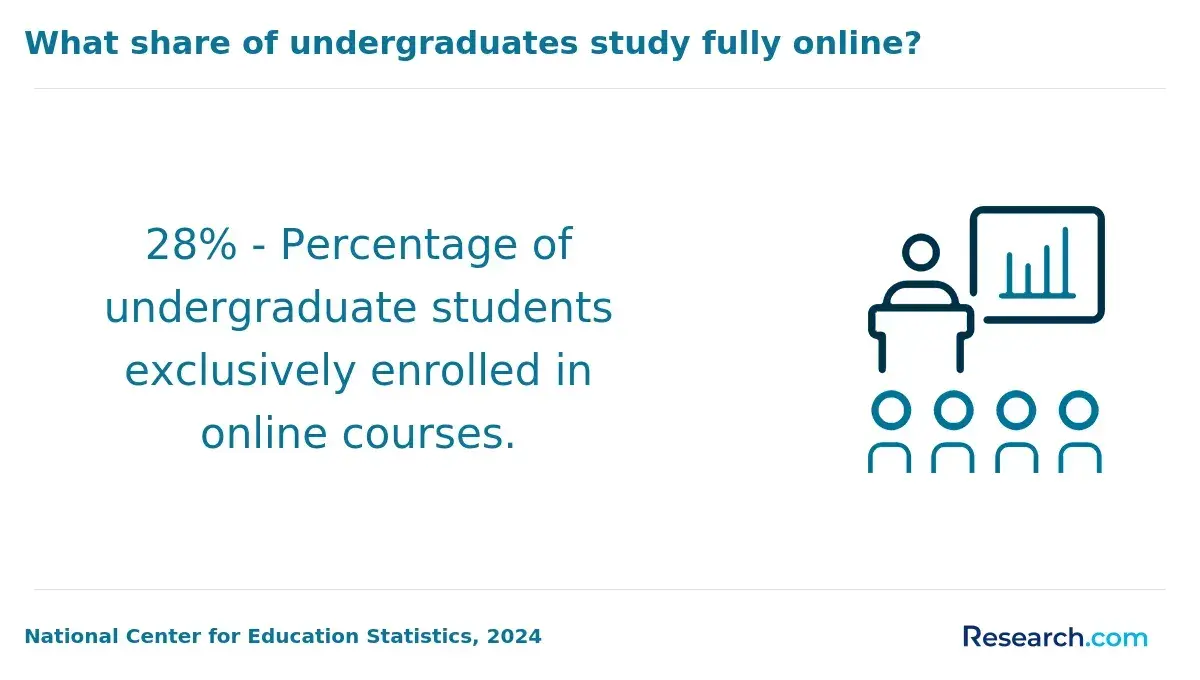
Students who want broad online academic options beyond short training should also compare the best degrees to get online. Do not assume "online" means self-paced: many career programs use weekly deadlines, proctored exams, mandatory live sessions, and placement-hour schedules.
What accreditation and licensing requirements should these online training programs meet?
Institutional accreditation matters primarily for college credit, federal financial aid eligibility, transfer potential, and quality oversight. Verify the institution's status through the U.S. Department of Education or the Council for Higher Education Accreditation, rather than relying on a school's logo or an unverified "accredited" claim. Programmatic accreditation may be more important in specific healthcare and technical fields.
Licensure and certification requirements are separate from school accreditation. A certificate program may prepare students for an external certification examination, but completion alone does not award the professional certification. Likewise, a program can teach a regulated occupation without meeting your state board's education, clinical, or supervised-experience rules.
Before enrolling, confirm the following directly with the relevant employer, certification body, or state board:
- Whether the program is approved for the license, registration, or examination you need in the state where you plan to work.
- Whether clinical, laboratory, internship, or apprenticeship hours are included, arranged, and documented.
- Whether graduates are eligible for the intended certification exam and whether additional work experience is required.
- Whether the credential is academic credit, a school-issued completion certificate, or a provider-issued noncredit credential.
A major red flag is a school that will not state whether its program meets requirements in your state. This is particularly important for patient-care roles, electrical work, cosmetology, and other occupations governed by state or local rules.
What admissions criteria and prior education do online career training programs require?
Requirements depend on the provider and credential level. Short noncredit career training may require only an application, age verification, and payment plan. College certificates and associate degrees commonly require a high school diploma or equivalent, official records, and placement or prerequisite coursework. Selective allied-health programs may also require science prerequisites, immunizations, drug screening, background checks, and health documentation before clinical participation.
Do not overfocus on GPA when the real barrier is eligibility for the career. Instead, identify the requirement that governs your next step:
- Entry-level technical certificates may accept beginners but expect basic math, computer access, and comfort using online learning systems.
- Advanced certificates may require prior coursework, professional experience, or an existing credential.
- Clinical programs can impose placement requirements that are separate from admission and may limit when students can begin hands-on training.
- Associate degrees may accept transfer credit, but each institution decides which courses apply to its curriculum.
Ask whether tutoring begins before the first graded course. Learners returning after a long break often benefit from refresher support in math, writing, computer skills, or science before entering a compressed program.
How long do online career training programs take, and what do they cost?
Completion time ranges from a few months for focused noncredit training to roughly two years for a full-time associate degree. Actual timing depends on course sequencing, prerequisite work, clinical availability, transfer credit, and whether you study part time. Accelerated schedules reduce calendar time but increase weekly workload; they are not automatically cheaper or easier.
College Board reported average published in-district tuition and fees of $4,150 at public two-year colleges for 2025-26. That benchmark can help compare credit-bearing associate or certificate study, but it does not represent the price of every online career program or include living costs.
The cost categories below should be added before comparing programs.
| Cost factor | Why it changes the total | What to verify |
| Tuition or program fee | May be charged per credit, course, term, or package | Full amount through completion, including repeat-course policies |
| Technology and materials | Laptops, software, tools, kits, and internet may be required | Required specifications and whether equipment is included |
| Exams and credentials | External certification tests may be billed separately | Exam eligibility, retake fees, and included preparation resources |
| Clinical or lab participation | Travel, uniforms, screenings, and insurance can add costs | Placement arrangements and out-of-pocket requirements |
Federal aid may be available for eligible students in qualifying credit-bearing programs at approved institutions, while many noncredit programs rely on cash payment, private financing, workforce grants, or employer assistance. If a longer credential better fits your advancement goal, compare it with a fastest masters degree only when you already hold the required bachelor's degree and the occupation truly values graduate education.
What coursework, hands-on training, and tutoring services do these programs typically include?
Online career training usually combines foundational knowledge with job-specific procedures. Coursework may include communication, professional ethics, documentation, customer service, safety, technology, and field-specific concepts. Strong programs show how each assignment connects to a real workplace task instead of relying solely on videos and multiple-choice quizzes.
Hands-on expectations vary by occupation. Design students may build a portfolio remotely; IT learners may work in virtual labs; trade and patient-care students often need physical equipment, labs, simulations, clinicals, or supervised placements. Confirm who secures the placement, what happens if a site is unavailable, and whether placement hours fit your work schedule.
Tutoring services should support progression through the curriculum, including:
- Content tutoring for difficult subjects such as anatomy, algebra, coding systems, legal research, or electrical theory.
- Study planning and practice assessments for timed certification examinations.
- Writing and communication feedback for reports, résumés, case notes, and professional correspondence.
- Portfolio, interview, and job-search coaching when the program prepares students for roles where demonstrated work matters.
Be cautious of programs that substitute generic career webinars for instruction, supervised practice, or subject tutoring. Those services can be useful additions, but they do not establish occupational competence.
Which careers and job roles can these online training programs prepare you for?
Career training can prepare learners for entry-level roles, advancement within an existing field, or readiness to pursue a separate certification. The credential should match the entry requirement used by local employers. For example, a medical billing certificate may support applications for billing roles, while clinical medical assisting generally requires more structured practical training.
This overview distinguishes realistic starting points from occupations that need additional steps.
| Program area | Possible entry-level direction | Important limitation |
| HVAC, electrical, or maintenance | Helper, technician trainee, maintenance assistant | Licensure and journey-level work commonly require apprenticeship or supervised hours |
| Medical billing and coding | Billing specialist, claims representative, coding support role | Employers may prefer an external coding certification or prior experience |
| Medical or dental assisting | Assistant roles in clinical settings | State rules, clinical requirements, and employer expectations vary |
| Legal studies or criminal justice | Legal assistant, records specialist, administrative support | Does not authorize legal practice or guarantee law-enforcement hiring |
| Graphic or digital design | Junior designer, production artist, content design support | A strong portfolio and software proficiency are typically essential |
If your goal requires a bachelor's degree rather than short training, review pathways connected to the highest paying degree options. A certificate is often a practical first step, but it should not be presented as a substitute for a degree, license, apprenticeship, or professional certification when employers require one of those credentials.
What salary ranges and job outlook can graduates of these programs expect?
Pay depends on occupation, location, experience, schedule, union status, industry, and required credentials - not simply on completing an online program. The U.S. Bureau of Labor Statistics' May 2024 wage estimates and 2024-34 projections provide useful occupational context, but they are not salary promises for certificate or associate-degree graduates.
These examples show why learners should compare training to the actual entry path for a role.
| Occupation | Median annual pay, May 2024 | Projected growth, 2024-34 | Training interpretation |
| Electricians | $62,350 | 9% | Typically learn through apprenticeship; online coursework can supplement but not replace supervised training |
| Medical assistants | $44,200 | 12% | Certificate training may be relevant; clinical preparation and employer requirements matter |
| Dental assistants | $47,300 | 6% | Requirements vary by state and duties performed |
| Paralegals and legal assistants | $61,010 | 0% | Employers may prefer a degree, specialized education, or relevant experience |
| Graphic designers | $61,300 | 2% | Portfolio quality and technical skills strongly affect hiring prospects |
Use wage data as a screening tool, not a forecast of your individual outcome. Compare local job postings for required credentials, review whether entry-level openings exist near you, and calculate whether likely earnings can reasonably cover tuition, supplies, transportation, and time away from work.
How can students choose a reputable online career training program with strong tutoring support?
Start with the job, not the program title. Find several current job postings in your target area and identify recurring requirements: credential level, certification, software, schedule, experience, and license. Then evaluate whether each program explicitly delivers the education and practice needed for those requirements.
Use this process before signing an enrollment agreement:
- Define the target role, state where you expect to work, and the credential or license that role actually requires.
- Verify institutional accreditation, program approval, and certification-exam eligibility when those factors apply to your pathway.
- Request the complete cost of attendance, including books, tools, exam fees, travel, clinical expenses, and financing terms.
- Ask for tutoring details in writing: tutor qualifications, access hours, appointment limits, response times, and support for practical assessments.
- Confirm how labs, externships, apprenticeships, or clinical placements work and who is responsible for arranging them.
- Review withdrawal, refund, transfer-credit, and complaint policies before paying.
Common mistakes include choosing the lowest advertised tuition while ignoring required fees, assuming a school certificate equals professional certification, and enrolling before checking state rules. Another red flag is pressure to enroll immediately without time to review the catalog or speak with a program advisor. Learners seeking a broader undergraduate route can also compare an easiest bachelor's degree to get, but should prioritize career relevance and legitimate support over perceived ease.
Other Things You Should Know About
Some theory-focused programs can be completed online. Programs involving patient care, skilled trades, physical equipment, or regulated competencies commonly require in-person labs, clinicals, externships, or supervised work.
No. Some providers include limited general academic support, while others charge separately or offer only instructor office hours. Ask for written details on availability, subjects covered, and whether tutoring is live or asynchronous.
It may prepare you for a separate certification exam, but a school certificate and a professional certification are different credentials. Confirm the certifying organization's eligibility rules before enrolling.
They can be worthwhile when the training meets a documented employer, certification, or licensing requirement and the total cost fits your budget. Compare outcomes, required hands-on training, local demand, and support services rather than choosing based on speed or advertising claims alone.
References
- How Much Does It Cost to Create an Online Course? A Complete Breakdown for Businesses That Want to Sell Courses https://oasis-lms.com/post/how-much-does-it-cost-to-create-an-online-course
- 25 organizations that offer online teaching and tutoring opportunitiesWriting Ethos https://www.writingethos.com/teach-1/25-organizations-that-offer-online-teaching-and-tutoring-opportunities
- Training https://www.ntatutor.com/training.html
- Tutor Certification Course | About Tutor Certification https://myactp.com/about-tutor-certification/
- ITTPC Certification Requirements - College Reading and Learning Association https://crla.net/page/ittpcrequirements
- How Tutoring Services Can Help Bridge Educational Gaps? https://cisjax.org/how-tutoring-services-can-help-bridge-educational-gaps/
- Paper Blog | 3 Ways Online Platforms Can Support High-Dosage Tutoring https://paper.co/blog/3-innovative-ways-online-platforms-can-support-high-dosage-tutoring
- Tutor Training and Education - Innovative Educators https://www.innovativeeducators.org/pages/tutorlingo
- Calbright Researches The Effectiveness Of Online Tutoring - And Sees Significant Results https://www.calbright.edu/newsroom/blog/calbright-researches-the-effectiveness-of-online-tutoring-and-sees-significant-results/
- Online Course Pricing Guide: How to Price Your Course in 2026 https://buddyboss.com/blog/online-course-pricing-guide/