2027 Best Online Career Training Programs for Parents

Co-Founder and Chief Data Scientist
Parents who need a better-paying or more flexible job cannot afford training that disrupts childcare, work, or household income. Online career training can offer a practical route into healthcare, technology, skilled trades, legal support, and creative work, but programs vary widely in quality and eligibility.
The U.S. Bureau of Labor Statistics projects healthcare occupations to grow much faster than average from 2024 to 2034. This guide helps parents compare realistic timelines, costs, credentials, online formats, and career outcomes before investing.
Key Things You Should Know
- For parents, the best online career training is usually asynchronous or part-time, includes clear live-session and clinical requirements, and leads to a credential employers or licensing boards recognize.
- Short training can support fast entry into roles such as medical billing, bookkeeping, IT support, paralegal assistance, and graphic design, but regulated healthcare and trade occupations may require in-person labs, clinical hours, exams, or state approval.
- BLS projections for 2024-2034 show strong demand in healthcare occupations, while wage potential depends on the occupation, location, experience, licensing, and employer - not simply on earning a certificate.
Top 10 Best Online Career Training Programs for Parents
Popular Trade School Programs
Online trade training works best for the classroom portion of a hands-on field. Common options include HVAC fundamentals certificates, electrical technician coursework, construction management certificates, welding theory, and automotive service training. Parents should expect shop practice, supervised labs, apprenticeships, or employer training for many trade jobs.
Choose a program only if it explains how practical competencies are assessed and whether it prepares learners for a state, local, or industry exam. A fully online program is rarely enough by itself for licensed electrician, plumber, or HVAC contractor work.
Healthcare Programs
Healthcare career training can include medical billing and coding certificates, pharmacy technician training, medical assisting certificates, dental assisting, and health information programs. Billing, coding, and administrative coursework may be largely online; direct-care programs commonly require clinical placements or skills labs.
A school certificate is not the same as professional certification from an industry organization, and it may not meet state licensing rules. Before enrolling, verify exam eligibility, clinical-hour arrangements, background-check requirements, vaccination policies, and whether the program is approved where you intend to work.
Criminal Justice / Law Programs
Parents seeking office-based legal or public-service work may consider paralegal studies certificates, legal assistant training, court reporting preparation, criminal justice certificates, or cybersecurity-related public safety programs. A paralegal certificate can build research, writing, and document-management skills, but it does not authorize someone to practice law.
Some employers prefer a degree or a program approved by the American Bar Association, though approval is not required for every paralegal job. Court reporting and law-enforcement roles can involve separate state requirements, examinations, or in-person skill training.
Arts & Design Programs
Online arts and design training commonly includes graphic design, UX design, digital marketing design, photography, web design, video editing, and interior design certificates. These programs are most valuable when they result in a polished portfolio, current software skills, and feedback from working professionals.
A noncredit certificate can demonstrate focused training but may not transfer into a degree. Parents should compare project requirements, software subscriptions, portfolio ownership, and instructor feedback. For regulated interior design titles, requirements vary by state and may exceed a short online program.
What are the best online career training options for parents?
The best option depends less on a program's marketing and more on your target job, available study hours, and whether the job requires a license or clinical training. For many parents, a short, job-focused certificate is a sensible choice when it teaches a specific skill employers request and fits around caregiving. A degree may be better for roles with formal education requirements or long-term advancement.
This comparison separates common online routes by the commitment and outcome they can realistically support.
| Training route | Best for | Typical format | Important limitation |
| Noncredit career training | Rapid skill-building or entry-level office, tech, and creative roles | Self-paced or instructor-led online | Usually does not award college credit or qualify learners for licensure |
| College certificate | Structured occupational preparation with potential academic credit | Online, hybrid, or campus-based | Transferability depends on the receiving institution |
| Industry certification preparation | Fields with recognized external examinations, such as IT or coding | Online courses plus independent exam | Course completion does not automatically confer certification |
| Associate degree | Careers needing broader coursework, clinical preparation, or advancement options | Often hybrid for applied fields | Usually takes longer and costs more than a short certificate |
Parents interested in fully remote careers should also compare work-from-home degrees that pay good money when a short program would not meet employer expectations. Choose a shorter credential when you need a targeted skill; choose a degree when job postings, licensing rules, or advancement pathways consistently require one.
How do online career training programs work for parents?
Online career training generally combines recorded lessons, readings, assignments, simulations, instructor feedback, and assessments. Asynchronous programs let parents study after bedtime, during school hours, or on weekends, while synchronous programs require attendance at scheduled virtual sessions. Programs in clinical, technical, and skilled-trade fields may add local labs, externships, or proctored exams.
Before committing, map the weekly workload against your actual support system. The following steps help prevent a schedule mismatch:
- Ask for the expected weekly study time, including homework and exam preparation.
- Confirm every required live session, lab, clinical placement, internship, and proctored assessment.
- Find out whether missed deadlines can be made up and whether leaves of absence are available.
- Budget for reliable internet, a computer, required software, supplies, and childcare during fixed sessions.
Very short formats can be useful for a discrete skill, but they are not automatically easier. Parents exploring compact terms can review 6-week courses online and compare the accelerated workload with a standard-length course.
What accreditation should parents check before enrolling?
Accreditation matters most when a program awards college credit, participates in federal student aid, prepares students for licensure, or claims a recognized academic credential. Institutional accreditation evaluates the college as a whole; programmatic accreditation evaluates a specific discipline. Neither should be confused with an employer-issued or industry-issued certification.
Parents should verify the type of recognition that matches their goal. For a credit-bearing college certificate or degree, check the institution's accreditor and confirm that the school is currently recognized by the U.S. Department of Education. For healthcare, counseling, teaching, and other regulated fields, check the relevant state board and any programmatic accreditor. For noncredit IT, design, or business training, prioritize transparent curriculum, instructor qualifications, employer relevance, and the provider's standing rather than assuming academic accreditation applies.
A major red flag is a provider that promises licensure, certification, employment, or transfer credit without naming the agency, examination, school, or policy involved. Get claims about clinical placements, exam eligibility, and refund terms in writing.
Which certificates lead to the fastest career changes?
The fastest career changes usually come from certificates that build a narrow, marketable capability rather than trying to replace a degree-required profession. Medical billing and coding, bookkeeping, IT support, customer relationship management software, digital marketing, project coordination, and entry-level design can be realistic targets when paired with a portfolio, practice projects, or an external certification exam where relevant.
A fast certificate is a poor fit when the desired role requires a state license, extensive supervised practice, or a degree. Nursing, dental hygiene, licensed electrical work, counseling, and many teaching roles normally have requirements beyond online coursework. Parents seeking a more substantial academic pathway can compare an easiest online bachelor's degree with the job requirements in their chosen field rather than selecting a major solely because admission or coursework appears manageable.
Use job postings in your location as a reality check: identify the repeated skills, software, credentials, and experience requirements before selecting training.
How long do online career training programs take?
Completion time ranges from a few weeks for a focused noncredit course to roughly one or two years for many part-time college certificates or associate degrees. The calendar length alone is less important than required practice hours and the pace you can sustain while parenting.
This timeline guide helps distinguish course completion from job readiness.
| Program type | Common timeline | What can extend completion |
| Short professional course | Weeks to a few months | Self-paced progress, exam preparation, project revisions |
| Career certificate | Several months to about one year | Part-time enrollment, required externship, prerequisite courses |
| Credit-bearing certificate | About one year or longer part-time | Course sequencing, academic calendar, limited clinical placement capacity |
| Associate degree | About two years full-time; longer part-time | General education courses, transfer-credit review, clinical or lab requirements |
Do not treat the advertised duration as a guarantee. Ask whether the estimate assumes full-time enrollment and whether it includes time to schedule a certification or licensing examination. Advanced academic goals are a different commitment; parents considering them can explore shortest PhD programs after confirming that a doctorate is actually required for their intended role.
How much do online career training programs cost?
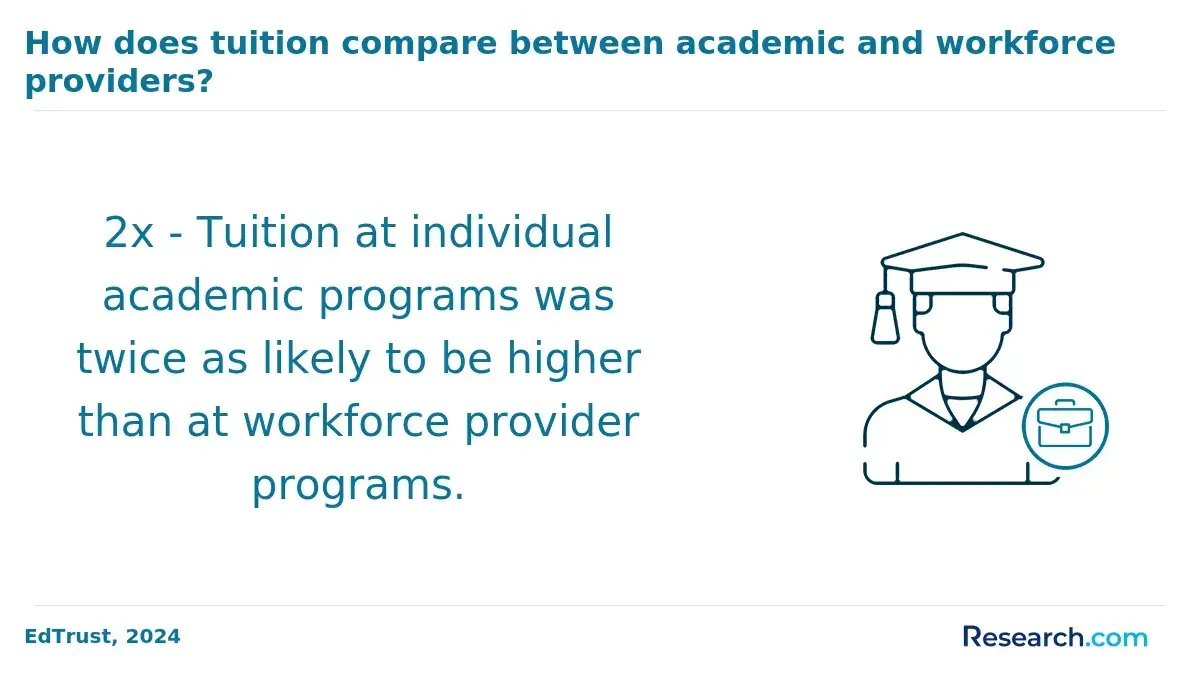
Total cost includes more than tuition. It can include application fees, textbooks, software, examination fees, supplies, background checks, immunizations, travel to labs or clinical sites, and lost work time. Noncredit providers may charge a flat program price, while colleges may bill per credit and add institutional fees.
For perspective, College Board reported that average published tuition and fees at public two-year colleges were $4,050 for the 2024-25 academic year, before aid and excluding living costs. This is a broad national benchmark, not the price of a particular online certificate; private providers, out-of-district tuition, and required materials can change the comparison substantially.
Compare each option using its net cost and realistic completion plan. Ask whether the program is credit-bearing, whether federal aid is available, whether employer tuition assistance applies, and whether a payment plan charges interest. Avoid borrowing for a program that cannot clearly explain the job skill, credential, or licensing pathway it provides.
What jobs can parents get after career training?
Parents can pursue jobs after training when the program's curriculum matches entry-level employer needs and any required credential has been completed. Examples include medical records specialist, billing specialist, pharmacy technician, IT support specialist, bookkeeper, junior graphic designer, legal assistant, customer support specialist, and project coordinator. Exact titles vary among employers.
The table distinguishes jobs that may be accessible after targeted training from roles that commonly need additional education or regulation.
| Career area | Possible entry point after training | May require more than a certificate |
| Healthcare administration | Medical records, scheduling, billing, coding support | Certification may be preferred; direct-care roles may require clinical approval or licensure |
| Technology | Help desk, technical support, junior web support | Portfolio, vendor certification, or experience may be preferred |
| Legal support | Legal assistant or paralegal support | Employers may prefer a degree or specialized paralegal preparation |
| Design | Production design, content design support, freelance projects | Portfolio quality often matters more than the certificate title |
| Skilled trades | Apprentice or helper roles | Hands-on training, apprenticeship, and state or local licensing may be required |
Build evidence of readiness while studying: complete projects, document software skills, seek supervised experience where available, and tailor a résumé to the specific entry-level role. A certificate can open a conversation with employers, but it does not replace experience requirements.
What salaries and job outlooks do these careers offer?
Salary and outlook data describe occupations, not the earnings of every program completer. They are useful for comparing possible destinations, but local wages, part-time availability, credentials, experience, and scheduling needs can vary considerably.
The U.S. Bureau of Labor Statistics reports that healthcare occupations overall are projected to grow much faster than the average for all occupations from 2024 to 2034. That makes healthcare administration and support pathways worth examining, but parents should distinguish growing occupations that require short training from those requiring a degree, clinical education, or a license.
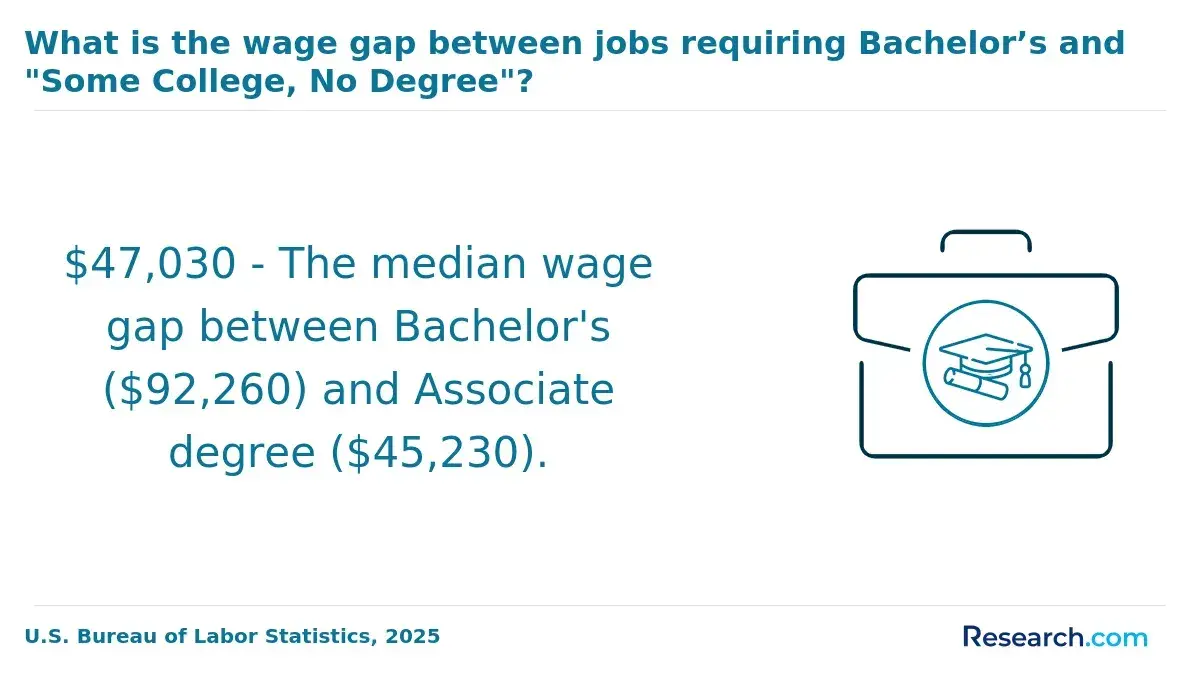
For a practical earnings check, review the BLS occupational profile for the exact job title and compare local job advertisements. Consider the whole household calculation: expected starting pay, childcare costs, commuting or clinical travel, benefit eligibility, and whether the role offers predictable shifts. A higher median wage is not necessarily the best fit if entry is highly competitive or the schedule conflicts with caregiving.
How do parents choose a reputable online program?
A reputable program makes its credential, curriculum, schedule, instructors, total price, refund policy, and career claims easy to verify. It should clearly state whether training is credit-bearing, whether it prepares students for an independent certification examination, and what parts of the experience cannot be completed online.
Use these checks before paying a deposit:
- Match the program to three to five current job postings for your intended entry-level role.
- Verify institutional, programmatic, state-board, or industry recognition only when it is relevant to the credential and occupation.
- Request the full cost of tuition, fees, supplies, exams, software, travel, and required in-person components.
- Ask where clinicals, labs, externships, or apprenticeships occur and whether placement is guaranteed, competitive, or self-arranged.
- Confirm withdrawal, refund, pause, and re-enrollment policies that account for family emergencies.
- Speak with an admissions representative and ask for outcomes definitions, including how employment and completion are measured.
Common mistakes include choosing the shortest program without checking employer requirements, assuming "online" means no in-person obligations, and confusing a completion certificate with a professional certification. The best decision is the least expensive credible pathway that meets the actual requirement for your target job.
Other Things You Should Know About
Yes, particularly in asynchronous programs, but confirm the weekly workload and any fixed live sessions. Programs involving clinicals, labs, or externships may require daytime availability, so arrange support before enrolling.
Recognition depends on the provider, field, and job. Employers may value a college certificate, an industry certification, a portfolio, or demonstrated skills differently. Check local job postings and ask whether the program prepares you for a recognized external exam.
Some credit-bearing programs at eligible institutions may qualify for federal aid, while many noncredit courses do not. Ask the provider about aid eligibility, scholarships, employer assistance, payment plans, and all borrowing terms before committing.
Choose a beginner program tied to a specific entry-level role, with clear prerequisites, realistic time expectations, and career-relevant projects or practice. Avoid advanced certificates that assume prior coursework, professional experience, or access to required equipment.
References
- Child Care Provider Training & Professional Development - Solano Family & Children's Services https://solanofamily.org/child-care-provider-training-professional-development/
- How to Choose the Online Parenting Class that's Right for Your Family https://www.positiveparentingsolutions.com/how-to-choose-online-parenting-course/
- Welcome to Care Courses® Book & Online Childcare Training https://www.carecourses.com/home
- Best Online Classes for Early Childhood Education: What to Know | Miller-Motte College https://www.miller-motte.edu/blog/education/best-online-classes-for-early-childhood-education/
- Why Employment Outcome Rates Matter | ACI Learning https://www.acitechacademy.com/blog/why-employment-outcome-rates-matter-a-guide-for-students-and-employers/
- High-Paying, Fast-Growing Jobs Without a Degree https://www.rockwellinstitute.com/blog/jobs-dont-require-degree/
- Child Care Certification Online: Flexible Options for Busy Educators and Parents - post https://www.childcareed.com/a/child-care-certification-online-flexible-options-for-busy-educators-and-parents.html
- Workforce Solutions Rural Capital Area https://workforcesolutionsrca.com/childcare/parents/resources-for-parents
- For-profit workforce training, funded by public dollars https://hechingerreport.org/wasted-money-how-career-training-companies-scoop-up-federal-funds-with-little-oversight/
- Financial Aid for Adult Learners: Grants, Scholarships & How to Pay for College (2026 Guide) https://www.straighterline.com/blog/financial-aid-resources-adults