2027 Fastest Certifications

Co-Founder and Chief Data Scientist
Choosing a fast certification can mean the difference between entering a field in weeks and paying for training that does not meet employer or licensing requirements. Short programs range from a one-day CPR certification to credit-bearing certificates that take a year or more.
U.S. Bureau of Labor Statistics projections for 2023-33 show healthcare support, skilled trades, and technology-related occupations remain important sources of openings. This guide helps career changers, recent graduates, and working adults compare speed, cost, recognition, and realistic next steps before enrolling.
Key Things You Should Know
- A certification is a professional credential awarded by a certifying body; a certificate is usually an educational program credential. The fastest option is only valuable if employers, a state board, or an industry association recognizes it.
- Some job-ready paths take days or weeks, including CPR, forklift, OSHA, food safety, and entry-level IT certifications; regulated healthcare and trade roles commonly require months of approved instruction plus an exam, background check, or clinical hours.
- Fast training does not guarantee employment or a particular income. Compare the total cost, required exam fees, state licensing rules, completion rate, and local job postings before choosing a program.
Top 10 Fastest Certifications
Popular Trade School Programs
Trade certificates are practical, occupation-focused programs offered by technical schools, community colleges, unions, and private career schools. HVAC, welding, electrical, plumbing, CDL, and industrial-maintenance certificates may take weeks to about a year; apprenticeships usually take longer but combine paid work with structured training. A certificate can build entry-level skills, while electrician and plumbing licensure normally requires supervised work experience and state-specific examinations. Choose a program with lab time, employer connections, and training that matches local code or licensing requirements rather than a short course that only offers attendance documentation.
Healthcare Programs
Healthcare has several fast entry routes, but regulation matters. CPR and basic life support certifications can be completed quickly; pharmacy technician, medical billing, phlebotomy, nursing assistant, and medical assistant programs often require weeks to months. State-approved nursing assistant training and clinical requirements vary, while medical assistants and pharmacy technicians may need employer-preferred national certification or state registration. Certificates can prepare students for an external exam but are not always the credential itself. Verify clinical placement, background-check policies, immunization requirements, and whether the program meets the rules where you intend to work.
Criminal Justice / Law Programs
Short criminal justice and law programs may cover legal assisting, court reporting fundamentals, security, emergency dispatch, or corrections-related skills. A legal studies or paralegal certificate can be useful for office support work, but it does not authorize someone to practice law. Security guard training and private-investigator requirements are state-specific and may involve fingerprints, licensing, and continuing education. For public-safety roles, agencies commonly impose separate hiring standards, physical assessments, background investigations, and academy training. Prioritize programs aligned with a named role and your state's regulations, not broad "criminal justice certification" marketing.
Arts & Design Programs
Arts and design certificates can provide focused training in graphic design, digital marketing content, UX tools, photography, video editing, or web production. Many are noncredit and can be completed in weeks or months, but portfolio quality usually matters more to employers than a completion credential alone. Credit-bearing community-college certificates may be stackable toward an associate degree; third-party courses generally are not. Choose based on the software, project feedback, portfolio assignments, and licensing of creative assets. For freelance work, budget for equipment, subscriptions, insurance, and time spent finding clients.
What are the fastest professional certifications that lead to in-demand jobs?
The fastest professional certifications leading toward in-demand work are usually standardized, exam-based credentials or legally required safety credentials - not broad academic certificates. They are best for people who already have baseline skills, can study independently, or need a specific employer-recognized qualification.
This comparison separates credentials that can be earned relatively quickly from training pathways that may be required before employment. Completion times are typical ranges, not promises; exam availability, background checks, state rules, and prior knowledge can extend them.
| Credential or pathway | Typical fastest timeline | Best fit | Important limitation |
| CPR/AED or Basic Life Support certification | Hours to one day | Healthcare support, childcare, fitness, public safety | Usually a supplementary requirement, not standalone job training |
| Food protection manager certification | Days to a few weeks | Food service supervisors and managers | Local employer or health-department acceptance varies |
| OSHA safety training | 10 or 30 instructional hours | Construction and general industry workers | An OSHA card is training documentation, not a professional license |
| Commercial driver's license training and testing | Several weeks to months | Truck, bus, or delivery driving | Requires a state-issued CDL and applicable endorsements |
| CompTIA IT certification | Weeks to several months of study | Entry-level IT support or cybersecurity foundations | Exam certification alone may not replace hands-on experience |
| Phlebotomy or nursing assistant certificate | Several weeks to months | Entry-level patient-care support | State approval, clinical work, or registry rules may apply |
For a person starting from zero, a short, state-approved healthcare certificate or CDL path may be more directly job-linked than a self-paced online badge. For someone with computer skills, an industry certification may be faster and less expensive, but a portfolio, home lab, or entry-level support experience can improve credibility.
Automation and AI are changing entry-level work, especially in office administration and basic content production. Favor credentials that validate hands-on, regulated, customer-facing, troubleshooting, or safety-critical abilities rather than courses that teach only a single software feature.
How long do quick certification programs take and what schedules do they offer?
Quick certification programs range from a few hours to roughly 12 months. The true timeline includes not only class time but also prerequisites, study time, clinical rotations, licensing applications, exam scheduling, and retakes. "Fastest" should mean the shortest verified path to the credential or job requirement you actually need.
Schedule format determines whether a short program is realistic alongside work or caregiving. The options below show the usual trade-off between speed and flexibility.
| Schedule | Speed | Who it suits | Common trade-off |
| Full-time daytime | Usually fastest | Students able to reduce work hours | Less income and limited scheduling flexibility |
| Evening or weekend | Often longer calendar time | Working adults | Fewer course sections and slower access to labs |
| Online self-paced | Can be very fast for experienced learners | Independent learners pursuing exam-based credentials | Requires discipline; may lack instructor and lab support |
| Hybrid | Moderate | Students needing practical training | Campus or clinical attendance remains mandatory |
A self-paced competency model can shorten time for learners who can demonstrate skills quickly. For people who already hold a bachelor's degree and are considering advanced study rather than an entry-level credential, a competency based masters degree may be a more appropriate accelerated option.
Before accepting an advertised timeline, ask whether it includes required clinical hours, externships, state examination eligibility, and the next available test date. A program that ends quickly but leaves a three-month wait for a required exam is not necessarily the fastest route.
What admission requirements do fast-track certification programs typically have?
Admission requirements depend on the credential type. Vendor certifications such as IT, project-management, and safety credentials may have no formal admission process, though advanced certifications can require documented work experience. College certificates and regulated career programs often have more screening because they use labs, clinical sites, or financial-aid systems.
Applicants should expect some combination of the following, especially in healthcare, transportation, and public-safety-related training:
- A high school diploma, GED, or age requirement
- Government identification and authorization to work when required by an employer or licensing process
- Placement testing or prerequisite coursework for credit-bearing college certificates
- Immunization records, drug screening, physical examinations, or criminal background checks for clinical placements
- A driving record, medical certification, or commercial learner's permit for CDL pathways
- Proof of prior education or professional experience for advanced industry certifications
Do not assume a low GPA prevents enrollment. Many noncredit training providers do not use GPA, while community-college certificate admissions may use placement requirements instead. Conversely, admission to training does not ensure eligibility for licensure, clinical placement, or a certification exam; ask about those separate standards before paying a deposit.
How do online fast certification programs compare to campus-based options?
Online fast certification programs work best when the final credential is exam-based and the learner can gain practical experience independently. Campus-based or hybrid programs are usually better when training requires equipment, supervised practice, patient contact, or direct observation.
The comparison below helps distinguish online convenience from the type of instruction an employer or regulator may expect.
| Decision factor | Online option | Campus or hybrid option |
| Lecture and exam preparation | Highly convenient and often lower-cost | More structured access to instructors |
| Hands-on skills | Limited unless paired with a local lab or employer site | Typically stronger access to labs and equipment |
| Clinical or practicum work | May still require local placement | Often coordinated through the school, but not guaranteed |
| Licensure preparation | Must be checked state by state | May be easier to verify when the program is locally approved |
| Networking | Requires proactive outreach | More direct contact with classmates and local employers |
Online learning is not the same as online eligibility. A school may deliver lectures remotely while requiring in-person skills assessments or clinical rotations. Confirm the physical requirements in writing and check whether the program is authorized to enroll students in your state.
If your goal is a formal college credential rather than a short occupational course, compare duration carefully. Some options marketed as best associate degree in 6 months online may depend on substantial transfer credit, accelerated terms, or prior learning, so they are not a six-month starting point for every student.
What accreditation and licensing should you verify for short certification programs?
Verify recognition before comparing tuition. Accreditation evaluates an institution or program, while certification validates an individual against a certifying organization's standards. Licensure is permission granted by a government authority. These terms are not interchangeable, and each may matter differently for the job you want.
Use the following checks before enrolling in a short program:
- Identify the exact job title and whether your state requires a license, registry entry, approved training, or examination.
- Ask whether the program is institutionally accredited, programmatically accredited, state-approved, or none of these - and why that status is relevant.
- Confirm that completion makes you eligible for the named certification or licensure exam; do not rely on vague phrases such as "certification preparation."
- Contact the licensing board, certifying organization, or a local employer to confirm acceptance of the program.
- Get written details on clinical placement, required equipment, external exam fees, and any background-check restrictions.
Red flags include claims that a credential is "nationally accepted" without naming the certifier, pressure to enroll before disclosures are provided, missing instructor qualifications, and refusal to state whether graduates qualify for a required exam. For licensed occupations, the state board - not the school's advertising - sets the controlling eligibility rules.
How much do accelerated certification programs cost and what financial aid is available?
Accelerated certification costs vary dramatically. A short online exam-prep course can cost far less than a clinical, lab-based, or CDL program, but the advertised tuition is rarely the total amount. Compare the all-in price and the time away from paid work, not just the first payment.
Build a complete cost estimate using these categories:
- Tuition, registration charges, and required course materials
- Certification, licensing, fingerprinting, background-check, and examination fees
- Uniforms, tools, software, protective equipment, books, and transportation
- Clinical, lab, practicum, or testing-site travel expenses
- Lost wages or reduced work hours during full-time study
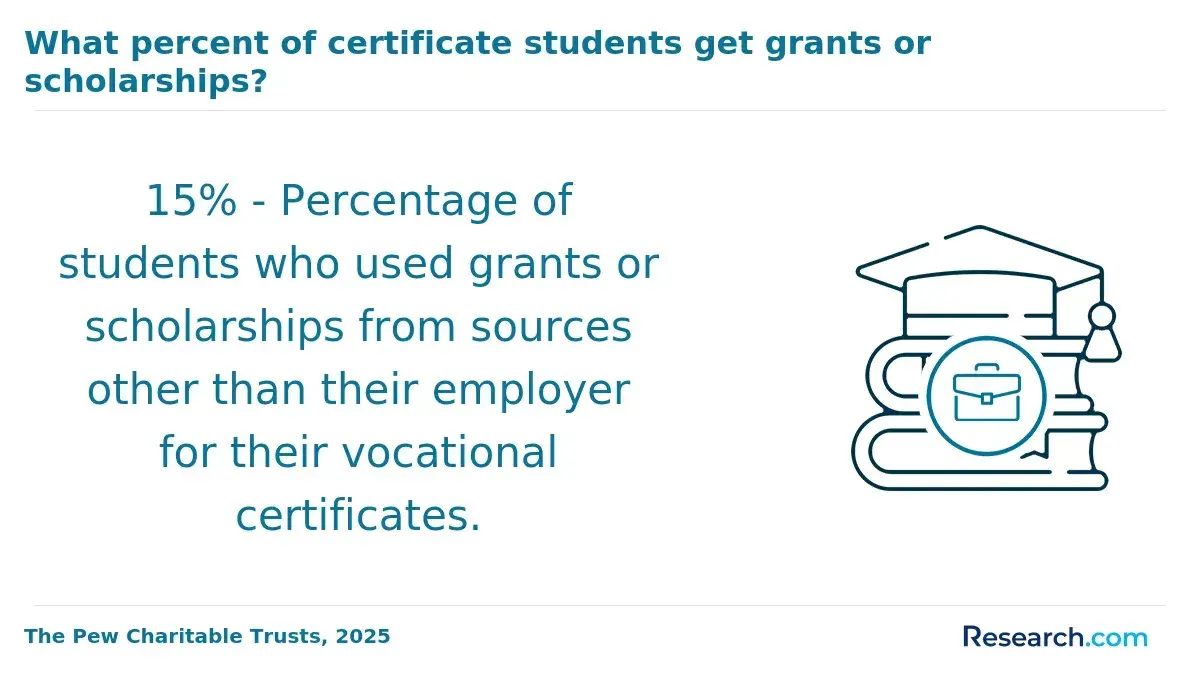
Federal student aid generally applies to eligible programs at participating institutions, not automatically to every short course, bootcamp, or vendor certification. Ask the school's financial-aid office whether the specific program - not merely the institution - is aid eligible. Workforce Innovation and Opportunity Act funding, state workforce grants, veterans' education benefits, employer tuition assistance, union training, scholarships, and payment plans may be relevant depending on the provider and learner.
For learners who need a broader credential with potentially stronger transfer value, compare short training against easy degrees that pay well. A longer program can be the better financial decision when the target occupation requires a degree, license, or extensive supervised training.
What careers can you qualify for with rapid certifications in different fields?
Rapid certifications can support entry into several fields, but the credential alone may not meet every hiring requirement. Employers may also expect experience, a driver's license, a portfolio, a background check, a state license, or demonstrated technical skills.
This table connects common fast pathways with realistic entry points and the additional steps that can improve employability.
| Field | Possible entry-level role | Helpful fast credential | What may still be required |
| Healthcare support | Nursing assistant, phlebotomy technician, medical office support | State-approved training or occupational certificate | Registry listing, clinical hours, employer training, or national exam |
| Transportation | Commercial driver | CDL training and state testing | Medical certification, endorsements, clean driving record |
| Information technology | Help desk technician or junior support specialist | Entry-level vendor-neutral certification | Hands-on troubleshooting evidence and customer-service skills |
| Construction and maintenance | Helper, installer, technician trainee | OSHA training, trade certificate, or apprenticeship entry training | Apprenticeship, supervised hours, local licensing |
| Business operations | Bookkeeping, customer support, administrative support | Software or bookkeeping certification | Relevant experience and employer-specific systems knowledge |
A rapid credential is a good fit when a posting explicitly names it, when it fulfills a legal entry requirement, or when it adds credible evidence to skills you already possess. Consider an associate or bachelor's degree when job postings consistently require one, when you need transfer credits, or when career advancement depends on formal education. Working professionals seeking a higher-level transition may also compare a fastest online master's degree with standalone certifications.
What salary ranges and earning growth can fast certifications realistically support?
Salary depends on occupation, location, shift differentials, experience, employer, union coverage, and licensure - not simply on how quickly a credential was completed. Use occupational wage data as a market reference, then compare it with actual local job postings and the full training cost.
Recent U.S. Bureau of Labor Statistics May 2024 wage data illustrates the range. The median annual wage was $48,780 for nursing assistants, $47,460 for pharmacy technicians, $51,500 for heavy and tractor-trailer truck drivers, and $60,340 for computer user support specialists. These figures describe workers in each occupation, not the expected pay of every certificate or certification holder.
Earning growth is usually strongest when a fast credential is the first step in a stackable pathway: for example, support role to licensed clinical role, IT support to specialized networking or cybersecurity work, or trade helper to apprenticeship and journeyman status. Be cautious of programs that advertise a high occupational median wage without explaining the education, experience, licensing, or geographic conditions behind it.
How can you choose a reputable fast certification program with strong job outcomes?
A reputable fast program is transparent about what students earn, what that credential qualifies them to do, and what it does not. The best choice is not automatically the shortest or cheapest; it is the shortest verified route that meets your job target, budget, schedule, and state requirements.
Before applying, take these practical steps:
- Search local postings for your intended job title and write down the credentials, licenses, experience, and schedule requirements that appear repeatedly.
- Compare at least two providers using total price, instructional hours, instructor access, equipment, exam eligibility, and required in-person attendance.
- Verify approval or recognition directly with the appropriate licensing board, certifying body, employer, union, or apprenticeship sponsor.
- Ask for written outcomes information, including completion, examination, placement, and withdrawal policies where the provider tracks them.
- Calculate a personal break-even estimate using total out-of-pocket cost, lost work time, and a conservative local wage estimate.
- Read the refund policy before paying and avoid financing arrangements you do not understand.
Strong indicators include published curriculum hours, named instructors, clear external exam information, a physical address, responsive admissions staff, and documented partnerships that do not overpromise hiring. Weak indicators include countdown-pressure sales tactics, claims of guaranteed jobs, unexplained "accreditation," or an unwillingness to provide state approval information.
If you are undecided, start with employer conversations rather than enrollment calls. Ask a hiring manager or experienced worker which credential they value for entry-level applicants and whether a short certificate, certification exam, apprenticeship, or degree is the better first investment.
Other Things You Should Know About
CPR/AED, basic life support, food safety, OSHA training, and some vendor exam certifications can be completed in hours, days, or a few weeks. The best choice depends on the job requirement; a very fast credential may be useful only as a supplement to broader training.
Possibly, particularly in roles where employers need a specific safety, driving, healthcare-support, or software credential. However, many jobs also require interviews, background checks, practical skills, a license, or prior experience. Check local postings before choosing training.
They can be, especially when a recognized certifying organization administers a standardized exam. For clinical, laboratory, driving, and skilled-trade work, online coursework may not replace required in-person practice, approved training, or state licensing.
Neither is automatically better. A certificate documents completion of education, while a certification usually demonstrates that an individual met an outside organization's standards. Choose the one employers, licensing boards, or job postings specifically request.
References
- How Do Certifications Influence Salary Increases? https://certiprof.com/blogs/news/how-do-certifications-influence-salary-increases
- 10 Quick Certifications That Lead To High-Paying Jobs | Become With Lantern https://www.learnhowtobecome.org/career-resource-center/quick-certifications-that-pay-well/
- Quick Certifications That Pay Well: A 2026 Tech Guide - tripleten.com/blog https://tripleten.com/blog/posts/quick-certifications-that-pay-well
- How long does it take to complete an IT course? - Ascend Education https://ascendeducation.com/how-long-does-it-take-to-complete-an-it-course/
- How Certifications Can Help You Earn a Raise - ONLC https://www.onlc.com/blog/certifications-can-help-get-raise/
- Top 10 Benefits of Professional Certification - Identity Management Institute® https://identitymanagementinstitute.org/top-10-benefits-of-professional-certification/
- The Top 5 Certificate Programs for Jobs With Growth Potential | CourseStorm https://www.coursestorm.com/blog/top-certificate-programs-for-jobs
- Fast Track Job Training https://ccitraining.edu/fast-track-careers/
- Why Choosing the Right Certifications Can Help Your Career https://www.managementconcepts.com/resource/why-choosing-the-right-certifications-can-define-and-accelerate-your-career/
- 7 in-demand certifications in 2025 | edX https://www.edx.org/resources/in-demand-professional-certifications