2027 Best Non-Degree Programs for High-Paying Careers

Co-Founder and Chief Data Scientist
Choosing training that leads to employable skills without committing to a four-year degree can be difficult. Non-degree programs include career certificates, diplomas, apprenticeships, and industry certifications, but their value depends on whether they meet employer, licensing, and hands-on training requirements.
U.S. Bureau of Labor Statistics projections for 2023-2033 show faster-than-average growth in several skilled trades and healthcare roles. This guide helps career changers, recent graduates, and working adults compare realistic timelines, costs, credentials, and earnings potential before enrolling.
Key Things You Should Know
- Skilled trades, healthcare support, legal support, and technology programs can lead to entry-level work in months rather than years, but regulated roles usually require state-approved education, an exam, clinical hours, or an apprenticeship.
- Occupational pay varies by location, experience, employer, and overtime: BLS reported a $62,350 median annual wage for electricians in May 2024, while dental hygienists had a $94,260 median annual wage.
- The strongest investment is usually a program tied to a required license, a recognized industry certification, or documented employer demand - not simply the shortest or cheapest online certificate.
Top 10 Best Non-Degree Programs for High-Paying Careers
Popular Trade School Programs
Trade programs emphasize hands-on skills for construction, repair, manufacturing, and transportation. Common choices include electrician, HVAC/R technician, welding, plumbing, diesel technology, and commercial driver training. A school certificate or diploma proves program completion; it is not the same as a state license or industry certification.
Electrician and plumbing paths commonly combine classroom instruction with paid apprenticeships, while HVAC graduates may need EPA Section 608 certification to handle refrigerants. Choose campus or hybrid training when labs are essential, and confirm that local employers recognize the curriculum before paying tuition.
Healthcare Programs
Healthcare non-degree options include practical nursing diplomas, dental hygiene associate degrees, radiologic technology associate degrees, medical assisting certificates, phlebotomy training, and surgical technology programs. Clinical training and state rules matter more than course length.
Practical nurses, radiologic technologists, and dental hygienists generally need approved education and licensure; medical assistants may be hired without certification in some settings, though employers may prefer it. Online coursework can support theory learning, but labs and clinical placements must occur in person.
Confirm who arranges clinical placement, eligibility for required exams, and whether the program meets your state's rules.
Criminal Justice / Law Programs
Paralegal studies certificates, legal assistant certificates, police academy training, corrections training, and private security programs are common non-degree routes. A paralegal certificate can build legal research, drafting, and case-management skills, but it does not authorize someone to practice law. Police academy eligibility is set by the hiring agency or state and may include background screening, fitness testing, and academy completion.
Private security licensing also varies by state. These paths suit detail-oriented people who can handle documentation, confidentiality, and irregular schedules; they are less suitable for applicants seeking remote work with minimal screening requirements.
Arts & Design Programs
Career-focused options include graphic design certificates, UX/UI design bootcamps, digital marketing certificates, photography programs, animation training, and web development certificates. Portfolios often matter as much as the credential, especially in design and freelance work. A credit-bearing community-college certificate may be more transferable than a noncredit bootcamp, while an industry-led program may better match a specific software platform.
Review instructor experience, portfolio feedback, project ownership, and job-placement definitions. Because AI tools are changing entry-level creative workflows, choose training that teaches design judgment, client communication, accessibility, and ethical use of generative tools.
What are the highest-paying careers you can enter with non-degree programs?
The highest-paying non-degree paths are generally regulated healthcare occupations and skilled trades with formal apprenticeships, rather than short unregulated certificates. The credential may be only one step: an associate degree, supervised practice, licensing exam, or apprenticeship can still be required.
This comparison uses May 2024 U.S. Bureau of Labor Statistics median annual wage data for occupations, not earnings guarantees for program completers. Local pay can differ substantially with union coverage, shift differentials, overtime, specialization, and cost of living.
| Career path | Typical qualifying route | Median annual wage | Important limitation |
| Dental hygienist | Accredited associate degree and state license | $94,260 | Usually not a short certificate path |
| Web developer | Portfolio plus skills training, certificate, or degree | $90,930 | Employers may prefer proven experience or a degree |
| Radiologic technologist | Approved associate program, exam, and state requirements | $77,660 | Clinical education is required |
| Electrician | Apprenticeship and licensing pathway | $62,350 | Training commonly takes several years |
| Paralegal | Certificate or associate degree; employer requirements vary | $61,010 | Certificate alone does not ensure employment |
For a shorter academic route that may broaden options beyond a standalone certificate, compare these careers with short degrees that pay well. An associate degree can be especially important in dental hygiene, radiologic technology, and other licensed allied-health fields.
How do non-degree career programs compare to traditional college degrees?
Non-degree career training is usually faster and narrower than a traditional degree. It can be a strong choice when a job has a defined skill standard, licensing pathway, or apprenticeship. A bachelor's degree remains more useful when a field requires broad academic preparation, promotion into management, graduate school eligibility, or access to employers that screen for degrees.
The comparison below separates completion credentials from professional qualifications so applicants can avoid treating every short program as equivalent.
| Factor | Non-degree program | Associate or bachelor's degree |
| Scope | Targeted occupational or technical skills | General education plus major coursework |
| Typical timeline | Weeks to about two years, depending on clinical or apprenticeship requirements | About two years for an associate degree; often longer for a bachelor's degree |
| Credit transfer | Often limited for noncredit programs | More likely when courses are credit-bearing and institutionally accredited |
| Best fit | Defined entry-level role or skill upgrade | Long-term career flexibility or degree-required profession |
| Main risk | Credential may lack employer recognition | Higher time and tuition commitment |
If a degree is ultimately necessary but speed is your priority, a bachelor degree online in 2 years may be worth comparing with repeated standalone certificates. Acceleration works best for students with transferable credits, reliable study time, and a clear major.
What accreditation and licensing requirements should non-degree programs meet?
Accreditation, approval, certification, and licensure serve different purposes. Institutional accreditation evaluates a college as an institution. Programmatic accreditation evaluates a specific program. State approval may be required for schools or career programs. Licensure is government permission to practice a regulated occupation. Certification is usually awarded by a professional organization after an exam or other standards are met.
Before enrollment, verify the requirement that actually applies to your intended role. The following checks prevent a common and expensive mismatch between training and eligibility.
- Find the licensing board or employer requirement for the job in the state where you plan to work.
- Confirm in writing that the exact program and campus or online format meets educational eligibility requirements.
- Ask whether graduation qualifies you to apply for a separate exam, rather than assuming the school certificate is the professional credential.
- For credit-bearing college programs, verify institutional accreditation and any field-specific accreditation relevant to the occupation.
- Keep records of clinical hours, course descriptions, transcripts, and exam results in case another state or employer requests them.
For example, a medical billing certificate may be useful job training without requiring licensure, while nursing and dental hygiene pathways involve state-specific regulatory rules. An online provider's marketing language cannot replace confirmation from the relevant board.
Employer Confidence in Online vs. In-Person Degree Skills, Global 2024

Which non-degree programs offer the best salaries and job growth by industry?
The best salary-and-growth combination depends on whether the occupation has a durable shortage, a formal entry pathway, and room to advance. BLS projections for 2023-2033 estimated 11% employment growth for electricians, faster than the average for all occupations. That supports demand, but it does not remove the need to complete an apprenticeship and meet local licensing rules.
This industry view helps distinguish programs with direct occupational alignment from broad training that may require additional self-directed portfolio building.
| Industry | Strong non-degree or sub-baccalaureate route | Career upside | Key trade-off |
| Skilled trades | Apprenticeship, diploma, technical certificate | Paid training and progression to journeyman status | Physical work, licensing, and variable schedules |
| Allied health | Approved certificate or associate program | Direct clinical roles with defined standards | Admissions, clinical hours, and exam requirements |
| Technology | Certificate, bootcamp, vendor certification, portfolio | Flexible skill-building and remote-work potential | Competitive hiring and rapidly changing tools |
| Legal support | Paralegal certificate or associate degree | Office-based role supporting legal teams | Employer preferences vary by market |
Technology applicants should treat a certificate as evidence of learning, then build projects and practical experience. Trade and healthcare applicants should prioritize approved pathways because a portfolio cannot substitute for legally required supervised training.
How do online non-degree programs differ from campus-based options for career training?
Online non-degree programs are best for theory-heavy subjects such as coding, bookkeeping, legal research, digital marketing, and exam preparation. Campus-based or hybrid programs are usually better for welding, electrical labs, HVAC equipment, imaging, dental hygiene, and any occupation requiring supervised clinical or laboratory competencies.
Use this format comparison to match delivery method to the actual work you must learn, not simply to the convenience of studying from home.
| Format | Works well for | Watch for |
| Fully online | Software, business, theory, and portfolio-based skills | Unclear instructor access, proctoring, or employer recognition |
| Hybrid | Programs combining lectures with required labs or simulations | Travel frequency and whether placements are guaranteed |
| Campus-based | Equipment-intensive trades and clinical education | Commuting, fixed schedules, and lab fees |
| Apprenticeship | Electrician, plumbing, and other work-based trades | Application waitlists and local sponsor availability |
When comparing online providers, start with recognized online colleges if you need transferable academic credit. For noncredit training, employer recognition, instructor expertise, project feedback, and access to required hands-on practice may matter more than institutional transfer policies.
What prerequisites, admission criteria, and skills are needed for top non-degree programs?
Requirements range from open enrollment to selective admissions. Many short workforce certificates require a high school diploma or equivalent, basic reading and math skills, and identity or background documentation. Healthcare programs may add prerequisite science courses, immunizations, drug screening, CPR training, entrance testing, and clinical-site clearance. Apprenticeships may require algebra, a driver's license, physical capability, and an aptitude test.
Assess readiness before paying an application fee. Strong candidates typically bring the following, although the exact standard is set by each provider, employer, or licensing board.
- Basic digital literacy for online assignments, documentation, and job-search tools.
- Reliable time availability for labs, clinical rotations, shop hours, or apprenticeship shifts.
- Communication, safety awareness, and the ability to follow detailed procedures.
- A realistic plan for transportation, equipment, uniforms, testing, and unpaid clinical time where applicable.
- Evidence of prior learning or work experience when entering advanced certification pathways.
Do not assume GPA, SAT, or transfer credit rules apply to every program. Noncredit workforce training often uses different enrollment standards than credit-bearing college certificates. Ask whether prerequisites are mandatory, recommended, or simply useful for success.
How long do leading non-degree programs take, and what do they cost?
Leading non-degree options range from a few weeks for focused exam preparation to several years for apprenticeships and regulated clinical careers. Published tuition is only part of the cost: tools, books, background checks, uniforms, licensing applications, certification exams, transportation, and lost work hours can change the total investment.
The ranges below are planning estimates rather than universal prices. Request a written, itemized cost sheet from each provider and compare the full pathway through first employability.
| Program type | Typical duration | Common cost pattern | Best use case |
| Industry certification preparation | Weeks to months | Course fee plus exam and retake costs | Workers adding a defined technical skill |
| Career certificate or diploma | Several months to about one year | Tuition, supplies, equipment, and possible externship costs | Entry-level training in a targeted occupation |
| Associate degree pathway | About two years | Credit-based tuition plus clinical, lab, and exam expenses | Licensed allied-health and technical roles |
| Registered apprenticeship | Often multiple years | May include paid work while learning | Trades requiring supervised progression |
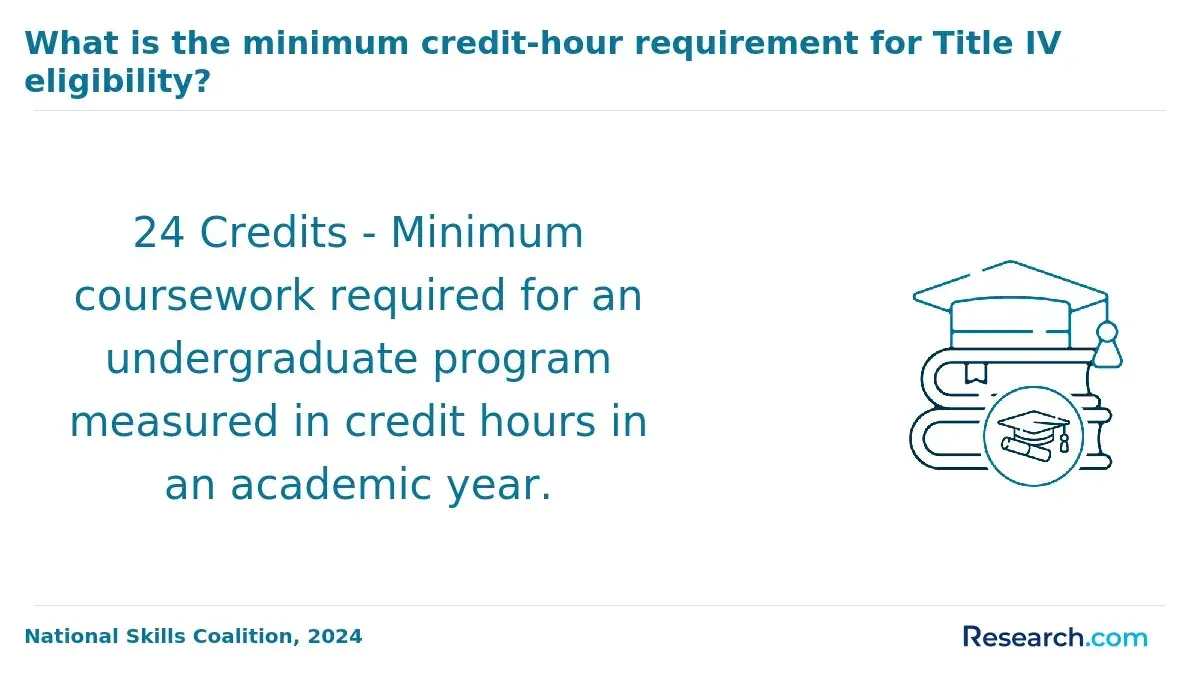
Ask about federal aid only for eligible programs at eligible institutions; not every noncredit certificate qualifies. Employer tuition assistance, Workforce Innovation and Opportunity Act funding, veterans' education benefits, scholarships, and payment plans may be available depending on the program and student eligibility.
For self-paced learners with prior knowledge, competency-based universities can offer a different model: progress is based on demonstrating mastery, but the pace, credit rules, and degree outcomes differ from a short career certificate.
What credentials, certificates, or exams are required to work in these careers?
First identify whether your target job requires a completion credential, a certification, a license, or several of these. A school certificate documents that you completed a curriculum. A professional certification typically confirms that you met an external organization's standards, often through an exam. A license is granted by a government authority and is mandatory for certain occupations.
Credential sequence matters because taking a course does not always make you exam-eligible. Common pathways include the following.
- HVAC: complete training or gain qualifying experience, then obtain EPA Section 608 certification before handling regulated refrigerants.
- Electrician: enter an apprenticeship or approved training route, document work experience, and meet state or local examination requirements where applicable.
- Practical nursing: graduate from an approved program and pass the NCLEX-PN before state licensure.
- Radiologic technology: complete approved education, meet examination requirements, and satisfy applicable state licensing rules.
- Paralegal: complete a relevant certificate or degree when preferred by employers; voluntary professional certification is separate from school completion.
Requirements change by state and specialty. Confirm the current rules directly with the relevant licensing board, employer, or certifying body before choosing a program.
How can students evaluate and choose a reputable non-degree program provider?
A reputable provider can explain exactly what credential you receive, what it qualifies you to do, and what additional steps remain. Be cautious of schools that promise licensing eligibility, employment, or unusually high income without documenting the requirements and limitations.
Use these questions during calls, campus visits, or virtual information sessions to compare providers on outcomes and fit rather than advertising claims.
- Is the program credit-bearing, noncredit, a diploma, an apprenticeship, or preparation for a separate certification exam?
- Which employers, licensing boards, or certifying organizations recognize this exact program?
- What are total required costs, including tools, books, exams, uniforms, clinical fees, and retakes?
- Who arranges internships, labs, clinical placements, or apprenticeships, and what happens if placement is delayed?
- What completion, exam-pass, placement, and licensure data can you provide, including the definitions and reporting period?
- What refund policy, complaint process, academic support, and career services apply if my circumstances change?
Red flags include pressure to enroll immediately, vague accreditation claims, undisclosed fees, claims that a certificate automatically confers a license, and job-placement figures that do not define whether jobs are full-time or related to the field. Compare at least two providers and verify claims independently before signing a financing agreement.
Other Things You Should Know About
Yes, particularly in licensed healthcare roles, skilled trades, and technical specialties. However, the stronger-paying paths often require more than a short course, such as an apprenticeship, associate degree, exam, supervised experience, or state license.
A certificate is usually awarded by a school after completing instruction. A certification is usually awarded by an independent professional organization after meeting standards such as passing an exam. Some careers require both.
They can be, especially for software, business, and digital skills, but employer acceptance depends on the provider, curriculum, projects, and credential. For clinical and hands-on trades, confirm that required labs and supervised experiences meet local standards.
It may be available for qualifying programs at eligible institutions, but many noncredit courses do not qualify for federal student aid. Ask the provider about aid eligibility, employer assistance, workforce grants, veterans' benefits, and total out-of-pocket costs.
References
- 7 in-demand certifications in 2025 | edX https://www.edx.org/resources/in-demand-professional-certifications
- How Much More High School Graduates Earn Than Non-Graduates in Every State | U.S. Career Institute https://www.uscareerinstitute.edu/blog/how-much-more-high-school-graduates-earn-than-non-graduates
- Is College Worth it? | Return on Investment Analysis of College Degree https://educationdata.org/college-degree-roi
- EdAssist | How Employers Can Maximize the ROI of Education Benefits with Degree and Non-Degree Programs https://www.brighthorizons.com/article/employers/how-employers-can-maximize-the-roi-of-education-benefits-with-degree-and-non-degree-programs
- Best Paying Jobs Without a Degree: 24 High-Income Careers for 2026 - tripleten.com/blog https://tripleten.com/blog/posts/best-paying-jobs-without-a-degree
- Getting a job without a 4-year degree. Prospects increase with a certificate. https://www.luminafoundation.org/resource/non-degree-credentials-provide-value-for-adults-in-the-labor-market/
- CourseCareers https://coursecareers.com/blog-posts/15-careers-you-can-start-with-no-experience-or-degree
- Research Summary: Education and Lifetime Earnings https://www.ssa.gov/policy/docs/research-summaries/education-earnings.html
- How does a college degree improve graduates' employment and earnings potential? - APLU https://www.aplu.org/our-work/publicuvalues/employment-earnings/
- Does College Pay Off? A Comprehensive Return On Investment Analysis - FREOPP https://freopp.org/whitepapers/does-college-pay-off-a-comprehensive-return-on-investment-analysis/