2027 Best Stackable Credentials With 2.5 GPA Admission

Co-Founder and Chief Data Scientist
A 2.5 GPA can narrow some college choices, but it does not eliminate practical, credit-bearing career pathways. Stackable credentials let students begin with a short certificate, build toward an associate degree, and potentially transfer credits later.
This matters as employers increasingly weigh demonstrable skills alongside education: the U.S. Bureau of Labor Statistics projects healthcare support occupations to grow faster than average through 2033. This guide helps prospective students compare realistic programs, verify admission rules, control costs, and avoid credentials that will not support their career or licensing goal.
Key Things You Should Know
- A 2.5 GPA may meet minimum admission standards at many community colleges and open-admission institutions, but competitive healthcare, nursing, and limited-seat trade programs can require higher prerequisite grades or separate selection criteria.
- Stackable pathways work best when each certificate is credit-bearing and explicitly applies to an associate degree; a noncredit workforce certificate may build skills but often will not transfer.
- Career outcomes vary by field: BLS reported a $48,780 median annual wage for licensed practical and licensed vocational nurses in May 2024, while many entry-level credential paths lead first to lower-paying support roles.
Top 10 Best Stackable Credentials With 2.5 GPA Admission
Popular Trade School Programs
Trade pathways often admit students with a 2.5 GPA or use open enrollment, though apprenticeships and selective cohorts can add testing or interviews. Common stackable options include welding certificates leading to an associate degree in welding technology, HVAC certificates leading to HVAC/R technology, electrical construction certificates leading to an electrical technology associate degree, and automotive service certificates.
These programs emphasize lab work, safety, tools, and employer-recognized skills. Students should confirm whether the credential prepares them for a licensing exam, EPA Section 608 testing, or apprenticeship requirements; completing school alone may not authorize independent work.
Healthcare Programs
Healthcare stackable routes may start with certificates in medical assisting, phlebotomy, nursing assistant training, medical billing and coding, or practical nursing and progress to an associate degree in allied health or nursing. A 2.5 GPA may be enough for general college admission, but clinical programs commonly review science prerequisites, entrance tests, background checks, immunizations, and available clinical placements.
Medical assisting and coding certificates do not automatically confer professional certification. Nursing pathways require careful state-board review because licensure eligibility, clinical hours, and program approval are essential.
Criminal Justice / Law Programs
Students interested in public safety or legal support can begin with certificates in criminal justice, corrections, homeland security, legal studies, or paralegal support before moving into an associate degree. General admission may be accessible with a 2.5 GPA, but police, corrections, and security employers commonly impose separate age, fitness, background, driving-record, and academy standards.
A paralegal certificate can strengthen administrative and legal-research skills, but it does not make someone an attorney or guarantee paralegal employment. Look for programs that teach local procedures, writing, ethics, records systems, and evidence handling.
Arts & Design Programs
Graphic design, digital media, web design, photography, animation, and visual communications certificates can stack into associate degrees at many community colleges. These programs may prioritize placement assessments or portfolio review more than high school GPA.
A short certificate can help learners build software and production skills, while an associate degree usually provides broader design, typography, portfolio, and client-communication coursework. Because hiring is portfolio-driven, students should compare access to current software, faculty feedback, internships, and portfolio reviews rather than selecting a program solely because it has low admissions barriers.
What are stackable credentials and how do they work for career advancement?
Stackable credentials are deliberately connected educational awards. A student may earn a short, credit-bearing certificate first, use those credits toward a longer certificate or associate degree, and later pursue a bachelor's degree if an articulation agreement allows it. The value is not simply collecting badges; it is earning milestones that have a documented relationship to a larger credential.
A strong pathway has written rules showing exactly what stacks, how long credits remain valid, and whether grades or course substitutions affect progression. This model can suit students who need employable skills before committing to a two-year degree, but it is less useful when the first credential is noncredit or narrowly tied to one employer.
Compare the common pathway types below before assuming that every short program creates academic momentum.
| Pathway type | What students earn first | Best use | Important limitation |
| Credit-bearing college pathway | Academic certificate | Students planning an associate degree | Transfer beyond the institution may be limited |
| Industry certification pathway | Exam-based certification | Workers needing vendor or occupation-specific validation | Usually does not create college credit automatically |
| Noncredit workforce pathway | Completion certificate or badge | Rapid skill training or employer upskilling | Often cannot be applied to a degree |
For long-term academic planning, confirm each step in writing. A short credential can be a sensible first move, while a later degree may serve a different career goal; students considering advanced study can also compare PhD online options after completing the prerequisite undergraduate education.
Which accredited certificate and associate programs accept a 2.5 GPA?
No nationwide list can guarantee admission with a 2.5 GPA because each institution and program sets its own rules. Public community colleges frequently use open admission for general enrollment, meaning a diploma or equivalent may matter more than GPA. However, admission to a college is different from admission to a capacity-limited program such as nursing, radiography, dental hygiene, or apprenticeship-sponsored training.
Students should focus on institutionally accredited community colleges, technical colleges, and public career colleges with transparent program requirements. Institutional accreditation supports transferability and federal aid eligibility, while specialized approval matters for regulated programs.
The comparison below separates realistic entry points from programs where a 2.5 cumulative GPA may not be enough on its own.
| Program type | How a 2.5 GPA is commonly treated | Extra screening to expect | Stacking potential |
| General technical certificate | Often sufficient where open admission applies | Placement testing or basic prerequisites | Often stacks into an associate degree |
| Business, IT, or criminal justice certificate | Often considered for general admission | Computer access or prerequisite courses | Commonly stackable when credit-bearing |
| Allied health certificate | May qualify for college admission only | Science grades, health records, background checks, clinical capacity | Varies by school and profession |
| Associate degree with selective entry | May meet the floor but not ensure a seat | Ranking points, entrance exam, prerequisite GPA | Can support bachelor's transfer agreements |
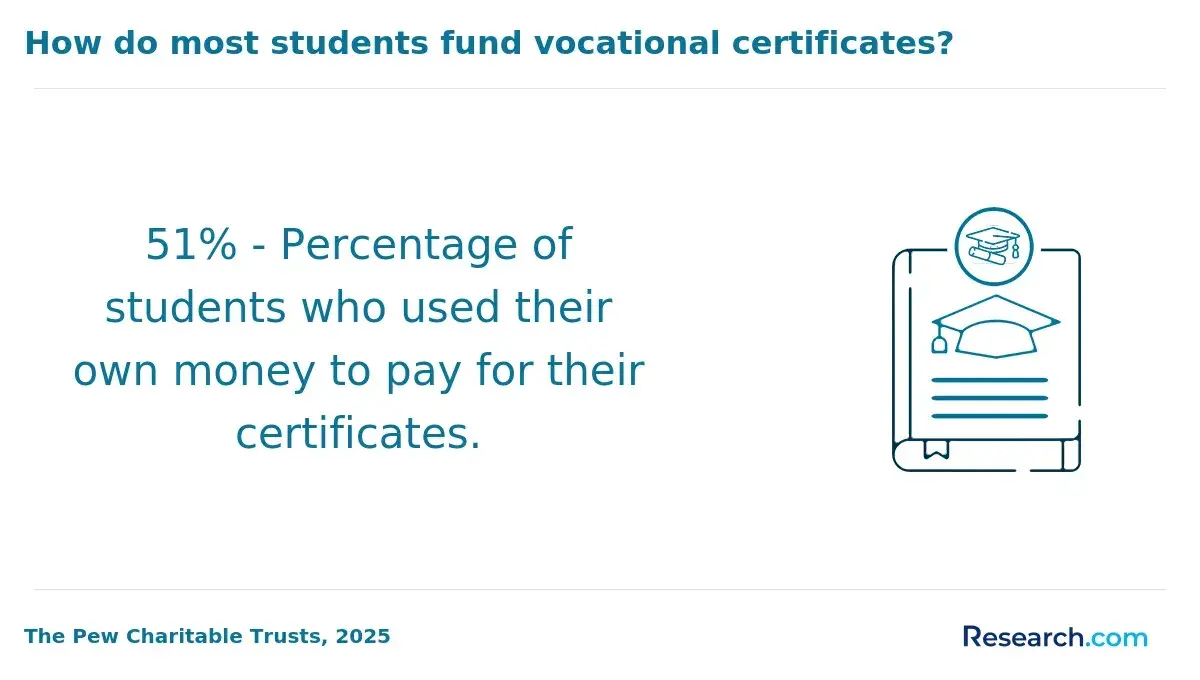
Ask admissions whether "2.5 GPA" means cumulative high school GPA, college GPA, prerequisite GPA, or minimum GPA to remain in the program. If rapid entry is the priority, compare verified short-term certificate programs, but confirm whether their courses carry academic credit before relying on them as the first rung of a degree pathway.
How do online stackable credential programs compare to campus-based options?
Online stackable programs can work well for business, information technology, criminal justice, accounting support, and some design coursework. They can reduce commuting and make part-time enrollment more manageable. Campus or hybrid study is usually the stronger choice when a program requires labs, equipment, hands-on assessment, clinical training, or supervised skill demonstrations.
Flexibility should not be confused with self-paced study. Many online college courses have weekly deadlines, proctored exams, group work, and set term dates. Clinical healthcare and skilled-trade programs may place lectures online while requiring in-person labs or externships.
This comparison highlights the practical trade-off students should evaluate before enrolling.
| Factor | Online or hybrid | Campus-based |
| Schedule | Often more flexible for lectures and general education | Usually fixed meeting and lab times |
| Hands-on training | May require local labs, externships, or intensives | Direct access to labs, shops, and equipment |
| Student support | Requires proactive use of virtual advising and tutoring | Often easier access to in-person services |
| Best fit | Working adults in theory-heavy programs | Students needing structured practice and facilities |
Parents and caregivers should compare course meeting times, required residencies, and practicum scheduling before choosing a format. Flexible college programs for moms can be useful comparison points when family responsibilities are central to the decision.
What admission requirements and application materials are needed for these programs?
For most credit-bearing certificates and associate degrees, applicants submit a high school transcript or GED record, an application, identification, and residency information. A 2.5 GPA may satisfy a stated minimum, but schools can still require placement measures, prerequisite coursework, or developmental education before students begin college-level classes.
Selective and regulated programs add requirements because they must meet clinical, safety, or licensing standards. Treat these as program-entry requirements, not routine college-admission paperwork.
Before applying, gather the materials below and ask which deadlines apply to the college versus the specific program.
- Official high school and any college transcripts, including attempted courses and prior credentials.
- Placement-test results or proof of college-ready English and math, when required.
- Program-specific prerequisite grades, especially biology, anatomy, algebra, or technical courses.
- Background check, drug screening, immunization records, physical exam, or CPR documentation for applicable clinical programs.
- Portfolio, skills assessment, interview, entrance exam, or apprenticeship aptitude test when the field requires one.
A common mistake is applying only to the college and assuming that secures a seat in a clinical or limited-enrollment cohort. Request a written admissions checklist and ask whether students are ranked after meeting the minimum GPA.
How long do stackable credential pathways take and what do they cost?
Completion time depends on credit load, prior learning, course availability, required labs, and whether courses must be taken in sequence. A college certificate may take one or two terms of full-time study, while an associate degree commonly takes about two academic years full time. Part-time students should expect a longer timeline, especially in programs with clinical or lab sequences.
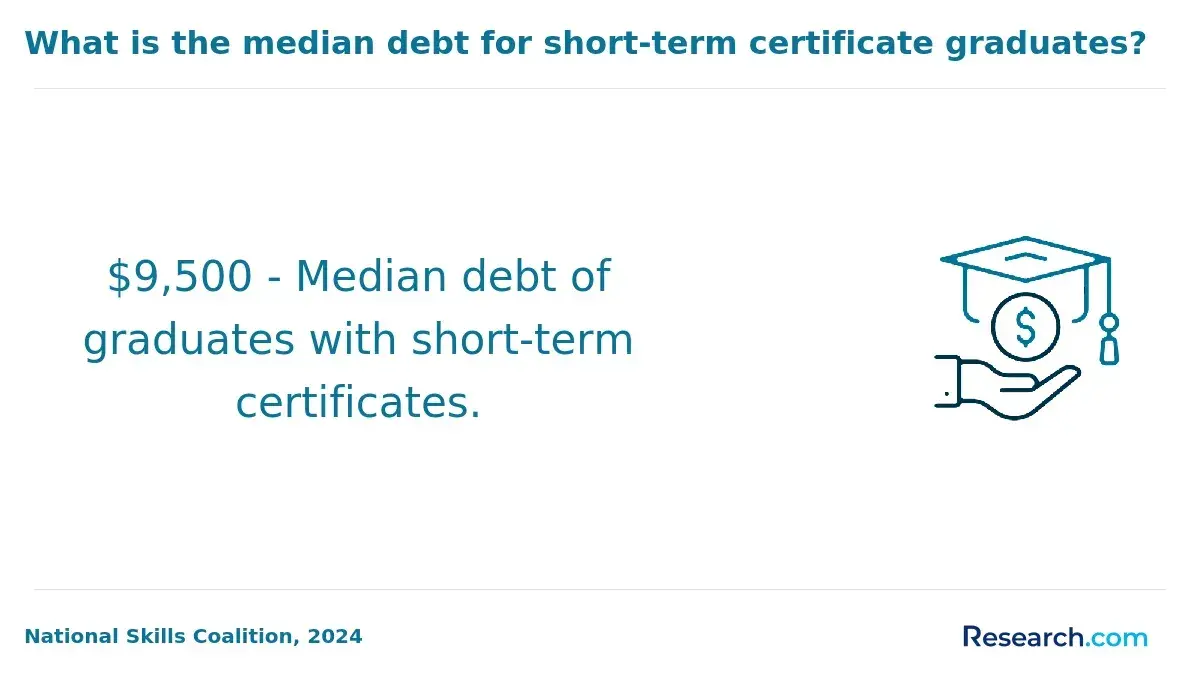
Tuition is only one cost. The College Board's 2024-25 estimate for average published in-district tuition and fees at public two-year colleges was $4,050. That figure is a national benchmark, not a program quote, and it excludes housing, transportation, books, tools, uniforms, testing, and licensure expenses.
Use this cost framework to compare a short credential against the full pathway rather than judging programs by advertised tuition alone.
| Cost category | Why it matters | How to verify |
| Tuition and mandatory fees | May differ by residency, course load, and delivery format | Request the program-specific estimate |
| Supplies and equipment | Tools, software, uniforms, and kits can be substantial | Ask for a required-item list |
| Testing and licensing | Certification exams and state applications may be separate | Check the relevant certifier or licensing board |
| Lost work time and travel | Labs and clinicals can limit work schedules | Review meeting times and placement locations |
Federal aid may be available for eligible students in qualifying credit-bearing programs, but eligibility depends on the institution, program length, enrollment status, and student circumstances. Students planning to continue after an associate degree can compare a cheapest master's program later, while recognizing that graduate admission requires a bachelor's degree first.
What coursework and skills are included in common stackable credential tracks?
Stackable tracks generally combine foundational college or technical courses with progressively specialized instruction. The first certificate should develop a usable entry-level skill set, while later coursework adds troubleshooting, documentation, leadership, general education, or advanced technical competencies.
The coursework should match the work environment students expect to enter. For example, HVAC students need hands-on diagnostics and electrical safety; healthcare learners need communication, documentation, privacy, and supervised clinical skills; IT students need practical systems or support experience in addition to theory.
Across fields, employers commonly value the following capabilities because they translate from a first job into later advancement.
- Technical or clinical procedures performed safely and according to current standards.
- Written communication, documentation, customer service, and professional ethics.
- Digital fluency with field-specific software, records systems, or diagnostic tools.
- Problem-solving, measurement, quality control, and the ability to follow procedures.
- Teamwork and reliability in supervised workplace, lab, clinical, or internship settings.
Review course descriptions, not just credential titles. A program marketed as "cybersecurity," "healthcare administration," or "legal studies" may offer introductory knowledge without providing the specialized practice an employer expects for a particular role.
What entry-level and mid-level jobs can these credentials help you qualify for?
A stackable credential can help students demonstrate preparation for entry-level work, but hiring also depends on local demand, work experience, background requirements, licensure, and employer preferences. The first certificate is most valuable when it aligns with a clearly defined entry role and the next credential expands responsibility rather than repeating the same content.
The examples below show how a pathway can progress. Job titles vary by employer and state, and a listed credential alone may not meet every hiring or licensing requirement.
| Track | Potential entry-level roles | Possible next step after additional education or experience |
| HVAC/R | HVAC helper, installation assistant, maintenance trainee | Service technician or lead technician |
| Welding | Production welder, fabrication assistant, welding trainee | Specialized welder, inspector pathway, shop lead |
| Medical support | Medical assistant, nursing assistant, phlebotomy technician | Licensed practical nurse or health-services support role, where qualified |
| IT support | Help desk technician, computer user-support trainee | Network support, systems support, or cybersecurity support role |
| Legal support | Legal assistant, records clerk, intake specialist | Paralegal or compliance-support role with appropriate education and experience |
Be wary of programs that name a job but cannot identify the actual education, exam, experience, or legal requirements for that role. Ask for local employer examples and the percentage of program graduates who obtain required licensure or certification when applicable.
What salary ranges and job outlook can graduates expect in key career fields?
Salary information describes occupations, not a guaranteed result of earning a certificate or associate degree. Pay varies by location, shift, union status, employer, experience, overtime, licensing, and specialization. Use wage data to assess the field's potential, then ask schools for transparent local outcomes for students completing the specific program.
The U.S. Bureau of Labor Statistics reported the following May 2024 national median annual wages for occupations commonly connected to these pathways. These figures help compare fields, but many roles require licensing, certification, apprenticeship completion, or education beyond an initial certificate.
| Occupation | May 2024 national median annual wage | Credential consideration |
| Licensed practical and licensed vocational nurses | $48,780 | Requires an approved practical-nursing program and state licensure |
| HVAC mechanics and installers | $59,810 | Training, experience, and EPA requirements may apply |
| Paralegals and legal assistants | $61,010 | Employers may prefer an associate degree or bachelor's degree plus paralegal preparation |
| Computer user support specialists | $60,810 | Requirements range from certificates to degrees depending on employer |
| Medical assistants | $44,200 | Certification may be preferred or required by employers |
BLS projects growth in many healthcare support and skilled technical occupations through 2033, but projected growth does not ensure openings in every city. Compare local job postings, commuting range, and licensure requirements before treating national wage data as a personal earnings forecast.
How can students choose reputable, accredited programs that support future licensing needs?
Choose the credential backward from the job target. First identify whether the intended occupation requires a state license, approved education, supervised clinical hours, an apprenticeship, or an industry certification. Then confirm that the exact campus and program - not merely the parent institution - meets the relevant requirement.
These steps can prevent the most costly errors: enrolling in a nontransferable certificate, overlooking a clinical placement requirement, or discovering too late that an online program does not meet state licensing rules.
- Find the occupation's requirements through the relevant state licensing board, apprenticeship agency, or certifying organization.
- Verify the college's institutional accreditation through the U.S. Department of Education or Council for Higher Education Accreditation databases.
- For regulated fields, confirm specialized accreditation, program approval, and eligibility for the required exam or license.
- Request a written program map showing which certificate courses apply to the associate degree and any transfer agreement.
- Compare total costs, completion rates, clinical or lab access, student support, and local employer relationships.
- Ask whether the school has restrictions for online learners who live outside the institution's state.
Red flags include guaranteed job claims, vague statements about accreditation, pressure to enroll before reviewing costs, and refusal to provide licensing or transfer details in writing. A reputable school will distinguish clearly between a completion certificate, a college certificate, an associate degree, and an independent professional certification.
Other Things You Should Know About
Often, yes. Many community colleges use open admission for general enrollment. However, selective programs may separately evaluate prerequisite grades, test scores, interviews, or available seats.
No. A 2.5 GPA may meet college admission requirements, but nursing programs often use a higher prerequisite GPA, entrance exam scores, clinical eligibility, and competitive ranking.
They can be worthwhile when the first credential leads to a realistic entry-level role and its credits are documented as applying toward a higher credential. They are less valuable when credits do not transfer or the training does not match employer requirements.
Sometimes, but only when the program meets the relevant education and practical-training requirements. Online coursework alone may not satisfy clinical, lab, examination, supervised-experience, or state authorization rules.
References
- USHE initiative helps students earn meaningful credentials on their way to a degree - Utah System of Higher Education https://ushe.edu/stackable-credentials-help-students-earn-credentials-on-their-way-to-a-degree/
- What Are Stackable Credentials and Why Do They Matter? https://www.pltw.org/blog/what-are-stackable-credentials
- Making sure you're not a bot! https://www.iastatedigitalpress.com/jtmae/article/id/14484/
- Dual Enrollment: College Credits in High School https://www.excelhighschool.com/online-programs/dual-enrollment-highschool-college/
- SEE MORE https://iticollege.edu/blog/stackable-credentials-how-certificate-programs-can-be-your-fast-track-to-a-degree/
- Admissions Requirements - Central Penn College https://www.centralpenn.edu/admissions-requirements/
- Online Degree & Certificate Programs https://www.stchas.edu/programs-courses/scc-online.php
- Top-rated online high schools for flexible learning https://www.asuprepdigital.org/blog/best-online-high-schools/
- The Potential for Stackable Credentials: From 30,000 Feet - The EvoLLLution https://evolllution.com/programming/credentials/the-potential-for-stackable-credentials-from-30000-feet
- A Research-Based Look at Stackable Credentials https://www.parchment.eu/blog/podcast-episode-9-a-research-based-look-at-stackable-credentials/