2027 Best Online Certifications With Academic Advising

Co-Founder and Chief Data Scientist
Choosing an online certificate is harder when a program promises flexibility but provides little help with course planning, transfer questions, or career next steps. Academic advising can make the difference between a credential that fits your goal and one that does not.
U.S. Bureau of Labor Statistics projections show employment for healthcare occupations is expected to grow much faster than average from 2024 to 2034, making targeted training especially relevant. This guide explains certificate types, advising quality, costs, accreditation, licensing limits, and career fit so you can compare programs confidently.
Key Things You Should Know
- Choose a credit-bearing academic certificate when you may later pursue an associate or bachelor's degree; choose a noncredit career certificate only when employers recognize it and transfer credit is not important.
- Strong advising should include a named advisor, documented education plan, transfer or licensure guidance, and career referrals - not merely technical support or automated registration.
- Certificate length ranges from weeks for noncredit training to roughly one year for many college certificates; occupation-level pay varies widely, with 2024 BLS median pay ranging from $47,320 for medical records specialists to $62,350 for electricians.
Top 10 Best Online Certifications With Academic Advising
Popular Trade School Programs
Online trade certificates commonly cover construction management, HVAC fundamentals, electrical theory, welding safety, logistics, and automotive service concepts. Hands-on trades usually require local labs, employer training, apprenticeships, or supervised clinical-style practice; a fully online certificate alone rarely qualifies someone for field licensure. An associate degree may add general education and broader technical coursework, while a short certificate can help an experienced worker build targeted knowledge. Choose programs that clearly identify required in-person components, state licensing alignment, and whether coursework supports an apprenticeship or industry exam.
Healthcare Programs
Healthcare options include medical billing and coding, medical assisting theory, health information technology, pharmacy technician preparation, and medical records certificates. Some are academic certificates offered by accredited colleges; others are noncredit training designed to prepare learners for a separate industry certification examination. Clinical occupations often require in-person skills training, background checks, immunizations, and state-specific approval. Advising is particularly useful for confirming whether a program meets employer expectations and licensure rules. For example, medical coding training does not automatically confer a coding certification or guarantee eligibility for every employer role.
Criminal Justice / Law Programs
Online certificates in criminal justice, legal studies, paralegal studies, homeland security, and cybersecurity law introduce legal systems, ethics, writing, evidence, and procedure. A legal studies certificate can complement another degree or support administrative work, but it does not authorize independent legal practice. Paralegal employment may require employer-preferred education, practical experience, or a program with appropriate recognition; requirements vary by employer and state. Students seeking law school should usually prioritize a bachelor's degree and strong academic record rather than assume a certificate is a substitute.
Arts & Design Programs
Arts and design certificates may focus on graphic design, UX foundations, digital media, photography, web design, or animation. They work best when the curriculum produces a reviewable portfolio, includes current software workflows, and offers instructor feedback. A certificate can be a practical entry point for career changers, but employers often evaluate work samples more closely than the credential title. An associate degree generally offers more studio time and general education, while a short noncredit program may be better for upgrading a specific tool or skill. Confirm software costs and portfolio expectations before enrolling.
What is an online certification with academic advising, and who is it best for?
An online certification with academic advising is usually an online certificate program paired with support from an academic advisor. The educational credential is a certificate earned by completing coursework; it is not necessarily a professional certification awarded by an outside certifying body. Advisors help students select courses, understand prerequisites, plan a manageable schedule, identify degree pathways, and sometimes connect with career services.
This option is best for working adults, career changers, and current students who need structure or want to preserve future education options. Readers comparing career-focused online certificates should first decide whether their goal is immediate skills, preparation for an external exam, or college credit toward a degree.
A certificate with advising may be a poor fit if your target occupation requires a bachelor's degree, a state license, substantial clinical training, or an apprenticeship. In those cases, advising should help you identify the required pathway rather than oversell a short program.
How do accredited online certificate programs compare to campus-based options?
Accredited online and campus certificates can cover the same learning outcomes, but the better format depends on the occupation and the kind of support you need. Online study suits theory-heavy fields such as business, coding, health information, legal studies, and project coordination. Campus or hybrid delivery is usually safer for training requiring equipment, supervised practice, laboratories, or clinical placements.
The comparison below separates flexibility from the elements that cannot reliably be replicated online. Use it to avoid enrolling in a convenient format that does not meet your eventual employment or licensing needs.
| Decision factor | Online certificate | Campus or hybrid certificate |
| Scheduling | Often asynchronous, with deadlines and virtual advising | Fixed meeting times and more direct access to facilities |
| Hands-on learning | May require local practicum, lab kit, or external placement | Usually integrated through labs, studios, or simulations |
| Advising access | Video, phone, email, and degree-planning tools | In-person access may be easier for some learners |
| Best fit | Self-directed learners with a theory-based goal | Learners needing practice, equipment, or close supervision |
Do not equate online delivery with easier coursework. Students who want a lower-intensity academic route should compare program requirements carefully; an easiest degree to get online is still a different commitment from a short certificate and may better serve a long-term degree goal.
What accreditation and licensing standards should online certification programs meet?
Accreditation matters most when a certificate is credit-bearing, uses federal financial aid, leads toward a degree, or supports regulated professional preparation. Check that the college holds institutional accreditation recognized by the U.S. Department of Education or the Council for Higher Education Accreditation. Then determine whether the specific program needs specialized approval.
Licensure and certification rules are separate from institutional accreditation. Nursing, allied health, teaching, skilled trades, and certain legal or public-safety roles can have state-board requirements that an online certificate may not meet. Ask the school for written confirmation of the program's eligibility in your state; do not rely on a general statement that coursework is "career-ready."
For noncredit provider certificates, institutional accreditation may not apply. Instead, evaluate whether the curriculum maps to a known employer requirement or external certification exam and whether the provider explains its assessment, instructor qualifications, refund policy, and identity-verification practices.
What admission requirements and prerequisites do online certificate programs typically have?
Admission rules depend on the credential type. Many college undergraduate certificates require a high school diploma or equivalent and an application, while graduate certificates generally require a bachelor's degree. Selective technical or healthcare pathways may add placement testing, prerequisite science or math courses, background screening, or proof of immunization for fieldwork.
Noncredit professional certificates often use open enrollment and may not require transcripts, GPA review, standardized tests, or formal admission. That convenience can be useful, but it also means students must independently verify whether the credential meets their goal.
Before applying, obtain answers to the following enrollment questions in writing.
- Is the certificate credit-bearing, and can its credits apply to a named associate or bachelor's program?
- Which prerequisites must be completed before the first course or before any practicum?
- Are students outside the institution's home state eligible for online enrollment and required placements?
- Does the program prepare students for a separate certification exam, and are exam eligibility requirements beyond coursework?
How long do online certification programs take, and what do they cost?
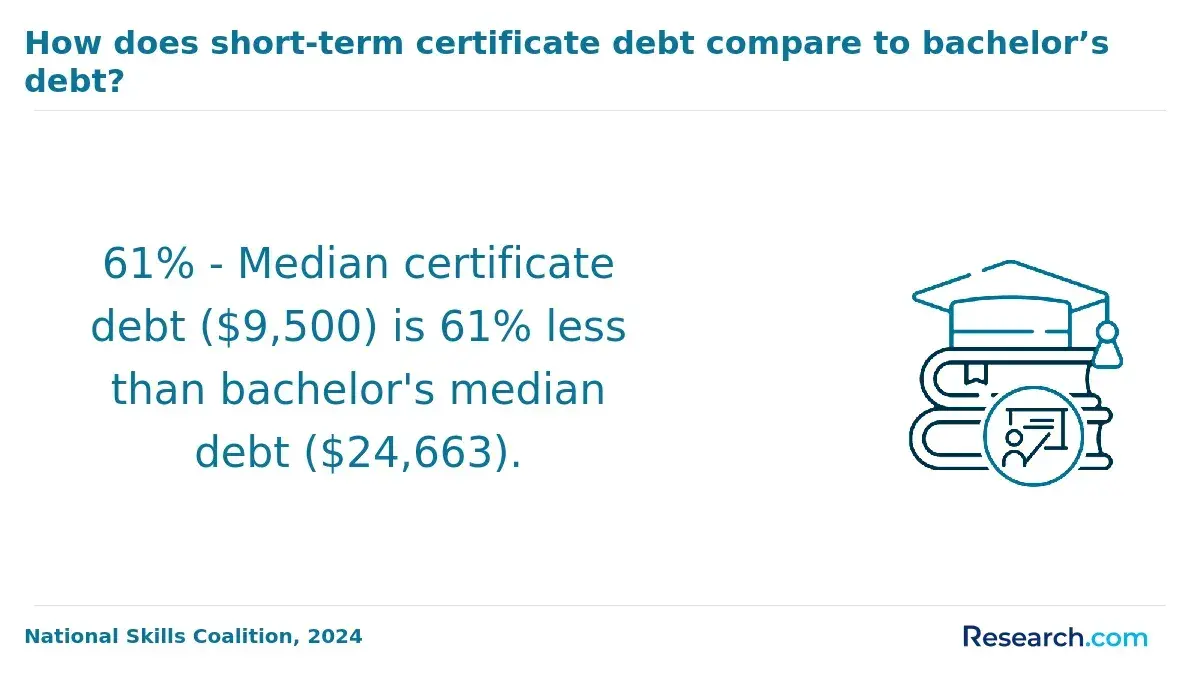
Completion time depends on credits, course sequencing, and whether a practicum is required. A noncredit certificate may take weeks or several months, while many undergraduate academic certificates require about 15 to 30 credits and can take two semesters to a year part time. Accelerated pacing can reduce calendar time, but it increases weekly workload and can make missed deadlines more costly.
Cost should be evaluated as a total, not just tuition. College programs may charge per credit plus fees; career training may bundle instruction but exclude exam, software, supplies, proctoring, travel, or practicum expenses. For context, the maximum Federal Pell Grant for the 2024-25 award year was $7,395, but eligibility applies only to qualifying students and programs and should never be assumed for noncredit training.
Use the following cost categories when comparing program quotes.
| Cost category | Why it changes the total | What to confirm |
| Tuition | May be charged per credit, course, term, or package | Published total for your planned pace |
| Required fees | Technology, registration, graduation, and proctoring fees may be separate | Mandatory versus optional charges |
| Materials | Software, kits, textbooks, tools, and uniforms can add materially | Current itemized estimate |
| Career requirements | Exam, background check, travel, and clinical costs may fall to the student | Which costs are not included |
If speed is the priority, compare course loads, start dates, and required sequencing at fast track schools before committing. Faster is worthwhile only when the schedule remains compatible with work, caregiving, and required practice hours.
What coursework and advising support can students expect in these online certifications?
Coursework should align with a defined outcome: foundational academic credit, job-relevant skill development, preparation for an external certification exam, or advancement in a current role. Common online components include recorded lectures, readings, discussion boards, projects, quizzes, live sessions, virtual labs, and supervised placements when required. Quality programs state the expected weekly time commitment and disclose which activities must occur at set times.
Academic advising is more valuable when it is proactive and specific. At minimum, students should expect help interpreting program requirements and planning terms around prerequisites. Stronger support may include transfer evaluation, academic-progress checks, accessibility coordination, career coaching, tutoring referrals, and assistance locating approved practicum sites.
Ask how frequently an advisor contacts students and whether the advisor understands your field. A general enrollment representative can explain registration, but may not be qualified to answer transfer, licensing, or certification-exam questions.
What careers and job roles do online certifications with advising prepare you for?
Online certificates with advising can prepare learners for entry-level support roles, technical tasks, or the next educational step. They are most credible when the program names the job functions taught and explains any additional employer, examination, experience, or license requirements. Advising can help match a certificate to a realistic first role rather than a broad career label.
This comparison shows how credentials commonly fit into career pathways; it does not mean certificate completion alone qualifies a graduate for every listed role.
| Program focus | Possible entry-level direction | Important limitation |
| Medical billing or health information | Billing support, records, patient-access, or coding-track roles | Employers may prefer experience or an external coding certification |
| IT support or cybersecurity foundations | Help desk, user support, or junior technical support | Roles may require portfolio work, vendor certification, or prior experience |
| Business or project coordination | Administrative, operations, scheduling, or project-support work | Certificate scope varies substantially by provider |
| Design and digital media | Production assistant, content support, or freelance portfolio building | Portfolio quality and software fluency are central to hiring |
AI is changing task expectations in administrative, technical, and design work. Prioritize programs that teach verification, ethical use of workplace tools, communication, and portfolio-quality applied work instead of relying solely on software demonstrations.
What salary ranges and earning potential are linked to these certifications?
Salary data should be used as labor-market context, not as a promise about certificate outcomes. The U.S. Bureau of Labor Statistics reported 2024 median annual pay of $47,320 for medical records specialists, $61,010 for paralegals and legal assistants, $61,300 for graphic designers, and $62,350 for electricians. These figures describe workers in each occupation across education and experience levels, not the earnings of certificate holders.
The table pairs pay context with projected employment trends from BLS 2024-34 projections. It can help you distinguish a credential that supports a growing occupation from one that may require stronger differentiation, additional education, or local networking.
| Occupation | 2024 median annual pay | Projected 2024-34 outlook |
| Medical records specialists | $47,320 | 7% growth |
| Electricians | $62,350 | 9% growth |
| Graphic designers | $61,300 | 2% growth |
| Paralegals and legal assistants | $61,010 | 1% decline |
Pay can vary by state, employer, shift, union status, specialization, experience, and degree level. Compare local job postings with the program's actual curriculum before using national median pay to judge return on investment.
How can students choose a reputable online certification program with strong advising?
A reputable program makes its credential, total cost, support model, and limitations easy to verify before enrollment. Do not choose based only on a short completion claim, a broad "accredited" label, or a salary testimonial. The right choice is the one that meets your intended role's requirements and gives you an advisor who can document the route from enrollment to completion.
Use this process to compare finalists before paying an application or enrollment fee.
- Write down the exact job, external certification, license, or degree outcome you want within the next one to three years.
- Check whether the program is credit-bearing, noncredit, exam-preparation training, or a stackable certificate, and verify its recognition with the relevant employer or licensing authority.
- Request an itemized total-cost estimate, including materials, examination, proctoring, travel, and practicum costs.
- Schedule an advising conversation and ask who will evaluate prerequisites, transferability, academic progress, and state-specific eligibility.
- Read withdrawal, refund, attendance, and placement policies before enrolling, especially for accelerated programs.
Red flags include pressure to enroll immediately, vague claims about "national accreditation," no explanation of in-person requirements, no written refund policy, and advisors who cannot distinguish a school certificate from an industry certification. To lower application costs while comparing legitimate institutions, consider online schools no application fee.
Other Things You Should Know About
They can be worthwhile when the certificate matches a specific job goal, certification exam, or degree pathway and advising helps you avoid unnecessary courses or ineligible programs. They are less valuable when the occupation requires a license, degree, or supervised training the program does not provide.
A certificate is an educational credential awarded after completing a course sequence. A certification is usually awarded by a professional organization after meeting standards such as passing an exam or documenting experience. A certificate may prepare you for a certification, but it does not automatically grant one.
Possibly. Eligibility depends on the institution, whether the certificate is an eligible credit-bearing program, your enrollment status, and your federal or state aid eligibility. Noncredit certificates commonly do not qualify for federal student aid, though employer tuition assistance or payment plans may be available.
Contact the relevant state licensing board and ask the school for written confirmation of the program's status in your state. Verify required clinical hours, supervised practice, examinations, background checks, and whether online coursework is accepted before you enroll.
References
- 2025's Best Online Graduate Certificate Programs in the U.S. https://www.onlinemastersdegrees.org/graduate-certificate-programs/
- Career Advising Certificate Course - Eduology https://eduology.org/career-advising-certification-course
- Best Accredited Online Courses for College Credit [2026 Expert Rankings] https://www.straighterline.com/blog/degreecompletion-best-accredited-online-courses-for-college-credit
- How Academic Advising Impacts the Question: Are You Coming Back Next Semester? https://www.facultyfocus.com/articles/academic-leadership/how-academic-advising-impacts-the-question-are-you-coming-back-next-semester/
- How Career Pathways Software Helps Students Navigate Their Academic Journey https://moderncampus.com/blog/how-career-pathways-software-helps-students-navigate-their-academic-journey.html
- Best Academic Advising Software for Colleges (2026) https://prentus.com/blog/best-student-advising-software-for-colleges-and-universities
- How South Carolina is Transforming Career Development with Advanced Career Advisor Training https://www.icadlearn.com/post/how-south-carolina-is-transforming-career-development-with-advanced-career-advisor-training
- Effective Academic Advising Strategies | Civitas Learning https://www.civitaslearning.com/blog/effective-academic-advising-strategies/
- Academic Advisor Training & Certificate | DC Education Group https://www.dceducationgroup.com/retention-advisor-certificate
- Certificate Programs - National Association for College Admission Counseling (NACAC) https://www.nacacnet.org/education/certificate-programs/