2027 Best Online Certifications With Easy Admission Requirements

Co-Founder and Chief Data Scientist
Choosing an online certificate can be difficult when "easy admission" is confused with weak quality or guaranteed employment. The best options usually require a high school diploma or equivalent rather than selective GPA, test, or essay requirements. This matters because the U.S. Bureau of Labor Statistics projects healthcare support occupations to grow faster than average from 2023 to 2033. This guide helps adult learners compare accredited school certificates, industry certifications, costs, schedules, licensing implications, and career paths before enrolling.
Key Things You Should Know
- Easy-admission online certificates commonly require a high school diploma or GED, identity documentation, and placement or prerequisite coursework; they usually do not require SAT or ACT scores.
- A certificate is a school-issued educational credential, while a certification is typically awarded by a professional body after an exam, experience requirement, or both; employers may value either depending on the field.
- Completion time often ranges from a few months to about one year, but clinical, skilled-trade, and licensure-oriented programs may require in-person labs, externships, background checks, or state-approved training.
Top 10 Best Online Certifications With Easy Admission Requirements
Popular Trade School Programs
Online trade certificates can cover estimating, construction management fundamentals, HVAC theory, electrical theory, welding safety, logistics, and computer-aided design. They are best for learners who need foundational knowledge before an apprenticeship or entry-level support role. Fully online study rarely replaces hands-on requirements for electricians, welders, HVAC technicians, or commercial drivers. Choose a hybrid or local partner program if the occupation requires lab hours, supervised practice, or a state license. Ask whether the credential is credit-bearing and whether it can stack into an associate degree.
Healthcare Programs
Common online healthcare certificates include medical billing and coding, medical office administration, pharmacy technician preparation, health information support, and community health work. Admissions are often accessible, but programs involving direct patient care - such as medical assisting, practical nursing, dental assisting, and phlebotomy - typically require clinical placements and may have immunization, drug-screening, background-check, and CPR requirements. A school certificate may prepare students for an external certification exam but does not automatically confer professional certification or state licensure. Confirm local employer and state-board expectations before paying tuition.
Criminal Justice / Law Programs
Online certificates in criminal justice, legal studies, paralegal studies, homeland security, and court administration often admit students with a diploma or equivalent. They can suit people exploring public safety or legal support work, but they do not qualify someone to practice law, become a police officer, or meet every agency's hiring standards. Paralegal employers may prefer programs approved by the American Bar Association, though approval is not universally required. Review local background, fitness, academy, and licensing rules for law-enforcement-related goals.
Arts & Design Programs
Accessible online arts and design options include graphic design, digital illustration, UX fundamentals, web design, photography, animation, and social media content creation. Admission may be portfolio-free for beginner certificates, making them practical for career changers. However, creative hiring usually depends heavily on a portfolio, technical ability, and client-ready work rather than the certificate alone. Select programs that include project critiques, current software instruction, accessible instructor feedback, and portfolio development. Verify whether software subscriptions, equipment, and portfolio hosting add to the advertised tuition.
What are the easiest online certifications to get into at accredited U.S. schools?
The easiest legitimate online certificates to enter are usually undergraduate or continuing-education programs with open enrollment or simple application review. They are not necessarily the fastest, cheapest, or best choice for regulated work. Learners who ultimately need a degree may also compare a best accelerated bachelor's degree online option, especially when a short certificate would not meet employer requirements.
This comparison separates school certificates from professional certifications so applicants can match the credential to the goal.
| Option | Typical admission barrier | Best use | Important limitation |
| Community college workforce certificate | Diploma/GED and application; some courses may require placement | Entry-level career skills and possible academic credit | Not every certificate transfers into a degree |
| University continuing-education certificate | Often open enrollment; advanced programs may require prior study | Career changers seeking structured online learning | May be noncredit and ineligible for federal aid |
| Industry certification preparation course | Usually course enrollment only | Preparing for an external exam in IT, project management, or healthcare administration | Course completion is not the external certification |
| State-approved career training program | Varies by state and occupation | Fields with mandated education or examination pathways | Online-only delivery may not satisfy clinical or lab rules |
For the lowest-friction path, begin with a program that clearly publishes its entry requirements, total required fees, delivery format, and whether its credential is academic credit, noncredit training, or exam preparation. Avoid providers that advertise "no requirements" but cannot explain who recognizes their credential.
How do online certificate programs compare to campus options for flexibility and support?
Online certificates are usually more flexible than campus programs because lectures, readings, and assignments may be asynchronous. That format can work well for working adults, caregivers, and rural learners. A self paced accredited online college can be especially useful when a learner needs flexible pacing, but self-paced does not mean instructor-free, instantly completed, or appropriate for every licensed occupation.
The practical trade-off is support. Campus programs can provide in-person labs, equipment, peer practice, and local employer relationships; online programs can provide scheduling freedom, recorded lessons, virtual advising, and digital tutoring. Before enrollment, ask how quickly instructors respond, whether career services serve online students, and how required placements are arranged. Choose online delivery for knowledge-based fields such as billing, IT support, business, or design. Choose hybrid or campus delivery when supervised practice is central to competence.
What admission requirements do most online certification programs have for adult learners?
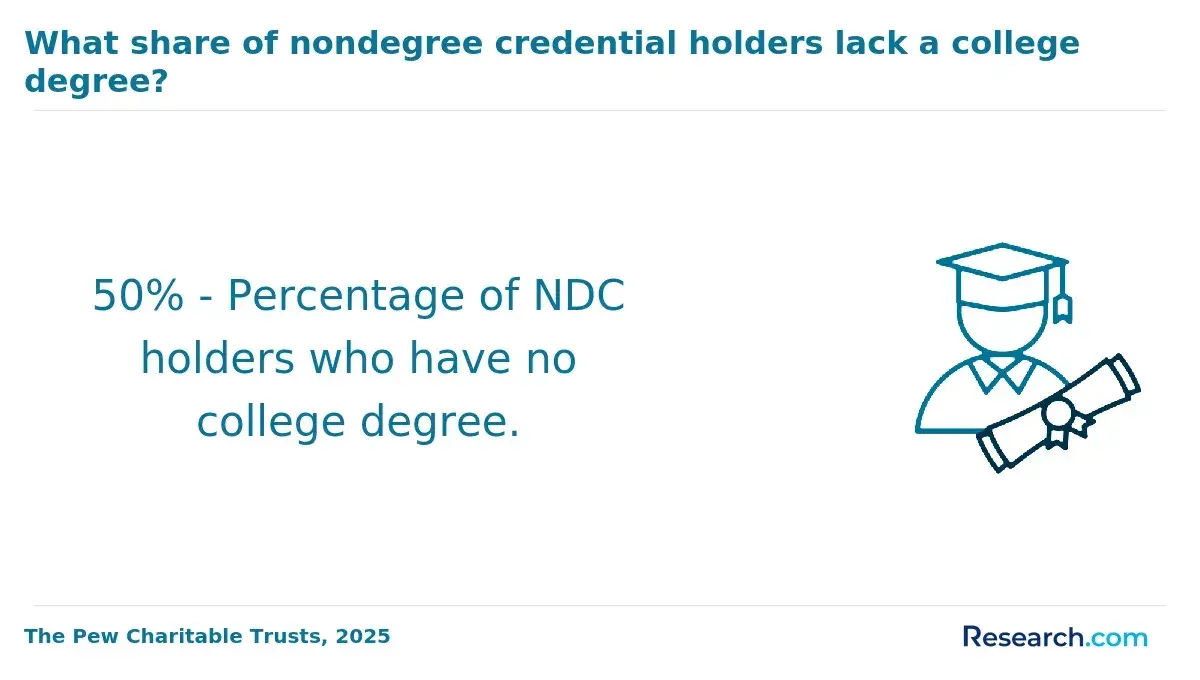
Most adult learners applying to accessible online school certificate programs submit a short application, proof of high school completion or equivalent, government-issued identification, and residency information when tuition differs by location. Schools may request transcripts, but many career certificates do not use a competitive GPA cutoff. Standardized admission tests are uncommon for short certificates.
Requirements become more involved when the program leads toward clinical practice, professional examination eligibility, or advanced technical study. Applicants may need prerequisite courses, minimum grades in math or science, an entrance assessment, criminal-background review, health records, technical equipment, or a placement interview. Do not interpret "easy admission" as "no academic expectations": students still must meet course standards to earn the credential.
Adults returning to school should request written answers about these issues before applying.
- Is the program credit-bearing, noncredit, or preparation for an outside certification exam?
- Are prior college credits, military training, or work experience eligible for evaluation?
- What mandatory costs are separate from tuition, including exams, software, books, tools, labs, and background checks?
- Does any course require live attendance, proctored tests, clinical work, or travel?
How can you verify that an online certification program is properly accredited and recognized?
Accreditation applies primarily to institutions and, in some fields, to specific programs. For credit-bearing certificates, verify that the college holds recognized institutional accreditation and confirm that the certificate appears in the school's official catalog. For specialized healthcare or technical training, also check whether a programmatic accreditor, state agency, or licensing board requires approval.
Recognition works differently for industry certifications. For example, an IT training provider may be legitimate without being a college, but the relevant question is whether its course prepares learners for a certification exam respected by employers. Verify the certifying organization's eligibility rules independently; some credentials require paid exams, documented work experience, continuing education, or periodic renewal.
Common red flags include vague claims of "national accreditation," no physical or legal school identity, pressure to pay immediately, promises of a license without state-specific information, and refusal to provide a catalog or refund policy. A reputable provider can explain what students earn, who issues it, and what it does not qualify them to do.
What are the typical program length, tuition costs, and financial aid options for online certificates?
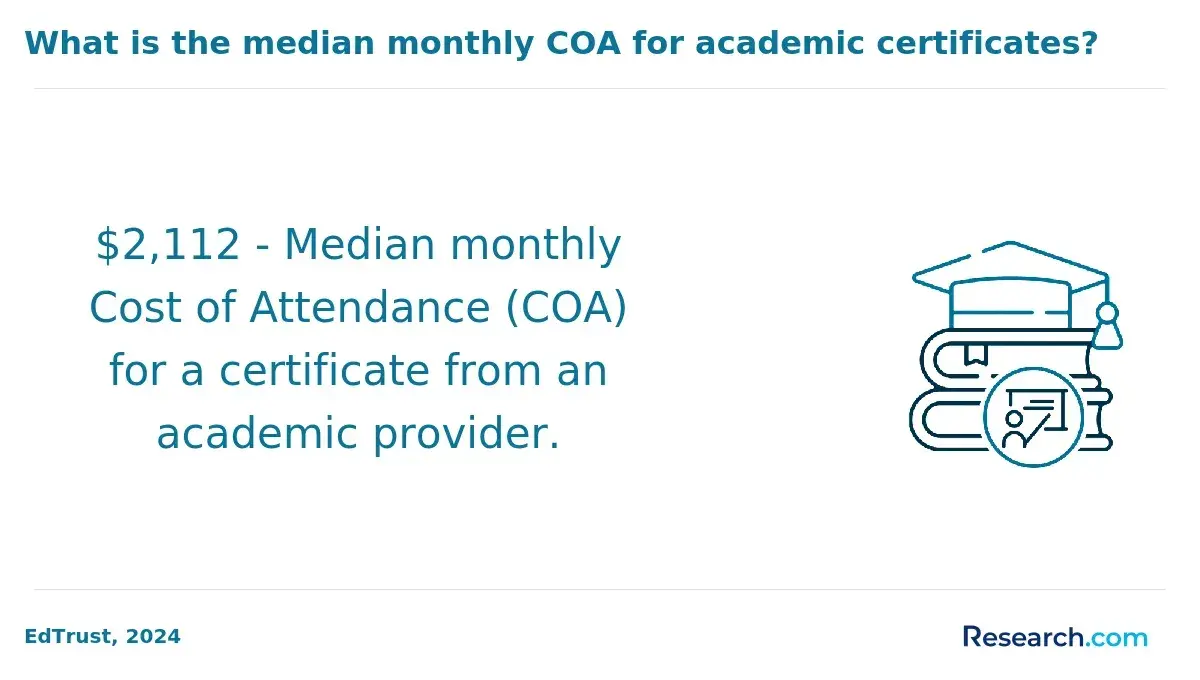
Program length depends on the credential and required practical training. Short noncredit courses may last weeks, while college certificates often take one or two terms and clinical or technical certificates can take about a year. Total cost includes more than published tuition: learners may pay for application fees, learning platforms, books, software, examination fees, tools, uniforms, insurance, and travel to labs or placements.
Use this cost framework to compare programs with similar career outcomes rather than choosing solely by the lowest advertised price.
| Funding or cost factor | What to verify | Why it matters |
| Federal student aid | Whether the credit-bearing program and institution are eligible | Many short, noncredit programs do not qualify |
| Workforce grants | State or local eligibility, approved-provider list, and application deadlines | Support may target high-demand occupations |
| Employer tuition assistance | Eligible programs, reimbursement timing, and continued-employment rules | Upfront payment may still be required |
| Payment plan | Finance charges, late fees, and full withdrawal terms | Monthly payments can increase total cost |
Students seeking eligible degree or certificate pathways can compare cheapest online colleges that accept FAFSA near me. Submit the FAFSA only when the school confirms the program's aid eligibility; FAFSA submission alone does not make every certificate federally aid eligible.
What core courses and skills are covered in the most popular online certification tracks?
Popular online certificate tracks teach targeted, job-related skills rather than the broad general education found in an associate or bachelor's degree. The strongest programs make learning outcomes concrete and assess them through projects, simulations, supervised practice, or exam-aligned assignments.
Typical curriculum patterns help clarify what the credential can realistically prepare a learner to do.
| Track | Common core learning | Career-readiness evidence |
| Medical billing and coding | Medical terminology, coding systems, privacy, claims workflows | Coding exercises and possible certification-exam preparation |
| IT support | Hardware, operating systems, networking basics, troubleshooting, security awareness | Hands-on troubleshooting tasks and industry-exam alignment |
| Paralegal or legal studies | Legal research, writing, civil procedure, ethics, document management | Research memoranda and case-file exercises |
| Graphic or web design | Design principles, accessibility, layout, software, portfolio development | Published portfolio projects |
| Skilled-trade theory | Safety, codes, measurement, tools, technical drawings | Lab or apprenticeship pathway where required |
AI tools are increasingly used for drafting, design, support documentation, and data tasks, but students should learn verification, privacy, copyright, accessibility, and judgment alongside tool use. Programs that teach only a particular software interface can age quickly; prioritize transferable fundamentals.
Which careers and job roles can you pursue with common online certifications?
Online certificates can support entry-level, support, or career-transition roles, but the appropriate outcome depends on the credential type and local hiring practices. A certificate is often enough to demonstrate focused preparation for administrative, technical-support, or creative junior roles; it is less likely to replace a required degree, apprenticeship, license, or professional certification.
The roles below show realistic directions, not guaranteed job outcomes.
- Medical billing and coding certificates can support applications for billing specialist, coding support, claims processing, and medical office roles; employers may prefer an external coding certification.
- IT support certificates can support help desk, desktop support, technical support, and junior systems-support applications; portfolios and troubleshooting practice strengthen candidacy.
- Legal studies and paralegal certificates can support legal assistant, case-management, records, and compliance-support roles; paralegal expectations vary by employer and jurisdiction.
- Design certificates can support junior graphic design, content-production, web-content, and freelance work, a portfolio is usually essential.
- Trade-theory certificates can support apprenticeships, dispatch, estimating, warehouse, or technician-helper roles; hands-on qualifications remain necessary for many trades.
Career changers should review at least 10 local job postings before enrolling. Record the required education, external certifications, software, experience, schedule, and background standards. This simple check exposes whether a short credential matches actual hiring criteria.
What salary ranges and earning potential are associated with in-demand online certifications?
Occupation-level pay data is useful for evaluating a path, but it is not proof that a certificate graduate will earn that amount. Pay varies by state, employer, experience, industry, shifts, commissions, and whether the job requires additional licensing or a degree. According to U.S. Bureau of Labor Statistics May 2024 wage data, median annual pay was $50,250 for medical records specialists, $60,340 for computer user support specialists, $61,010 for paralegals and legal assistants, and $61,300 for graphic designers.
These figures suggest different return-on-investment questions. Medical records work may be accessible with focused training, while IT support can reward demonstrated technical ability and industry certification. Paralegal and graphic design roles may have stronger competition, making school reputation, local demand, portfolio quality, and prior experience important. Use local job postings and total program cost - not a national median alone - to decide whether the investment is sensible.
How can you choose a reputable online certification that aligns with your career goals and licensing needs?
Choose an easy-admission certificate only after defining the job, employer, or next educational step it must support. The most affordable option is not always the best value if it lacks required labs, exam eligibility, career support, or transfer options. Learners planning beyond a short credential may find useful comparisons through most affordable online colleges, particularly when they want a credit-bearing pathway.
Use the following process before submitting an application.
- Identify the exact target role and review current local job postings for required education, licenses, certifications, software, and experience.
- Confirm whether the school credential is a certificate, a noncredit completion award, or preparation for an independent certification examination.
- Check institutional accreditation, required program approval, and state-board rules when the field is regulated.
- Request the complete cost of attendance and compare it with expected funding, including employer assistance and non-tuition expenses.
- Confirm practical requirements, placement support, withdrawal terms, and whether credits can transfer or stack into a larger credential.
Consider a different route if your target occupation requires a bachelor's degree, an apprenticeship, extensive clinical hours, or a state license that the online program cannot provide. A transparent program will say so clearly rather than implying that a short online credential solves every requirement.
Other Things You Should Know About
Often, yes. Many entry-level certificates require a diploma or GED and an application rather than competitive GPA review or standardized tests. Requirements can be stricter for clinical, advanced technical, or licensure-related programs.
Possibly. Federal aid generally depends on the institution and the specific eligible program. Noncredit and very short programs may not qualify, so confirm eligibility with the school before enrolling.
No. A certificate is awarded by a school after completing coursework. A professional certification is awarded by a certifying organization after meeting its standards, which may include an examination, work experience, and renewal requirements.
Only if the program meets the requirements of the relevant state licensing board and includes any mandated clinical, lab, examination, or supervised-practice components. Verify this directly with the board before enrolling.
References
- Top 10 Online Certifications That Pay Well https://www.ssbm.ch/online-certifications-that-pay-well/
- How Much Does It Cost to Create an Online Course? A Complete Breakdown for Businesses That Want to Sell Courses https://oasis-lms.com/post/how-much-does-it-cost-to-create-an-online-course
- Mission https://atcb.org/state-licensure-lp/certificates-credentials-and-licensure-comparison/
- What Are Industry Certifications https://www.savvas.com/resource-center/blogs-and-podcasts/college-and-career-readiness/intro-to-cte/what-are-industry-certifications
- IT Certifications vs. Degree: What's the Difference? - Per Scholas https://perscholas.org/news/it-certifications-vs-degree-whats-the-difference/
- Online Certificate Programs | Certifications Programs https://www.uscareerinstitute.edu/online-certificate-programs
- Online Certificates for Job-Ready Skills | Grow with Google https://grow.google/certificates
- 7 in-demand certifications in 2025 | edX https://www.edx.org/resources/in-demand-professional-certifications