2027 Online Data Science Master's Options for Professionals in State College, Pennsylvania

Co-Founder and Chief Data Scientist
For professionals in State College, choosing an online data science master's is less about finding the nearest campus than finding a program that fits a full-time job and a specific career goal. Penn State offers a nearby institutional connection, while online programs elsewhere may offer a better curriculum or schedule.
This guide compares credible options and shows what to verify before committing: technical depth, required attendance, total cost, and the evidence behind career expectations.
Key Things You Should Know
- Penn State World Campus is a natural local starting point, but its data analytics degree should be compared with data science degrees by curriculum, not title alone.
- For a working State College resident, required live sessions, campus visits, and Pennsylvania enrollment eligibility can matter more than a university's distance.
- The U.S. median wage for data scientists was $120,230 in May 2025, according to the Bureau of Labor Statistics (BLS); it is not a Pennsylvania starting salary or a promised graduate outcome.
What online data science master's programs are available near State College, Pennsylvania?
State College residents can consider Penn State World Campus alongside online programs based elsewhere. The useful distinction is between a program's institutional location and what a student must actually do in person. Confirm each program's current delivery and Pennsylvania enrollment eligibility before applying.
The following examples offer different starting points for a shortlist. Degree titles indicate an area of emphasis, but they do not establish the depth of a particular course or project:
| Program to investigate | Why it may fit a State College professional | Question to resolve |
| Penn State World Campus, Master of Professional Studies in Data Analytics | A Penn State option for someone seeking applied analytics study with a nearby university connection. | Does its current curriculum provide the modeling and computing depth your target role requires? |
| Drexel University, online MS in Data Science | A data science degree to compare against a more explicitly applied analytics credential. | What are the current live-session, project, and residency requirements? |
| Syracuse University, online MS in Applied Data Science | An applied data science option for professionals comparing project-oriented study. | How much of the work can be completed around your job schedule? |
| Georgia Tech, online MS in Analytics | A national online analytics alternative when institution location is less important than curriculum fit. | Which courses support your intended data science role, and how are they assessed? |
This is a shortlist, not a ranking or a claim that these programs have equivalent requirements. Request current catalogs and sample schedules before narrowing it. For additional candidates to price-check, an online data science master's affordability guide can help identify programs to investigate; verify every quoted cost with the university.
How do you choose an accredited online data science master's program?
Start by checking the university's current institutional accreditation through the institution and its recognized accreditor. Then check the program itself: institutional accreditation does not tell you whether a curriculum covers the methods or projects you need. Do not assume a data science degree must hold a separate, field-specific accreditation.
For a State College resident, the next checks are practical rather than geographic. Ask whether the university enrolls students living in Pennsylvania, whether any course requires travel or attendance at a fixed time, and what access online students have to career services, instructors, and project support. A nearby name is valuable only if the associated resources are available to you.
Compare required courses, not just electives, against your intended role. A prospective machine-learning practitioner should look for substantial statistical modeling, programming, and model evaluation; an analytics manager may place more weight on communication and decision-making. A red flag is a program that advertises advanced AI work but makes it difficult to identify where students practice those skills.
What are the admission requirements for an online data science master's?
Requirements vary by school and sometimes by track. Expect to review each program's current policy for a bachelor's degree, transcripts, quantitative preparation, programming experience, recommendations, and any required statement or test.
Do not assume that professional experience automatically replaces a stated prerequisite, or that a degree outside computer science rules you out.
Before applying, compare your transcript and work samples with the program's listed expectations. If a gap appears, ask admissions whether a for-credit course can formally satisfy it or whether independent study would merely help you prepare.
Guidance on bridging skill gaps before graduate AI study can inform a preparation plan, but the data science program decides what it will accept.
What do you learn in an online data science master's program?
Programs commonly connect statistical reasoning and coding with data preparation, predictive modeling, and communicating results.
Their balance varies considerably: one may emphasize business analytics, while another offers more advanced computing or machine-learning electives. Read course descriptions and project requirements rather than treating similar degree names as interchangeable.
If your goal involves building reliable data pipelines as well as models, check whether data engineering is required, optional, or absent. A course that briefly mentions databases is different from sustained pipeline work.
Programs combining AI study and data engineering provide another curriculum comparison when that combination matters to your target role.
Ask to see the kinds of problems students solve in a capstone or equivalent project. For an employed student, a project using approved workplace data may be particularly relevant, but employer permission, data privacy, and program rules must be settled first.
How do online and campus-based data science master's programs compare?
An online program can let a State College professional keep working without relocating. That advantage shrinks if required meetings conflict with work hours or if group projects assume frequent daytime availability. Campus study may offer more routine face-to-face contact, but it can introduce commuting or reduced-work-hour costs.
Neither format guarantees better instruction or career access. Ask for a typical term schedule, how students meet instructors, whether exams require proctoring, and which career and recruiting activities online students can use.
Penn State's proximity may make optional local connections appealing; it should not be mistaken for proof that every World Campus resource or activity is available in person.
How long does an online data science master's take and cost?
Completion time depends on required credits, course sequencing, how many courses you take while working, and whether needed classes run every term.
Published minimum completion times may assume a pace that is unrealistic for someone with a full-time job. Ask each school to map both a manageable part-time schedule and its maximum time-to-degree policy.
Compare costs using the same basis: total required tuition at the rate applicable to a Pennsylvania resident, mandatory online and program fees, materials, and any travel. Then account for financing costs and income you might give up if the schedule affects work. Do not compare one school's per-credit tuition with another's all-in estimate.
Employer reimbursement can change the decision, but check annual limits, grade requirements, and repayment obligations before counting on it. Review financial assistance pathways for a data science master's, then confirm eligibility and current terms directly with each school and your employer.
What careers can an online data science master's prepare you for?
Depending on prior experience and the curriculum, graduates may pursue data scientist, data analyst, analytics engineer, or machine-learning-focused positions.
These are not interchangeable entry points: a role centered on production systems may demand stronger software and data-engineering evidence than a reporting-focused analyst role.
For a working professional, the most credible next move may be within an existing industry. Pair domain knowledge with a project that demonstrates sound data preparation, appropriate model evaluation, and a clear recommendation to stakeholders.
Check actual job postings from employers you would consider, including those offering remote work, before choosing electives. A master's can strengthen that evidence, but it does not substitute for the skills a particular employer tests.
What salaries can data science master's graduates expect in Pennsylvania?
A defensible Pennsylvania salary expectation depends on the job title, employer, location, and candidate's experience; a verified statewide salary figure for master's graduates specifically is not established here.
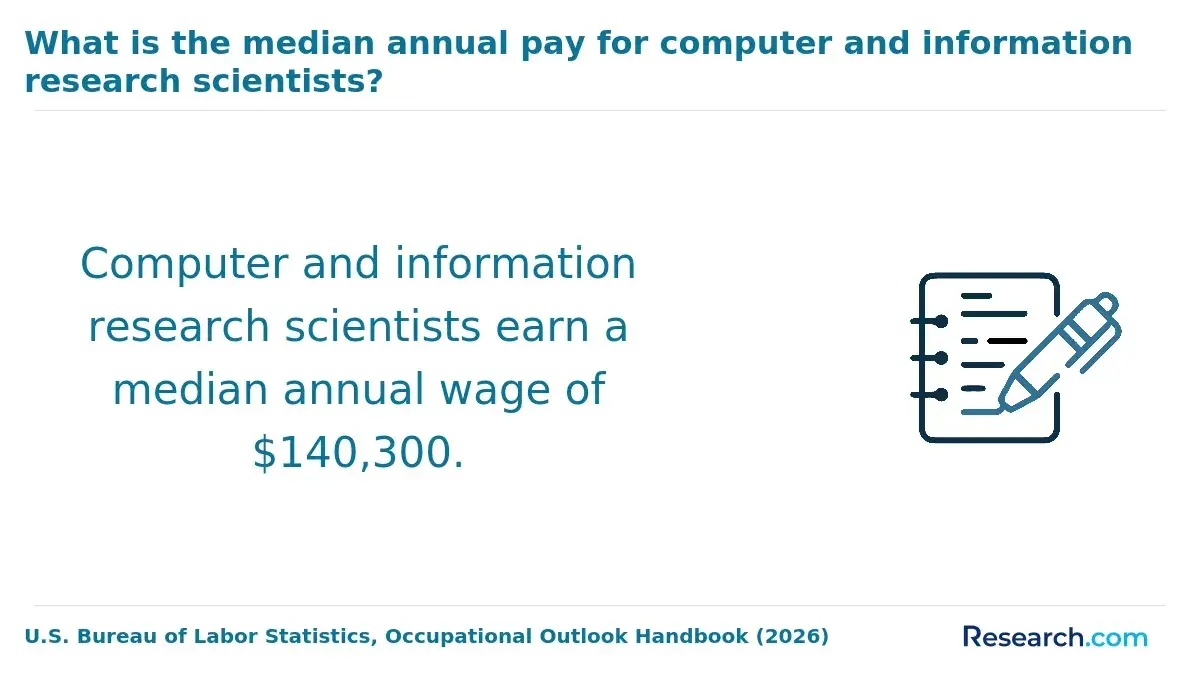
For context, BLS reports a $120,230 U.S. median annual wage for data scientists in May 2025. That figure covers workers in the occupation nationwide, not new graduates or State College hires, so it should not serve as a personal pay forecast.
For a financial decision, compare current Pennsylvania postings for roles you could realistically obtain with your existing pay and the program's full cost. If you are also weighing AI degrees, online AI master's cost and earnings considerations offer a related comparison; do not assume either degree title causes a particular salary increase.
What is the job outlook for data science professionals in Pennsylvania?
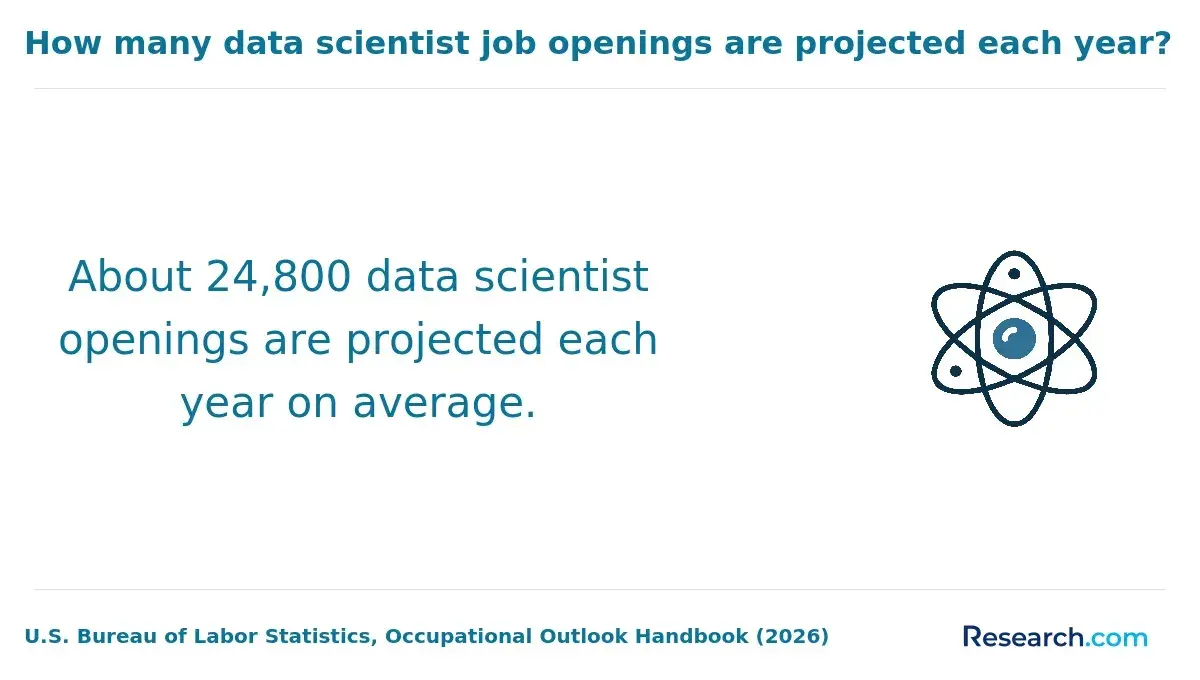
BLS projects 35% U.S. employment growth for data scientists from 2025 to 2035. That national projection signals opportunity in the occupation, but it is not a forecast for State College or Pennsylvania and does not measure demand for master's graduates alone.
State College residents should test the local market separately: examine recent postings for nearby employers, then decide whether Pennsylvania-wide or remote roles are acceptable.
Note which positions ask for modeling, data engineering, or industry expertise. That exercise is more useful for choosing a program than assuming national growth will translate into a local opening at graduation.
Are certifications or licenses required for data science careers?
Data scientist roles generally do not require a state-issued professional license. Some employers value certifications in particular software or cloud platforms, but these are employer preferences, not substitutes for a degree or proof of applied ability. Requirements can differ for positions that combine data work with another regulated profession.
Choose a certification only after identifying tools used in your target postings. If the program already teaches those tools through assessed projects, an additional credential may be less valuable than a strong, clearly documented project portfolio.
Other Things You Should Know About Data Science
Possibly, but obtain written employer permission and check the course's rules first. Confidential, personal, or proprietary data may require de-identification or a different dataset.
Some programs consider transfer credit, subject to limits and course-equivalency rules. Request a written evaluation before assuming prior coursework will shorten the degree.
Not necessarily. A well-evaluated applied project can show relevant skills, while a thesis may suit research-oriented goals. Check what the program actually requires and permits.
Not automatically. Staying employed may provide domain expertise, tuition support, and project ideas. The deciding question is whether you can sustain the program's actual schedule alongside your work.
References
- Optional Practical Training (OPT) for F-1 Students | uscis.gov https://www.uscis.gov/working-in-the-united-states/students-and-exchange-visitors/optional-practical-training-opt-for-f-1-students
- Career Support for Online Students | The Career Center | UIUC https://careercenter.illinois.edu/career-support-online-students
- How Long Does It Take to Complete a Master's Degree Program? | California Southern University https://www.calsouthern.edu/articles/how-long-is-a-masters-degree
- Tuition and Costs | The Pennsylvania State University https://www.psu.edu/admission/undergraduate/tuition-costs
- English proficiency - Office of Admissions https://admit.washington.edu/apply/first-year/how-to-apply/english-proficiency/
- Education - Data Science - Penn State https://datascience.psu.edu/education/
- What Makes the Best MSDS Programs | Master of Science in Data Science | University of Connecticut https://masters.datascience.uconn.edu/about/best-data-science-degrees/
- Graduate Admissions | UW College of Education https://education.uw.edu/admissions/apply-grad
- Synchronous vs. Asynchronous Learning | Saint Leo University https://www.saintleo.edu/about/stories/blog/synchronous-vs-asynchronous-learning-for-course-delivery
- Full article: Students' Experience and Perspective of a Data Science Program in a Two-Year College | tandfonline.com https://www.tandfonline.com/doi/full/10.1080/26939169.2023.2208185