2027 Best Online Non-Degree Programs for Job Security

Co-Founder and Chief Data Scientist
Choosing a short online program is risky when "career-ready" marketing does not match employer or licensing requirements. Online non-degree programs can build targeted, job-relevant skills without a full degree, but the right choice depends on the occupation. The U.S. Bureau of Labor Statistics projects healthcare support occupations to grow faster than average from 2024 to 2034, while skilled trades remain essential for construction and maintenance. This guide compares practical pathways, costs, credentials, licensing limits, and job-security factors so you can choose training that fits a real hiring route.
Key Things You Should Know
- For job security, prioritize programs tied to regulated work, recurring local services, or clear employer demand; electricians had a $62,350 median annual wage in May 2024, while medical assistants had a $44,200 median.
- An online certificate can teach theory and prepare for an exam, but hands-on trades, clinical healthcare roles, and many licenses still require supervised in-person training.
- Compare the total cost, required exams, equipment, clinical or practicum hours, state approval, and actual entry-level job requirements before paying for a non-degree program.
Top 10 Best Online Non-Degree Programs for Job Security
Popular Trade School Programs
Online trade programs commonly cover electrical theory, HVAC fundamentals, welding safety, construction estimating, plumbing basics, CAD drafting, and industrial maintenance. They suit learners who can arrange local labs, apprenticeships, or employer training. A school certificate is not the same as a journeyman license: most trade licenses require documented work hours and state or local exams. Choose hybrid training when equipment practice is essential. For long-term stability, favor programs connected to apprenticeships, contractors, unions, or local licensing requirements rather than fully online courses promising immediate field qualification.
Healthcare Programs
Common online or hybrid healthcare options include medical billing and coding, pharmacy technician, medical assisting, dental assisting, health information support, and patient care certificates. Administrative programs can be largely online; clinical roles generally require approved labs and supervised externships. Medical assisting is a strong option for people comfortable with patient contact, but employers may prefer certification and state rules vary. Before enrolling, confirm whether the program prepares you for a recognized certification examination, provides clinical placement support, and meets any state board requirements. Do not assume a noncredit course qualifies you for direct patient-care work.
Criminal Justice / Law Programs
Online non-degree options include paralegal studies certificates, legal research, court reporting foundations, legal transcription, compliance, and cybersecurity-forensics training. A paralegal certificate can help degree holders build legal specialization, but it does not authorize someone to practice law or provide legal advice. Some employers prefer paralegals with an associate or bachelor's degree plus a certificate. Criminal justice certificates may support civilian administrative, records, corrections-support, or security-related roles, but police officer hiring requires agency-specific screening and academy training. Check background standards and local employer expectations before selecting a program.
Arts & Design Programs
Online certificates in graphic design, UX design, web design, digital marketing, video editing, and digital illustration can build a portfolio quickly. These programs work best for self-directed learners who will complete client-style projects and seek feedback. A credential alone rarely creates job security in design; employers commonly evaluate portfolio quality, software fluency, communication, and relevant experience. Choose a program with current tools, accessible instructors, portfolio reviews, and transparent project requirements. For web and digital interface design, technical skills such as HTML, CSS, accessibility, and analytics can broaden employment options beyond purely visual work.
What are online non-degree programs and how do they improve job security?
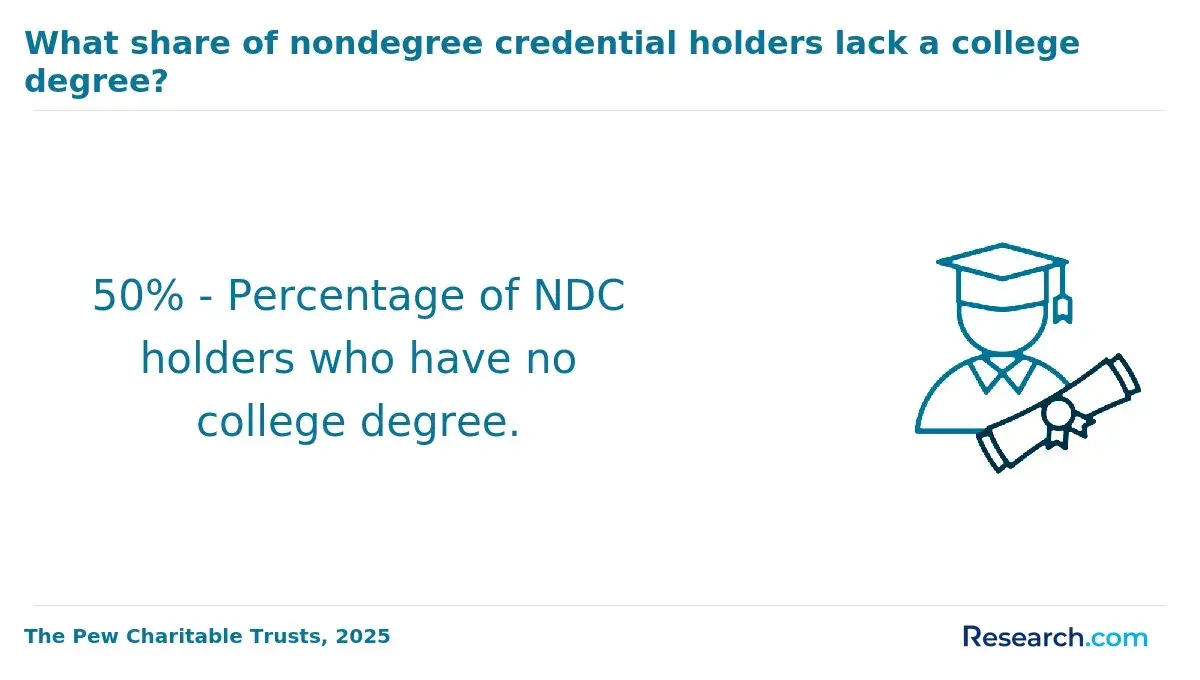
Online non-degree programs are short, focused learning experiences that award a school certificate, completion credential, digital badge, or continuing-education record rather than a degree. Providers include community colleges, universities, trade schools, employers, professional associations, and private training companies. They may be credit-bearing or noncredit, self-paced or instructor-led.
They improve job security when they close a specific hiring gap: required technical knowledge, a recognized examination prerequisite, current software skills, or documented training for a role with repeat demand. They are less useful when the target role legally requires a degree, license, apprenticeship, clinical hours, or extensive experience. Learners exploring longer academic routes can also compare best college majors for the future before deciding whether a short credential is enough.
The practical distinction matters, a certificate is awarded for completing education; a professional certification is awarded by a certifying body after meeting its standards, often including an exam. A program may prepare you for certification without awarding that certification itself.
How do online non-degree certificates compare to traditional campus programs?
Online non-degree certificates are usually faster and less expensive than campus degree programs, but they offer narrower training and may have limited transfer value. Campus or hybrid programs are often the safer choice when labs, clinical practice, equipment access, or supervised assessment are central to the occupation.
The comparison below helps match the delivery model to the kind of job security you want, not simply the fastest enrollment path.
| Factor | Online non-degree program | Traditional campus program |
| Typical purpose | Targeted skill building or exam preparation | Broader academic and technical preparation |
| Time commitment | Often weeks to under one year | Usually one to four years |
| Hands-on training | Limited unless hybrid or externally arranged | More likely built into the curriculum |
| Transferability | Varies widely; noncredit work often does not transfer | Credit may transfer subject to receiving-school policy |
| Best fit | Upskilling, career pivots, defined entry requirements | Licensed professions or roles requiring degrees |
For caregivers balancing work and study, comparing schedules with best degrees for stay-at-home moms can clarify whether a short credential or flexible degree path better supports the intended career.
How can students verify accreditation and quality for online non-degree programs?
Quality checks differ by provider. Institutional accreditation matters most for college credit, federal aid eligibility, and academic reputation. Programmatic approval matters most when a program leads toward clinical practice, licensure, or a regulated occupation. Industry certification alignment matters for technology, project management, coding, and similar employer-recognized fields.
Use this screening process before applying. It prevents the common mistake of paying for a polished online course that does not meet an employer's, certifier's, or licensing board's requirements.
- Identify the exact job title and review several local job postings for required education, licenses, and certifications.
- Confirm the provider's institutional accreditation through the accreditor and verify any program approval with the relevant state board.
- Ask whether the credential is credit-bearing, whether credits transfer, and whether completion qualifies you to sit for a named certification exam.
- Get written details on clinicals, labs, externships, instructor access, completion rules, total charges, and refund policies.
- Contact the certifying organization or licensing board directly when eligibility is unclear.
Red flags include vague claims about accreditation, guaranteed jobs or wages, missing instructor information, pressure to enroll immediately, and no written explanation of required hands-on components.
What admission requirements and prior experience do online non-degree programs expect?
Requirements range from open enrollment to selective admission. Many noncredit technology, design, office, and introductory trade programs require only a high school diploma or equivalent, basic computer access, and payment. College certificates may require an application, placement steps, prior coursework, or minimum grades. Advanced professional certificates can require a prior degree or field experience.
Applicants returning after a career interruption should ask about readiness support rather than assume a GPA is decisive. People with records should also investigate occupation-specific restrictions and compare realistic pathways through degrees felons can get; licensing boards and employers may set separate background-review rules.
For healthcare, expect additional requirements such as immunizations, background checks, drug screening, CPR training, health insurance, and clinical-site onboarding. For trades, physical capacity, reliable transportation, tools, and access to an approved work site can matter as much as formal admission criteria.
How long do online non-degree programs take and what do they typically cost?
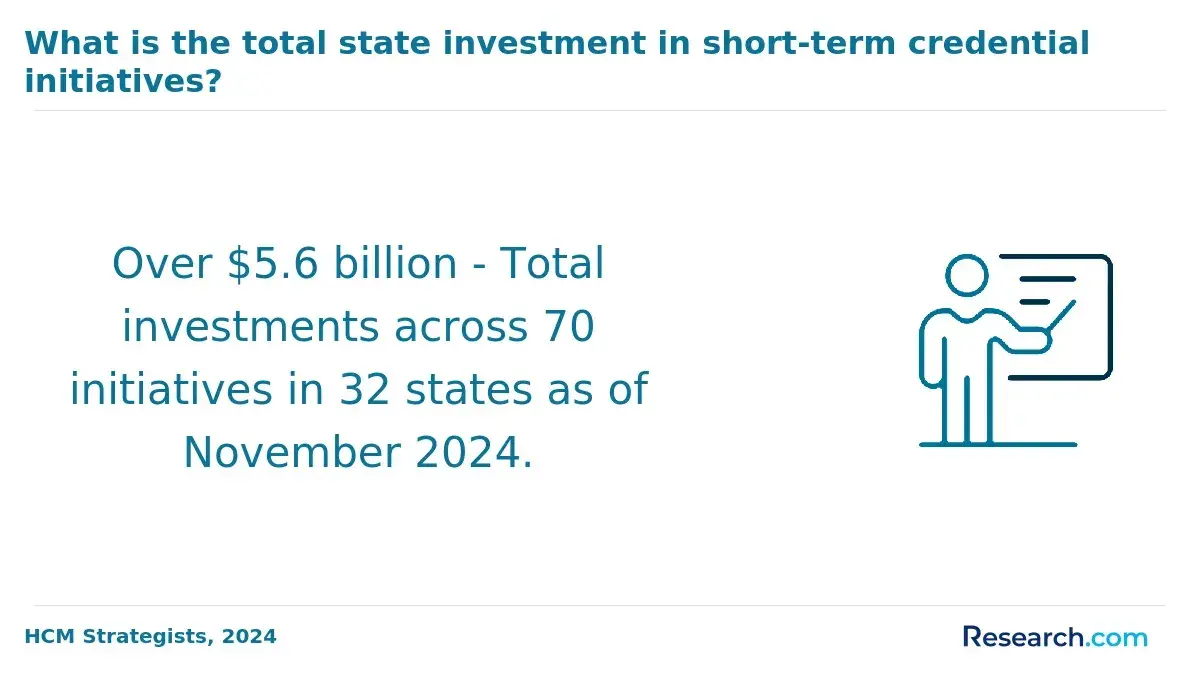
Completion time depends on the credential and delivery format. Self-paced courses may take a few weeks, instructor-led certificates commonly take several months, and credit-bearing college certificates can take roughly one academic year. Programs with clinicals, labs, apprenticeships, or externships may take longer because placement availability affects the timeline.
Cost is more than tuition. The following categories reveal the full investment and make it easier to compare a low advertised price with a program that includes required career preparation.
| Cost category | Why it matters | Questions to ask |
| Tuition and fees | May be charged per course, credit, term, or subscription | What is the total amount through completion? |
| Exam fees | Certification tests are often separate | Is one exam attempt included? |
| Tools and software | Trades and design programs may require specialized items | Are licenses, kits, and upgrades mandatory? |
| Clinical or practicum costs | Healthcare placement can add compliance expenses | Who pays for screening, uniforms, and travel? |
| Lost work time | Live classes and placement hours can reduce earnings | Can requirements be completed evenings or weekends? |
Federal aid is generally tied to eligible programs at participating institutions, not every non-degree offering. Ask about employer tuition assistance, workforce grants, payment plans, and whether workforce-agency funding applies before borrowing.
What curriculum and skills do job-focused online non-degree programs usually teach?
Job-focused programs teach a narrower curriculum than a degree. Strong programs combine technical instruction, applied practice, documentation, communication, and job-search evidence such as a portfolio, capstone, skills assessment, or supervised practicum.
Curriculum should map directly to work tasks. The most useful programs generally include the following elements, adapted to the field.
- Current tools, terminology, workflows, safety standards, and relevant regulations.
- Practice scenarios that require troubleshooting, documentation, accuracy, and professional communication.
- Feedback from instructors or qualified reviewers instead of only automated completion checks.
- Preparation for a clearly named industry exam when certification is relevant.
- Career artifacts, such as a design portfolio, coding project, estimating sample, or compliant patient-record exercise.
AI is changing skill expectations, especially in administrative, design, and technology work. Select programs that teach responsible use of AI tools, fact-checking, privacy, accessibility, and human review rather than treating automation as a substitute for foundational skills.
What careers and job roles can online non-degree certificates help you qualify for?
Certificates can help candidates qualify for support, technician, assistant, junior, and specialist roles when employer requirements match the training. They are most credible when paired with a portfolio, recognized certification, supervised experience, or prior related work. They do not automatically replace a required degree, license, or apprenticeship.
This comparison shows realistic role directions and the limitations readers should consider before enrolling.
| Program focus | Possible roles | Important limitation |
| HVAC or electrical fundamentals | Helper, installer trainee, maintenance trainee | Independent work usually requires apprenticeship progress and licensing |
| Medical billing and coding | Billing specialist, coding support, patient accounts representative | Employers may prefer recognized coding certification or experience |
| Medical assisting | Medical assistant | Clinical training and employer or state expectations apply |
| Paralegal studies | Legal assistant, paralegal support | Some employers prefer a degree plus specialized education |
| UX or web design | Junior designer, web content specialist, freelance designer | Portfolio and technical ability drive hiring |
An associate degree can be a better bridge for some entry-level roles because it combines general education with occupational coursework. Readers comparing that option can review the pathway described as Barbados community college, while confirming U.S. employer and licensing requirements independently.
What salaries and earning potential are common for careers from non-degree programs?
Salary data describes occupations, not what every certificate holder earns. Pay varies by state, experience, shift, union coverage, employer, licensure, and whether the role requires education beyond the non-degree program.
The U.S. Bureau of Labor Statistics reported these May 2024 median annual wages for occupations commonly associated with short-term or certificate-related training pathways. Use them as labor-market context, then compare local postings and entry-level pay.
| Occupation | May 2024 median annual wage | Certificate-only caution |
| Electricians | $62,350 | Typically requires apprenticeship and licensing progression |
| Heating, air conditioning, and refrigeration mechanics and installers | $59,810 | Hands-on training and refrigerant credentials may be needed |
| Medical assistants | $44,200 | Clinical preparation and employer preferences vary |
| Paralegals and legal assistants | $61,010 | Many roles prefer postsecondary education and relevant experience |
| Graphic designers | $61,300 | Portfolio quality and experience strongly affect opportunities |
Higher wages are not automatically better job-security choices if the path requires unpaid clinical time, years of apprenticeship, expensive tools, or relocation. Calculate the likely entry-level wage, total training cost, time away from work, and local demand together.
What licenses or professional certifications may be required after non-degree programs?
Whether you need a license or certification depends on the occupation, state, and employer. A school certificate may be useful preparation, but it does not itself grant legal authority to perform regulated work.
Common examples include EPA Section 608 certification for technicians who work with regulated refrigerants, state or local licensing for electricians and plumbers, and certification preferences for medical assistants, pharmacy technicians, billers, coders, and paralegals. Nursing assistants, dental assistants, and other clinical roles can have state-specific training, examination, registry, or supervision rules.
Before enrollment, identify the exact credential required by your target employer or board, verify eligibility directly with that organization, and ask whether the program's curriculum, practicum, and completion documentation meet the requirement. This avoids the costly mistake of finishing an online course that cannot lead to the exam, registry, or license you need.
Other Things You Should Know About
They can be worthwhile when they align with a specific job requirement, recognized exam, or employer demand. They are a weaker investment for occupations requiring a degree, clinical placement, apprenticeship, or license that the program does not provide.
The fastest credible option depends on local hiring needs. Billing and coding, IT support, bookkeeping, and digital skills programs can be completed relatively quickly, while stable trade and clinical careers usually require additional hands-on training or supervised experience.
Usually not. Online coursework can cover code, safety, and theory, but most jurisdictions require documented field experience, examinations, and sometimes apprenticeship training before issuing a license.
Employers may accept them when the provider is credible and the curriculum matches the role. Acceptance is stronger when you can show a portfolio, certification exam result, practicum, work samples, or prior experience alongside the certificate.
References
- Best Online Degrees for Working Adults in 2026 https://www.straighterline.com/blog/degreecompletion-best-online-degrees-for-working-adults-in-2026
- CourseCareers https://coursecareers.com/blog-posts/college-vs-online-career-training
- Examining Employers' Perceptions of Online Credentials - Ithaka S+R https://sr.ithaka.org/publications/examining-employers-perceptions-of-online-credentials/
- What Enrollment Numbers Can (and Cannot) Tell Us About Access to Postsecondary Training Programs https://www.atlantafed.org/research-and-data/publications/workforce-currents/2026/04/08/02-what-enrollment-numbers-can-and-cannot-tell-us-about-access-to-postsecondary-training-programs
- What Employers Actually Think About Online Degrees https://www.onlineu.com/magazine/what-employers-think-about-online-degrees
- Certifications Offer Workers With No Degree a Pathway to Good Jobs https://www.luminafoundation.org/resource/professional-certifications-offer-workers-with-no-college-degree-a-pathway-to-good-jobs/
- CreateSell https://createsell.com/blog/high-income-skills-without-degree
- Is College Worth It? - Public Policy Institute of California https://www.ppic.org/publication/is-college-worth-it/
- Most adults agree that continuous learning increases job security | edX https://www.edx.org/resources/upskilling-and-job-security
- The Non-Degree Market: Oasis or Mirage? https://www.encoura.org/resources/wake-up-call/the-non-degree-market-oasis-or-mirage/