2027 Best Non-Degree Programs for Career Changers

Co-Founder and Chief Data Scientist
Changing careers often means choosing between spending years on a new degree or building job-ready skills faster. Non-degree programs can offer a focused alternative, but their value depends on whether the credential matches employer, certification, or licensing requirements.
The U.S. Bureau of Labor Statistics projects healthcare support occupations to grow 15% from 2023 to 2033, illustrating why targeted training can be worth investigating. This guide compares practical program types, delivery formats, costs, credentials, and realistic outcomes so you can choose a path that fits your target role.
Key Things You Should Know
- Non-degree programs range from short workforce training and noncredit certificates to credit-bearing college certificates; confirm whether the credential is accepted by employers, certification bodies, or state licensing boards before enrolling.
- For career changers, the strongest options combine hands-on practice, a recognized credential, job-placement transparency, and a direct route to an entry-level role rather than broad coursework alone.
- BLS projects employment for healthcare support occupations to grow 15% from 2023 to 2033, while many skilled-trade roles offer paid apprenticeships that can reduce upfront training costs.
Top 10 Best Non-Degree Programs for Career Changers
Popular Trade School Programs
Trade programs are best for career changers who want hands-on work and a defined path into construction, repair, transportation, or manufacturing. Common options include HVAC technician certificates, electrical technology certificates, welding certificates, plumbing apprenticeships, commercial driver training, and automotive service programs. Many take months rather than years, but regulated trades usually require an apprenticeship, supervised hours, or a state exam after training. Ask whether the curriculum prepares you for EPA Section 608, a commercial driver license, or another required credential. An associate degree can add broader technical coursework but is not always necessary for entry.
Healthcare Programs
Healthcare non-degree options include medical assistant, pharmacy technician, dental assistant, phlebotomy, medical billing and coding, sterile processing, and nursing assistant programs. Clinical programs commonly require immunizations, background checks, drug screening, CPR training, and in-person supervised practice. A school certificate is not the same as national certification or state authorization: for example, employers may prefer certified medical assistants, while nursing assistants must meet state-specific training and registry rules. Choose a program with required clinical placement arrangements, clear exam preparation, and eligibility aligned with the state where you plan to work.
Criminal Justice / Law Programs
Career changers can explore paralegal studies certificates, legal assistant certificates, court reporting training, private security training, corrections certificates, and crime-scene technician coursework. A paralegal certificate can build legal research, writing, and e-discovery skills, but it does not authorize someone to practice law. Requirements vary sharply: private security licensing is state-based, and court reporting may involve separate certification or licensure standards. Programs with internships, legal software training, and instructors with current field experience are generally more useful than broad criminal justice courses without occupational preparation.
Arts & Design Programs
Arts and design career programs commonly cover graphic design, UX/UI design, digital marketing design, photography, video editing, animation, web design, and interior design fundamentals. Portfolio quality often matters more than the certificate title for creative entry-level roles. Look for project-based coursework using current tools, instructor feedback, portfolio reviews, and a clear explanation of software costs. An academic certificate may be credit-bearing and stack toward a degree; a bootcamp or professional certificate is usually noncredit. Interior design is a special case because title use and licensing expectations vary by state.
What are non-degree programs, and why are they effective for career changers?
Non-degree programs are focused learning experiences that do not award an associate, bachelor's, or graduate degree. They may be college certificates, workforce certificates, apprenticeships, bootcamps, vendor training, or professional certificate programs. Their main advantage is concentration: learners spend more time on job-specific competencies and less on general education requirements.
They are effective when the target occupation values demonstrable skills, a required exam, supervised training, or an employer-recognized credential. They are less suitable when a role legally requires a degree, advanced licensure, or substantial professional experience. For people who need a broader academic credential, comparing highest paying online degrees can help clarify whether a degree pathway offers better long-term access.
A certificate is awarded by an education provider for completing study. A certification is awarded by a certifying organization after a person meets its standards, often including an examination. Some programs prepare students for certification, but completing the program alone does not automatically confer it.
How do online and campus non-degree programs compare for flexibility and outcomes?
Online programs can work well for theory-heavy fields such as medical billing, digital design, IT support, and legal research. Campus or hybrid study is usually the safer choice when training requires labs, equipment, clinical hours, shop practice, or direct observation of practical skills.
This comparison highlights the delivery decision that matters most: whether the format can provide the experiences your target job requires.
| Format | Best for | Main advantage | Important limitation |
| Fully online | Software, administration, theory-based training | Flexible scheduling and lower commuting burden | May not satisfy lab, clinical, or licensing requirements |
| Hybrid | Healthcare, technical, and applied programs | Balances online coursework with required practice | Still requires fixed in-person attendance |
| Campus-based | Trades, labs, clinical training, equipment-intensive work | Direct access to instructors, tools, and peers | Less scheduling flexibility and possible commuting costs |
Before choosing online delivery, verify the program's approval status and whether it arranges local clinical or practical experiences. If you decide that a degree is necessary, review accredited online degree programs rather than assuming any online provider has the same institutional standing.
What accreditation and industry recognition should non-degree programs for career changers have?
There is no single approval standard for all non-degree programs. The right form of recognition depends on the field. Credit-bearing college certificates should generally come from an institution accredited by an agency recognized by the U.S. Department of Education or the Council for Higher Education Accreditation. Career schools may also need state authorization to operate.
For regulated occupations, programmatic approval and eligibility matter more than general reputation. Nursing assistant, medical assisting, pharmacy technician, HVAC, commercial driving, and security programs may need to meet state rules or prepare students for a named industry examination. Ask the provider to identify the exact credential, approving body, exam eligibility, and state limitations in writing.
A major red flag is vague language such as "nationally recognized" without naming the employer, licensing board, accreditor, or certification organization that recognizes it. Another is a provider that promises certification or employment without explaining the separate requirements.
How long do non-degree career-change programs take, and what do they typically cost?
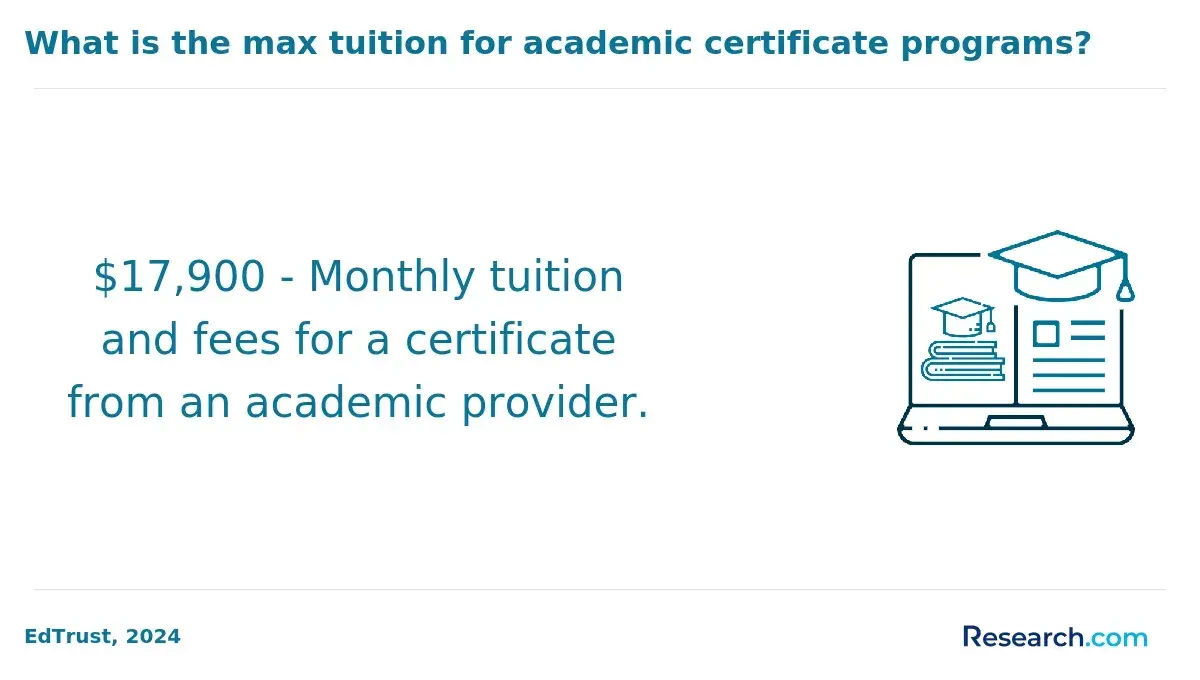
Time and price vary more by occupation, required practice, and provider than by the label "certificate." A self-paced professional certificate may take weeks, while a clinical certificate or apprenticeship-related pathway can take many months. Tuition is only one component of the investment.
The comparison below shows the cost factors that should be included in a realistic budget before you compare providers.
| Program type | Typical timeline | Common cost factors | Best fit |
| Short online professional certificate | Weeks to several months | Subscription or course fee, software, exam fee | Portfolio or software-based career exploration |
| College workforce certificate | Several months to about one year | Tuition, fees, books, supplies, transportation | Structured entry-level occupational training |
| Clinical or technical certificate | Several months to more than one year | Tuition, equipment, uniforms, background checks, exam and licensure fees | Roles requiring supervised practice |
| Apprenticeship | Often multiple years | Tools, dues, classroom costs; wages may offset costs | Licensed skilled trades |
Compare total costs, not advertised tuition. Credit-bearing certificates may qualify for some aid when offered by eligible institutions, while many noncredit programs do not. Adults seeking a broader credential on a faster schedule can also compare accelerated bachelors degree programs for adults.
What admission requirements and prior experience do non-degree programs usually expect?
Requirements range from open enrollment to competitive screening. Short online certificates may require only basic computer access and payment. College-based and regulated programs can require a high school diploma or equivalent, placement testing, prerequisite courses, background checks, health documentation, or proof of English proficiency.
Prior experience is often helpful but not mandatory for entry-level training. Technical programs may expect comfort with math, tools, or computers; design programs may request a portfolio; healthcare programs may require physical capability standards and clinical-clearance documentation. A low GPA does not automatically rule out non-degree study, but selective clinical cohorts may use grades in prerequisite courses.
Do not pay a deposit before confirming deadlines, attendance expectations, equipment needs, refund terms, and whether required practical placements are guaranteed or merely suggested. If the role involves licensure, check the relevant state board directly because schools cannot waive state eligibility rules.
What curriculum and skills do top non-degree programs offer for career switching?
Strong programs teach a narrow set of skills that employers can observe or verify. They pair technical instruction with workplace skills such as documentation, safety, client communication, digital tools, problem-solving, and professional ethics. The best curriculum depends on the target role, not on which subject sounds broadly marketable.
Career changers should look for evidence that the program includes the following practical components:
- Hands-on labs, simulations, clinical practice, shop time, or real client projects appropriate to the occupation.
- Current tools and workflows, such as electronic health records, CAD software, legal research platforms, diagnostic equipment, or design applications.
- Assessment through work samples, supervised demonstrations, portfolios, or practice examinations rather than attendance alone.
- Career support that includes resume translation, interview practice, employer introductions, or portfolio review without guaranteeing placement.
AI is changing many office and creative workflows, so prioritize programs that teach judgment, quality control, privacy, communication, and responsible tool use alongside task-specific software. Training that only teaches one rapidly changing platform can be useful, but it may have a shorter shelf life than programs built around transferable work processes.
What careers and job roles can non-degree programs realistically prepare you to enter?
Non-degree study most often supports entry-level, technician, assistant, apprentice, or junior roles. It can be a credible route into a field, but it is not a substitute for a degree where employers, state law, or professional standards require one. Job titles also vary by employer and location.
This table separates common training outcomes from roles that usually require additional credentials or education, helping you avoid enrolling for a job the program cannot legally or realistically support.
| Training area | Potential entry roles | Common additional requirement |
| HVAC, welding, electrical technology | Helper, technician trainee, apprentice | Apprenticeship, supervised hours, or state licensing for independent work |
| Medical assisting or phlebotomy | Medical assistant, phlebotomist, patient-care support worker | Employer preference for certification; state rules may apply |
| Medical billing and coding | Billing specialist, coding support, patient accounts representative | Experience or an industry certification may improve access |
| Paralegal studies | Legal assistant, paralegal support, legal administrative assistant | Employer requirements; no authority to practice law |
| Digital design | Junior designer, production artist, content creator | Competitive portfolio and relevant software capability |
An associate degree may be the better option when a career needs broader advancement opportunities, academic transfer credit, or a stronger credential signal. Readers exploring that middle ground can compare easy associate degrees while evaluating whether "easy" still aligns with their intended occupation.
What salary ranges and earning potential can career changers expect after non-degree study?
Earnings depend on occupation, location, schedule, union coverage, experience, licensure, and employer - not simply on completing a program. Use occupational wage data as a labor-market reference, not as a promise of what a certificate holder will earn.
For example, the U.S. Bureau of Labor Statistics reports that the median annual wage for electricians was $61,590 in May 2023. That figure applies to employed electricians overall and typically reflects the experience, apprenticeship, and licensing required for the occupation; a short electrical program alone does not make a person an independently licensed electrician.
When estimating return on investment, compare entry-level local job postings with total program costs, unpaid training time, certification fees, and realistic time to advancement. A lower-cost program can have better value than a premium option if both meet the same licensing or employer requirements. Conversely, the cheapest course is a poor investment if it lacks required clinical hours, equipment training, or credential eligibility.
How can adults choose a reputable non-degree program aligned with their career goals?
Start with the job, not the school. Review local job postings and identify the minimum credential, software, license, certification, shift expectations, and experience level employers request. Then compare programs against those requirements rather than relying on advertising claims.
Use this sequence to make a decision with fewer surprises:
- Name one target entry-level role and confirm whether it requires a license, certification, degree, apprenticeship, or supervised hours.
- Compare at least three providers on total cost, schedule, curriculum, practical training, completion rules, and examination eligibility.
- Ask whether the program is credit-bearing, whether credits can transfer or stack, and whether clinical sites, internships, or equipment are included.
- Request written outcomes information, including how job placement is defined and how many students completed the program.
- Speak with local employers, alumni, or licensing authorities before committing to a nonrefundable payment.
Common mistakes include confusing a school certificate with a professional certification, assuming any online program meets state rules, and choosing based on monthly payment rather than full cost. A reputable provider answers direct questions, documents requirements, and does not pressure you to enroll before you can verify the career pathway.
Other Things You Should Know About
They can be worthwhile when they lead to a recognized entry credential, required practical experience, or an employer-valued skill. They are less valuable when the target career requires a degree or license the program cannot provide eligibility for.
Possibly, particularly in administrative, technology, design, and other portfolio- or skills-based fields. For clinical, trade, and licensed roles, verify that the online format includes required in-person training and meets applicable rules.
The fastest legitimate route depends on the occupation. Short programs may work for software, support, or administrative roles, while healthcare and skilled trades often require labs, clinical hours, exams, or apprenticeships that cannot be skipped.
Employers tend to value certificates when the provider, curriculum, and skills are relevant to the role. A recognized industry certification, completed portfolio, apprenticeship, or documented hands-on experience can strengthen a certificate's value.
References
- Employers hesitate to move away from college degrees https://www.ccdaily.com/2022/08/employers-hesitate-to-move-away-from-college-degrees/
- What are the fastest-growing industries to consider for a career change? - MSU Denver https://www.msudenver.edu/innovative-lifelong-learning/blog/what-are-the-fastest-growing-industries-to-consider-for-a-career-change/
- High-Paying, Fast-Growing Jobs Without a Degree https://www.rockwellinstitute.com/blog/jobs-dont-require-degree/
- 4 High Paying Industries that Don't Require a College Degree - Staffing Network https://staffingnetwork.com/4-high-paying-industries-that-dont-require-a-college-degree/
- The Non-Degree Market: Oasis or Mirage? https://www.encoura.org/resources/wake-up-call/the-non-degree-market-oasis-or-mirage/
- Grants and Scholarships | Financial Aid Options at SCI https://scitexas.edu/paying-for-school/
- Best Paying Jobs Without a Degree: 24 High-Income Careers for 2026 - tripleten.com/blog https://tripleten.com/blog/posts/best-paying-jobs-without-a-degree
- Why Credential Terminology Matters in Higher Education and Workforce Development - UPCEA https://upcea.edu/why-credential-terminology-matters-in-higher-education-and-workforce-development/
- Aid for Non-Traditional Students - Finaid https://finaid.org/otheraid/nontraditional/
- Getting a job without a 4-year degree. Prospects increase with a certificate. https://www.luminafoundation.org/resource/non-degree-credentials-provide-value-for-adults-in-the-labor-market/