2027 Best Online Career Training Programs for Students With Some College Credit

Co-Founder and Chief Data Scientist
Students with unfinished college credits face a costly choice: return for a degree, use transferable coursework toward a shorter credential, or train directly for a new occupation. The Bureau of Labor Statistics projects healthcare support occupations to grow faster than the average for all occupations from 2023 to 2033. This guide compares online career training paths, explains when prior credits matter, and shows how to evaluate cost, accreditation, licensing, flexibility, and realistic career outcomes before enrolling.
Key Things You Should Know
- Prior college credits can reduce time and tuition in credit-bearing certificates and associate degrees, but noncredit career training providers may not accept transfer credit at all.
- Online training works best for classroom-based content; healthcare, skilled trades, and some legal programs usually require local labs, clinical placements, internships, or supervised fieldwork.
- Before paying, verify institutional accreditation, programmatic approval where required, total costs, and whether the credential meets state licensing or employer requirements.
Top 10 Best Online Career Training Programs for Students With Some College Credit
Popular Trade School Programs
Online trade programs commonly cover electrical theory, HVAC fundamentals, construction management, welding concepts, industrial maintenance, and automotive service. A certificate can build entry-level knowledge, while an associate degree may include general education and more technical coursework.
Students should expect hands-on skills training through a local lab, employer site, apprenticeship, or hybrid component; a fully online program generally cannot replace required supervised practice. For licensed trades, verify that coursework supports your state's apprenticeship, examination, or licensing pathway before enrolling.
Healthcare Programs
Online healthcare career training may include medical billing and coding, medical assisting theory, health information technology, pharmacy technician preparation, and healthcare administration. Programs with direct patient care, such as medical assisting, radiologic technology, and nursing, commonly require in-person clinical experiences.
A school certificate is not the same as a professional certification: students may need a separate certification exam after completing an eligible program. Check whether clinical placement is arranged, whether the program meets state rules, and whether employers in your area recognize the credential.
Criminal Justice / Law Programs
Online options include criminal justice certificates, associate degrees, legal studies, paralegal studies, and court reporting-related coursework. These programs can suit students seeking foundational knowledge in policing, corrections, legal procedures, investigations, or office support.
They do not automatically qualify graduates as police officers, attorneys, or licensed private investigators; agencies and states set separate hiring, background-check, academy, and licensing standards. For paralegal work, look for practical legal research and writing instruction, internship options, and employer recognition in the region where you intend to work.
Arts & Design Programs
Digital design, graphic design, web design, photography, video editing, animation, and UX-focused certificates can be completed largely online because coursework centers on software, projects, and portfolios. An associate degree usually adds broader design theory and general education, while a short certificate is more targeted.
Prior credits may satisfy general education requirements in a degree pathway. Portfolio quality, software proficiency, client experience, and specialization often matter as much as the credential. Confirm that required software, equipment, and portfolio-review support are included in the total cost.
What are online career training programs for students with some college credit?
Online career training programs are structured learning options designed to prepare adults for a specific job area or advancement opportunity. They range from noncredit provider training and professional certificates to credit-bearing college certificates and associate degrees. For students with some college credit, the key question is whether the new program can evaluate those credits toward graduation.
A credit-bearing certificate or associate degree from a college may apply accepted prior coursework to general education, electives, or prerequisites. A noncredit program may be faster and have simpler enrollment, but it usually does not award transferable college credit.
Students still deciding between broad academic routes can compare majors in college before committing to a narrow occupational program.
| Path | Typical purpose | How prior credit may help | Best fit |
| Noncredit career training | Job-specific skills or exam preparation | Usually does not transfer in | Fast entry or skill update |
| College certificate | Focused academic and technical coursework | May satisfy prerequisites or electives | Students needing a recognized college credential |
| Associate degree | Career preparation plus general education | Often offers the greatest transfer opportunity | Students seeking broader advancement options |
How do online career training programs compare to campus-based options for working adults?
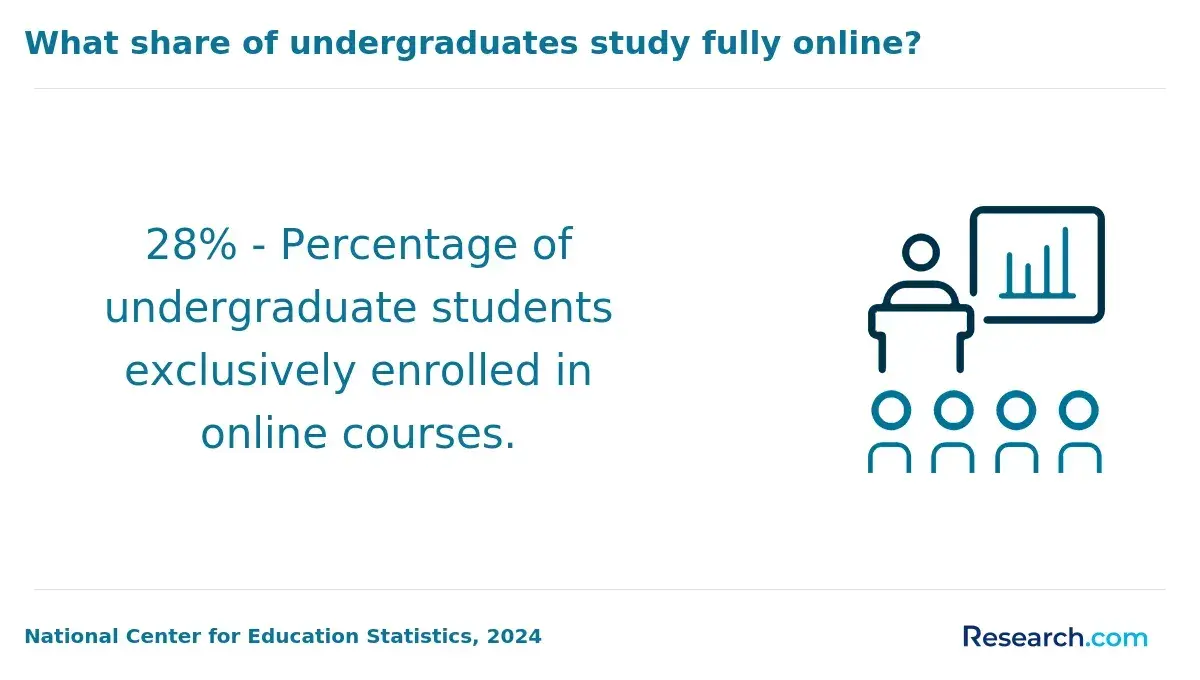
For working adults, online programs can reduce commuting and allow asynchronous study, but flexibility is not the same as self-paced learning. Many programs retain weekly deadlines, group projects, proctored exams, and required virtual meetings. Campus-based options can be better when equipment access, immediate instructor coaching, or employer networking is central to the occupation.
Students with changing schedules should prioritize schools with predictable course calendars and multiple entry points. Explore online schools with multiple start dates if starting quickly or avoiding a long wait between terms matters more than following a traditional semester calendar.
| Factor | Mostly online | Campus or hybrid |
| Scheduling | Often flexible for lectures and assignments | Fixed meeting times are more common |
| Hands-on learning | May require local placement or short residencies | Usually easier access to labs and equipment |
| Transfer-credit advising | Available remotely, quality varies by school | May allow more face-to-face support |
| Best use | Theory-heavy, software-based, or administrative fields | Clinical, lab-intensive, and skilled-trade fields |
What accreditation and quality standards should these online career programs meet?
Quality checks depend on the credential type. For a credit-bearing college program, confirm institutional accreditation recognized by the U.S. Department of Education or the Council for Higher Education Accreditation and ask whether the specific credential is eligible for federal student aid.
For occupations with external standards, programmatic accreditation, state approval, or board eligibility may matter more than institutional accreditation alone.
Use this distinction carefully: a school-issued certificate documents completion of a course of study, while a professional certification is awarded by an independent certifying body after its requirements are met. Programs that advertise certification preparation should identify the exact exam, eligibility rules, extra fees, and pass-rate methodology.
Common red flags include claims that a fully online clinical program needs no in-person training, vague statements about "national recognition," missing instructor qualifications, pressure to enroll immediately, and refusal to provide a written tuition-and-refund schedule.
What admission requirements apply to online career training programs for students with prior credits?
Admission requirements vary more by provider type than by subject. Noncredit training may require only an application, payment arrangement, and basic technology access.
College certificates and associate degrees commonly require a high school diploma or equivalent, official transcripts, placement review, and completion of prerequisite courses. Selective healthcare programs may also require immunizations, background checks, drug screening, CPR training, or entrance testing before clinical placement.
Prior credits are evaluated course by course. Ask for an official transfer evaluation before registering, not an informal estimate. Courses may be rejected because they are too old for a fast-changing field, lack an equivalent learning outcome, fall below the school's minimum grade, or exceed a residency limit.
Before applying, gather the documents most likely to affect your timeline:
- Official transcripts from every previously attended college
- Course descriptions or syllabi for unusual, technical, or older coursework
- State-specific licensing requirements if your target role is regulated
- A weekly availability plan for clinicals, labs, internships, or live sessions
How long do these online career training programs take and what do they cost?
Completion time can range from a few months for a focused noncredit program to roughly two years for an associate degree, with accepted transfer credit potentially shortening the latter. The actual pace depends on prerequisite gaps, course sequencing, clinical or lab availability, and whether the student attends part time. Accelerated formats can save calendar time but require a heavier weekly workload.
Costs include tuition, fees, books, software, tools, exam fees, background checks, uniforms, travel to required placements, and lost work time.
The National Center for Education Statistics reported that average published tuition and fees for in-state students at public two-year institutions were $3,990 in the 2022-23 academic year; that is a sector average, not the price of a particular online program.
Students considering a longer academic route should compare short-term training against the earnings and time commitment of college degrees that pay well. A lower advertised price is not automatically the lower total cost if a program requires expensive equipment, repeat courses, or unpaid placement hours.
| Cost question | Why it matters |
| Is tuition charged per credit, course, or program? | Determines whether transferred credits reduce the bill |
| Are materials and exam fees included? | Prevents underestimating required out-of-pocket expenses |
| Is federal aid available? | Eligibility differs between eligible college programs and noncredit training |
| Does an employer offer tuition assistance? | May change the best program and scheduling choice |
What curriculum and coursework do online career training programs typically include?
Curriculum should match the job tasks and any required exam or license, not simply carry a promising program title. Most career-focused programs combine foundational knowledge, occupational terminology, software or technical skills, ethics and safety, communication, and applied assignments. Associate degrees generally add writing, mathematics, social science, or other general education requirements.
Online delivery may include recorded lessons, live demonstrations, simulations, discussion boards, case studies, remote labs, and supervised field experiences.
AI tools are increasingly relevant in administrative, design, technology, and legal-support work, so look for programs that teach responsible use, verification, privacy, and job-specific workflows rather than treating AI as a substitute for core skill development.
Review the course sequence and compare it with local job postings. If the curriculum omits the software, technical standards, documentation practices, or supervised experience repeatedly requested by employers, choose a program with a closer match.
What career outcomes and job roles can these programs prepare students to enter?
Career outcomes depend on the credential level, prior experience, local hiring conditions, licensing rules, and the student's demonstrated skills. Short training is most useful when it maps to a defined entry-level role or a recognized certification exam. An associate degree can offer broader mobility, especially where employers prefer general education alongside technical training.
The table separates plausible program-to-role connections from occupations that require additional steps. It helps prevent the common mistake of assuming that any program title automatically confers job eligibility.
| Program area | Potential entry-level roles | Important limitation |
| Medical billing and coding | Billing specialist, coding support, patient accounts representative | Employers may prefer an external coding certification |
| HVAC or electrical fundamentals | Helper, installer trainee, maintenance trainee | Licensure and apprenticeship requirements vary by state |
| Paralegal studies | Legal assistant, paralegal support, litigation support | Does not qualify a person to practice law |
| Digital design | Junior designer, production artist, content design assistant | A strong portfolio is often essential |
For learners whose goals have shifted toward graduate-level advancement rather than initial career entry, a quickest cheapest masters degree may be a more appropriate comparison after confirming bachelor's-degree and admission requirements.
What salary ranges and job outlook can graduates of these career programs expect?
Salary figures describe occupations, not a guaranteed return from completing a particular online program. The Bureau of Labor Statistics reported a 2024 median annual wage of $61,010 for paralegals and legal assistants and projected 1% employment growth from 2023 to 2033. That modest outlook means candidates may need strong writing, technology, and specialized-practice skills to compete.
Some career-training areas have stronger projected demand but require more than online coursework. For example, healthcare support roles are projected to grow faster than average from 2023 to 2033, yet direct-care positions may require clinical education, certification, or state authorization.
Skilled trades can offer solid opportunities, but wage levels vary substantially by union coverage, location, overtime, apprenticeship progression, and license status.
Evaluate return on investment using local job postings, entry requirements, likely time away from work, and total program cost. Do not rely on a school's salary claim unless it identifies the occupation, reporting period, sample size, and methodology.
How can students choose a reputable online career training program that fits their goals?
A reputable program fits a specific target role, accepts only the prior credits it can document, and provides transparent answers about cost, format, outcomes, and required in-person work. The best option is not necessarily the fastest: a shorter noncredit course can be efficient for a defined skill, while a credit-bearing certificate or associate degree may be a better investment when transferability and long-term progression matter.
Use the following sequence before making a deposit:
- Name the job you want and identify its education, certification, licensing, and experience requirements in your state.
- Request official transfer-credit evaluations from more than one eligible college or provider.
- Compare complete costs, including equipment, clinical travel, examination fees, and fees not covered by tuition.
- Confirm how online instruction, labs, internships, and career services actually work for distance learners.
- Read the refund policy and ask for outcome information that defines who was counted and over what period.
Avoid choosing solely by advertising claims, completion speed, or a generic "career-ready" label. If the school cannot explain whether its credential is credit-bearing, transferable, state-approved, or aligned with a recognized certification, treat that uncertainty as a reason to pause.
Other Things You Should Know About
Possibly. Credit-bearing colleges may evaluate prior coursework, but acceptance depends on equivalency, grades, age of the course, and residency rules. Most noncredit training programs do not apply transfer credit.
They can be, especially when issued by an accredited college or aligned with a recognized industry certification. Employer value also depends on the curriculum, hands-on experience, portfolio, and local job requirements.
Theory courses may be online, but many patient-care and skilled-trade pathways require in-person labs, clinicals, apprenticeships, or supervised practice. Confirm these requirements before enrolling.
A certificate may be better for a quick, targeted career change. An associate degree may be better if many credits transfer, the occupation prefers a degree, or you want a foundation for future bachelor's-level study.
References
- Getting Financial Assistance for Career Training https://ccitraining.edu/blog/getting-financial-assistance-for-career-training/
- Delivering on Student Expectations with Career Pathways https://moderncampus.com/blog/delivering-on-student-expectations-with-career-pathways
- Adult Continuing Education https://www.berkscareer.com/o/ace/page/tuition-assistance
- How does a college degree improve graduates' employment and earnings potential? - APLU https://www.aplu.org/our-work/publicuvalues/employment-earnings/
- Free Online College Programs | Calbright College https://www.calbright.edu/programs/
- Best Online Degrees for Working Adults in 2026 https://www.straighterline.com/blog/degreecompletion-best-online-degrees-for-working-adults-in-2026
- Best Student Loans for Certificate Programs - Credible https://www.credible.com/student-loans/student-loans-for-certificate-programs
- CareerStep + Your College or University: Supporting Learners Through Flexible, Online Career Programs https://www.careerstep.com/blog/training/careerstep-your-college-or-university-supporting-learners-through-flexible-online-career-programs/
- Community College Program Outcomes | Department of Education https://educate.iowa.gov/higher-ed/community-colleges/program-outcomes
- Best Online Colleges with Job Placement Programs for Career Success https://lakewood.edu/best-online-colleges-with-job-placement-programs-for-career-success/