2027 Best Online Career Training Programs With Fast Transfer Credit Evaluation

Co-Founder and Chief Data Scientist
Choosing training is harder when you already have college credits, military learning, or workforce coursework that could reduce your timeline. Fast transfer evaluation matters because only credit-bearing programs can formally apply eligible prior coursework toward completion.
The U.S. Bureau of Labor Statistics projects healthcare occupations to grow much faster than average from 2023 to 2033, while many skilled-trade and technology roles continue to require practical training. This guide helps prospective students compare online options, verify transfer policies, understand licensing limits, and select training that fits a specific career goal.
Key Things You Should Know
- Fast evaluation is not the same as guaranteed transfer: ask for a written transfer-credit decision, the number of credits accepted, and the remaining graduation requirements before enrolling.
- For credit-bearing associate degrees and certificates, transferred credits can shorten completion time and tuition; noncredit career courses usually do not accept or award traditional college transfer credit.
- BLS projections for 2023-33 show healthcare occupations growing much faster than average, but regulated roles still require state-approved clinical training and, where applicable, separate licensure exams.
Top 10 Best Online Career Training Programs With Fast Transfer Credit Evaluation
Popular Trade School Programs
Credit-bearing online trade programs commonly include HVAC fundamentals, electrical technology, welding theory, construction management, industrial maintenance, and automotive service. Certificates can teach entry-level theory in months, while associate degrees usually add general education and may better support transfer later. Online study works best for code, safety, estimating, and diagnostics; welding, electrical labs, and HVAC refrigerant practice require campus labs, employer sites, or approved local partners. Choose a program aligned with the credential employers request, such as EPA Section 608 preparation for HVAC work. Do not assume an online certificate alone meets apprenticeship or state licensing requirements.
Healthcare Programs
Online healthcare options include medical billing and coding, medical assisting coursework, health information technology, pharmacy technician training, and nursing prerequisite courses. Medical coding certificates are often nonclinical and may prepare students for an optional industry certification exam. Clinical occupations require more scrutiny: medical assisting, practical nursing, radiologic technology, and allied-health programs generally need supervised in-person clinical experiences and may require programmatic approval for licensure eligibility. A fast credit review can help with anatomy, physiology, or general education credits in degree programs, but clinical competency requirements are rarely waived simply because a course transfers.
Criminal Justice / Law Programs
Online certificates and associate degrees may cover criminal justice, legal studies, paralegal studies, corrections, emergency management, or cybersecurity law. These programs can build knowledge for support roles, but they do not authorize someone to practice law or become a police officer. Paralegal employers may value a degree, legal experience, or a program approved by a recognized paralegal education body; requirements vary by employer and state. For policing, corrections, and public safety work, academy training, background checks, physical standards, and agency rules are separate from academic transfer credit. Confirm whether prior credits satisfy required general education or major courses.
Arts & Design Programs
Online programs in graphic design, web design, digital media, photography, animation, and user experience commonly award certificates or associate degrees. A certificate can be a focused portfolio-building option for learners who already have a degree or relevant skills. An associate degree offers broader foundations and more transferable academic credit. Employers often evaluate portfolios, software fluency, and project quality alongside credentials, so compare the amount of instructor feedback and portfolio review. Transfer evaluation is especially useful for students bringing general education, art history, or design foundation courses, but schools may require portfolio review before accepting studio-credit equivalents.
What are online career training programs with fast transfer credit evaluation?
Online career training programs with fast transfer credit evaluation are education or training options that quickly review a learner's prior college coursework, and sometimes evaluated military or workplace learning, to determine what can count toward a new credential. The qualifier matters most for accredited, credit-bearing certificates and associate degrees. A school may evaluate an unofficial transcript for planning, but an official decision usually requires official transcripts and course descriptions.
"Fast" should mean a documented service timeline, not a marketing promise. Ask whether the evaluation occurs before registration, whether it covers major requirements as well as electives, and whether accepted credits appear on the degree plan. Noncredit bootcamps and vendor courses may offer prior-learning placement, but they generally do not conduct conventional college transfer evaluations.
A certificate is an educational award for completing a program. A professional certification, by contrast, is typically awarded by an industry organization after meeting its requirements, often including an exam. The training program may prepare a learner for certification, but it does not automatically confer it.
How can students compare accredited online vs campus career training options?
Online and campus programs can lead to the same academic credential when offered by the same institution, but delivery affects practice, networking, scheduling, and licensure readiness. Compare the actual program rather than assuming online is cheaper or faster.
| Comparison point | Online or hybrid option | Campus-based option |
| Transfer review | May be completed remotely before enrollment; verify timing in writing. | May offer in-person advising and document support. |
| Hands-on learning | Often uses local clinicals, labs, simulations, or employer placements. | Usually provides scheduled school labs and facilities. |
| Best fit | Working adults with strong time management and nearby required placement sites. | Learners needing routine, equipment access, and face-to-face support. |
| Main risk | Assuming required clinical, lab, or proctored work can be completed fully online. | Longer commute and less flexibility around work schedules. |
For a quick start date, compare online colleges that start soon, then separately confirm that their transfer review can be completed before the first course begins. A rapid intake process is useful only if the resulting degree plan is accurate.
What accreditation and licensing standards should these career programs meet?
Accreditation should match the credential and occupation. For academic certificates and associate degrees, verify that the institution holds recognized institutional accreditation and that the specific program has any required specialized approval. For noncredit workforce training, look for transparent employer recognition, curriculum alignment, instructor qualifications, and preparation for a named industry exam where relevant.
Licensure is a separate state-level issue. Nursing, practical nursing, radiologic technology, many therapy fields, cosmetology, electrical work, and other regulated occupations may require a state-approved program, supervised hours, examinations, and background checks. A school's general accreditation alone does not establish eligibility in every state.
Before paying a deposit, use this verification sequence:
- Identify the exact job title and the state where you expect to work.
- Check the state licensing board or employer's stated education requirement.
- Confirm that the program's format, clinicals, labs, and approvals meet that requirement.
- Get confirmation from the school if you plan to work outside its home state.
What admission requirements and prior credits qualify for fast transfer evaluation?
Eligibility for fast transfer evaluation depends on the provider. Credit-bearing colleges commonly request official transcripts from prior institutions, course titles, credits earned, grades, and sometimes syllabi for technical or older coursework. Many schools set minimum grade rules and residency requirements, meaning a student must complete a minimum number of credits at the new institution.
Prior learning may also be considered through military transcripts, standardized examinations, industry certifications, portfolios, or challenge exams, but acceptance is not automatic. Noncredit providers may instead use a skills assessment or prerequisite check rather than transfer-credit evaluation.
Prepare a clean file before applying. It should include the following evidence so an evaluator can match completed learning to program requirements:
- Official transcripts from every college or university attended.
- Course descriptions or syllabi for technical, lab-based, or disputed courses.
- Military, apprenticeship, licensure, or industry-certification documentation where applicable.
- A written list of the credential, start term, and career goal you are pursuing.
A common mistake is enrolling based on an advisor's verbal estimate. Request the final evaluation and confirm whether credits satisfy required courses, not merely free electives.
How long do online career training programs take, and what do they cost?
Completion time depends less on the program's advertised length than on accepted credits, course sequencing, required clinicals or labs, and whether the learner attends full time. A short noncredit certificate may take weeks or months; a credit-bearing certificate often takes several months to about a year; an associate degree commonly takes about two academic years before transfer credit. Required placements can prevent acceleration even when general education credits transfer.
The largest cost differences are usually tuition per credit, transfer-credit limits, fees, equipment, exams, insurance, commuting for labs, and lost work time. The National Center for Education Statistics reports that published tuition and fees vary substantially by institution type, so compare the net program cost rather than a single per-credit price.
| Cost or timeline factor | Why it changes the decision | What to confirm |
| Accepted transfer credits | Can reduce remaining tuition and coursework. | Number applied to required courses and remaining credits. |
| Course sequence | Prerequisites may delay a final practicum or capstone. | Term-by-term graduation plan. |
| Clinical or lab requirement | May add travel, supplies, and scheduling constraints. | Placement availability and all related fees. |
| Certification or licensing exam | May be needed after graduation for employment. | Exam, application, background-check, and renewal costs. |
Students seeking a graduate-level pivot should not assume career training is the only affordable route; compare a cheapest masters program when the target occupation truly requires advanced education.
What curriculum and hands-on training do top online career programs include?
Strong online career programs connect theory to demonstrable work. Their curriculum should identify learning outcomes, required technology, assessment methods, instructor access, and exactly where practical training occurs. In technical programs, look for safety instruction, equipment exposure, troubleshooting, and code or standards awareness. In healthcare, verify supervised clinical education and documentation practice. In design, prioritize portfolio projects with meaningful feedback.
Before choosing, compare the practical components that employers and licensing bodies can recognize:
- Structured simulations, labs, clinicals, internships, externships, or employer-based practice.
- Faculty feedback on projects, documentation, and professional communication.
- Preparation for a clearly named certification examination when one is relevant.
- Career services that explain placement support without promising employment.
AI tools are increasingly used in administrative, design, and technology workflows. Programs should teach responsible use, verification, privacy, and task-specific judgment rather than treating automation as a substitute for foundational skills.
What entry-level and advanced career paths do these programs prepare students for?
Career training is most useful when its scope matches the entry point you want. A short certificate may help prepare someone for support, technician, or assistant roles; an associate degree can add general education, broader technical depth, and a foundation for transfer. Advanced or independently regulated roles may require a bachelor's degree, graduate degree, apprenticeship, licensure, documented experience, or all of these.
| Program path | Typical preparation focus | Important limitation |
| Noncredit career training | Targeted job skills or exam preparation. | Usually does not create transferable academic credit. |
| Credit-bearing certificate | Focused college coursework for entry-level or upskilling goals. | May not meet licensure or degree requirements alone. |
| Associate degree | Technical major coursework plus general education. | Clinical and licensing requirements can extend the timeline. |
| Degree or apprenticeship pathway | Advanced, regulated, or progression-based occupations. | Usually requires a longer commitment than short training. |
For readers weighing a higher academic credential, what is the easiest masters degree to get can be a useful starting comparison, but "easiest" should never replace checking whether the credential meets the role's hiring or licensing standard.
What salaries and earning potential can graduates of these career programs expect?
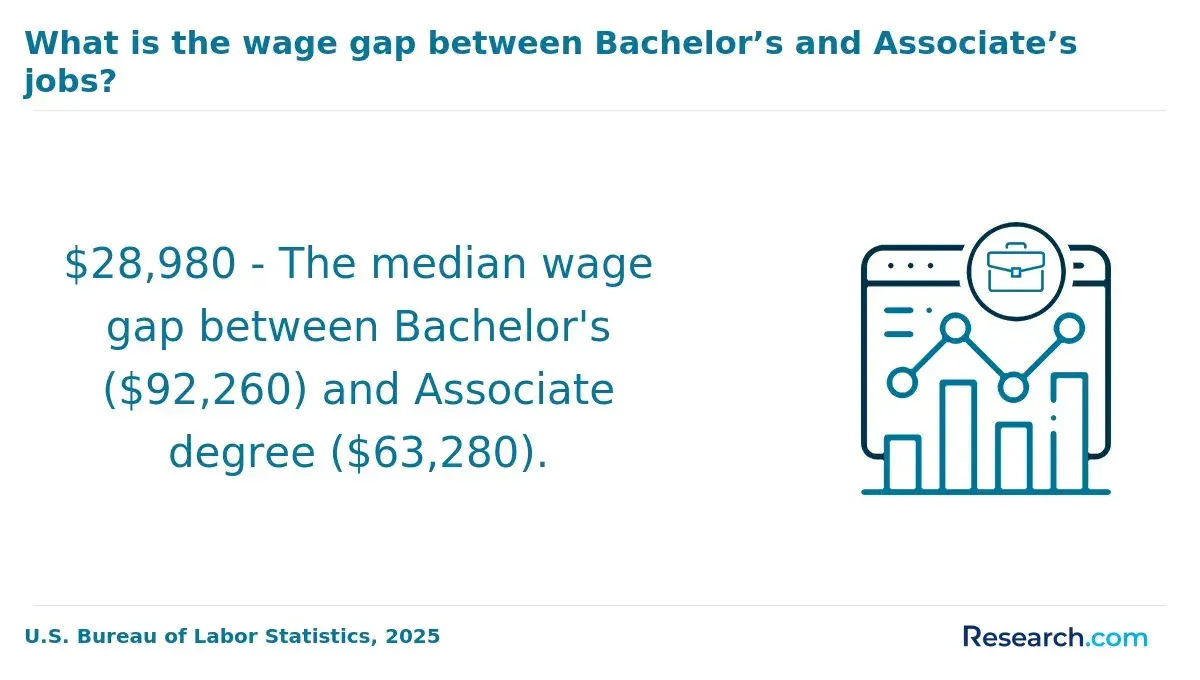
Salary research should start with the occupation, location, experience level, and employer, not with a promise attached to a program. The Bureau of Labor Statistics' Occupational Employment and Wage Statistics provides national wage estimates for occupations, but those figures include workers with varied education and experience. They are not evidence that completing a particular online certificate produces that pay level.
For example, BLS reported a 2024 national median annual wage of $59,190 for medical records specialists. That figure can help evaluate the field, but coding credentials, employer requirements, experience, and local demand still affect entry-level opportunities. Likewise, trade wages may reflect apprenticeship status, union coverage, overtime, and licensure.
Use a salary target carefully. Compare local job postings, the program's total cost, likely time out of work, credential renewals, and the realistic first role the program supports. For occupation ideas tied to credentials, review high paying certificate jobs and verify each role's actual education and licensing pathway.
How can students verify job outlook and industry demand before choosing a program?
Check demand before committing to a program because national growth does not guarantee openings in a particular city or for a particular credential level. The BLS Occupational Outlook Handbook projects employment trends for 2023-33 and explains typical entry education, but local employers may set higher requirements. Use national data as a screening tool, then test it against local evidence.
A practical demand check should combine public labor data with current employer expectations:
- Search the target occupation in BLS outlook information and note typical education, projected growth, and licensing language.
- Review several recent local job postings for recurring software, credential, schedule, and experience requirements.
- Ask the school which employers accept its credential and whether its reported outcomes distinguish completers from job placements.
- Speak with a local employer, union, workforce agency, or licensing board when the field is regulated.
- Reject programs that make vague placement claims or will not explain how their training maps to actual roles.
Red flags include guaranteed-job language, missing total-cost disclosures, no written transfer policy, unclear clinical placement responsibility, and claims that an online program qualifies learners for licensure everywhere.
Other Things You Should Know About
Timelines vary by school and document completeness. Some institutions provide an initial review quickly, but an official evaluation may take longer. Submit official transcripts early and ask for the written decision before committing financially.
Usually not in the traditional academic sense. Noncredit providers may offer advanced placement, credit for prior learning, or prerequisite waivers, but these are different from applying semester credits toward a college credential.
Only if the program meets the licensing board's education, clinical, and approval requirements in the state where you plan to practice. Verify this directly with the board and the school before enrolling.
It depends on the goal. Choose a certificate for focused, shorter training when the target role accepts it. Choose an associate degree when you need broader preparation, transferable credit, or a credential that supports later advancement.
References
- How College Credit Transfer Really Works: A Practical Guide https://www.straighterline.com/blog/transfer-how-college-credit-transfer-really-works-a-practical-guide
- 5 Common Challenges in Credit Transfer Evaluation (And How to Solve Them) https://www.stellic.com/resources/transfer-credit-evaluation
- Higher Education: Students Need More Information to Help Reduce Challenges in Transferring College Credits | U.S. GAO https://www.gao.gov/products/gao-17-574
- Improving Credit Transfer Can Help More Students Graduate From College - Center for Higher Education Policy and Practice https://www.chepp.org/news/from-chepp/improving-credit-transfer-can-help-more-students-graduate-from-college/
- Findings (Beyond Transfer) - Public Agenda https://publicagenda.org/resource/beyond-transfer/findings/
- Certificate vs Degree: Find the Best Fit for Your Goals https://beal.edu/certificate-vs-degree/
- Transferring Credits/Degrees/Academic Credentials & Articulation Agreements https://uci.catalog.unitedcareer.edu/transferring-credits-degrees-academic-credentials-articulation-agreements-1
- Choosing an Online School as a Transfer Student | OEDb.org https://www.oedb.org/advice/choosing-an-online-school-for-transfer-students/
- www.degreesight.com: Verifying that you are not a robot... https://www.degreesight.com/news/transfer-credit-evaluation-the-key-to-unlocking-enrollment-growth/
- Credit vs Non-Credit - what's the difference? https://ce.gvltec.edu/credit-vs-non-credit.html