2027 Best Certifications With 2.0 GPA Admission

Co-Founder and Chief Data Scientist
A 2.0 GPA can limit admission to selective college programs, but it does not eliminate practical certificate, career-training, or industry-certification routes. U.S. Bureau of Labor Statistics projections show healthcare support occupations are expected to grow faster than the average for all occupations, making careful program selection especially important.
This guide is for students seeking accessible training that leads toward employable skills. Learn which options may consider a 2.0 GPA, what they cost, when licensure matters, and how to avoid training that does not fit your goal.
Key Things You Should Know
- A 2.0 GPA may meet minimum admission standards at some community colleges, adult career schools, and open-enrollment certificate programs, but each school and selective healthcare program can impose higher requirements.
- Certificates are education credentials; certifications are professional credentials usually earned from an exam or standards process. Choose training that explicitly prepares you for the license or certification your target job requires.
- BLS projects much-faster-than-average growth for healthcare support occupations; demand alone is not enough, so confirm clinical placement, state approval, total cost, and employer recognition before paying.
Top 10 Best Certifications With 2.0 GPA Admission
Popular Trade School Programs
Trade programs often emphasize aptitude, attendance, and placement testing more than GPA. Accessible options may include HVAC technician certificates, welding certificates, electrical helper training, automotive service certificates, commercial driver training, and plumbing pre-apprenticeship programs.
A short certificate can build entry-level skills, while apprenticeships commonly provide the supervised hours needed for journey-level work. Ask whether training is credit-bearing, whether tools and exam fees are extra, and whether the program connects students with registered apprenticeships. Avoid assuming that classroom completion alone qualifies you for contractor licensing.
Healthcare Programs
Possible 2.0-GPA-friendly starting points include nursing assistant, medical assistant, phlebotomy, pharmacy technician, medical billing and coding, and patient care technician certificates. Admission rules differ sharply: open-enrollment coursework may be accessible, while clinical programs can require background checks, immunizations, drug screening, entrance testing, and a higher GPA in prerequisite sciences. A certificate may prepare students for an external exam, but it is not itself a professional certification or state license. Verify that required clinical hours and state-specific eligibility are included before enrolling.
Criminal Justice / Law Programs
Entry options include criminal justice certificates, legal studies certificates, paralegal studies certificates, security-guard training, corrections coursework, and emergency-dispatch training. These programs can suit students who want foundational knowledge before pursuing academy training or an associate degree.
However, police, corrections, and security roles may require age thresholds, background investigations, physical standards, agency academy training, or state licensing beyond a classroom certificate. Paralegal employers often value substantive legal-skills training and may prefer an associate or bachelor's degree for more competitive roles. Confirm local employer expectations before choosing a program.
Arts & Design Programs
Graphic design, digital media, photography, web design, UX fundamentals, audio production, and cosmetology-related training may offer flexible entry routes. Portfolio quality, software skill, client work, and licensing rules can matter more than a high school GPA. A noncredit design certificate can be useful for building samples quickly, but it may not transfer into a degree.
Cosmetology and related personal-care training must meet state hour and examination rules. Choose campus, hybrid, or online training based on whether you need supervised studio work, equipment access, or a professional portfolio review.
What certificate programs accept a 2.0 GPA and still lead to strong careers?
The strongest choice depends on the job's legal requirements, not simply on whether a school accepts a 2.0 GPA. For regulated work, select an approved educational certificate that leads to required testing, supervised practice, or licensure. For technology, skilled trades, and office roles, an industry certification or employer-recognized skills program may provide a faster route than a college credential.
This comparison separates common paths that can be realistic for students with lower GPAs. "May consider" does not mean guaranteed admission; cohorts, prerequisites, and clinical capacity can change the decision.
| Path | Credential type | Typical admission focus | Best fit | Important limitation |
| HVAC, welding, automotive | School certificate or apprenticeship training | Diploma, placement, aptitude, attendance | Hands-on technical work | Licensing and apprenticeship rules vary |
| Medical assisting or phlebotomy | Educational certificate; possible external certification exam | Prerequisites, screenings, clinical eligibility | Patient-support roles | Employer and state requirements differ |
| IT support | Industry certification or noncredit/credit certificate | Usually skills and exam preparation rather than GPA | Entry-level technical support | No certificate guarantees a first job |
| CDL training | Career training leading to state testing | Age, driving record, medical requirements | Commercial driving | Must meet federal and state driver rules |
| Bookkeeping or office software | Professional certificate or school certificate | Often open enrollment | Administrative and finance-support work | Experience and software proficiency remain important |
Choose a certificate when you need structured instruction, labs, clinicals, or academic credit. Choose an industry certification when an employer recognizes a particular exam-based credential and you already have the skills to prepare independently. Students who ultimately want broader advancement can compare these routes with best degrees before deciding whether a stackable certificate or associate degree is the better long-term investment.
How do online certificate programs compare with campus options for 2.0 GPA students?
Online certificate programs can reduce commuting and make part-time study easier, but they are not automatically better for students with a 2.0 GPA. Online programs work best when the field does not require on-campus labs, local clinicals, supervised shop practice, or state-approved contact hours. Campus and hybrid programs can offer equipment, instructor feedback, and placement support that matter in hands-on fields.
The comparison below helps match delivery format to the type of credential rather than to convenience alone.
| Factor | Online option | Campus or hybrid option |
| Scheduling | Often flexible for lectures and assignments | Set meeting times, often with structured support |
| Hands-on training | May require separate local arrangements | Usually includes access to labs, shops, or simulations |
| Clinical or practicum work | Must be confirmed locally before enrollment | May be coordinated by the school, but not always guaranteed |
| Student support | Depends on virtual tutoring and responsiveness | Typically easier access to in-person advising and equipment |
| Licensure suitability | Requires explicit state-by-state confirmation | Still requires approval verification, especially across state lines |
Before selecting an online program, request written confirmation of where practical training occurs, who secures it, and whether graduates in your state can sit for the required exam. If flexibility is the priority, review best online schools while separately checking that the specific program - not merely the institution - meets your career requirements.
What admission requirements beyond GPA do certificate programs typically expect?
GPA is only one admissions factor, and many short career programs do not use college-style GPA review at all. Schools may accept applicants provisionally, require developmental coursework, or use placement results to determine readiness. A licensing-bound program may add requirements that are more consequential than academic admission.
Prepare these items early because missing them can delay a start date or prevent participation in clinical or field training.
- A high school diploma, GED, or equivalent proof of completion when the provider requires it.
- Placement, reading, math, keyboarding, aptitude, or entrance assessments for programs that use readiness testing.
- Official transcripts if applying to a credit-bearing college certificate, especially when prerequisite courses are required.
- Background checks, drug screening, immunization records, CPR training, or physical-clearance documents for healthcare and public-safety placements.
- A valid driver license, medical certification, age eligibility, or driving-record review for commercial driving programs.
- Portfolio samples, auditions, interviews, or software assessments for some creative programs.
Ask whether a 2.0 GPA is the institution's overall minimum, a program-specific minimum, or merely a threshold for conditional admission. Also ask whether failure in a prerequisite course can block entry into the career sequence.
Which industries offer high-demand certifications accessible with a 2.0 GPA?
High-demand fields accessible through shorter training include healthcare support, transportation, construction and repair, information technology support, and business operations. Accessibility means the training may not require a high GPA; it does not remove skill, licensure, background, or hiring requirements.
BLS projects employment of wind turbine service technicians to grow 60% through 2033, although this small occupation is specialized and may require travel, physical work, and employer training. Use demand data as a screening tool, then evaluate local openings and entry requirements.
Current employer interest in skills-based hiring can help candidates demonstrate capability through portfolios, supervised practice, and recognized exams. For a short online route, compare curriculum depth and career fit with short certificate programs that pay well online; fast completion is valuable only when the credential is recognized by local employers.
How long do these certifications take and what do they cost on average?
Completion time ranges from several weeks for exam preparation or commercial-driver training to about one year for many college certificates. Associate degrees usually take about two years of full-time study, though prior credit, course availability, and part-time schedules can extend that timeline. A program's advertised duration may exclude prerequisites, waiting lists, clinical scheduling, and certification-exam preparation.
Cost should be evaluated as a total investment rather than tuition alone. The following categories explain why two programs with similar advertised prices can have very different out-of-pocket costs.
| Cost category | Often included? | Why it matters |
| Tuition and institutional fees | Usually quoted | May differ for in-district, out-of-district, and online students |
| Books, software, and supplies | Often separate | Can be material in technical, design, and health programs |
| Tools, uniforms, and protective equipment | Often separate | Common in trades and clinical training |
| Exam, application, and licensing fees | Often separate | May be required to work after program completion |
| Transportation, childcare, and lost work time | Rarely included | Can determine whether an accelerated schedule is workable |
Request a written estimate covering all required charges through licensure or examination. Credit-bearing certificates at eligible institutions may have federal aid options for qualifying students, while noncredit training often relies on payment plans, workforce grants, employer support, or private financing. Do not borrow based on an advertised salary claim; compare the full cost with local entry-level opportunities and progression paths.
What accreditation and state licensing factors matter when choosing a certificate program?
Accreditation and licensing are essential when a program leads to regulated work. Institutional accreditation evaluates a school broadly; programmatic accreditation evaluates a particular discipline; state approval or board approval may determine whether graduates can take a licensing exam. These are different checks, and one does not automatically substitute for another.
Verify the following in writing before paying a deposit, particularly for online programs that serve students across state lines.
- Identify the exact job, certification examination, or license you want after training.
- Check the relevant state licensing board or certifying organization for approved-program and eligibility rules.
- Confirm the school's institutional accreditation when you need federal aid, academic credit, or transfer options.
- Confirm programmatic accreditation or state approval when the occupation requires it.
- Ask whether clinical sites, lab hours, supervised practice, and exam preparation are included in the published curriculum.
- Get written confirmation that the program meets requirements in the state where you intend to work.
For unregulated occupations such as some IT, design, and business-support roles, employer recognition and demonstrable skill may matter more than programmatic accreditation. Even then, a transparent provider should disclose instructors, curriculum, total charges, refund terms, and measurable completion requirements.
What courses and skills are usually included in 2.0-friendly certification curricula?
Programs that are accessible to students with a 2.0 GPA should still have rigorous, job-relevant learning outcomes. Supportive admission policies are not a reason to accept weak curriculum. The best fit offers foundational instruction, repeated practice, feedback, and a clear bridge to the next credential or entry-level role.
Most curricula combine core employability skills with field-specific practice. What appears on the list should align with the tasks employers or licensing boards actually expect.
- Communication, workplace professionalism, documentation, and customer or patient interaction.
- Applied math, measurement, reading technical information, and safety procedures.
- Field tools and technology, such as diagnostic equipment, electronic records, spreadsheets, creative software, or help-desk systems.
- Hands-on labs, simulations, projects, portfolios, or supervised practicum experiences where the occupation requires them.
- Exam preparation when the program is designed to support an external certification or licensing examination.
- Career preparation, including résumés, interviewing, job-search strategy, and understanding entry-level expectations.
Credit-bearing certificates may apply toward an associate degree if the college publishes an articulation pathway. Noncredit certificates can be faster and more focused, but transferability is often limited. Ask for the course list, clock or credit hours, and written transfer policy instead of relying on a verbal promise.
What entry-level jobs, salary ranges, and career paths follow these certifications?
A certificate can help a candidate qualify for training-oriented or support roles, but it is not a universal substitute for experience, licensure, or a degree. Salary figures describe occupations across workers with different education and experience levels, not a guaranteed result of completing one program.
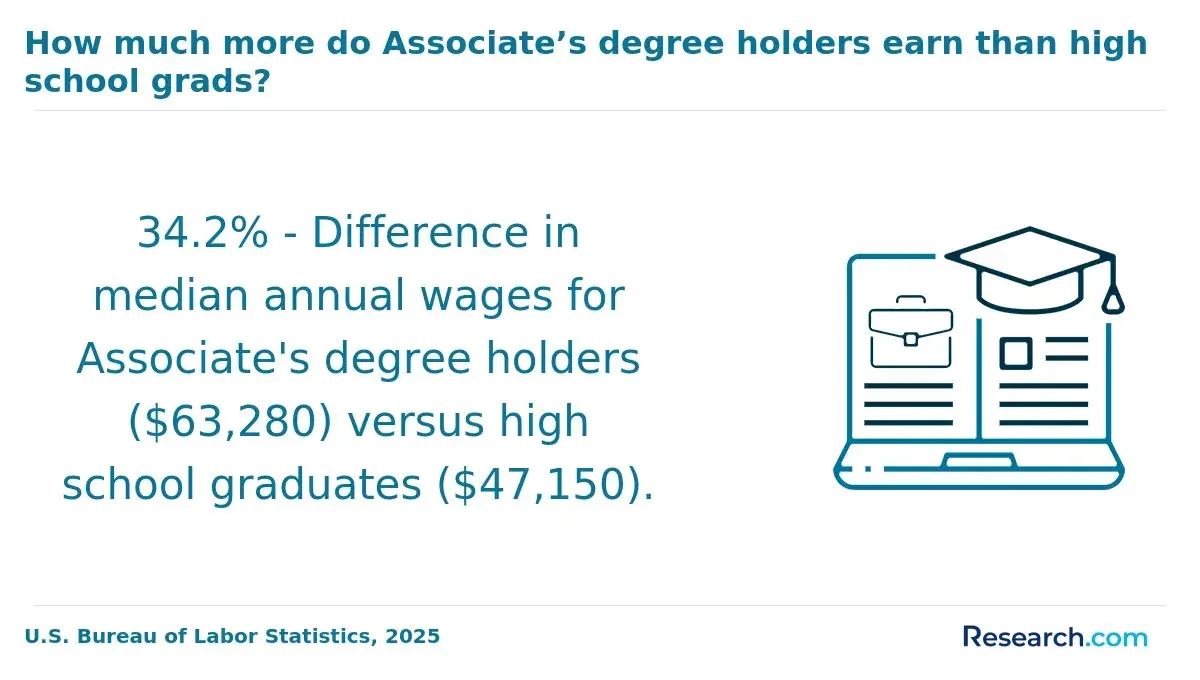
These examples show how a short credential can fit into a longer career path. BLS recently reported a median annual wage of $48,780 for medical assistants; pay varies by employer, location, schedule, certification status, and experience.
| Starting direction | Possible entry role | Common next step | Career-path consideration |
| Healthcare support certificate | Medical assistant, nursing assistant, phlebotomy technician | Specialty certification, practical nursing, or allied-health degree | Clinical eligibility and state rules can limit mobility |
| Trade certificate | Helper, installer trainee, shop technician | Apprenticeship, manufacturer training, or contractor pathway | Experience and supervised hours are often central |
| IT certification preparation | Help-desk technician, desktop-support trainee | Networking, cybersecurity, cloud, or systems specialization | Projects and troubleshooting ability strengthen applications |
| Business software certificate | Administrative assistant, billing clerk, bookkeeping assistant | Advanced software, accounting coursework, or operations roles | Employers may prioritize demonstrated software proficiency |
| Creative portfolio certificate | Production assistant, junior designer, freelance support work | Portfolio expansion, specialization, or degree completion | Work samples can outweigh the credential title |
Students seeking the highest long-term earnings in fields that require a degree should also compare best degrees to make money. A certificate is most worthwhile when it matches a real entry requirement, reduces time to a first opportunity, and leaves room to advance.
How can students verify program quality and avoid low-value or predatory certificates?
Program quality is easiest to assess before enrollment, when you can compare written evidence rather than marketing claims. Be cautious of providers that promise employment, advertise vague "accreditation," pressure you to sign immediately, or will not disclose the total price and refund policy.
Use this screening process to distinguish a credible career investment from a low-value certificate.
- Search local job postings to identify the credentials, software, licenses, or experience employers actually request.
- Match those requirements to the program's published course list, practical training, and exam eligibility.
- Verify approval, accreditation, or licensure status directly with the appropriate regulator or accreditor when the field is regulated.
- Request written information on total cost, included materials, cancellation terms, completion rules, and additional examination fees.
- Ask how clinical placements, internships, apprenticeships, or employer introductions work and whether they are guaranteed, assisted, or entirely self-arranged.
- Compare completion, licensure-exam, and job-placement disclosures only when the school defines the measures and provides the reporting period.
- Speak with employers, recent students, or workforce agencies about whether the credential is recognized locally.
A low GPA does not require settling for weak training. If a program cannot explain what credential you earn, what it qualifies you to do, and what additional steps remain, pause before enrolling.
Other Things You Should Know About
Often, yes. Many community college certificates, career schools, and noncredit programs use open enrollment, placement testing, or conditional admission. Competitive programs, especially those with clinical placements, may require a higher GPA in prerequisite courses.
No. A certificate is usually awarded by a school after completing coursework. A certification is generally awarded by a professional organization after meeting standards, often through an examination. Some school certificates prepare students for a separate certification exam.
Possibly. Eligibility depends on the institution, program length, whether the program is credit-bearing, and your individual aid eligibility. Ask the financial-aid office about federal aid, workforce funding, payment plans, and whether noncredit programs qualify.
First identify the occupation and state where you plan to work. Then confirm that the program meets state requirements, includes required clinical training, and makes you eligible for any examination or certification required by employers or regulators.
References
- 20 Necessary IT Certifications + Salaries I Skillsoft - Skillsoft https://www.skillsoft.com/blog/top-paying-it-certifications
- How Do Certifications Influence Salary Increases? https://certiprof.com/blogs/news/how-do-certifications-influence-salary-increases
- What Are Industry Certifications https://www.savvas.com/resource-center/blogs-and-podcasts/college-and-career-readiness/intro-to-cte/what-are-industry-certifications
- Apply to Thaddeus Stevens College of Technology https://www.stevenscollege.edu/apply/
- The Alternative Teacher Certification Sector Outside Higher Education https://www.americanprogress.org/article/the-alternative-teacher-certification-sector-outside-higher-education/
- 7 in-demand certifications in 2025 | edX https://www.edx.org/resources/in-demand-professional-certifications
- Eligibility - Ogeechee Technical College https://www.ogeecheetech.edu/admissions/eligibility
- Highest Paying Certifications 2025-2026: IT, Cybersecurity, Medical & Career Growth Guide https://www.frontlinesourcegroup.com/blog-certifications-that-pay-the-most.html
- Low GPA Exemption for WCACP program acceptance https://www.wcacp.org/low-gpa-exemption-for-wcacp-program-acceptance/
- Best Entry-Level IT Certifications for Beginners - ONLC https://www.onlc.com/blog/best-beginners-entry-level-it-certifications/