2027 Best Online Short Certificate Programs for Transfer Students

Co-Founder and Chief Data Scientist
Transfer students often need a fast credential without losing the value of coursework they have already completed. Online short certificate programs can provide a focused route into healthcare, technology, skilled trades, law-related support, or design, if the credits, accreditation, and career outcome align.
The Bureau of Labor Statistics projects healthcare occupations to grow faster than average from 2024 to 2034, making targeted training especially relevant. This guide explains how to compare transferable, credit-bearing certificates with noncredit career training and choose a practical next step.
Key Things You Should Know
- Choose a credit-bearing academic certificate when you want prior college courses evaluated and may later apply the certificate toward an associate or bachelor's degree; noncredit programs usually do not accept or award transfer credit.
- Short programs commonly take weeks to about one year, but clinical, licensure-bound, and technical programs may require labs, supervised practice, exams, tools, background checks, or in-person requirements.
- For career context, BLS projects healthcare occupations to grow much faster than average from 2024 to 2034. However, a certificate alone does not automatically qualify a graduate for every healthcare role or license.
Top 10 Best Online Short Certificate Programs for Transfer Students
Popular Trade School Programs
Online-friendly trade certificates include construction management support, HVAC theory, electrical fundamentals, welding safety, industrial maintenance, logistics, and CAD drafting. Transfer students may receive credit for technical math, safety, blueprint reading, or general education courses in credit-bearing college programs.
Hands-on trades such as welding, HVAC service, and electrical work usually still require campus labs, apprenticeships, or supervised field experience. Choose a short online program for foundational knowledge or advancement; choose an approved apprenticeship or state-aligned program when your goal requires journey-level experience or licensing.
Healthcare Programs
Short healthcare certificates can include medical billing and coding, pharmacy technician preparation, medical assisting, patient care, sterile processing, and health information support. Transfer credit may reduce general education or prerequisite coursework at accredited colleges, but it rarely replaces required clinical skills training.
Fully online study is most realistic for administrative pathways; patient-facing programs generally include clinical placements and may have immunization, background-check, and drug-screen requirements. Verify whether the program prepares you for a separate national certification exam and whether your state or employer requires one.
Criminal Justice / Law Programs
Transfer-friendly online options include criminal justice, homeland security, legal studies, paralegal studies, court reporting support, and victim advocacy certificates. Prior credits in composition, psychology, sociology, government, or introductory justice courses may satisfy requirements in academic certificates.
A legal studies certificate can build research and document-preparation skills, but it does not make a student an attorney or independently licensed legal professional. Prospective paralegals should compare employer expectations, program quality, and whether a bachelor's degree or approved paralegal education is preferred in their local market.
Arts & Design Programs
Online short certificates in graphic design, web design, digital photography, UX foundations, animation, and digital marketing can help transfer students create a focused portfolio. Credit-bearing programs may accept prior art history, design foundations, or software coursework, while provider-based professional certificates usually assess learning through projects rather than transfer evaluations.
Portfolio quality, software proficiency, and practical briefs often matter as much as the credential for entry-level creative work. Select a program with instructor feedback, current tools, accessible software costs, and projects you can show employers or clients.
What are online short certificate programs for transfer students?
Online short certificate programs for transfer students are focused learning programs designed to build a defined set of academic or job-related skills in less time than a degree. They may be offered by community colleges, universities, technical schools, professional associations, or private training providers.
The key distinction is whether the certificate is credit-bearing. A college-issued academic certificate may accept previous coursework and may stack into a degree. A noncredit professional certificate or career-training program typically has its own enrollment process, does not evaluate college transfer credits, and may be valuable for skills development without being transferable.
A short certificate is not the same as a professional certification. The program certificate shows that you completed a course of study. A certification, such as an industry exam credential, is awarded by a certifying body after meeting its standards. Some programs prepare learners for certification exams; completion alone may not confer the certification.
Transfer students who want a very compressed, skills-first option can also compare 4 6 week certification programs online. Confirm whether the option is academic credit, a completion certificate, or preparation for an external exam before enrolling.
How do transfer credits work for certificate programs?
Transfer credit is a school-by-school academic evaluation, not an automatic entitlement. Credit-bearing certificate programs commonly review official transcripts and compare prior course content, grades, credit hours, and recency with their curriculum. Many colleges set a minimum grade for transfer work and require students to complete a set number of credits at the awarding institution.
This comparison shows why students should ask about transferability before paying an application or enrollment fee.
| Program type | Can prior college credit apply? | Can new learning transfer later? | Best use |
| College academic certificate | Often, after transcript review | Sometimes, especially within the same institution | Students pursuing a degree pathway |
| Community-college workforce certificate | Often for related academic courses | Varies by course and institution | Career entry with possible stackability |
| Noncredit professional certificate | Usually no | Usually no academic credit | Fast skill building or employer-recognized training |
| Industry certification preparation | Rarely relevant | Not academic credit | Preparing for an external certification exam |
Request a written transfer-credit evaluation, not an informal verbal estimate. Ask which courses apply to the certificate itself, which apply only as electives, whether credits expire, and whether the credential stacks into a degree.
Students whose main goal is a low-cost bachelor's completion route should also compare the most affordable online colleges rather than assuming a short certificate is the least expensive long-term choice.
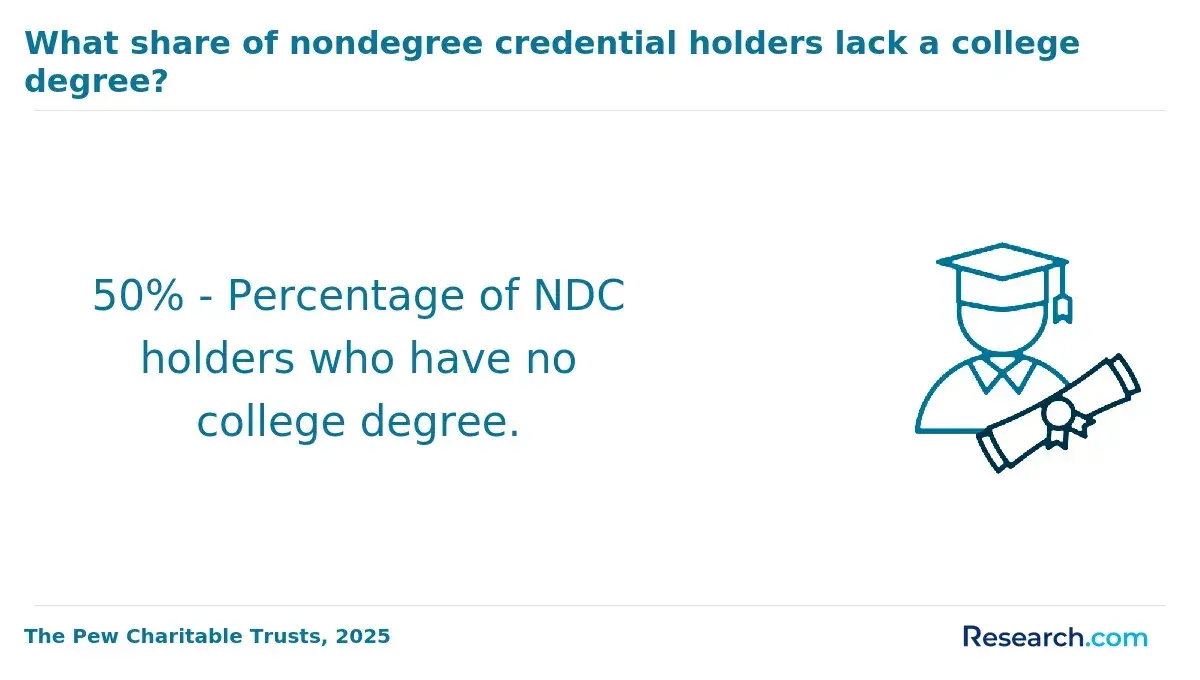
Are online certificate programs accredited and career-relevant?
Accreditation and career relevance depend on the provider and field. For a college academic certificate, institutional accreditation is an important signal that credits may be recognized by other institutions and that the school participates in established academic quality-review processes. Programmatic accreditation can matter in fields such as nursing, medical assisting, surgical technology, and some technical disciplines.
For noncredit training, institutional accreditation may not apply in the same way. Instead, evaluate whether the curriculum is current, instructors have relevant experience, employers recognize the provider, and the program clearly states whether it prepares students for a named certification examination.
Do not assume an online format changes licensing requirements. States and licensing boards may require approved curricula, laboratory hours, supervised clinical practice, background checks, examinations, or in-state placements. Before enrolling, compare the program's disclosures with the requirements where you intend to work.
AI-related tools are also changing entry-level work in design, administration, and technology. A useful certificate teaches foundational judgment, communication, privacy practices, and hands-on workflow, not only one software platform that may quickly change.
What admission requirements do transfer students need?
Admission requirements reflect the credential type. Credit-bearing undergraduate certificates often require an application, official transcripts, identity or residency documentation, and placement information when needed.
Some programs require prerequisite courses in math, English, science, or computing. Transfer applicants may need a minimum grade in prerequisites even if the institution has broad admission access.
Career-training providers may use a simpler enrollment process, but regulated programs can still require proof of education, health records, criminal-background screening, or technical readiness. Graduate certificates generally require a completed bachelor's degree and may require professional experience.
Before applying, collect the documents and answers that can prevent an expensive mismatch.
- Request official transcripts from every college attended.
- Ask whether the program is credit-bearing, noncredit, or exam-preparation training.
- Confirm prerequisite, clinical, residency, technology, and attendance requirements.
- Ask for the transfer-credit decision and remaining course plan in writing.
- Check whether the credential meets any applicable employer, certification, or state licensure requirement.
Students returning after a long break may find that a flexible certificate is a better first step than a full degree, while others may be better served by one year degrees for seniors that support a broader academic goal.
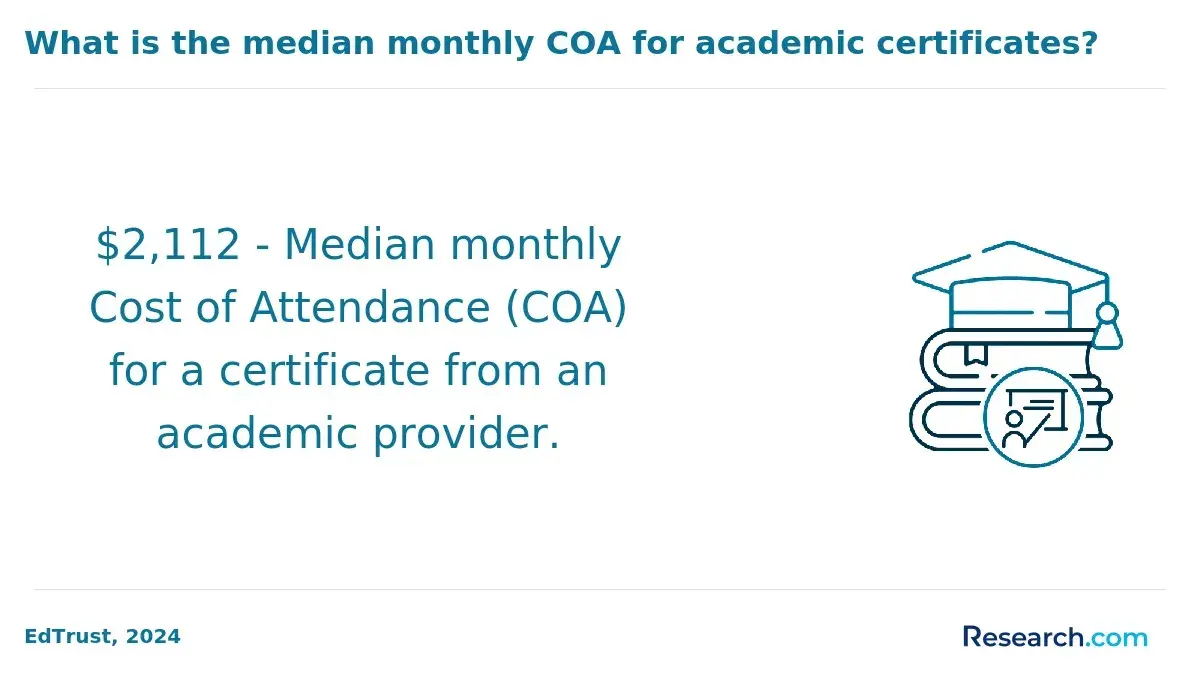
How long do online certificate programs take and cost?
Many short online certificates take from several weeks to roughly one year. Completion time depends on the number of credits, prerequisite requirements, course sequencing, transfer evaluation, and whether clinical or lab work is required. An "accelerated" schedule can reduce calendar time but may increase weekly workload and limit flexibility for working students.
Cost varies more by provider and program type than by delivery mode. As a broad benchmark, College Board reported average published tuition and fees of $4,050 for public two-year in-district students in the 2024-25 academic year. That figure is not the price of every certificate and excludes expenses such as books, software, examinations, equipment, transportation, and clinical compliance costs.
When comparing offers, separate tuition from required charges so an apparently low-cost program does not become more expensive after enrollment.
- Tuition and mandatory institutional fees
- Transfer-credit evaluation or transcript fees
- Textbooks, software subscriptions, tools, uniforms, and supplies
- Certification examination, background-check, immunization, or licensing costs when applicable
- Travel and time away from work for labs, clinicals, or proctored exams
Eligible credit-bearing programs at approved schools may support federal student aid for qualifying students, but short certificates do not automatically qualify. Ask the financial-aid office about program eligibility, satisfactory academic progress rules, employer tuition assistance, and payment plans before borrowing.
What courses are included in short certificate programs?
Coursework should match the actual skill level and job target, not just a broad program label. A short certificate generally has a narrow curriculum: introductory concepts, job-specific tools, professional communication, ethics or safety, and a capstone, practicum, or exam-preparation component when relevant.
Transfer students should compare their evaluated credits against required courses, because a certificate with many prerequisites may not be short in practice. The table below shows typical course patterns and the delivery questions that matter most.
| Program area | Common course themes | Online-format consideration |
| Healthcare administration | Medical terminology, coding, records, billing, privacy | May be fully online; verify exam preparation |
| Skilled trades | Safety, technical math, blueprints, systems theory | Hands-on competency may require labs |
| Legal studies | Legal research, writing, procedure, ethics | Confirm software and document-work practice |
| Digital design | Design principles, software, portfolio projects | Budget for software and critique-based feedback |
| Information technology | Networking, security, support, cloud, scripting | Look for virtual labs and certification alignment |
A good curriculum identifies its learning outcomes, required technology, instructor support, assessment method, and any external exam it addresses. Be cautious of programs that promise broad career readiness but do not disclose courses, practical assignments, or instructor qualifications.
Which jobs can transfer students get after certification?
Jobs after a certificate depend on the field, the student's prior education and experience, local hiring practices, and whether a role requires a separate credential. A transfer student may use a short certificate to enter a support role, change specialties, demonstrate current skills, or add a focused qualification to an existing degree.
Potential entry-level or advancement-adjacent roles include medical records specialist, billing support specialist, pharmacy technician trainee, IT support specialist, CAD drafter, logistics coordinator, junior graphic designer, legal assistant, and construction project support staff. Employers may also value portfolios, internships, customer-service experience, software proficiency, or external certifications.
A certificate is often a sound choice when it fills a specific skills gap. It is a weaker choice when the desired occupation legally requires a degree, approved clinical education, an apprenticeship, or a license.
Learners aiming ultimately for executive, academic, or research careers may need a longer credential pathway, including options such as the shortest doctoral programs after meeting the appropriate degree prerequisites.
What salaries and job outlooks do certificate careers have?
Salary data describes occupations rather than the earnings of certificate completers. It is useful for estimating the market value of a target role, but it cannot predict an individual offer, which depends on location, experience, employer, hours, and additional credentials.
The BLS Occupational Outlook Handbook reports that medical records specialists had a 2024 median annual wage of $50,250 and projected employment growth of 7% from 2024 to 2034. This makes health-information training worth investigating for students interested in administrative healthcare work, but employers may still prefer coding credentials or experience for particular openings.
The comparison below highlights the differing education expectations behind several certificate-adjacent career paths.
| Career direction | Certificate's likely role | Important limitation |
| Medical records and billing support | Can provide relevant terminology, coding, and systems preparation | Some positions prefer an external coding credential |
| IT support | Can build technical foundations and prepare for vendor certifications | Employers may test troubleshooting skills directly |
| Graphic design | Can produce portfolio-ready projects | Portfolio and experience strongly affect hiring |
| Paralegal support | Can develop legal research and document skills | Requirements vary by employer and jurisdiction |
| Skilled trades | Can provide theory and safety preparation | Hands-on hours, apprenticeship, or licensing may be required |
Use occupational data to compare career directions, then review local job postings to identify the credentials, tools, schedules, and experience employers actually request.
How do you choose the best online certificate program?
The best online short certificate for a transfer student is the one that accepts the right prior coursework, leads to a realistic next step, and fits the time and budget available. Do not choose solely by advertised completion speed.
Use this process to compare programs before committing.
- Define the target: decide whether you need academic credit, an employer-recognized skill certificate, preparation for a certification exam, or a license-eligible program.
- Verify transfer value: send transcripts and obtain a written evaluation showing exactly what transfers and how many courses remain.
- Check recognition: confirm institutional accreditation for college credit and programmatic approval or exam alignment where the field requires it.
- Calculate total cost: include fees, supplies, software, travel, exams, and lost work time - not tuition alone.
- Test the format: identify live sessions, proctored exams, lab days, clinical placements, group work, and expected weekly study hours.
- Validate outcomes: compare curriculum and required credentials with current local job postings and ask how the program supports placements or career preparation.
Common red flags include vague transfer promises, missing total-cost disclosures, claims that a completion certificate automatically creates licensure eligibility, and programs that do not name instructors or assessment methods. A transparent school can explain the credential type, completion requirements, transfer policy, and career limitations in writing.
Other Things You Should Know About the Best Online Short Certificate Programs
Often, if the certificate is credit-bearing and offered by a college or university. The school evaluates official transcripts, course content, grades, and credit age. Noncredit certificates usually do not accept transfer credit.
They can be worthwhile when they close a specific skills gap, prepare for a recognized examination, or stack into a degree. They are less suitable when the intended job requires a license, apprenticeship, or degree that the certificate does not provide.
Some programs prepare students for external certification exams, but the educational certificate and professional certification are separate credentials. Check the exam's eligibility rules, fees, and experience requirements directly before enrolling.
Employers typically focus on relevant skills, the provider's reputation, portfolio or practical experience, and any required certification or license. Online delivery is generally less important than whether the curriculum and credential match the role.
References
- College, But Make it Affordable https://www.straighterline.com/
- Transfer Pathway Partnerships https://www.yorktech.edu/campus-life/support-resources/academic-career-advising-center/transfer-pathways-partnerships/index.html
- Online and Adult Learning - NCICU https://ncicu.org/online-and-adult-learning/
- Choosing an Online School as a Transfer Student | OEDb.org https://www.oedb.org/advice/choosing-an-online-school-for-transfer-students/
- Certificate Programs: Programs, Costs, Duration & Are They Worth It? - University of the Potomac https://potomac.edu/certificates-programs-costs-duration-are-they-worth-it/
- Career and College Promise | NC DPI https://www.dpi.nc.gov/students-families/enhanced-opportunities/advanced-learning-and-gifted-education/career-and-college-promise
- Top Online Schools That Accept Transfer Credits https://www.edvisorly.com/student-guides/online-schools-that-accept-transfer-credits
- What You Should Know About Short-Term Certification Programs https://www.learnhowtobecome.org/career-resource-center/short-term-certifications/
- 5 Common Challenges in Credit Transfer Evaluation (And How to Solve Them) https://www.stellic.com/resources/transfer-credit-evaluation