2027 Best Short Certificate Programs for Students With Some College Credit

Co-Founder and Chief Data Scientist
Some college credit can shorten the path to a marketable credential, but only if the new program accepts the right coursework and matches the job you want. Short certificates range from credit-bearing college programs to noncredit workforce training, with very different transfer, licensing, and aid rules.
The U.S. Bureau of Labor Statistics projects medical assistant employment to grow 12% from 2024 to 2034, illustrating why targeted training can be appealing. This guide helps near-completers compare programs, costs, formats, requirements, and realistic career paths before enrolling.
Key Things You Should Know
- Students with transferable general-education or prerequisite credits may finish a credit-bearing certificate faster, but each college decides what it will accept and whether credits have expired.
- Choose the credential backward from the job: a college certificate can build skills, while a separate industry certification or state license may still be required for employment.
- Short programs can cost less and take weeks or months rather than years, but hands-on trades and licensed healthcare roles often require campus labs, clinical placements, exams, or supervised practice.
Top 10 Best Short Certificate Programs for Students With Some College Credit
Popular Trade School Programs
Common short trade options include HVAC technician certificates, welding certificates, electrical helper programs, plumbing certificates, commercial driver training, and industrial maintenance certificates. Students with college algebra, safety, technical writing, or general education credits may reduce requirements in credit-bearing programs. Choose campus or hybrid training when employers or licensing rules require lab hours. A short certificate may prepare students for entry-level work or an exam, but it does not replace an apprenticeship where one is required. Ask whether tools, protective equipment, testing, and permit fees are included in the quoted price.
Healthcare Programs
Medical assisting, pharmacy technician, phlebotomy, billing and coding, patient care technician, and practical nursing prerequisite certificates are common accelerated options. Prior anatomy, physiology, communications, and computer credits can matter most in college-based programs. Clinical training, background checks, immunizations, drug screening, and CPR certification may add time and expense. A school certificate is not the same as national certification, and requirements differ by occupation and state. For patient-facing careers, verify that clinical placements are arranged and that the curriculum meets any applicable licensure or exam eligibility standards.
Criminal Justice / Law Programs
Short options include paralegal studies certificates, legal office technology, court reporting prerequisites, corrections certificates, and crime-scene or security training. A paralegal certificate can be useful for learners who already hold a degree or have substantial college credit, but employers set hiring standards and some programs are more widely recognized than others. Security work may require state-specific registration or training. Criminal justice certificates can strengthen knowledge for support roles, yet they do not automatically qualify someone to become a police officer, attorney, investigator, or licensed private investigator.
Arts & Design Programs
Graphic design, digital photography, web design, UX foundations, video editing, animation, and interior design certificates can help students develop focused technical skills and portfolio pieces. Existing credits may satisfy art history, communications, or general-education requirements in a college certificate, though studio courses usually remain. Online formats suit software-based work; campus access can be valuable for equipment, critique, and production studios. Review the portfolio outcomes, software taught, instructor experience, and ownership of your work. For regulated interior design pathways, confirm state requirements before assuming a short certificate is sufficient.
What are short certificate programs for students with some college credit?
A short certificate program is a focused course of study that awards a certificate after completion, usually in a specific occupational or academic area. For students with some college credit, the main advantage is potential credit reuse: prior coursework may satisfy general education, prerequisites, or electives, reducing the courses left to complete.
Credit-bearing certificates are generally offered by community colleges, technical colleges, and universities. They may be stackable, meaning their courses can later apply toward an associate or bachelor's degree under that institution's policies. Noncredit career-training certificates are often faster and may have simpler enrollment, but they usually do not transfer as college credit. Students deciding whether to finish a broader credential should also compare good degrees to get with a narrowly targeted certificate.
A certificate differs from a professional certification. The school awards a certificate for completing instruction; an industry organization awards a certification after its own eligibility and assessment process. A certificate may prepare you for a certification examination, but it does not automatically confer the certification.
How do online and campus-based short certificate programs compare?
Online and campus programs can lead to the same school-issued certificate when they use the same curriculum, but the best format depends on how the occupation is learned. Online delivery is strongest for software, business systems, legal research, coding, and administrative skills. Campus or hybrid delivery is often better - and sometimes necessary - for welding, HVAC, clinical care, imaging, and other hands-on training.
The comparison below highlights the practical trade-off: convenience is valuable only when the format still provides the experiences employers, certifiers, or licensing bodies expect.
| Factor | Online certificate | Campus or hybrid certificate |
| Best fit | Digital, administrative, and theory-heavy skills | Lab, shop, clinical, and equipment-based skills |
| Schedule | Often asynchronous, with fixed deadlines | Usually set meeting, lab, or clinical times |
| Credit transfer | Depends on institutional policy, not delivery mode | Depends on institutional policy, not delivery mode |
| Key risk | Insufficient live practice or unclear exam eligibility | Commute, limited section availability, and higher incidental costs |
For learners who need a broader credential with remote flexibility, reviewing online associate degree programs can clarify whether a stackable degree path is a better long-term fit than a standalone certificate.
What admission requirements apply to short certificate programs if you already have credits?
Requirements depend on whether the program is credit-bearing, noncredit, or tied to a regulated occupation. Community-college certificates commonly request an application, official transcripts for transfer evaluation, placement information when needed, and proof that prerequisites were met. A noncredit provider may require only registration and payment. Selective healthcare and technical programs can add entrance testing, minimum course grades, health documentation, or criminal-background screening.
Before applying, take these steps to avoid paying for courses you have already completed or enrolling in a program that does not meet your goal.
- Request official transcripts from every prior college early, since evaluation can take time.
- Ask for a written transfer-credit evaluation and a program-specific graduation audit.
- Confirm course age limits for science, technology, or clinical prerequisites.
- Check whether the certificate has GPA, placement, portfolio, interview, background-check, or physical-capacity requirements.
- Get written confirmation that the program meets any exam, clinical, apprenticeship, or state licensing prerequisites you need.
A common mistake is assuming that "some college" automatically means fewer classes. Credits may be accepted by the institution but not apply to the chosen certificate, particularly when they are electives or do not match required course outcomes.
How long do short certificate programs take and what do they typically cost?
Completion time can range from a few weeks for a narrowly focused noncredit course to roughly one year for a credit-bearing technical or healthcare certificate. Your remaining time depends less on the label "short" than on accepted credits, prerequisite sequencing, clinical or lab schedules, and whether you attend part time. A program described as accelerated may still take longer if a required course is offered only once per term.
Cost should be evaluated as a total, not just tuition. The following categories show what can change the true price and whether a lower advertised rate is actually the better value.
| Cost category | Why it matters | What to verify |
| Tuition and mandatory fees | Credit-bearing programs commonly charge per credit plus institutional fees | Resident status, number of credits remaining, and repeat-course charges |
| Books, software, and supplies | Trade and design programs may require costly tools or subscriptions | Required purchases, rental options, and whether equipment is included |
| Clinical, lab, and testing expenses | Healthcare and regulated fields can add compliance costs | Background checks, immunizations, uniforms, exam fees, and liability coverage |
| Lost work time and commuting | Fixed labs and clinical rotations can limit employment hours | Required daytime attendance and travel to placements |
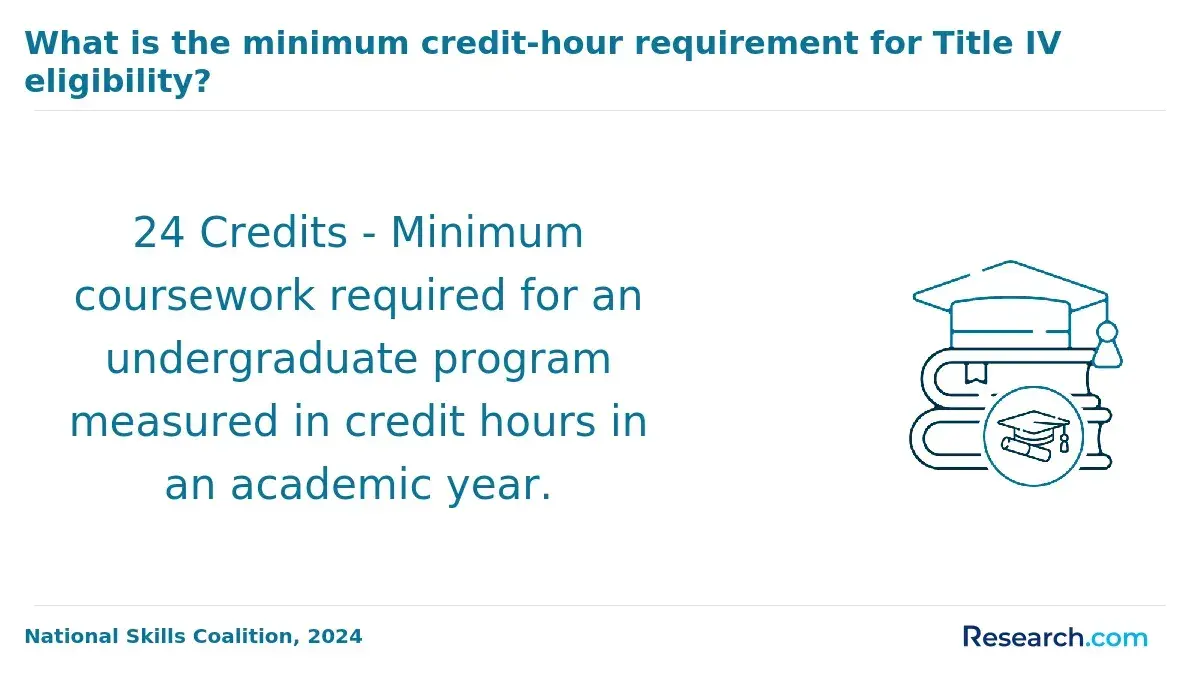
Federal aid eligibility generally depends on the school, program length, enrollment status, and whether the credential qualifies under federal rules; noncredit programs often have different funding options. Ask the financial-aid office about eligibility before enrolling, and ask employers about tuition assistance. If short-term training does not provide enough advancement, compare its total cost with highest paying degrees rather than assuming the quickest route has the best return.
Which accredited schools offer the most reputable short certificate programs?
For credit-bearing certificates, reputable options are usually institutions accredited by an agency recognized by the U.S. Department of Education or the Council for Higher Education Accreditation. Community colleges and public technical colleges can be particularly practical for students with prior credits because they often have formal transfer evaluation, transparent course numbering, and stackable pathways.
Institutional accreditation is only one check. Programmatic accreditation or approval may matter more in fields such as nursing, medical assisting, surgical technology, and certain technical disciplines. For example, an institution can be accredited while a specific program does not meet eligibility standards for a desired professional examination or license.
Compare schools using evidence that connects directly to your goal: the exact credential awarded, transfer-credit policy, required in-person hours, completion sequence, exam preparation, clinical or employer partnerships, total charges, and published student-support services. Avoid providers that will not identify their accreditor, pressure you to enroll immediately, make job-placement guarantees, or give vague answers about licensing eligibility.
What coursework and skills do short certificate programs usually include?
Coursework is intentionally narrow. A credit-bearing certificate may combine occupational courses with prerequisites or a few general-education classes; a noncredit certificate may focus only on job tasks. Prior credits are most useful when they align with required foundational courses, not when they are unrelated electives.
The skills below are common examples, but schools package them differently. Reviewing the course sequence helps determine whether the credential gives you enough practice for an entry-level role or only an introduction to the field.
- Trade certificates may cover workplace safety, blueprint reading, measurements, equipment operation, diagnostics, and code awareness.
- Healthcare certificates may cover medical terminology, patient privacy, documentation, infection control, anatomy, and supervised clinical procedures.
- Legal and criminal justice certificates may cover legal research, writing, records management, ethics, procedures, and case-management software.
- Arts and design certificates may cover design principles, digital tools, project workflows, critique, accessibility, and portfolio development.
AI-enabled software is increasingly part of office, design, and technical workflows, but a strong program teaches learners to verify outputs, protect confidential information, document decisions, and demonstrate underlying skills. Do not select a program solely because it advertises AI tools; assess whether its core training remains relevant when platforms change.
What careers can short certificate programs lead to for near-completers?
A short certificate can support entry-level employment, advancement in a current workplace, or progress toward a longer degree. It is most useful when the target job recognizes the skills taught and does not require a higher degree, an apprenticeship, or a license the program cannot provide. Near-completers should distinguish "prepares for" from "qualifies for" in every school description.
These examples show the relationship between certificate study and potential job directions; hiring requirements remain employer-, state-, and role-specific.
| Certificate focus | Possible entry-level direction | Important limitation |
| HVAC or welding | Installer helper, maintenance trainee, or fabrication support worker | Apprenticeship, employer training, or local licensing may still be needed |
| Medical assisting | Medical assistant in outpatient settings | Employers may prefer or require national certification |
| Paralegal studies | Legal assistant or paralegal support role | A certificate does not authorize legal practice or make someone an attorney |
| Digital design or web production | Junior production, content, or design-support work | Portfolio quality and demonstrated software skills often drive hiring |
Students seeking roles that can be performed away from a job site may find that a certificate in digital skills is only one part of the equation; explore degrees for work from home jobs to compare occupations where remote work is more structurally feasible.
What salary ranges and job outlook can graduates of short certificate programs expect?
Occupational wage data describe workers in an occupation, not what every certificate graduate will earn. Pay varies by location, experience, employer, shift, union status, licensure, and whether the role requires education beyond the certificate. Use wage data to assess the field, then ask local employers what they expect from entry-level applicants.
Recent U.S. Bureau of Labor Statistics data provide useful context for several certificate-adjacent occupations. These figures are national medians and projected employment change from 2024 to 2034, not promises of outcomes after completing a program.
| Occupation | 2024 median annual pay | Projected change, 2024-2034 | Certificate context |
| Medical assistants | $44,200 | 12% | Postsecondary education and certification preferences vary by employer and state |
| Heating, air conditioning, and refrigeration mechanics and installers | $59,810 | 8% | Programs often lead to trainee roles; licensing and EPA requirements may apply |
| Paralegals and legal assistants | $61,010 | -1% | Employers may seek a degree, a paralegal certificate, or relevant experience |
| Web developers and digital designers | $95,380 | 8% | Portfolio, technical ability, and employer requirements vary widely |
For a realistic return-on-investment estimate, compare total program cost and time away from work against local entry-level openings, not national median pay alone. Contact several employers before enrolling and ask which credential, certification, software, or license they actually request.
How can students verify accreditation, licensing, and certification requirements for these programs?
Verification should happen before you pay an enrollment deposit. First, identify the exact job title and the state where you intend to work. Then separate three questions: whether the school is appropriately accredited, whether the program is approved or accredited when required, and whether the curriculum makes you eligible for any needed license or certification exam.
Use this sequence to reduce the risk of choosing a credential that cannot support your intended path.
- Search the school's accreditor and confirm recognition through official U.S. education or accreditation directories.
- Check the relevant state licensing board for education, supervised-hours, examination, and background requirements.
- Visit the certifying organization's official eligibility rules if an industry certification is expected.
- Ask the program for written confirmation of its approval status, exam eligibility, clinical arrangements, and any restrictions by state.
- Save the curriculum, catalog year, and written responses in case requirements change while you are enrolled.
Be especially cautious with fully online programs in regulated healthcare and trade fields. Online theory instruction can be legitimate, but it may not satisfy hands-on, clinical, or supervised-hour requirements. A school should be able to explain exactly where and how those requirements are completed.
Other Things You Should Know About
Possibly. Colleges evaluate credits course by course and may impose limits based on course age, grade earned, residency requirements, or program changes. Request an official evaluation rather than relying on an informal estimate.
A certificate can be better when it leads directly to a specific job skill you need quickly. An associate degree may be stronger when your target field expects broader education, when you are close to graduating, or when you want more transfer options later.
Some credit-bearing certificate programs at eligible schools may qualify, but eligibility depends on the program and your enrollment circumstances. Noncredit training often follows different funding rules. Confirm with the school's financial-aid office before enrolling.
Verify the provider's identity, accreditation where relevant, curriculum, instructor qualifications, total costs, refund policy, and any licensing or certification eligibility claims. Avoid programs that guarantee employment or refuse to provide these details in writing.
References
- Transferology https://www.transferology.com/
- Short-term programs bring lasting benefits - when student centered https://www.luminafoundation.org/focus-magazine/spring-2023/short-term-programs-bring-long-lasting-benefits-when-designed-with-students-in-mind/
- Types of Financial Aid https://www.hhloans.com/types-of-financial-aid/
- Can Short-Term Certificates Compete with Full Degrees in 2026? https://www.scholaro.com/db/News/can-short-term-certificates-compete-250
- Best Online Schools for Transferring Credits [2026 Guide] https://www.straighterline.com/blog/transfer-best-online-schools-for-transferring-credits
- What You Should Know About Short-Term Certification Programs https://www.learnhowtobecome.org/career-resource-center/short-term-certifications/
- Transfer Credit | ACE https://ace.edu/tuition-and-admissions/transfer-credit/
- Six Types of Credentials Non-Traditional Students Want https://laurelridgeworkforce.com/six-types-of-credentials-non-traditional-students-want/
- In-Demand Careers | Columbus State Community College https://www.cscc.edu/academics/in-demand-careers/
- High-Paying, Fast-Growing Jobs Without a Degree https://www.rockwellinstitute.com/blog/jobs-dont-require-degree/