2027 Best Professional Certificates for High-Paying Careers

Co-Founder and Chief Data Scientist
Choosing a professional certificate can be difficult because programs range from short online courses to licensed career training that takes more than a year. The right option depends on the job you want, not simply the fastest credential.
U.S. Bureau of Labor Statistics projections for 2024-2034 show healthcare and technical occupations among the fields with substantial projected openings and growth. This guide compares certificates, certifications, and associate-level pathways so you can assess pay potential, required licensing, cost, format, and realistic next steps before enrolling.
Key Things You Should Know
- Professional certificates can support high-paying careers when they teach employer-recognized skills or meet a state licensing requirement; a short completion certificate alone is not the same as an industry certification.
- May 2024 BLS wage data show that several certificate-accessible occupations have strong pay potential, including dental hygienists with a $94,260 median annual wage and diagnostic medical sonographers with a $89,340 median annual wage.
- Check whether a program is credit-bearing, accredited where required, eligible for licensure, and transparent about total costs before paying; these factors usually matter more than program length or marketing claims.
Top 10 Best Professional Certificates for High-Paying Careers
Popular Trade School Programs
Trade certificates and associate degrees prepare learners for hands-on work in construction, manufacturing, transportation, and building systems. Common options include HVAC/R certificates, welding certificates, electrical technology diplomas, commercial driver training, automotive technology certificates, and plumbing apprenticeships.
Many lead to entry-level work, while licensure or apprenticeship hours may be required for independent practice. HVAC technicians and electricians often benefit from programs that include safety training, supervised lab work, and preparation for recognized exams. Choose an associate degree when you want broader technical coursework or possible transfer credit; choose a focused certificate when a local employer or licensing pathway recognizes it.
Healthcare Programs
Healthcare certificates can be valuable when they meet clinical, accreditation, and state eligibility requirements. Examples include practical nursing diplomas, medical assisting certificates, surgical technology certificates, phlebotomy training, pharmacy technician programs, and dental assisting certificates. Associate degree pathways are common for registered nursing, dental hygiene, respiratory therapy, and diagnostic medical sonography.
Clinical placements are essential because fully online study generally cannot replace required patient-care hours. A certificate may prepare you for a separate certification examination, but passing that exam and meeting state rules are separate steps. Confirm programmatic accreditation before enrolling in a license-eligible healthcare program.
Criminal Justice / Law Programs
Criminal justice certificates can introduce policing, corrections, emergency management, cybersecurity, or legal support work, while associate degrees provide broader general education and criminal justice coursework. Paralegal certificates may suit people who already hold a degree or want structured legal training, but they do not authorize someone to practice law.
Police officer requirements are set by employers and state training standards, commonly including academy training, background screening, and physical requirements. Court reporting, legal nurse consulting, and compliance roles may require specialized education beyond a general criminal justice certificate. Match the program to the hiring standard for your intended agency or employer.
Arts & Design Programs
Arts and design certificates can build job-ready portfolios in graphic design, UX design, digital media, photography, animation, web design, and interior design. Employers typically evaluate demonstrated work, software proficiency, and communication skills alongside the credential.
A short professional certificate can be useful for career changers who need targeted training in tools such as Adobe Creative Cloud, Figma, or CAD software. An associate degree may be a better fit for learners needing a structured portfolio, internships, and broader design foundations. Verify that instructors teach current tools and that the program includes substantial portfolio feedback, not just recorded software tutorials.
Which certificates lead to the highest salaries?
The certificates with the strongest salary potential usually connect to regulated healthcare roles, advanced technical work, or occupations where employers need verifiable skills. Salary figures below are occupational medians, not guaranteed earnings for certificate completers. Location, experience, schedule, licensing status, and employer all affect pay.
| Career path | Common education route | Median annual wage, May 2024 | Important limitation |
| Dental hygienist | Accredited associate degree; state license | $94,260 | A short dental assisting certificate does not qualify a person to become a hygienist. |
| Diagnostic medical sonographer | Accredited certificate or associate program; employer credentials often preferred | $89,340 | Clinical training is central, and eligibility rules vary by program and employer. |
| Radiation therapist | Accredited certificate or associate program; state licensure may apply | $101,990 | Entry requirements can include prior radiologic education or specific prerequisites. |
| Elevator and escalator installer and repairer | Paid apprenticeship, usually followed by licensing where required | $106,580 | This is generally an apprenticeship path, not a short standalone certificate path. |
| Computer network support specialist | Certificate, certification, associate degree, or relevant experience | $73,340 | Employer expectations differ widely; a portfolio of technical skills can matter greatly. |
For many learners, the best-paying route is not necessarily the shortest. Compare these options with other quick degrees that pay well if a degree or apprenticeship better matches the role's legal and hiring requirements.
Which certificate programs have the strongest job outlook?
Job outlook matters because a credential is more useful when it aligns with durable employer demand. BLS employment projections for 2024-2034 estimate that diagnostic medical sonographer employment will grow 13%, much faster than the average for all occupations. That growth does not guarantee a local opening, but it signals a field worth investigating if you can complete the required clinical preparation.
| Program area | Relevant occupation | Projected employment change, 2024-2034 | What the outlook suggests |
| Diagnostic medical sonography | Diagnostic medical sonographers | 13% | Strong demand supports accredited clinical training routes. |
| Respiratory care | Respiratory therapists | 12% | An associate degree and licensure are commonly central to entry. |
| Wind energy technology | Wind turbine service technicians | 50% | Growth is high, but jobs may be geographically concentrated. |
| HVAC/R | Heating, air conditioning, and refrigeration mechanics and installers | 8% | Technical certificates can be relevant, especially with EPA-required refrigerant credentials. |
| Cybersecurity | Information security analysts | 29% | Many positions require a bachelor's degree or experience, so a certificate alone may be insufficient. |
High projected growth should be one screening factor, not your entire decision. Review local job postings, commute range, work conditions, required credentials, and whether entry-level employers hire candidates with the exact training you are considering.
What makes a professional certificate worth the cost?
A professional certificate is worth the cost when it closes a specific gap between your current qualifications and an employer, certification, or licensing requirement. Its value is harder to prove when the provider cannot explain what the credential represents, who recognizes it, or what graduates can realistically do next.
Use the following cost-and-value checks before comparing tuition. They help distinguish a career-focused program from a course collection with limited labor-market relevance.
- Calculate total cost, including tuition, fees, books, tools, uniforms, examination fees, background checks, transportation, and unpaid clinical or practicum time.
- Identify the exact outcome: academic certificate, noncredit completion certificate, industry certification preparation, license-eligible education, or credit that can stack into a degree.
- Check whether local employers request the program's skills, software, certification, license, or credential in actual job postings.
- Ask about completion rates, licensure-exam eligibility where applicable, career services, clinical placement support, and written refund policies.
- Compare lost wages and schedule demands against a shorter program, apprenticeship, associate degree, or employer-funded training option.
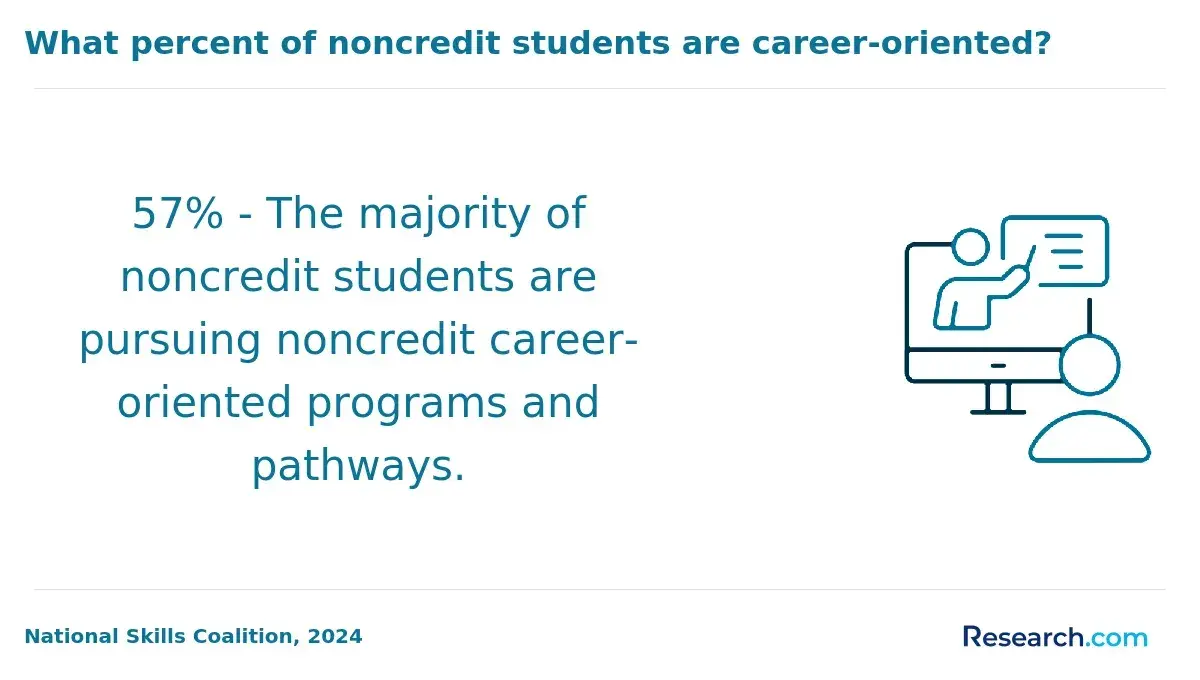
Federal financial aid is more common in eligible credit-bearing programs at approved institutions, while many noncredit professional certificates require self-payment, private financing, or employer tuition assistance. Do not assume a recognizable university name means a noncredit certificate transfers into a degree or qualifies for federal aid.
Are online certificate programs respected by employers?
Online certificate programs can be respected by employers when the provider is credible, the curriculum matches the role, and you can demonstrate the skill. For software, data, project management, IT support, and design roles, employers may focus heavily on portfolios, technical assessments, work samples, and industry certifications. Online delivery can also make part-time study practical for working adults.
Online learning is less suitable when a field requires clinical practice, shop equipment, supervised patient contact, or state-mandated in-person hours. Hybrid healthcare and trade programs can combine online theory with labs or placements, but students should confirm where those experiences occur and whether the school arranges them. Be cautious of programs that promise job placement, licensing eligibility, or unusually high salaries without publishing clear requirements and limitations.
How do accreditation and licensing affect certificate value?
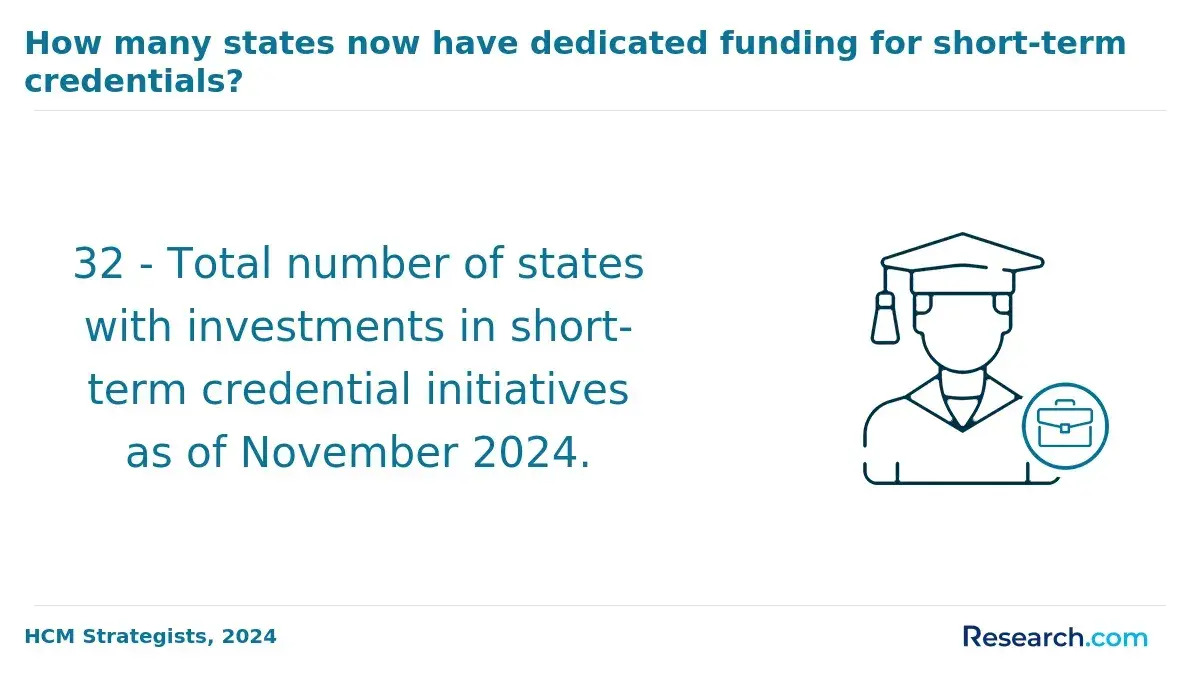
Accreditation and licensing can determine whether a certificate has practical value. Institutional accreditation evaluates a college or school, while programmatic accreditation evaluates a specific professional program. In regulated fields, the second type may be crucial because it can affect eligibility for licensure examinations, certification examinations, clinical placements, or employer hiring.
Before enrolling, verify the requirements with the relevant state licensing board and the credentialing organization rather than relying solely on an admissions representative. This is especially important for nursing, dental hygiene, respiratory therapy, sonography, radiologic technology, counseling, and other regulated occupations. For nonregulated fields such as design or many technology roles, recognized vendor certifications, portfolio quality, curriculum relevance, and employer demand may matter more than programmatic accreditation.
A common mistake is assuming that "approved" means approved everywhere. Licensure rules are state-specific, and an online program's eligibility statement should identify the states it serves, any restrictions, and whether clinical placements are available where you live.
What admission requirements do certificate programs usually have?
Admission requirements depend on the credential type and provider. A noncredit professional certificate may require only payment and basic computer access. A college certificate may require a high school diploma or equivalent, placement testing, prerequisite courses, or an application. Advanced certificates can require prior college coursework, a degree, work experience, or an existing license.
Healthcare and public-safety programs often add requirements because of clinical, legal, or safety responsibilities. Applicants may need immunizations, drug screening, a criminal background check, CPR training, physical capability documentation, or minimum grades in prerequisite science courses. These requirements are not universal, but missing one can delay enrollment or prevent placement.
Ask for the current admissions checklist in writing and confirm the sequence of prerequisites. If you have a criminal record, immigration-status question, prior academic issue, or licensing concern, seek individualized guidance before paying a nonrefundable deposit.
How long do professional certificate programs take to finish?
Professional certificate timelines range from a few weeks for focused online training to roughly one year or longer for credit-bearing, clinical, or lab-intensive programs. Duration alone does not show rigor: a self-paced course and a certificate with supervised clinical hours may have very different schedules and outcomes.
| Credential format | Typical timeline | Best fit | Main trade-off |
| Self-paced online professional certificate | Weeks to several months | Working adults building a defined digital or business skill | Usually noncredit and may not meet licensing requirements. |
| Community college career certificate | One or more academic terms | Entry-level technical, business, or allied-health preparation | Course sequencing can extend completion time. |
| Clinical or lab-based certificate | Several months to more than one year | Regulated or hands-on occupations | Fixed labs, placements, and eligibility requirements reduce flexibility. |
| Associate degree | Usually about two academic years full time | Roles needing general education, extensive clinical training, or advancement options | More credits and potentially higher total cost. |
If speed is your primary concern, compare the credential requirement first, then the calendar. Some learners may be better served by the fastest associate's degree online options, but confirm that an accelerated format includes every prerequisite, lab, and licensure component your target occupation requires.
What jobs can you get with a professional certificate?
Jobs available after a professional certificate vary by field, employer, and the credential's level. Certificates can support entry-level roles such as medical assistant, pharmacy technician, HVAC technician helper, welder, IT support specialist, bookkeeper, paralegal assistant, web designer, or digital marketing coordinator. Some roles require a separate industry certification, background clearance, apprenticeship, clinical training, or state license.
The most reliable approach is to start with job postings rather than program catalogs. Identify the entry-level titles you want, record the recurring requirements, and choose training that addresses those requirements. For people rebuilding employment options after a conviction, degrees felons can get may offer broader pathways, but occupational licensing and employer policies still need individual review.
Career changers should also distinguish between "can apply" and "is competitive." A certificate can open an application pathway, while internships, projects, supervised experience, and certifications may make a candidate more competitive.
How do you choose the best certificate program?
Choose the best certificate program by working backward from a defined job target. First determine whether the occupation requires a license, degree, apprenticeship, certification examination, or portfolio. Then compare programs only against that requirement. This prevents a common and expensive mistake: enrolling in a short program that does not make you eligible for the job you want.
Use this decision sequence to narrow your choices:
- Find 10 to 20 current local or remote job postings for your target entry-level role and note the recurring education, credential, software, and experience requirements.
- Confirm whether the occupation is regulated in your state and whether the program meets educational or clinical eligibility rules.
- Request the complete cost sheet and identify expenses beyond tuition, including exams, equipment, travel, and time away from work.
- Compare delivery format, instructor access, labs, clinical placements, career support, and refund terms with your work and family schedule.
- Ask whether credits transfer or stack into an associate or bachelor's degree if you may need more education later.
- Choose the program with the clearest connection to your target role, not the broadest promise or lowest advertised tuition.
If your target role eventually requires graduate study, a certificate may be a stepping stone rather than the endpoint. Explore quick master's degrees online only after confirming that a master's degree is genuinely requested for the role and that you meet its admission requirements.
Other Things You Should Know About
A professional certificate is usually awarded after completing an educational program. A certification is typically awarded by a professional or industry organization after meeting standards, which may include passing an exam or documenting experience. One program may prepare you for a separate certification, but completing it does not automatically grant that certification.
It can support access to well-paid occupations, particularly in regulated healthcare, skilled trades, and technical fields. However, high pay often also depends on licensing, supervised experience, geographic location, shift differentials, union status, and employer demand. Review the requirements for the occupation rather than assuming the certificate itself determines pay.
They can help for entry-level support, data, digital marketing, or design roles when paired with demonstrable skills, projects, and relevant certifications. For more advanced roles such as cybersecurity analyst or software engineer, employers may expect substantial experience, a degree, a portfolio, or multiple credentials.
Choose a certificate when you need focused, employer-recognized training for a specific entry-level role and do not need extensive general education. Choose an associate degree when the occupation requires it, when you want stronger transfer options, or when you need broader academic and clinical preparation for long-term advancement.
References
- Degree vs Certifications: What Employers Value Most in 2026 https://cccareersolutions.com/degree-vs-certifications-what-employers-value-most-2026/
- Highest Paying Certifications 2025-2026: IT, Cybersecurity, Medical & Career Growth Guide https://www.frontlinesourcegroup.com/blog-certifications-that-pay-the-most.html
- Should Companies Prioritize Skills Over Credentials? https://wearetrueline.com/should-companies-prioritize-skills-over-credentials/
- 20 Necessary IT Certifications + Salaries I Skillsoft - Skillsoft https://www.skillsoft.com/blog/top-paying-it-certifications
- Why Choosing the Right Certifications Can Help Your Career https://www.managementconcepts.com/resource/why-choosing-the-right-certifications-can-define-and-accelerate-your-career/
- NAVIGATING GLOBAL CERTIFICATION RECOGNITION: What Professionals need to know - Accential https://accentialtech.com/navigating-global-certification-recognition-what-professionals-need-to-know/
- The Ultimate Guide to IT Certifications: Which Path Is Right for Your Tech Career? - ONLC https://www.onlc.com/blog/it-certifications-guide/
- Top 10 Benefits of Professional Certification - Identity Management Institute® https://identitymanagementinstitute.org/top-10-benefits-of-professional-certification/
- How to Become a Certified Financial Planner: The Process | CFP Board https://www.cfp.net/certification-process
- Top 10 Best Certifications for Healthcare Administrators in 2026 https://clinxacademy.com/blog/best-certifications-for-healthcare-administrators