2027 Best Online Certifications With Financial Aid Options

Co-Founder and Chief Data Scientist
Choosing an online credential is difficult when "certificate," "certification," and "financial aid" can mean very different things. This guide helps career changers, working adults, and recent graduates compare credit-bearing college certificates, workforce programs, and industry certifications.
U.S. Bureau of Labor Statistics projections published in 2024 show healthcare support occupations are expected to grow faster than average from 2023 to 2033, underscoring the value of training tied to a specific role. Learn which programs may qualify for aid, what credentials employers recognize, and how to avoid paying for training that will not support your goal.
Key Things You Should Know
- Federal Pell Grants and federal loans generally require enrollment in an eligible program at a school that participates in federal student aid; most standalone vendor certifications and short noncredit courses do not qualify.
- For the 2025-26 award year, the maximum Federal Pell Grant is $7,395, but an eligible student's actual award depends on financial need, enrollment intensity, program cost, and other factors.
- Choose the credential backward from the job: a college certificate can build academic credit, while an industry certification usually verifies job skills through a vendor or professional body and may require a separate exam.
Top 10 Best Online Certifications With Financial Aid Options
Popular Trade School Programs
Online trade training works best for theory-heavy coursework paired with local labs, clinical practice, or apprenticeships. Common options include HVAC technology certificates, electrical technology certificates, welding technology certificates, construction management certificates, and automotive service programs. HVAC and electrical programs can prepare students for entry-level work, but state licensing, supervised hours, and exams may still be required. A credit-bearing certificate may stack into an associate degree; short proprietary programs often do not. Confirm where hands-on training occurs, whether tools and safety gear are included, and whether the curriculum aligns with state or employer requirements before enrolling.
Healthcare Programs
Online healthcare certificates commonly cover medical billing and coding, pharmacy technician preparation, medical assisting coursework, health information technology, and community health. They are not interchangeable: billing and coding may be fully online, while medical assisting and nursing-related programs require supervised clinical experiences. For regulated roles, verify that the program meets your state's rules and prepares you for any required certification exam. A college certificate can be credit-bearing and aid eligible when offered through an eligible institution. Employer-recognized certifications, such as coding credentials, may require separate examination fees and continuing education after program completion.
Criminal Justice / Law Programs
Online criminal justice certificates may focus on corrections, homeland security, crime analysis, legal studies, or cybersecurity fundamentals. Legal studies and paralegal certificates can help build research and document-preparation skills, but they do not authorize someone to practice law. Some employers prefer paralegal education approved by the American Bar Association, although ABA approval is not required for every position. Law-enforcement hiring usually involves agency-specific background checks, physical standards, academy training, and state requirements beyond online coursework. Choose a credit-bearing college certificate if you may later pursue an associate or bachelor's degree in criminal justice or legal studies.
Arts & Design Programs
Online arts and design certificates can develop portfolios in graphic design, digital media, UX design, animation, photography, or web design. These programs are usually most useful when they produce reviewable work samples and teach current software workflows. A college certificate may provide transferable credit, while a noncredit professional certificate may be faster and more portfolio-focused. Neither automatically establishes eligibility for a design job; employers often assess work quality, technical proficiency, and relevant experience. Before paying, ask whether software licenses, portfolio reviews, live critique, and career support are included in the total cost.
What online certifications have financial aid?
Online programs with financial aid are usually eligible college-based certificates rather than individual certification exams. Federal aid may be available when the school participates in Title IV aid programs and the student enrolls in an eligible certificate program that meets federal requirements. State grants, institutional scholarships, workforce-agency funding, veterans' education benefits, and employer tuition assistance can expand options.
The following comparison separates educational certificates from professional certifications so you can ask the right funding question.
| Credential type | Typical provider | Financial-aid likelihood | Best use |
| Credit-bearing academic certificate | Community college or university | May qualify for federal, state, and institutional aid if eligible | Career entry, academic credit, or degree pathway |
| Noncredit workforce certificate | College continuing education unit or training school | Often limited to workforce grants, employer aid, or payment plans | Short, skills-focused training |
| Professional certification | Vendor or professional association | Usually not eligible for federal student aid | Verifying a defined skill or professional standard |
Start by submitting the FAFSA if the program is offered by an eligible college. Then ask the financial-aid office whether the exact certificate's length, clock or credit hours, and enrollment status qualify. Learners seeking shorter skill training can also compare eligible online courses with employer reimbursement policies and local workforce funding.
Do not assume that a school's participation in federal aid makes every program eligible. A school may offer both aid-eligible academic programs and noncredit offerings that must be paid for separately.
How do online certificate programs compare with campus programs?
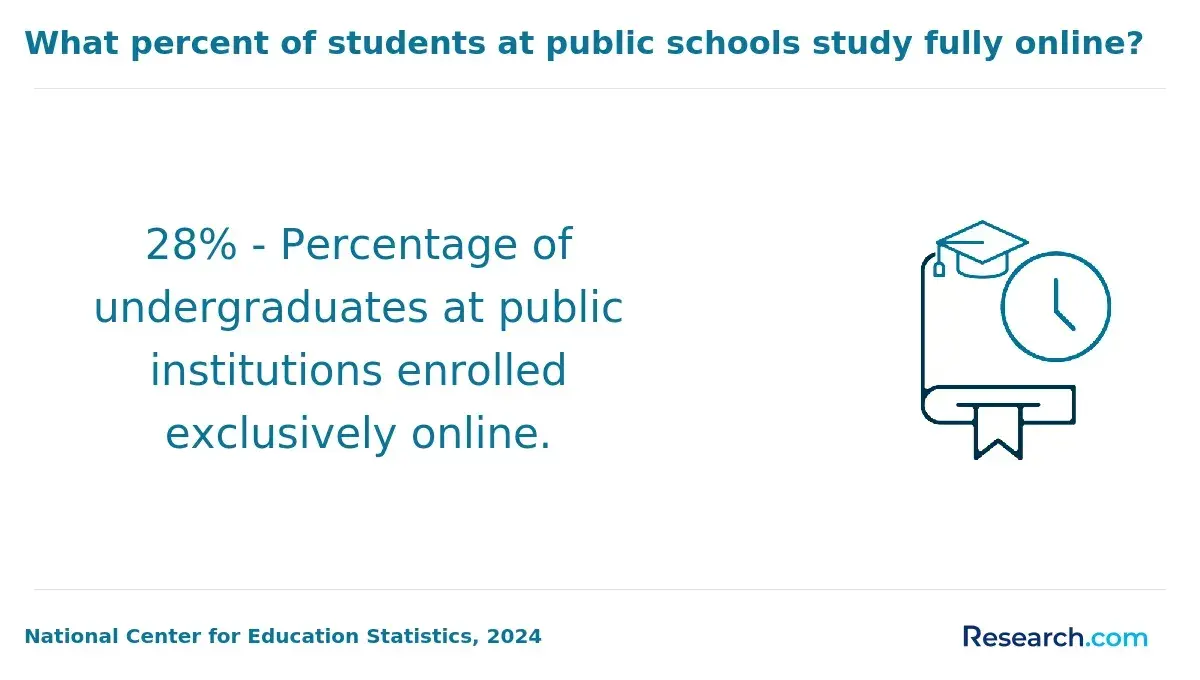
Online certificate programs can deliver the same academic content as campus programs, but they are not automatically equivalent. The better choice depends on whether the field requires equipment, clinical practice, supervised internships, networking, or a structured schedule. For primarily digital fields such as bookkeeping, coding, project coordination, or graphic design, online delivery may be highly practical. For electrical work, welding, patient care, and other hands-on occupations, a hybrid format is often more realistic.
This comparison highlights the trade-offs that matter before committing to a format.
| Factor | Online or hybrid certificate | Campus certificate |
| Schedule | Often asynchronous, with fixed deadlines or required virtual sessions | Usually scheduled classes and labs |
| Hands-on learning | May require approved local placement, intensives, or partner labs | Usually integrated on site |
| Networking | Requires intentional use of virtual events, faculty hours, and placements | More spontaneous contact with peers and local employers |
| Cost considerations | May reduce commuting and housing costs; technology and travel can still apply | May add commuting, parking, or relocation costs |
Self-directed learners may benefit from self paced online colleges, but flexibility is not the same as a lighter workload. Ask whether courses are asynchronous, whether attendance is required, and how quickly instructors respond. If you need accountability, lab access, or immediate coaching, campus or hybrid study may be the stronger investment.
Which online certifications are accredited and employer-recognized?
An accredited school and an employer-recognized credential answer different questions. Institutional accreditation evaluates a college or university; programmatic accreditation evaluates certain professional programs; an industry certification generally reflects standards set by a vendor or professional organization. For credit-bearing online certificates, verify the institution's accreditation status through the U.S. Department of Education or the Council for Higher Education Accreditation. For career training, check the credential against actual job postings and employer requirements in your target area.
Use the credential type and career goal together when evaluating recognition.
| Goal | What to verify | Potential red flag |
| Transfer to a degree | Institutional accreditation and written transfer-credit policy | Credits described as "transferable" without naming receiving institutions |
| Licensure pathway | State board requirements, required clinical or practicum hours, and program approval | Claims that online completion alone qualifies you for a license |
| Technology role | Alignment with employer-requested vendor certifications and current tools | Outdated curriculum or no exam-preparation detail |
| Healthcare support role | Eligibility for the relevant certification exam and local employer expectations | No explanation of externship, clinical, or exam requirements |
Recognition also changes by role. A Google, CompTIA, Microsoft, or similar industry certification may be useful for a specific technology skill, while a college certificate may be better for financial aid, credit accumulation, and a broader academic foundation. Request written confirmation of exam eligibility and transferability rather than relying on marketing language.
What are the admission requirements for online certificate programs?
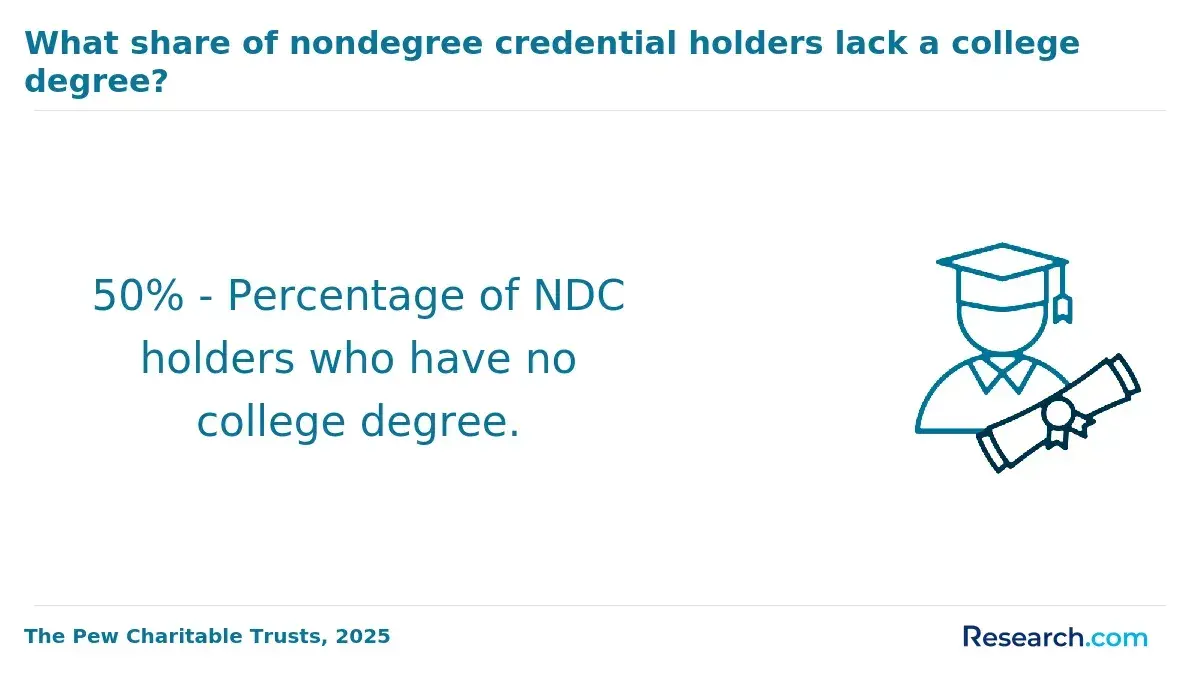
Admission requirements vary more by provider than by subject. Many undergraduate college certificate programs require a high school diploma, GED, or equivalent and an application; some require placement testing or prerequisites for math, writing, science, or technical coursework. Graduate certificates generally require a completed bachelor's degree. Noncredit professional programs may have minimal admissions screening but can still require prior knowledge, equipment, or a background check for placements.
Before applying, collect the details that determine whether you can start and finish on schedule.
- Ask whether the program is credit-bearing, noncredit, undergraduate, or graduate, because this affects admissions and aid eligibility.
- Confirm prerequisites, technical specifications, required software, and any clinical, lab, internship, or proctored-exam obligations.
- For regulated fields, ask whether background checks, immunizations, drug screening, CPR training, or state-specific documentation are required.
- Obtain the policy for transfer credit, prior-learning credit, withdrawal, and leave of absence in writing.
A low-barrier admission process is not necessarily a problem, but it should not replace evidence of academic support, instructor access, and a clear completion pathway. Programs promising instant enrollment should still provide a complete catalog, tuition disclosure, and credential requirements.
How much do online certifications cost after financial aid?
The amount you pay after financial aid can range from $0 to the full program price, depending on your aid eligibility, school, enrollment level, and living expenses. Tuition is only one part of the decision. The National Center for Education Statistics reported that the average published tuition and fees at U.S. public two-year institutions was $3,990 for the 2022-23 academic year; individual certificate prices and net costs can differ substantially from that broad institutional average.
Compare the complete price rather than a promotional monthly payment or a single tuition figure.
| Cost category | Why it matters | How to check it |
| Tuition and mandatory fees | Forms the base charge and may vary by residency or credit load | Request the program-specific tuition schedule |
| Books, equipment, and software | Can be substantial in trade, design, and technical programs | Ask for a required-materials list |
| Exam, licensing, and background-check fees | May be needed after or during training | Confirm whether each fee is included |
| Travel, clinical, and lab costs | Online programs may still require in-person participation | Identify placement locations and attendance dates |
Use the school's net-price information and financial-aid offer to estimate your out-of-pocket amount. Grants and scholarships do not normally need repayment; federal loans do. If the certificate has limited transfer value or uncertain job relevance, borrowing heavily can create a poor return even when monthly payments appear manageable.
How long do online certification programs take to finish?
Online certifications and certificates can take anywhere from a few weeks to more than a year, but the timeline depends on the credential type. Self-paced industry certificate courses may be completed quickly by experienced learners, while credit-bearing college certificates often follow academic terms. Programs requiring clinicals, labs, apprenticeships, or proctored exams can take longer than their online course sequence suggests.
Estimate your realistic completion time by looking beyond the advertised duration.
- Divide total credit or clock hours by the number of courses you can take while working and managing family responsibilities.
- Check whether courses must be completed in sequence, especially when prerequisites limit entry to later classes.
- Identify fixed clinical, practicum, lab, or exam dates that may delay completion.
- Ask whether the program has a maximum time limit and whether pauses affect financial aid or course access.
Accelerated study is most appropriate when you already have the prerequisites, enough weekly study time, and reliable access to required technology or placements. A slower, part-time path can be more sustainable and may reduce the risk of withdrawing and losing progress.
What jobs can online certifications qualify you for?
An online credential can strengthen candidacy for jobs when its curriculum matches a defined entry-level task, employer requirement, or advancement need. It is not a universal substitute for a degree, license, apprenticeship, portfolio, or work experience. For example, a medical coding certificate can prepare a learner for coding-related certification exams, while a cybersecurity certificate may support help-desk or junior security pathways when paired with technical practice.
The occupations below show why career alignment matters. Median pay is for the occupation, not a promise of earnings after completing any certificate.
| Career direction | Relevant training example | May also require | U.S. median annual pay |
| Computer support | IT support certificate or vendor certification preparation | Hands-on troubleshooting experience | $60,810 for computer user support specialists, May 2024 |
| Medical records and coding | Health information or coding certificate | Employer-preferred coding certification | $50,250 for medical records specialists, May 2024 |
| Graphic design | Digital design certificate and portfolio | Portfolio and software proficiency | $61,300 for graphic designers, May 2024 |
| Paralegal support | Paralegal or legal studies certificate | Employer-specific education preference | $61,010 for paralegals and legal assistants, May 2024 |
For roles where employers typically expect a longer academic pathway, compare certificate training with online associate degrees. An associate degree may make more sense when a role requires broad general education, substantial clinical training, or a credential that is commonly used for transfer to a bachelor's program.
How much can you earn with an online certification?
Earnings depend primarily on occupation, location, experience, employer, schedule, and licensure - not simply on holding an online certificate. The Bureau of Labor Statistics reported a May 2024 median annual wage of $49,500 across all occupations. Use occupational wage data as a market benchmark, then compare it with entry-level postings in your area and the program's documented outcomes, if available.
A certificate may be a strong investment when it fills a clear skill gap at a modest net cost, qualifies you for a required exam, or creates a stackable route toward a degree. It may be less compelling when the target job normally requires licensure or a degree that the program does not provide. Be especially cautious of schools that cite high salaries without identifying the occupation, geographic area, sample size, or time period.
If maximizing long-term earnings is your primary goal, review broader education paths alongside training options, including degrees that pay well. A shorter credential can still be valuable as an entry point, but it should fit a documented career ladder rather than replace needed education.
How do you choose the best online certification program?
The best online certification with financial aid is the one that meets your target role's requirements at a manageable net cost and in a format you can complete. Start with job postings, not school advertising: identify the credential, software, license, degree level, and experience employers repeatedly request. Then compare only programs that clearly address those requirements.
Use this sequence to make a practical, lower-risk decision.
- Name the job you want within the next one to three years and review local entry-level postings for common requirements.
- Decide whether you need an academic certificate, an industry certification, a license-qualifying program, or a degree pathway.
- Verify the provider's accreditation or industry standing and confirm any exam, practicum, or licensing eligibility in writing.
- Calculate total cost after grants, scholarships, employer assistance, and realistic borrowing, including supplies and exam fees.
- Compare delivery format, student support, completion timeline, refund policy, and transfer or stackability options before enrolling.
Common mistakes include treating a certificate as a certification, assuming "online" means no in-person requirements, and enrolling before confirming aid eligibility. Avoid programs that guarantee employment, hide total costs, pressure you to sign immediately, or cannot explain how the credential connects to a specific occupation. A credible school should provide a catalog, clear policies, qualified instructor information, and a direct answer about whether its program leads to academic credit, exam eligibility, or licensure preparation.
Other Things You Should Know About
Possibly. You generally need to enroll in an eligible certificate program at a school that participates in federal student aid. Complete the FAFSA and ask the school whether the specific online program qualifies; not every nondegree or noncredit offering does.
They can be, particularly when they come from a recognized college, professional association, or technology vendor and teach skills shown in job postings. Employers usually care more about the credential's relevance, verified skills, portfolio, experience, and any required license than about online delivery alone.
No. A certificate is typically awarded for completing an educational program. A professional certification is awarded by a certifying organization after meeting its standards, often including an exam, and may require renewal or continuing education.
Some credit-bearing college certificates may transfer or stack into an associate or bachelor's degree, but transfer is never automatic. Confirm the receiving institution's written policy before enrolling, especially if completing a degree is part of your plan.
References
- Apply for financial aid https://www.coursera.support/s/article/learner-000001455
- How to finance edX courses | edX https://www.edx.org/resources/how-to-get-financial-assistance-for-edx-courses
- College Enrollment under California's New Financial Aid Application Policy https://www.ppic.org/publication/college-enrollment-under-californias-new-financial-aid-application-policy/
- Understanding Financial Aid Eligibility and the FAFSA Process https://www.innovativecpagroup.com/resources/newsarticles/understanding-financial-aid-eligibility-and-the-fafsa-process/
- FAFSA Guide for Business Schools | Accounting.com https://www.accounting.com/resources/fafsa-guide/
- How Much Does It Cost to Build an Online Course? https://onedtech.philhillaa.com/p/how-much-does-it-cost-to-build-an-online-course
- Cost of Online College vs. Traditional | Champlain College Online https://online.champlain.edu/blog/cost-of-online-education-vs-traditional-education
- Can You Get Financial Aid for Online College? Finding Out https://beal.edu/can-you-get-financial-aid-for-online-college/
- Explore Online Certificate Programs Approved by FAFSA https://www.edumed.org/online-schools/fafsa-approved-certificate-programs/
- Comprehensive On-Demand Training: Foundation of Financial Aid https://www.nacacnet.org/foundations-of-financial-aid/