2027 Best Certificate Programs With Conditional Admission

Co-Founder and Chief Data Scientist
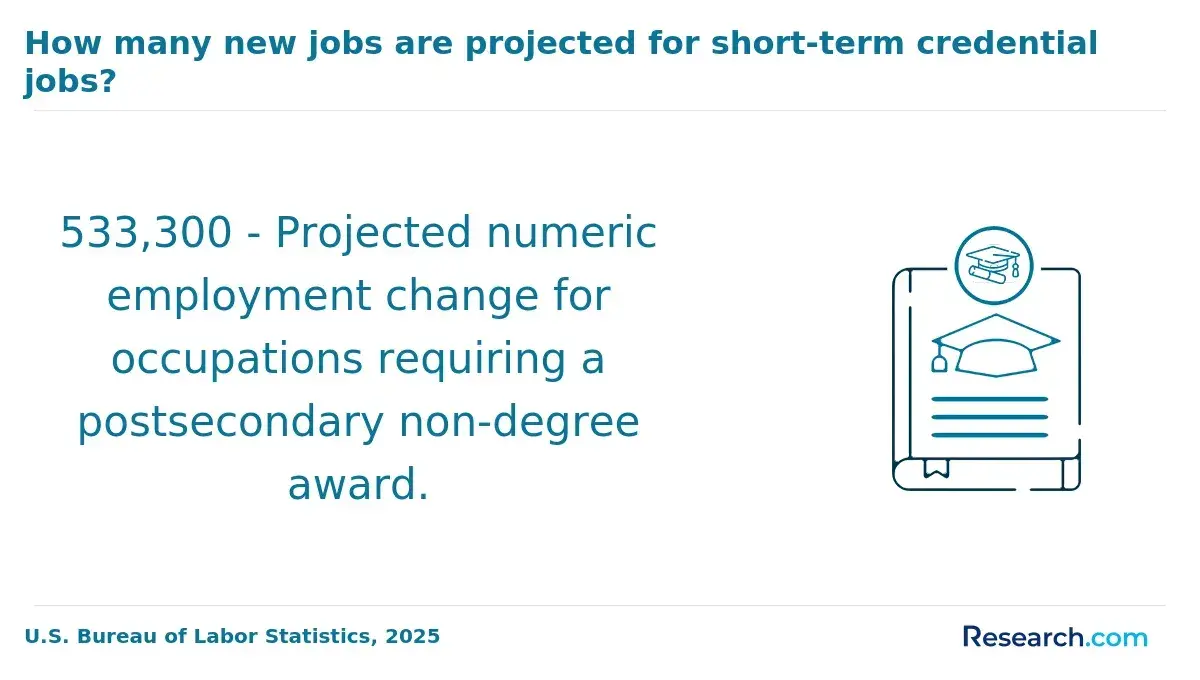
Conditional admission can be a practical route when you are ready to build job skills but do not yet meet every standard admissions requirement. U.S. Bureau of Labor Statistics projections show total employment is expected to add about 5.2 million jobs from 2024 to 2034, with many opportunities tied to technical and healthcare training. This guide explains how conditional certificate admission works, which programs may fit your goals, what to verify before paying tuition, and when a degree, certification, apprenticeship, or other path may be the stronger investment.
Key Things You Should Know
- Conditional admission is not automatic acceptance: students commonly must complete developmental, English-language, prerequisite, GPA-recovery, or first-term coursework before moving into the intended certificate sequence.
- Career value depends on the field and credential type. A college certificate may build job-ready skills or academic credit, while a separate industry certification or state license may still be required for employment.
- Compare total cost, accreditation, licensing eligibility, scheduling, and completion conditions - not tuition alone - before enrolling. BLS projects about 5.2 million additional U.S. jobs from 2024 to 2034, but demand varies substantially by occupation.
Top 10 Best Certificate Programs With Conditional Admission
Popular Trade School Programs
Conditional entry can help students begin foundational math, safety, or communications courses before entering selective lab-based training. Common options include electrical technology, HVAC/R, welding, automotive service, plumbing, industrial maintenance, and construction management certificates. An associate degree may offer more general education and supervisory preparation, while a short certificate is often better for a focused entry-level skill. Apprenticeship remains a stronger route for many electrician and plumbing careers because paid supervised experience and state requirements can matter more than a classroom certificate alone.
Healthcare Programs
Healthcare conditional-admission pathways may include medical assisting, pharmacy technician, nursing assistant, practical nursing prerequisites, dental assisting, medical billing and coding, and sterile processing. Schools may admit students conditionally while they finish anatomy, background checks, immunizations, placement testing, or required English coursework. A certificate can prepare students for an employer-recognized examination, but it is not itself a professional certification. Programs involving patient care should be evaluated especially carefully because clinical placement, state rules, and licensing or certification eligibility can determine whether the training leads to usable employment options.
Criminal Justice / Law Programs
Legal studies, paralegal studies, criminal justice, homeland security, corrections, and court reporting programs may offer conditional admission for applicants who need academic support or prerequisite completion. A paralegal certificate is generally an educational credential; it does not authorize independent legal practice or make someone an attorney. An associate degree may be preferable for candidates seeking broader criminal justice coursework or transfer options. Before choosing online study, check whether local employers value the program, whether internships are available, and whether any state-specific court reporting or legal-support requirements apply.
Arts & Design Programs
Conditional admission is common in creative fields when an applicant needs to strengthen a portfolio, software skills, academic writing, or English proficiency. Options include graphic design, web design, digital media, photography, animation, UX design foundations, fashion design, and interior design support programs. A short certificate can help career changers develop a portfolio quickly, while an associate degree may provide broader critique, studio, and general education experience. Students should confirm which software, hardware, portfolio reviews, internships, and professional credentials are expected in their intended specialty.
What are certificate programs with conditional admission and who are they best for?
A certificate program with conditional admission is an educational program that allows an applicant to enroll before fully satisfying all standard entry requirements. The acceptance usually comes with written conditions, such as passing developmental coursework, maintaining a specified GPA during an initial term, completing missing prerequisites, submitting final records, or demonstrating English proficiency.
These programs are often best for adult learners returning to school, applicants with a weak or incomplete academic record, students changing careers, international students completing language requirements, and recent high school graduates who need foundational support. The exact credential may be a credit-bearing college certificate, a noncredit workforce certificate, or a short career-training program; the provider should clearly state which one it is.
Conditional admission is less suitable when your target occupation requires immediate entry into a tightly regulated clinical or licensing sequence, or when you already qualify for direct admission to a program with better transfer, aid, or advising options. It is also not a substitute for required licenses, background clearances, clinical eligibility, or industry examinations.
How do conditional admission certificate programs work at accredited U.S. colleges?
At an accredited U.S. college, conditional admission generally creates a monitored starting period rather than a permanent exception to admissions rules. The school identifies what is missing, documents the deadline, and limits or permits course registration accordingly. Conditions may apply to admission to the college, admission to a specific certificate, or progression into a clinical, lab, or internship component.
The most important distinction is whether the certificate is credit-bearing. Credit-bearing certificates may be eligible for institutional aid policies and may have stackable courses that count toward an associate degree, but neither result is automatic. Noncredit workforce programs can be faster and more focused, yet commonly have different financing, transfer, and admissions systems.
Ask the admissions office to confirm the following in writing before accepting an offer:
- The exact condition, deadline, and academic standard required for full admission.
- Which courses you can take before the condition is cleared and whether those credits apply to the certificate.
- What happens if you miss the benchmark, including dismissal, course restrictions, appeal options, and refund implications.
- Whether successful completion leads to program admission or merely permission to reapply.
Conditional entry can be useful when it provides structured support and a transparent pathway. It is a red flag when a provider cannot explain progression rules, uses vague promises of "guaranteed acceptance," or will not identify the credential awarded.
What admission requirements and documents are needed for conditional entry?
Requirements vary by college and program, but conditional applicants usually submit enough information for the school to assess readiness and identify missing items. More selective healthcare, public-safety, and technical programs can require additional compliance documents before hands-on training begins.
Applicants should prepare for the following common requests:
- Completed application, identification, and residency information where applicable.
- High school transcript, GED record, or prior college transcripts.
- Placement results or evidence of required math, writing, reading, or English-language proficiency.
- Documentation of prerequisite courses, transfer-credit evaluations, or a plan to complete missing prerequisites.
- Program-specific items such as a portfolio, interview, aptitude assessment, immunization records, drug screening, background check, or physical examination.
Do not assume a low GPA means every option is closed. Some colleges emphasize placement, prerequisite performance, or a probationary first term instead. Conversely, do not assume conditional institutional admission grants entry to a limited-enrollment program. Nursing, dental, and clinical programs often use separate competitive selection processes.
If a four-year degree better matches your long-term goal, compare the admissions pathway and eventual credit value with a cheap online bachelor degree. The right choice depends on whether you need rapid job skills now or broader advancement and transfer options later.
How do online and campus-based conditional certificate programs compare for flexibility and support?
Online conditional certificate programs can make it easier to complete academic support courses around work and family responsibilities. Campus-based options can offer more immediate access to labs, equipment, tutoring, instructors, and peer accountability. Hybrid delivery is common where lecture content can be online but skills assessment must occur in person.
This comparison highlights the trade-off between convenience and hands-on support.
| Factor | Online or hybrid certificate | Campus-based certificate |
| Schedule | Often offers asynchronous coursework and fewer commuting demands. | Usually follows fixed meeting times and may suit learners who prefer routine. |
| Hands-on training | May require local clinical sites, intensives, proctored exams, or campus labs. | Typically provides regular access to equipment, labs, and supervised practice. |
| Conditional support | Depends on virtual tutoring, advising responsiveness, and online orientation. | May make it easier to use in-person tutoring and meet instructors. |
| Best fit | Self-directed learners whose field does not require frequent campus lab work. | Students needing structure or entering trades and clinical fields with extensive practice. |
For online study, verify whether the school can serve students in your state and whether required practicums can be arranged locally. Learners focused on flexible, job-oriented options can also compare online certificate programs that pay well, while remembering that a certificate's career relevance depends on employer demand and any required licensing.
What fields offer the strongest career outcomes for conditional admission certificates?
The strongest conditional-admission certificate path is not simply the shortest one. It is the one that aligns with a specific entry-level role, local hiring needs, required credentials, and a realistic next step. Healthcare support, skilled trades, information technology support, business operations, and legal support can offer clearer role definitions than broad, unstructured general certificates.
Use this comparison to match the field to the kind of outcome you need.
| Field | Potential certificate focus | Important career consideration |
| Skilled trades | HVAC/R, welding, electrical foundations, industrial maintenance | Apprenticeship, supervised hours, and state rules may be more important than the certificate alone. |
| Healthcare support | Medical assisting, pharmacy technology, billing and coding | Check clinical placement, employer preferences, examination preparation, and state scope-of-practice rules. |
| Information technology | IT support, networking foundations, cybersecurity foundations | Projects and industry certifications can complement a college certificate. |
| Legal support | Paralegal studies, legal office administration | Internships, writing skills, and local employer expectations can affect entry-level prospects. |
| Design and digital media | Graphic design, web design, digital production | A current portfolio often carries significant weight in hiring decisions. |
For occupations where employer-recognized testing is central, compare training with certifications that pay well. A certification exam may validate a specific competency, while a college certificate generally documents completion of a course of study; some career paths benefit from both.
How long do conditional admission certificate programs take and what do they cost?
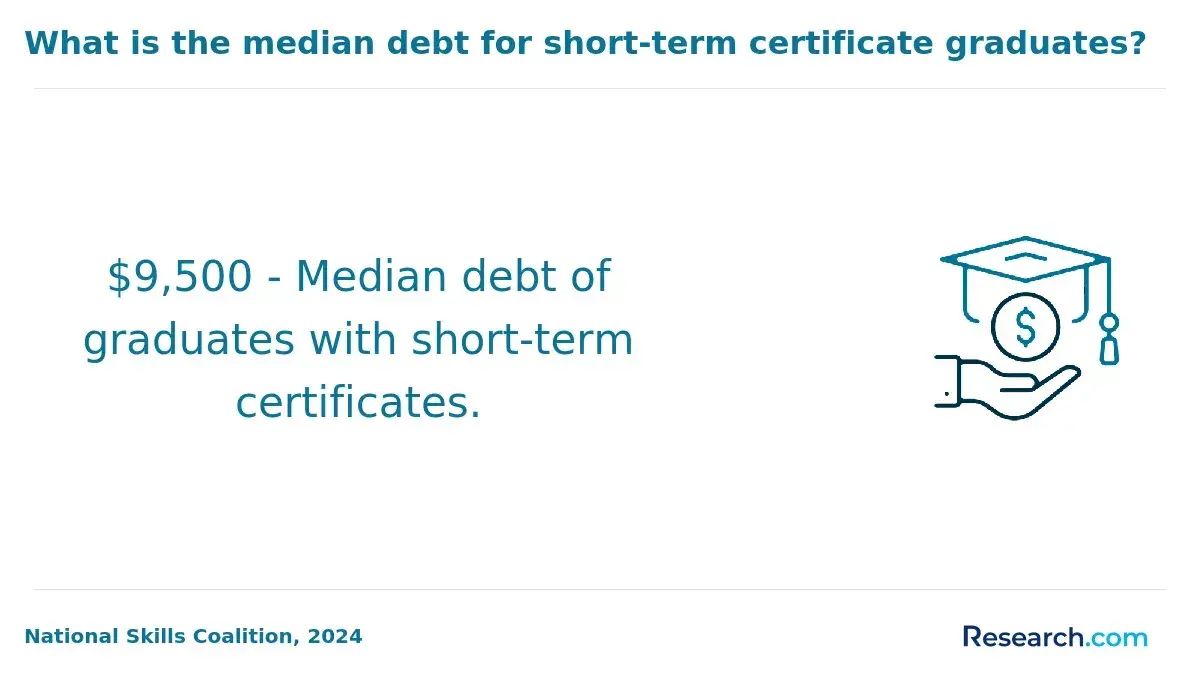
Many conditional-admission certificates take roughly one semester to one year when studied full time, though prerequisite work, limited course sequencing, clinical placements, and part-time schedules can extend the timeline. Associate degrees generally require more credits and often take about two years of full-time study. A condition that requires developmental coursework may add time without always adding credits toward the certificate.
Total cost should include more than published tuition. The table identifies expenses that commonly change the actual investment.
| Cost factor | Why it matters | What to confirm |
| Tuition and mandatory fees | Rates can differ by residency, delivery format, and credit load. | Ask for the full program estimate, not a per-credit figure alone. |
| Tools, books, software, and uniforms | Trade, healthcare, and design programs can have substantial required materials. | Request a required-item list before enrollment. |
| Testing, licensing, and background checks | These may be necessary for a next step but may not be included in tuition. | Ask which costs are mandatory and which are optional. |
| Lost work time and travel | Clinical rotations, labs, and externships can affect work schedules. | Confirm meeting times, locations, and attendance rules. |
Ask whether the certificate is eligible for federal, state, institutional, workforce, veteran, or employer funding; eligibility depends on the program and student circumstances. Be wary of making a borrowing decision before seeing the net price and the cost of required supplies. A low tuition figure can still produce a poor fit if the program lacks the equipment, clinical placement, or transfer value you need.
What coursework and skills do students typically gain in conditional admission certificates?
Conditional-admission certificates usually combine foundational academic support with career-specific content. The coursework should directly address the reason for conditional entry while moving students toward measurable technical competencies. In a credit-bearing program, some courses may be stackable toward a later certificate or associate degree, but the registrar - not a recruiter - should confirm that policy.
Students commonly build skills in these areas:
- Workplace communication, documentation, digital literacy, and professional conduct.
- Applied math, reading, writing, or English-language skills needed for program-level coursework.
- Field-specific safety, ethics, privacy, compliance, equipment, software, or procedural knowledge.
- Problem-solving through labs, simulations, projects, portfolios, or supervised practice.
- Career preparation such as resume development, interviewing, externship readiness, or certification-exam preparation when offered.
Automation and AI tools are changing administrative, IT, design, and business workflows, so prioritize programs that teach responsible technology use alongside core occupational skills. A program that only teaches a single software product may age quickly; one that teaches transferable workflows, communication, troubleshooting, and portfolio evidence can be more durable.
What salaries, job roles, and growth outlook are linked to these certificates?
Salary data describes occupations, not a guaranteed outcome for certificate graduates. Education requirements differ by employer and state, and many roles require experience, apprenticeship, certification, licensure, or an associate or bachelor's degree in addition to a certificate. Still, occupational data can help you assess whether a program points toward a field with credible demand.
The following BLS 2024 median pay and 2024-2034 employment projections provide broad U.S. labor-market context for related occupations.
| Occupation | 2024 median pay | Projected change, 2024-2034 | Certificate-path limitation |
| Electricians | $62,350 | 9% | A certificate may support entry, but apprenticeship and licensing requirements commonly apply. |
| Medical assistants | $44,200 | 12% | Employers may prefer certification; duties and requirements vary by state and setting. |
| Paralegals and legal assistants | $61,010 | -1% | A certificate can be relevant, but it does not permit practicing law. |
| Graphic designers | $61,300 | 2% | Portfolio quality, software skills, and experience may be decisive in hiring. |
The figures show why occupation-specific research matters. Healthcare support and electrical work have stronger projected growth than paralegal and graphic design roles in these BLS projections, but local openings, schedule demands, and entry requirements should decide the program choice. If a certificate does not clearly map to a job title, required credential, or employer skill need, consider a broader degree path; some learners may find an easiest bachelors degree more useful for roles that require four-year credentials.
How can students verify accreditation, licensing alignment, and program quality before enrolling?
Program quality checks are essential because conditional admission can make an offer feel urgent. Accreditation and licensing alignment are separate issues: institutional accreditation evaluates the college, while programmatic accreditation may apply to a particular discipline. Licensing boards and employers may impose additional standards.
Before enrolling, take these practical steps:
- Verify the college's institutional accreditation through the accreditor and the U.S. Department of Education database, then confirm any programmatic accreditation required in your field.
- Ask the relevant state licensing board whether the specific program meets education requirements, especially for nursing, cosmetology, electrical work, counseling, and other regulated occupations.
- Get the conditional-admission terms, total-cost estimate, completion timeline, and policy for failed conditions in writing.
- Confirm whether classes are credit-bearing, whether credits transfer or stack, and whether the school will evaluate prior learning or transfer credit.
- Request outcomes information that defines the cohort, timeframe, job titles, and methodology rather than relying on unsupported placement claims.
- Speak with an advisor about clinical sites, externships, lab access, certification-exam preparation, and state authorization for online learning.
Common red flags include pressure to enroll before you can review policies, vague statements about accreditation, claims that a certificate "guarantees" a license or job, unclear extra fees, and refusal to explain what happens if you do not meet the condition. A legitimate school should answer these questions directly and allow time for comparison.
Other Things You Should Know About
Possibly. Some colleges offer conditional admission, placement-based entry, probationary enrollment, or prerequisite pathways. However, selective clinical and limited-enrollment programs may still require a minimum GPA in prerequisite courses.
Not necessarily. It means you have an offer that depends on meeting stated conditions. Confirm whether you are admitted to the college, the certificate program, or only eligible to begin preparatory coursework.
Eligibility depends on the institution, the program's credit status and length, enrollment level, and the student's federal and state aid eligibility. Ask the financial aid office about your specific program before enrolling.
They can be, but verify institutional accreditation, state authorization, faculty support, proctored testing, lab or clinical arrangements, and whether the credential meets employer, certification, or licensing expectations in your state.
References
- What is Conditional Admission? https://info.reach.edu/support/what-is-conditional-admission
- 75+ Free Certifications to Boost Your Career in 2026 https://www.jobscan.co/blog/5-certifications-add-resume-free/
- Access to college preparatory coursework https://educationtoworkforce.org/indicators/access-college-preparatory-coursework
- Conditional Admission to Colleges and Universities | ELS https://www.els.edu/university-programs/conditional-admission
- What Is Conditional Admission? How Does It Work? https://blog.prepscholar.com/what-is-conditional-admission
- Professional Business Certifications to Boost Your Career in 2025 https://www.business.com/articles/best-business-certifications/
- Pathways to College Completion in the Inland Empire - Public Policy Institute of California https://www.ppic.org/publication/pathways-to-college-completion-in-the-inland-empire/
- Which Online Certification Programs Are Recognized by Employers in the U.S.? https://fellow.msicertified.com/blog/which-online-certification-programs-are-recognized-by-employers-in-the-u-s
- Success Rates Summary https://www.mischooldata.org/success-rates-summary/
- The Top 5 Certificate Programs for Jobs With Growth Potential | CourseStorm https://www.coursestorm.com/blog/top-certificate-programs-for-jobs