2027 Best Online Certifications With No Application Fee

Co-Founder and Chief Data Scientist
A waived application fee can remove an immediate barrier, but it does not make an online certificate free - or automatically career-ready. This guide is for career changers, working adults, and recent graduates comparing credit-bearing college certificates, noncredit career training, and industry certifications. The Bureau of Labor Statistics projects healthcare support occupations to grow faster than average from 2024 to 2034, illustrating why short, targeted training remains attractive. Learn how to identify legitimate no-fee options, calculate total costs, verify recognition, and match a credential to the job or license you want.
Key Things You Should Know
- A no application fee means the provider does not charge to submit an application; tuition, course materials, exams, background checks, equipment, and licensing costs may still apply.
- Choose the credential type first: college certificates may carry academic credit, while professional certifications usually require an independent exam or experience; neither term means the other.
- For cost context, the maximum Federal Pell Grant for the 2025-26 award year is $7,395, but eligibility generally applies only to qualifying programs at participating institutions.
Top 10 Best Online Certifications With No Application Fee
Popular Trade School Programs
Online trade certificates often cover construction management, HVAC theory, electrical fundamentals, welding safety, automotive service concepts, and logistics. They work best for learners who need classroom knowledge before supervised labs, apprenticeships, or employer training. Hands-on trades rarely qualify a student for work solely through online study: HVAC refrigerant handling requires EPA certification, while electricians commonly need state-regulated apprenticeship hours. Compare required lab attendance, tools, exam preparation, and local employer recognition before enrolling. A credit-bearing certificate can be useful when it stacks into an associate degree; a short noncredit course may be better for basic upskilling.
Healthcare Programs
Common online healthcare options include medical billing and coding, health information technology, pharmacy technician coursework, medical assisting theory, and community health certificates. These programs can suit detail-oriented learners, but clinical roles usually require in-person skills training, externships, background checks, immunizations, and sometimes state approval. Coding certificates may prepare students for credentials such as CPC or CCS, but certification exams are separate from school completion. Prioritize programs that clearly disclose practicum arrangements, whether coursework meets employer expectations, and whether credits apply toward an associate degree in health information or a related field.
Criminal Justice / Law Programs
Online certificates in criminal justice, legal studies, paralegal studies, homeland security, and cybersecurity law introduce legal procedure, ethics, report writing, and evidence concepts. They can support administrative, compliance, victim-services, or security-related work, but they do not make a graduate an attorney, police officer, or licensed private investigator. Paralegal hiring standards vary widely; some employers prefer programs approved by the American Bar Association, which typically involve substantial in-person components. Choose a credit-bearing program if you may later pursue an associate or bachelor's degree, and verify local hiring expectations before paying for exam preparation.
Arts & Design Programs
Online arts and design certificates commonly focus on graphic design, UX design, digital marketing design, web design, photography, animation, or video editing. A portfolio usually matters more to employers than the certificate title alone, so select programs with project feedback, current software instruction, and portfolio-building assignments. Noncredit professional certificates can be efficient for software-specific skills, while college certificates may offer transferable credits and broader design foundations. Account for software subscriptions, a capable computer, and portfolio hosting when comparing total costs. Avoid programs promising employment without reviewing student work and instructor experience.
What types of online certifications can you earn with no application fee?
Online credentials with no application fee range from college-based academic certificates to vendor-issued professional certifications. The right choice depends on whether you need college credit, a recognized exam credential, practical training, or a pathway into a degree.
This comparison separates options that are often incorrectly treated as interchangeable.
| Credential type | Typical provider | What it demonstrates | Best use |
| Academic certificate | Community college or university | Completion of a defined, often credit-bearing curriculum | Entry-level preparation or degree stackability |
| Professional certificate | College, university, or training provider | Completion of career-focused instruction | Skill development and portfolio or job-search support |
| Industry certification | Certifying body or technology vendor | Meeting an external standard, usually through an exam | Employer-recognized technical or professional validation |
| Microcredential | College or online platform | Focused competency in a narrow subject | Rapid upskilling or exploring a field |
For learners seeking a structured, employment-focused option, compare online courses with certificates by their provider, assessments, employer relevance, and total price - not simply by the absence of an application charge. A no-fee application is most valuable when it lets you apply to several credible programs before committing.
How do you verify that a no-fee online certification program is properly accredited?
Accreditation matters most for credit-bearing college certificates, federal aid eligibility, transfer credit, and regulated careers. Institutional accreditation evaluates the college as a whole; programmatic accreditation evaluates selected professional programs. Noncredit providers and vendor certifications may not be accredited because they are not academic institutions, but they should still disclose who issues the credential and how employers recognize it.
Use these checks before supplying personal information or paying a deposit.
- Confirm that a college is listed in the U.S. Department of Education's Database of Accredited Postsecondary Institutions and Programs.
- Check whether your intended healthcare, technical, or legal-support field requires programmatic approval, clinical placement standards, or board approval.
- Ask whether the exact online track - not only the campus program - meets the relevant requirements.
- Verify the credential issuer, exam vendor, renewal rules, and employer acceptance for noncredit or industry credentials.
- Get written confirmation of transfer-credit and licensure statements rather than relying on general marketing language.
A common red flag is a school that claims "accreditation" without naming the accreditor or links only to a private membership organization. If you want to compare institutions before applying, review online colleges no application fee and then independently verify each school's current status.
What admission requirements do no-application-fee online certification programs typically have?
Admission requirements vary sharply by credential type. A college certificate may request an online application, identity documentation, high school completion evidence, placement information, and residency details. A noncredit course may require only payment and a learner account. An industry certification generally has registration requirements rather than college admission, although some exams recommend prior training or documented work experience.
The following comparison helps applicants avoid assuming that "no application fee" means "no requirements."
| Program format | Common entry requirement | Important limitation |
| Undergraduate college certificate | High school diploma, GED, or equivalent | Selective or clinical programs can add prerequisites and screenings |
| Graduate certificate | Bachelor's degree, often in a related field | May require a minimum GPA or professional background |
| Noncredit career training | Age, computer, and language readiness | May not award transferable academic credit |
| Industry certification exam | Exam registration; sometimes recommended experience | Training completion may not waive exam requirements |
Do not pay for preparatory classes until you confirm prerequisites, required technology, time zone for proctored exams, and any practicum eligibility. Applicants who need a low-barrier academic starting point can also explore easy online college courses, while remembering that "easy" should never replace career relevance or academic quality.
How much do online certifications without application fees cost overall, and what financial aid is available?
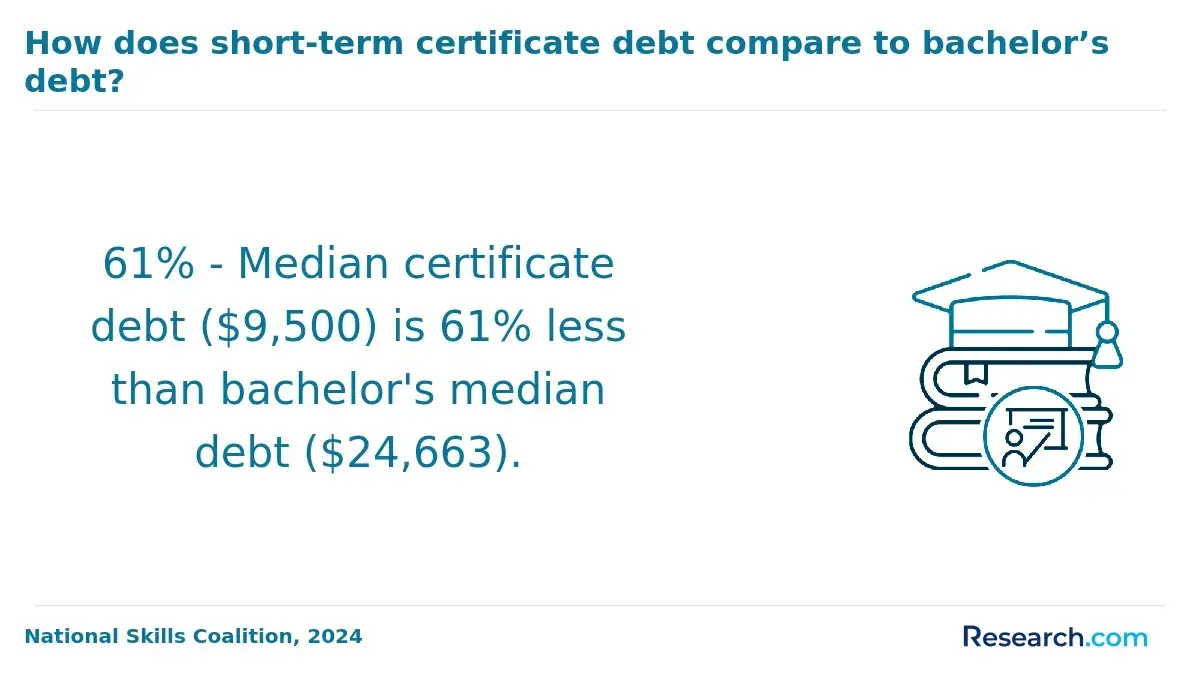
No application fee is only one line in the budget. Total cost can include per-credit tuition or course fees, textbooks, software, exam vouchers, proctoring, lab kits, travel for clinicals or skills testing, background checks, and credential renewal. Public community colleges can offer lower tuition for in-district residents, while private and third-party providers may price short programs as a single package.
Build a complete comparison before deciding which option is genuinely affordable.
| Cost category | Questions to ask | Why it matters |
| Tuition or course price | Is pricing per credit, per term, or per program? | Accelerated schedules can change the number of terms billed |
| Required materials | Are books, software, kits, and uniforms included? | Extra purchases can materially change a low advertised price |
| External exam | Is the certification exam voucher included? | Many certificates prepare for, but do not include, the credentialing exam |
| Field experience | Who pays for travel, screenings, and liability requirements? | Clinical and lab requirements can make an online program partly campus-based |
Federal aid is generally limited to eligible programs at participating schools; many short noncredit programs do not qualify. Complete the FAFSA when applicable, ask about institutional scholarships and workforce grants, and check employer tuition assistance. For a cost-focused school search, compare the cheapest online university in USA options alongside each program's required fees and local-residency rules.
How do fully online, hybrid, and campus-based certification formats compare for flexibility and outcomes?
Fully online programs can be the most flexible choice for theory-based fields such as billing and coding, IT support, business software, legal studies, or digital design. Hybrid programs combine online lectures with scheduled labs, simulations, or clinical work. Campus-based training is often the stronger fit when employers or regulators expect extensive equipment use, direct observation, or supervised practice.
This format comparison focuses on fit rather than claiming that one delivery method produces universally better outcomes.
| Format | Flexibility | Best fit | Primary trade-off |
| Fully online | Usually highest; may include live deadlines | Knowledge-based, portfolio-based, or software-focused learning | Requires reliable technology and self-management |
| Hybrid | Moderate; attendance is required for some sessions | Programs needing labs, simulations, or limited practice | Travel and fixed scheduling remain necessary |
| Campus-based | Lowest schedule flexibility | Hands-on trades and clinical skill development | Commuting and daytime scheduling may be barriers |
Before enrolling, request a calendar showing synchronous sessions, lab dates, practicum hours, testing locations, and maximum time to finish. Do not assume an "online" label eliminates in-person licensing or clinical requirements.
What courses, skills, and assessments are included in common no-fee online certification curricula?
Curricula vary by field, but credible programs align instruction with an identifiable job task, industry exam blueprint, or academic learning outcome. Credit-bearing certificates usually assess learning through graded assignments and exams. Professional certificates may use projects, simulations, and capstones. Industry certifications typically rely on a standardized exam administered separately from training.
Readers should expect the following components when comparing common career-focused programs.
- Technical foundations, such as medical terminology, electrical theory, networking basics, legal procedure, or design principles.
- Workplace skills, including documentation, communication, customer service, ethics, privacy, and safety.
- Applied practice through software labs, case studies, design briefs, coding exercises, or supervised simulations.
- Assessments such as quizzes, projects, practical demonstrations, proctored exams, or a portfolio.
- Career preparation, which may include résumé feedback, interview practice, externship support, or exam preparation.
Ask for the current course sequence and sample assessment. A vague curriculum, no named instructors, or no explanation of how skills are evaluated can signal a weak program. If an external credential is your goal, compare every course objective with the certifying organization's published exam domains.
What entry-level and mid-career jobs can you get with these online certifications?
Online certificates can support entry-level job searches, internal advancement, or a transition into a related field, but employers decide qualifications based on the role, experience, local rules, and the full applicant profile. A certificate alone is less likely to be enough for licensed clinical work, skilled-trade journeyman status, or professional roles requiring a degree.
This table shows realistic examples of how credentials may connect to work; it is not a guarantee of eligibility or employment.
| Credential focus | Potential entry-level work | Possible progression with experience or further study |
| IT support or cloud fundamentals | Help desk specialist, desktop support technician | Systems administrator, cybersecurity analyst, cloud specialist |
| Medical billing and coding | Billing assistant, coding support specialist | Medical coder, revenue-cycle specialist, compliance support |
| Digital design | Production artist, junior content designer, marketing assistant | Graphic designer, UX designer, art director |
| Business or project coordination | Administrative coordinator, project assistant | Project coordinator, operations specialist, project manager |
| Trade theory | Apprentice or trainee, depending on employer and state rules | Licensed or journey-level work after required supervised experience |
For a stronger transition plan, review local job postings before enrolling and note repeated requirements: specific software, an external certification, portfolio samples, shift availability, or years of experience. Select training that closes those particular gaps.
What are typical salary ranges for careers that use these online certifications?
Salary varies more by occupation, location, experience, industry, schedule, and degree requirements than by the presence of a certificate. The U.S. Bureau of Labor Statistics' May 2024 wage data is useful for comparing occupational earning potential, but it does not prove that a particular online program leads to those wages.
These national median annual wages provide broad career context for roles often related to certificate pathways.
| Occupation | National median annual wage, May 2024 | Credential caution |
| Computer user support specialists | $60,340 | Employers may accept certificates or certifications, but requirements vary |
| Medical records specialists | $50,250 | Certification can be preferred; duties and hiring standards differ by employer |
| Paralegals and legal assistants | $61,010 | Many roles prefer an associate or bachelor's degree plus paralegal preparation |
| Graphic designers | $61,300 | Portfolio quality and software skills are central to hiring |
| Heating, air conditioning, and refrigeration mechanics and installers | $59,810 | Hands-on training, apprenticeship, and EPA requirements can be essential |
Use wage figures as a starting point for ROI, then check local wages and the actual education level requested in nearby postings. A low-cost certificate can be worthwhile when it fills a specific hiring requirement; it is a weaker investment when employers consistently demand a degree, license, or substantial field experience.
How do industry licensing and professional certification requirements affect program choice in the U.S.?
Licensing and professional certification rules can determine whether an online program is usable in your state. A college certificate is an educational award; it may prepare you for an exam but does not itself grant a license. Professional certification is granted by a certifying organization after its standards are met. Licensure is legal permission from a government authority to practice a regulated occupation.
Take these steps before choosing a regulated-career program.
- Identify the state where you plan to work, not merely the state where the school operates.
- Find the licensing board or regulatory agency requirements for education, clinical hours, examinations, background checks, and supervised experience.
- Ask the school for a written disclosure confirming whether its online curriculum meets requirements in your state.
- Confirm whether an external exam, apprenticeship, practicum, or continuing education is required after completion.
- Keep copies of course descriptions, transcripts, clinical logs, and certificates for future board or employer review.
This matters especially in nursing, allied health, counseling, teaching, cosmetology, electrical work, plumbing, and private security. Programs that make broad "license-ready" claims without state-specific disclosures deserve extra scrutiny.
Other Things You Should Know About
No. The waived fee usually covers only the application submission. Review tuition, materials, exam vouchers, proctoring, travel, clinical requirements, and renewal fees before deciding.
Possibly. Federal aid generally requires an eligible program at a participating institution. Short noncredit courses often do not qualify, but employer assistance, workforce grants, scholarships, and payment plans may be available.
No. An online certificate is usually awarded for completing education or training. A professional certification is awarded by a certifying organization after meeting its requirements, often including an examination.
Apply selectively. First verify accreditation or issuer credibility, total cost, required in-person components, transferability, licensing fit, and whether the curriculum matches real job requirements in your area.
References
- The Ultimate Guide to Online Certification Programs [UPDATED] https://www.msicertified.com/blog/the-ultimate-guide-to-online-certification-programs/
- Top 10 Online Certifications That Pay Well https://www.ssbm.ch/online-certifications-that-pay-well/
- Free Certifications With No Background Check (35+ That Pay Well in 2026) https://www.felonfriendlyjobsnow.com/training/free-and-low-cost-training-and-certifications
- Applicant Support https://appsupport.commonapp.org/applicantsupport/s/article/What-do-I-need-to-know-about-the-Common-App-fee-waiver
- What Employers Say a Certification Adds to Resumes https://www.nrep.org/blog/what-employers-say-about-certifications
- Non-Credit Courses: 6 Reasons to Choose Them https://www.michiganstateuniversityonline.com/resources/business-analytics/six-benefits-of-completing-non-credit-certificate-programs-online/
- Employer requiring a new cert for employment... who should pay for it? https://community.spiceworks.com/t/employer-requiring-a-new-cert-for-employment-who-should-pay-for-it/781582
- 10 Best Online Colleges With No Application Fees for 2026 - Rankings https://www.collegeconsensus.com/rankings/online-colleges-with-no-application-fees/
- Application Fee Waivers | Coalition for College https://www.coalitionforcollegeaccess.org/fee-waiver
- 7 in-demand certifications in 2025 | edX https://www.edx.org/resources/in-demand-professional-certifications