2027 Best Online Career Training Programs With Financial Aid Options

Co-Founder and Chief Data Scientist
Choosing online career training is difficult when programs use similar promises but differ sharply in financial-aid eligibility, hands-on requirements, and job preparation. This guide is for career changers, recent graduates, and working adults comparing certificate and associate-level options. Federal Pell Grant maximum awards reached $7,395 for the 2024-25 award year, but many short, noncredit programs do not qualify.
Learn how to identify aid-eligible training, compare online formats, estimate total costs, and select a path that fits your target occupation.
Key Things You Should Know
- Federal financial aid usually requires enrollment in an eligible program at a school approved to participate in Title IV aid; a standalone online course, bootcamp, or vendor certificate often does not qualify.
- Online training works best for classroom-based skills, while trades and clinical careers commonly require local labs, supervised practice, externships, or state-approved in-person training.
- Use occupation data carefully: electricians had a 2024 median annual wage of $62,350 and projected 9% growth from 2024-34, but a short online certificate alone does not replace apprenticeship or licensing requirements.
Top 10 Best Online Career Training Programs With Financial Aid Options
Popular Trade School Programs
Online trade programs commonly cover HVAC fundamentals, electrical theory, construction management, welding concepts, plumbing basics, and industrial maintenance. They may award a school certificate or credit-bearing certificate; neither is the same as an occupational license. Choose a hybrid option if your target job requires lab work, tool practice, or an apprenticeship. Electrician training is especially location-dependent because most states require supervised field hours and licensure. A short online program can build vocabulary and exam readiness, but it should clearly identify its hands-on partner, employer connections, and whether credits apply toward an associate degree.
Healthcare Programs
Online healthcare career training may include medical billing and coding, pharmacy technician preparation, medical assisting coursework, health information support, and dental-office administration. Programs can be certificates, diplomas, or associate degrees, and requirements vary by role. Billing and coding can be substantially online, while medical assisting, nursing, phlebotomy, and other patient-facing programs need supervised clinical experiences. Confirm that a program meets your state's rules and, when applicable, prepares you for a separate certification examination. Do not enroll until the school explains how clinical placement works, who pays related costs, and whether completion meets employer expectations in your area.
Criminal Justice / Law Programs
Online options include criminal justice certificates, homeland security coursework, legal studies certificates, and paralegal associate degrees. These programs can support entry-level administrative, records, compliance, or legal-support work, but they do not automatically qualify graduates as police officers, attorneys, or licensed private investigators. Police agencies commonly set separate fitness, background, academy, and state requirements. Aspiring paralegals should look for a curriculum aligned with local employer expectations and verify whether an American Bar Association-approved program is preferred in their market. A credit-bearing associate degree can be more portable than a noncredit legal-studies course.
Arts & Design Programs
Online arts and design training includes graphic design, digital illustration, UX design, web design, animation, photography, and video editing certificates. A portfolio usually matters more to employers than the certificate name alone, so compare programs by project feedback, software access, portfolio ownership, and instructor experience. Noncredit programs can be practical for building targeted skills quickly; credit-bearing certificates may be better for students who may continue into an associate or bachelor's degree. Check whether software subscriptions, equipment, portfolio hosting, and optional industry exams add to the advertised tuition.
What types of online career training programs qualify for federal and state financial aid?
Federal and state aid is tied to the school and program, not simply to the word "online." The most common aid-eligible option is a credit-bearing certificate, diploma, or associate degree at a Title IV-participating institution. Eligible programs generally lead to a recognized credential and meet federal length, instructional-time, and institutional requirements. Students typically begin by submitting the FAFSA.
The categories below show why readers should verify aid status before comparing tuition.
| Training type | Typical aid position | What to verify |
| Credit-bearing certificate at an eligible college | May qualify for Pell Grants, federal loans, work-study, and state aid | Title IV participation, program eligibility, enrollment status, and remaining aid eligibility |
| Career diploma at an eligible school | May qualify when the specific program is approved | Program length, accreditor recognition, completion disclosures, and total charges |
| Noncredit bootcamp or vendor course | Usually not eligible for federal student aid | Employer tuition assistance, Workforce Innovation and Opportunity Act funding, scholarships, and payment terms |
| Registered apprenticeship | Funding varies; wages and employer sponsorship may offset costs | Apprenticeship registration, related instruction, wage progression, and local availability |
State grants can have residency, income, institution, and program restrictions that differ from federal rules. Workforce agencies may fund eligible occupational training on an approved-provider list, particularly for displaced workers or adults with low incomes. For rapid, lower-cost study, compare short certificate programs that pay well online with aid-eligible college programs rather than assuming either category receives the same funding.
A common mistake is treating a school's monthly payment plan as financial aid. Ask the financial-aid office for the program's federal school code, a written aid estimate, and a breakdown of grants, loans, and out-of-pocket charges before accepting enrollment.
How do you verify accreditation and program quality for online career training schools?
Accreditation is a quality-review process for institutions and, in some fields, individual programs. Institutional accreditation matters most for federal aid and transferability. Programmatic accreditation matters when a profession, employer, certification body, or state licensing board specifically requires it. Neither type alone guarantees employment.
Use this sequence before paying a deposit:
- Confirm that the institution appears in the U.S. Department of Education's accreditation and federal-aid records.
- Ask whether the exact online program, not just the school, is approved for federal aid and offered in your state.
- Check your state licensing board or certification organization if the role is regulated or requires an exam.
- Request written information on curriculum, instructor qualifications, clinical or lab arrangements, completion rates, and total charges.
- Speak with local employers or review job postings to determine whether they request a degree, a license, a certification, or simply demonstrated skills.
Red flags include pressure to sign immediately, vague answers about clinical placement, a promise of guaranteed certification, missing tuition disclosures, or claims that "accredited" automatically means transferable. Transfer credit is decided by the receiving school, and licensing eligibility is decided by the relevant board.
What are the key differences between online and campus career training formats?
Online career training can reduce commuting and make part-time study more manageable, but it is not automatically faster or easier. Asynchronous courses suit learners who can plan independent study time. Scheduled live sessions can provide structure. Hybrid formats are usually the stronger choice for occupations needing equipment practice, clinical judgment, safety demonstrations, or direct observation.
This comparison helps match delivery format to the kind of skill an occupation requires.
| Format | Best fit | Primary trade-off |
| Fully online | Billing, coding, legal support, IT-adjacent, business, and design fundamentals | Requires reliable technology, self-direction, and access to local networking opportunities |
| Hybrid | Healthcare support, technical trades, and programs needing demonstrations or labs | Includes fixed travel, lab, clinical, or weekend commitments |
| Campus-based | Students needing frequent equipment access, structured support, or extensive practical training | Less schedule flexibility and potentially higher commuting costs |
If you want broad general education alongside career preparation, compare the program's transfer policy with associate degrees. An associate degree usually takes longer than a short certificate, but it may include transferable college credit and support later advancement. Before choosing fully online study, confirm required software, proctored exams, attendance rules, time-zone expectations, and the location of any externship.
What admission requirements and application steps do online career training programs typically have?
Admissions depend on the credential type. A college certificate or associate program may require an application, high school diploma or equivalent, placement steps, immunization records for clinical programs, and financial-aid forms. A noncredit provider may only require payment and basic technology access. Selective or regulated programs can require background checks, drug screening, prerequisite courses, health documentation, or an entrance assessment.
Complete these steps in order to avoid applying to a program that cannot serve your career goal:
- Identify the entry-level role, state, and employer type you want to pursue.
- Check whether that role requires a degree, license, certification exam, apprenticeship, clinical hours, or background clearance.
- Compare each school's admission requirements with your prior education, schedule, and local placement options.
- Submit FAFSA and state-aid applications early if the school confirms eligibility.
- Review the enrollment agreement, withdrawal policy, equipment costs, and aid offer before signing.
Do not assume GPA or standardized tests apply everywhere. Many open-admission career programs do not use SAT or ACT scores, while competitive healthcare cohorts may use prerequisites or entrance testing. Ask whether accepted transfer credits shorten the program and obtain the answer in writing.
How long do online career training programs take and what do they cost overall?
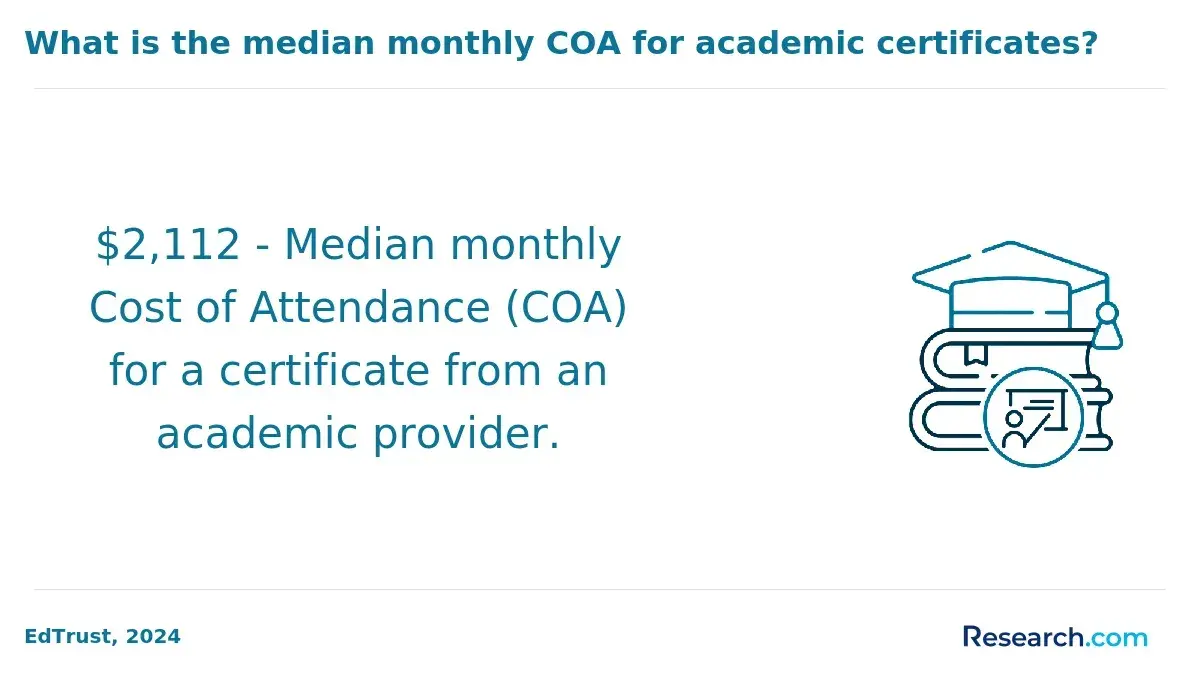
Completion time ranges from a few months for focused noncredit training to about two years for a full-time associate degree. The practical timeline can be longer when courses are part-time, prerequisites are needed, clinical placements are limited, or an apprenticeship requires work hours. Total cost includes more than tuition: fees, books, tools, software, exam fees, travel, uniforms, insurance, and lost work time can materially change affordability.
Compare the program's pace and cost structure, not only its advertised tuition.
| Option | Typical timeline | Cost and value consideration |
| Noncredit online training | Weeks to months | Often has a clear upfront price but may not qualify for federal aid or transfer as college credit |
| College certificate or diploma | Several months to about one year | May be aid-eligible and credit-bearing; compare required fees and whether credits stack into a degree |
| Associate degree | About two years full time | Usually includes broader coursework and may support transfer or advancement, but carries more time and tuition exposure |
| Apprenticeship | Often multiple years | Can combine paid work with instruction, though wage progression and licensing rules vary by occupation and state |
An accelerated degree program can make sense for learners with transfer credit, substantial available study time, and a goal requiring a degree. It is a poor fit if accelerated pacing would prevent you from completing clinical, lab, or work obligations successfully. Request a net-price estimate and compare it with expected borrowing, not just the sticker price.
What courses and skills are usually covered in online career training certificates?
Online career certificates typically combine occupation-specific knowledge with employability skills. The exact curriculum should mirror the work you intend to do, not just provide broad exposure to an industry. Credit-bearing programs may include general education or prerequisites; noncredit programs usually focus tightly on a tool, workflow, or exam domain.
Look for a curriculum that demonstrates how learning translates into job tasks:
- Trade programs may cover safety, measurements, blueprint reading, codes, electrical or mechanical theory, and troubleshooting.
- Healthcare programs may cover terminology, privacy rules, documentation, scheduling, billing systems, anatomy basics, or supervised clinical procedures.
- Legal and criminal justice programs may cover legal research, records management, report writing, ethics, court processes, and evidence handling.
- Design programs may cover typography, layout, user research, digital tools, accessibility, project critique, and portfolio development.
- Most programs should also build communication, digital literacy, time management, and problem-solving skills employers use across roles.
AI-enabled software is changing routine drafting, scheduling, coding, and design tasks. Choose programs that teach verification, privacy, ethical use, and portfolio-quality work rather than treating an AI tool as a substitute for foundational knowledge.
Which careers and entry-level job roles can these online training programs lead to?
Career training can lead to entry-level work, but the outcome depends on the role's regulations, local demand, prior experience, and the program's practical training. A certificate is an educational award; a professional certification is a separate credential granted by a certifying organization after its standards are met. Some programs prepare students for a certification exam but do not award that certification themselves.
The following examples show realistic role categories and important limits.
| Program focus | Possible entry-level roles | Important limitation |
| HVAC or electrical fundamentals | Helper, installer trainee, maintenance trainee | Independent work commonly requires apprenticeship hours and state or local licensing |
| Medical billing and coding | Billing specialist, claims processor, patient-access representative | Employers may prefer experience or a separate coding certification |
| Legal studies or paralegal training | Legal assistant, records clerk, case-support assistant | Does not authorize legal practice or make someone an attorney |
| Digital design | Production artist, junior designer, content-production assistant | Portfolio quality and software capability often drive hiring decisions |
Choose a program only after reviewing actual local job listings. If listings consistently require a license, associate degree, bachelor's degree, or documented experience, a brief certificate may be a first step rather than the complete qualification.
What salary ranges and advancement prospects do graduates of online career training see?
Salary information describes occupations, not a guaranteed return from a particular online program. Pay varies by location, industry, union coverage, employer, shift, experience, and licensure. The U.S. Bureau of Labor Statistics reported a 2024 median annual wage of $62,350 for electricians; that occupation normally requires an apprenticeship and licensing progression beyond an introductory certificate. Medical assistants had a 2024 median annual wage of $44,200, while requirements vary by employer and state.
Advancement is usually strongest when training leads to documented experience, a required license or certification, and a next credential. For example, a billing certificate can support administrative entry work before advanced coding credentials; a trade fundamentals certificate can precede an apprenticeship; and a design certificate can support a portfolio before more specialized work.
For professionals who already hold a bachelor's degree and need a higher-level credential rather than entry training, online 1 year masters programs may be a more appropriate advancement route. Compare the educational level to the job requirement; paying for a graduate degree does not make sense when a local license, portfolio, or apprenticeship is the actual hiring gate.
How do licensing, certification exams, and professional standards work for these careers?
Licensure, certification, and school certificates serve different purposes. Licensure is legal permission from a government authority to practice a regulated occupation. Professional certification is awarded by a private or nonprofit credentialing body that verifies specified knowledge, skills, examination results, or experience. A school certificate shows that a learner completed an educational program.
Before enrolling in a program connected to a regulated career, verify these points directly with the relevant state board or certifying organization:
- Whether the target occupation requires a license, registration, certification, background check, or supervised experience.
- Whether online coursework is accepted and whether any lab, clinical, practicum, or apprenticeship hours must occur in person.
- Whether the specific school and program meet educational eligibility rules for the examination or license.
- Whether graduates need additional experience before they can sit for an exam or use a professional title.
- Whether moving to another state could require additional coursework, examinations, or verification.
A major red flag is a school that says its certificate "makes you certified" without naming the credentialing organization and eligibility requirements. Get written confirmation, particularly for nursing-related, clinical, electrical, HVAC, and legal pathways.
Other Things You Should Know About
Possibly. Federal aid is generally available only when the school and exact program are eligible to participate in Title IV student aid. Submit FAFSA, then ask the school for a written aid estimate and confirmation that the program qualifies.
They can be worthwhile when the curriculum teaches a skill employers request, the total cost is manageable, and the credential matches the role's actual entry requirements. They are less useful when a job requires licensing, clinical hours, an apprenticeship, or a degree the program does not provide.
Only if the receiving institution accepts it. Credit-bearing certificates from accredited colleges are generally more likely to be considered than noncredit courses, but transfer decisions are always made by the receiving school.
Some theory-based coursework can be online, but many trade and patient-facing healthcare roles require in-person labs, clinical practice, externships, or supervised work hours. Confirm those arrangements before you enroll.
References
- Career Training Could Beat Traditional College https://www.trainingdirectusa.com/blog/why-career-training-beats-traditional-college/
- Student Financial Aid Models - Finance | Learn & Work Ecosystem Library https://learnworkecosystemlibrary.com/topics/student-financial-aid-models/
- Financial Aid For Online College Students | LearnHowToBecome.org https://www.learnhowtobecome.org/career-resource-center/financial-aid-for-online-colleges/
- Paying for Career Training: Cost of Career Training and Trade Schools | Climb Credit https://climbcredit.com/resources/data/pay-for-trade-school-career-training/
- CourseCareers https://coursecareers.com/blog-posts/college-vs-online-career-training
- How to finance edX courses | edX https://www.edx.org/resources/how-to-get-financial-assistance-for-edx-courses
- Best Student Loans for Certificate Programs - Credible https://www.credible.com/student-loans/student-loans-for-certificate-programs
- How to Fund Your Tech Education | Miami Tech Works https://miamitechworks.org/resource-articles/how-to-fund-your-tech-education/
- How to pay for college without loans https://standtogether.org/stories/future-of-work/how-to-pay-for-college-without-loans
- Tuition Assistance for Job Training Programs https://www.fastweb.com/financial-aid/articles/tuition-assistance-for-job-training-programs