2027 Best Career Training Programs With Academic Advising

Co-Founder and Chief Data Scientist
Choosing short-term career training is difficult when programs vary widely in advising, licensing eligibility, hands-on practice, and employer recognition. Academic advising matters because it helps students select the right sequence, prerequisites, and career pathway before paying tuition. The U.S. Bureau of Labor Statistics projects healthcare occupations to grow much faster than average from 2024 to 2034, making program quality and credential fit especially important.
This guide compares common training options, explains what to verify, and helps you choose a realistic route to work, advancement, or further education.
Key Things You Should Know
- Career training programs can lead to a school-issued certificate, diploma, industry credential preparation, or associate degree; confirm exactly what credential you receive and whether it meets employer, certification, or state licensing rules.
- Academic advising is most valuable when a program has prerequisites, clinical or lab placement, licensure requirements, or stackable credits; ask whether advising is available before enrollment and through completion.
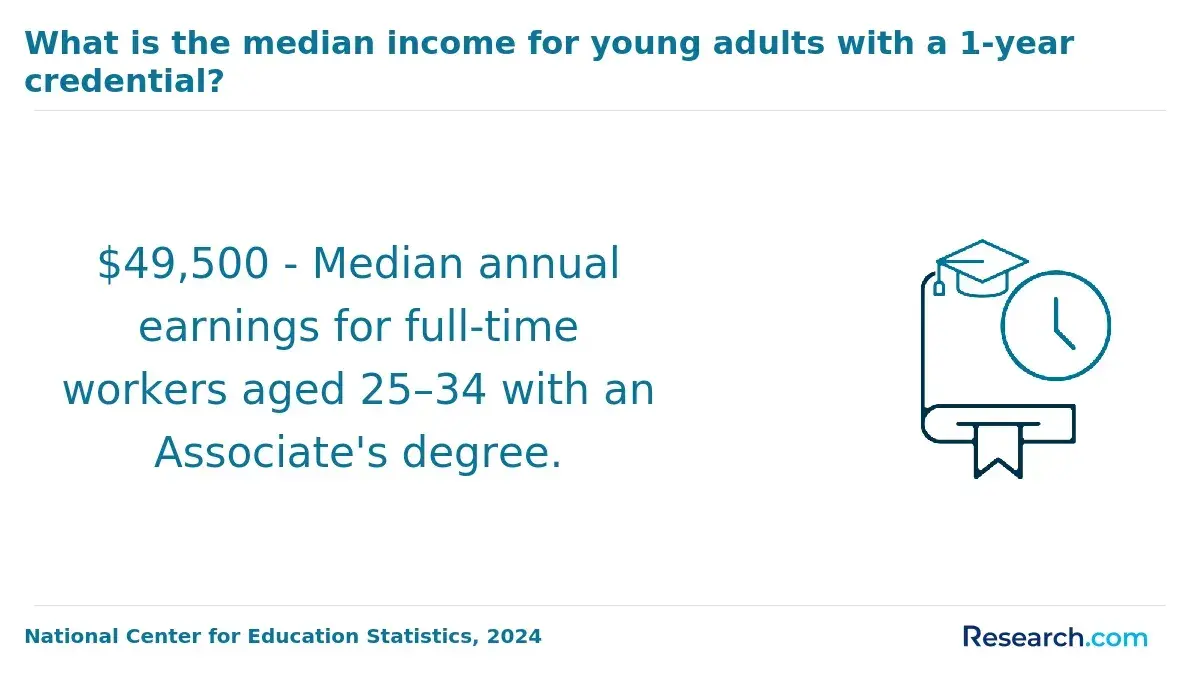
- For occupational context, the Bureau of Labor Statistics reported a $49,500 median annual wage for all occupations in May 2024; pay for a specific career depends on role, location, experience, licensing, and employer.
Top 10 Best Career Training Programs With Academic Advising
Popular Trade School Programs
Trade programs commonly include welding certificates, HVAC diplomas, electrical technology certificates, plumbing training, automotive service certificates, and construction management associate degrees. They suit learners seeking practical, equipment-based work and often combine classroom safety instruction with shop hours or apprenticeships. A short certificate can support entry-level employment, but electrician and plumbing careers commonly require supervised apprenticeship hours and state or local licensing. Choose a credit-bearing, stackable program if you may later pursue an associate degree; choose employer-recognized noncredit training when rapid skill development is the primary goal.
Healthcare Programs
Common options include medical assisting certificates, practical nursing diplomas, pharmacy technician certificates, dental assisting certificates, medical billing and coding certificates, and associate degrees in nursing or radiologic technology. These programs are a strong fit for learners comfortable with patient care, regulated workplaces, and required clinical schedules. A school certificate is not the same as a professional certification or license. Before enrolling, verify clinical placement, exam eligibility, background-check policies, vaccination requirements, and whether the program meets your state board's requirements. Online coursework may be available, but clinical and laboratory training generally require in-person participation.
Criminal Justice / Law Programs
Career-focused choices include paralegal certificates, legal studies associate degrees, criminal justice associate degrees, court reporting programs, and corrections or public-safety certificates. A paralegal certificate may build legal research, writing, and document-management skills, but it does not authorize someone to practice law. Criminal justice programs can support roles in dispatch, corrections, private security, records, or public administration, while sworn law-enforcement roles usually have separate agency standards. Compare programs by internship access, faculty legal experience, local employer relationships, and whether credits apply toward a later degree.
Arts & Design Programs
Graphic design certificates, digital media certificates, web design programs, animation certificates, interior design associate degrees, and photography programs can develop portfolio-based skills. These options work best for learners willing to produce, revise, and present original work rather than rely on a credential alone. Employers often evaluate a portfolio, software proficiency, and client or project experience. Confirm which tools are taught, whether software costs are included, and whether students leave with portfolio-ready projects. For regulated design fields, verify whether a degree, supervised experience, or separate examination is required in the state where you plan to work.
How do career training programs with academic advising work and who are they for?
Career training programs are structured, job-focused learning options offered by community colleges, technical schools, adult education providers, employers, unions, and private training organizations. They may award a credit-bearing certificate or associate degree, a noncredit completion certificate, or preparation for a separate industry certification examination. Academic advising is the service that helps learners map courses, check prerequisites, balance schedules, understand progression rules, and connect training to a target occupation.
They are especially useful for career changers, recent high school graduates, working adults, military-connected learners, and people returning to school after time away. Advising can prevent a costly mismatch between a program and a career goal, particularly in healthcare, skilled trades, and legal support fields. Service members and veterans comparing flexible support systems can also review online college for military options.
The right provider depends on your intended outcome. This comparison highlights the questions that distinguish a quick skills course from a pathway that can lead into further education.
| Program type | Typical outcome | Best for | Key limitation to check |
| Noncredit career training | Completion certificate or skills record | Fast, focused upskilling | May not transfer for college credit |
| College certificate | Academic certificate, often credit-bearing | Entry-level preparation or stackable study | May not itself meet licensure rules |
| Associate degree | Degree plus general education and technical courses | Roles needing broader preparation | Usually takes longer and costs more |
| Industry certification preparation | Training before a third-party exam | Fields with employer-recognized certifications | Course completion does not guarantee certification |
What accreditation and licensing factors should you check before enrolling in a career program?
Accreditation and licensing are not interchangeable. Institutional accreditation evaluates a school, while programmatic accreditation evaluates certain professional programs. A state license is legal permission to practice in a regulated occupation; a professional certification is generally a credential awarded by a certifying organization after meeting its standards. Ask the school to identify which of these applies rather than accepting broad claims that a program is "accredited" or "career-ready."
Before committing, use this verification sequence. It protects you from training that cannot be used for your intended job or state.
- Identify the exact job title and the state where you expect to work.
- Check the relevant state licensing board or employer requirements independently.
- Confirm the school's institutional status and, where required, the program's specialized accreditation.
- Ask in writing whether completion makes you eligible for the required exam, clinical placement, apprenticeship, or license application.
- Confirm whether the credential is credit-bearing, transferable, and accepted by local employers.
Red flags include vague statements about "national accreditation," promises of licensure without naming a board, no explanation of clinical placement, and pressure to enroll before reviewing the full catalog. Licensing rules can change and vary by state, so written confirmation is more reliable than an admissions conversation alone.
How do online career training programs compare to campus-based options for flexibility and support?
Online career training can be a practical choice when the occupation is primarily knowledge- or software-based, such as medical billing, legal studies, IT support, or digital design. Campus-based or hybrid delivery is usually stronger when training requires equipment, live skill assessment, studio critique, shop work, labs, or clinical rotations. The best choice is not simply the most convenient format; it is the format that allows you to complete every required component and receive timely advising.
This comparison shows where flexibility helps and where physical attendance is commonly unavoidable.
| Factor | Online or hybrid option | Campus-based option |
| Lecture coursework | Often asynchronous or scheduled live sessions | Set meeting times and face-to-face instruction |
| Hands-on training | May require local labs, proctoring, or placements | Usually integrated with school facilities |
| Academic advising | Video, phone, email, and virtual planning tools | In-person meetings and immediate campus referrals |
| Best fit | Self-directed learners with reliable scheduling | Learners needing structure, equipment, or close supervision |
Ask whether online students receive the same advisor access, tutoring, disability support, career services, and placement help as campus students. If your goal ultimately requires a four-year credential, compare program sequencing with accelerated bachelor degree programs before selecting a standalone training course.
What admission requirements and prerequisites do career training programs typically have?
Requirements depend on provider type and the level of training. Many short noncredit programs require only an application, identification, and payment arrangement. College certificates and associate degrees may require a high school diploma, GED, placement assessment, transcripts, or proof of prerequisite coursework. Competitive healthcare programs may additionally use entrance testing, immunization records, CPR training, drug screening, background checks, or minimum grades in science courses.
Do not assume a published minimum automatically means you can start the career-specific courses immediately. The following questions clarify whether you are eligible for the program you actually want.
- Is admission open to the school, or selective admission to the specific program?
- Which courses must be completed before clinical, lab, or advanced technical classes begin?
- Are background findings, prior convictions, physical-capacity standards, or health records likely to affect placement or licensing?
- Can prior learning, military training, industry certifications, or transfer credit reduce course requirements?
- What happens if a required clinical site, practicum, or apprenticeship placement is delayed?
Academic advisors should explain the distinction between admission and progression. That distinction matters because some students are accepted to a college but must still qualify separately for nursing, allied health, or limited-capacity technical cohorts.
How long do career training programs take, and what tuition and fees can you expect?
Program length can range from several weeks for narrowly focused noncredit training to about two years of full-time study for an associate degree. Actual time depends on prerequisite courses, cohort starts, clinical availability, part-time enrollment, and whether required courses are offered every term. Accelerated schedules may reduce calendar time, but they increase weekly workload and leave less room to repeat a course.
Tuition is only one part of the decision. The cost categories below help you compare written estimates fairly rather than selecting a program based on an advertised price alone.
| Cost category | Why it matters | What to ask |
| Tuition and mandatory fees | Core instructional cost may vary by residency or delivery format | What is the total cost through completion? |
| Tools, uniforms, and supplies | Common in trades, healthcare, and arts programs | Which items must students buy independently? |
| Testing and licensing | May be required after program completion | Are exam, application, and fingerprinting fees included? |
| Transportation and time away from work | Clinical sites and labs can create indirect costs | Where and when are required placements held? |
Federal aid eligibility depends on the school, program length, credential type, and student circumstances; many noncredit programs do not qualify. Ask about scholarships, workforce grants, payment plans, employer tuition support, and veterans education benefits where applicable. Learners seeking a short route with broader earning considerations can compare quickest online degrees, but should still verify that speed does not remove required practical training.
What courses, hands-on training, and advising services are included in these programs?
A credible career program connects instruction to job tasks and explains how students are assessed. Coursework may cover technical foundations, safety, ethics, communications, documentation, software, and field-specific regulations. Practical programs may add simulations, labs, shop work, portfolios, clinical rotations, externships, internships, or supervised work experience. The mix should match the occupation rather than rely solely on recorded lectures or generic test preparation.
Advising services should be concrete and accessible. Ask whether the program provides the following support before and after enrollment.
- A written education plan showing course order, prerequisites, and estimated completion timing.
- Help selecting electives or stackable courses that support a certificate, associate degree, or later bachelor's pathway.
- Early alerts, tutoring referrals, and schedule adjustments if academic difficulty arises.
- Career guidance on resumes, portfolios, interview preparation, apprenticeships, clinical requirements, and certification examinations.
- Clear referrals for financial aid, accessibility services, mental-health support, and transfer evaluation when those services apply.
A common mistake is treating career services as a substitute for academic advising. Career services can help with job search preparation, while academic advising helps ensure that your completed coursework actually meets program and progression requirements.
What entry-level and advanced career paths can these training programs help you access?
Career training can support entry-level access, but the credential needed rises with job responsibility and regulation. A certificate may be enough for selected support roles, while advanced technical, supervisory, clinical, and licensed positions may require an associate or bachelor's degree, supervised experience, and a separate examination. Employers can also prefer experience even when a credential is not legally required.
This pathway view helps prevent the mistake of enrolling in a short program for a role that requires a longer credential.
| Field | Potential entry-level direction | Possible advancement route |
| Skilled trades | Helper, technician trainee, apprentice | Journeyman status, specialty work, supervision, contracting where permitted |
| Healthcare support | Assistant, technician, administrative support | Licensed clinical role or specialized certification when requirements are met |
| Legal and public safety | Legal assistant, records specialist, dispatcher, security support | Paralegal specialization, public administration, supervisory roles |
| Arts and design | Production artist, junior designer, content assistant | Portfolio-led specialization, freelance work, creative direction with experience |
Career fit matters as much as curriculum. Learners who prefer independent, concentrated work may find useful role ideas in jobs for introverts that pay well, then work backward to identify the education, portfolio, certification, or license each role requires.
What salary ranges and earning growth can graduates of career training programs expect?
Salary information should be used as occupational context, not as a promise from a particular program. The Bureau of Labor Statistics reported a May 2024 median annual wage of $47,460 for medical assistants, $59,070 for paralegals and legal assistants, and $62,560 for electricians. These figures reflect workers in those occupations nationwide, with varying education, experience, geographic location, and employer type; they do not show what every certificate holder earns.
Earning growth usually comes from moving beyond initial training through experience, employer-sponsored development, specialization, licensure, supervisory responsibility, or additional education. For example, an entry-level HVAC trainee, design assistant, or healthcare support worker may need a portfolio, documented hours, a recognized certification, or a higher credential before qualifying for more advanced work.
To assess return on investment, compare the program's total out-of-pocket cost, time away from paid work, local entry-level job postings, likely licensing expenses, and realistic first-job wages. Avoid schools that imply a direct or guaranteed salary result without explaining how their outcomes were measured.
How is the job outlook and employer demand for careers linked to these training programs?
Employer demand is strongest when a program connects to work that cannot be easily delayed, outsourced, or performed without regulated in-person skills. The Bureau of Labor Statistics projects employment of medical assistants to grow 15% from 2024 to 2034, much faster than the average for all occupations. That outlook suggests continuing demand, but it is national and does not guarantee openings in a particular city, specialty, or employer.
Technology is changing training expectations across fields. Employers increasingly expect digital documentation, scheduling platforms, diagnostic software, computer-aided design, and AI-aware workflows alongside core technical skills. Choose a program that teaches current tools without substituting technology demonstrations for supervised practice where safety, patient care, or licensing standards require hands-on competency.
Before enrolling, review local postings and speak with employers, unions, workforce agencies, or professional associations about entry requirements. Ask advisors for recent completion, placement, licensure-exam, and employer-partnership information, including how they define "placement." A good program can explain its limitations as clearly as its opportunities.
Other Things You Should Know About
A career training certificate is usually issued by a school after you complete coursework. A professional certification is generally awarded by an independent certifying organization after you meet eligibility standards, often including an examination. A school program may prepare you for certification, but completing it does not automatically award the certification.
They can be worthwhile when advising helps you avoid unnecessary courses, meet prerequisites, secure required placements, and select a credential that matches your target job. Advising has less value if the provider cannot explain outcomes, licensing relevance, or the full cost of completion.
Some administrative, technology, business, and design programs can be completed online. Programs involving clinical care, laboratories, shop equipment, internships, or licensing skills usually require in-person or local supervised components.
Sometimes, but only when the program meets the applicable state board's education requirements and you complete any required exam, supervised hours, background review, or application steps. Verify eligibility with the licensing authority before you enroll.
References
- To provide a return on education, these schools integrate career and academic advising | EAB https://eab.com/resources/blog/student-success-blog/your-students-career-journey-should-start-in-their-advisors-office/
- Advisor and Success Coach Training Courses | DC Education Group https://www.dceducationgroup.com/courses
- Career Advising Certificate Course - Eduology https://eduology.org/career-advising-certification-course
- Home | CO Career Advising https://www.coloradocareeradvising.com/
- Importance of Academic Advising: Why it is Important | Webber International University https://www.webber.edu/importance-of-academic-advising/
- FRNYC School Playbook https://futureready.nyc/web/frnyc-core-components/personalized-pathways-advising
- How Career Services Can Blend Academic Advising and Career Coaching - uConnect https://www.gouconnect.com/career-everywhere/how-career-services-can-blend-academic-advising-and-career-coaching/
- Online vs. In-Person Certification: What Works | HealthCerts https://healthcareercerts.org/blog/online-vs-in-person-certification-what-works-best-college-students/
- Certificate Programs - National Association for College Admission Counseling (NACAC) https://www.nacacnet.org/education/certificate-programs/
- Advanced Career Training Programs Overview - /info/landing/online-career-training-program https://commed.smc.edu/info/landing/online-career-training-program