2027 Call Center Forecasting Capstones: What to Look for in a Data Science Master's

Co-Founder and Chief Data Scientist
A call center forecasting capstone can be a strong reason to choose a data science master's - but only if the program lets you solve more than a textbook prediction problem.
Prospective students interested in contact center analytics, workforce planning, or applied forecasting should examine the data they can use, how projects are supervised, and whether results must inform a staffing decision. This guide shows what a credible project looks like and how to check whether a program can support one.
Key Things You Should Know
- Look for a capstone that forecasts incoming contact volume, tests predictions on later periods, and connects forecast uncertainty to staffing decisions, not one that reports model accuracy alone.
- Confirm data access before enrolling: a program may offer a capstone without offering contact center data, an industry partner, or permission to publish project results.
- The U.S. Bureau of Labor Statistics projects 35% growth in data scientist employment from 2025 to 2035, but that occupation-wide figure does not predict demand for call center forecasting specialists.
What is a call center forecasting capstone in a data science master's program?
It is an applied graduate project that predicts future contact demand and translates the results into a decision a contact center could use. A typical question is how many calls or messages will arrive by interval, day, or channel - and how uncertain that estimate is when planners set schedules.
A credible project defines what is being forecast. Offered contacts are not interchangeable with answered contacts: abandonment, routing changes, and staffing constraints can alter the number answered even when customer demand stays similar. The student should document the target, forecast horizon, available history, and assumptions about holidays, campaigns, outages, and changes in operating hours.
The final work should include a documented dataset, a simple comparison forecast, a tested model, an explanation of errors, and a decision-oriented presentation.
A staffing scenario can add value, but it must state its service-level and workload assumptions; accurate volume forecasts alone do not determine the right number of agents. Do not assume a program advertising a capstone offers this topic. Ask whether students may propose projects and who secures usable data.
What skills should a call center forecasting capstone demonstrate?
The strongest projects show that a student can work from an operational question through to a defensible recommendation. Before comparing programs, use these capabilities to judge sample capstones or a program's project expectations:
- Data preparation: Reconcile timestamps, time zones, queue definitions, missing intervals, and changes in routing; keep customer information out of unnecessary project files.
- Forecasting: Compare an interpretable seasonal baseline with more complex methods where justified, and test on future periods rather than a random split that leaks time information.
- Evaluation: Report error and bias by horizon and busy period, not just one overall score; show the consequences of consistently underpredicting peaks.
- Decision support: Explain how forecast ranges affect scheduling choices, while separating predictions from assumptions about handling time, service targets, and agent availability.
- Reproducibility and communication: Provide documented code, data definitions, model limitations, and a presentation a workforce planner could challenge or use.
Privacy and model oversight matter when records contain customer or employee information. If governance is a primary career interest, compare AI master's ethics and governance options; an ethics-focused track, however, is not a substitute for hands-on forecasting and operational evaluation.
What should students look for in an accredited data science master's program?
First, verify the institution's current accreditation with its recognized accreditor or an official U.S. education database. Institutional accreditation is not proof that a particular data science curriculum has an industry partner, a forecasting course, or a contact center capstone. Check program-level claims separately rather than treating the word "accredited" as evidence of project fit.
Then inspect the catalog and capstone rules. Look for permission to propose a topic, access to an appropriate supervisor, a realistic route to data, and an assessment that includes validation and communication.
Ask to see project guidelines or appropriately redacted past work. A warning sign is a promised "industry capstone" whose data access, partner participation, and publication rules cannot be explained before enrollment.
Which courses prepare students for call center forecasting projects?
Time-series analysis, statistical modeling, programming, data engineering, and experimental or model evaluation courses are the most directly relevant.
Operations research or queueing coursework can help students examine staffing implications, but it should not replace forecasting instruction. Database work matters because interval-level contact histories often require substantial cleaning before modeling begins.
Read course descriptions and project examples, not titles alone. A course that briefly mentions forecasting may offer less preparation than one requiring rolling, time-ordered evaluation and uncertainty estimates.
If your mathematical or programming background is uneven, ask which foundations are required for admission and which can be completed after entry. AI graduate admission through foundation courses offers related context, but only the data science program can confirm whether a particular course satisfies its requirements.
How do online and campus-based data science master's programs compare?
Neither format is inherently better for forecasting. The useful comparison is whether you can obtain feedback, collaborate when required, and access data and computing resources without disrupting work. The table separates common delivery differences from features that must be verified program by program:
| Consideration | Online program | Campus-based program |
| Participation | May offer flexible access, but scheduled meetings or group work can still be required | Typically involves regular in-person attendance |
| Project collaboration | Depends on remote supervision, team scheduling, and secure data access | May make in-person meetings easier, without guaranteeing a project partner |
| Contact center capstone access | Depends on program rules and data arrangements | Also depends on program rules and data arrangements |
Choose online study if its actual meeting times and project arrangements fit your schedule; choose campus study if in-person collaboration is valuable and feasible.
For a closer look at scheduling questions, see data science master's programs suited to professional schedules. In either format, request the capstone timeline before committing - especially if employer approval is needed to use workplace data.
What are the admission requirements for a data science master's degree?
Requirements vary by institution. Programs may assess prior study in mathematics, statistics, and computing alongside transcripts, professional experience, recommendations, or a statement of purpose.
Do not assume contact center experience replaces a formal prerequisite, or that a candidate without that experience cannot propose a strong forecasting project.
If this topic motivates your application, explain the operational question you want to investigate and show evidence that you can work with data.
Before applying, ask admissions staff which prerequisites are mandatory, whether deficiencies can be addressed through approved coursework, and whether project-topic approval occurs before or after enrollment. Preparation through self-study can strengthen readiness without necessarily fulfilling a formal admissions condition.
How long does a data science master's take and cost?
There is no reliable single duration or price for this degree: credit requirements, pace, residency, fees, and capstone structure differ by program. For a forecasting project, timing also depends on when data access is approved and whether the project can be completed across the terms available to a part-time student.
Compare each school's published total academic requirements and current tuition schedule, then add mandatory fees and any applicable software, travel, or lost-work costs.
Ask whether tuition is charged per credit or term, whether capstone enrollment carries an additional charge, and what happens financially if data delays extend the project. For broader comparisons of affordable graduate study in data science, use the same total-cost assumptions for every school; a lower tuition figure alone does not establish a lower final cost.
Which careers can follow a data science forecasting capstone?
The closest applications are workforce planning, contact center analytics, demand forecasting, and operations analytics. Data scientist roles may also use similar time-series and decision-support skills, though job titles and technical expectations vary by employer.
A capstone is most useful when it lets you discuss both model performance and the operational consequences of an inaccurate forecast.
For a move into workforce planning, emphasize interval-level demand and scheduling trade-offs. For a broader data science role, emphasize reproducible modeling, validation, and communication with nontechnical stakeholders. A forecasting capstone is portfolio evidence, not a job qualification by itself; previous experience and the role's stated requirements still matter.
How much can data science master's graduates earn?
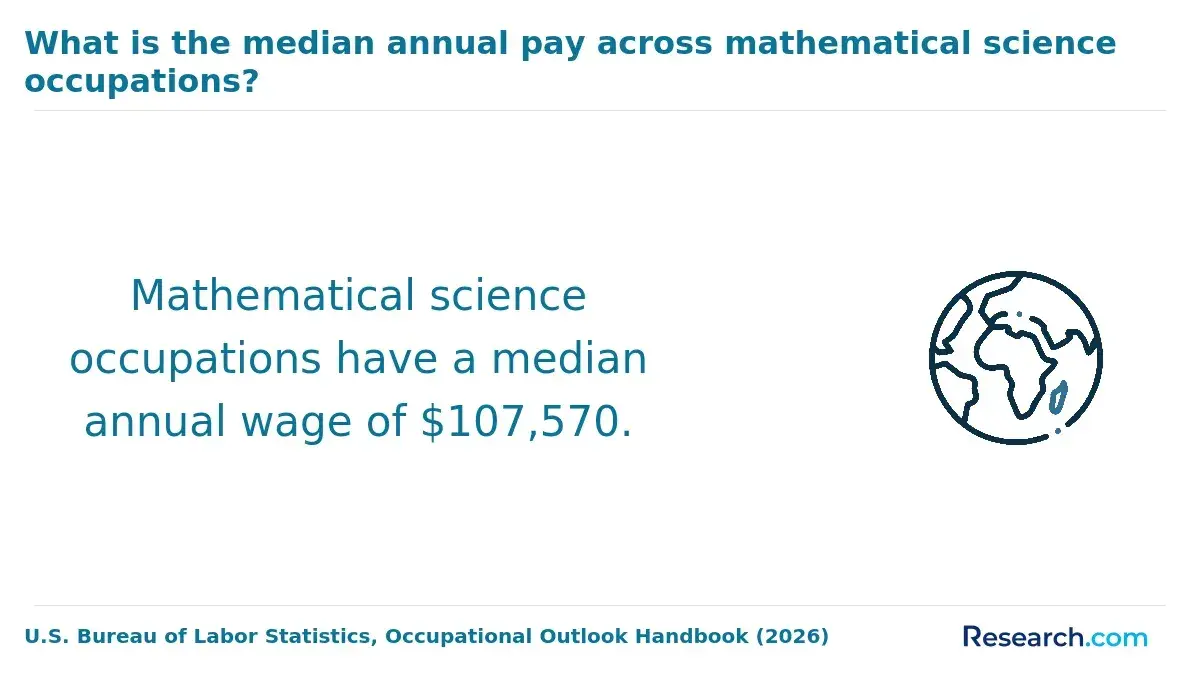
The U.S. Bureau of Labor Statistics reports a $120,230 median annual wage for data scientists in May 2025. That is an occupation-wide wage figure, not a reported starting salary for master's graduates or a forecast of earnings from a call center capstone. Workforce planning and analyst positions may have different pay structures and requirements.
To evaluate a program financially, compare likely target roles with your current experience, location, and total education cost rather than applying the data scientist median to every graduate. Industry pay patterns for data science degree holders can add context, but no industry average establishes what a particular employer will offer or what the degree caused a graduate to earn.
What is the job outlook for data scientists in forecasting roles?
The U.S. Bureau of Labor Statistics projects 35% employment growth for data scientists from 2025 to 2035. This supports a favorable outlook for the broad occupation, not a forecast of openings specifically devoted to call center demand planning. Some forecasting work also sits in operations or workforce-management roles outside the data scientist category.
For a career decision, read actual job descriptions in your target market. Check whether employers ask for time-series forecasting, SQL or Python, staffing knowledge, and stakeholder communication, and whether a master's degree is required or preferred. That comparison is more informative than choosing a program solely because the broad occupation is projected to grow.
Other Things You Should Know About Data Science
Not necessarily. It helps with interpreting operations, but a student can learn the domain through documented data definitions and feedback from knowledgeable stakeholders. Confirm whether the program permits a self-proposed topic.
Only within the permissions set by the data owner and your program. Ask about using a public summary, redacted findings, or a separate demonstration built with data you are allowed to share.
No. If the decision concerns incoming volume and staffing, reliable forecasts and clear error analysis are more relevant. Add text or speech methods only when they answer a defined question and the data can be used appropriately.
No. A capstone is an assessed academic project; an internship is a work placement. Some programs may connect them, but eligibility, supervision, and deliverables depend on the school's rules.
References
- The effects of data leakage on connectome-based machine learning models - PMC https://pmc.ncbi.nlm.nih.gov/articles/PMC10793416/
- MSDS Capstone Projects - College of Information Science https://infosci.arizona.edu/ms-data-science/capstone-projects
- Data Science Capstone Experience - Purdue Online https://www.purdue.edu/online/data-science/data-science-capstone-experience/
- Prediction Intervals Explained: Understanding Forecast Uncertainty | Harvard Business School https://online.hbs.edu/blog/post/prediction-interval
- Capstone Sponsorships - Columbia's Data Science Institute https://datascience.columbia.edu/partnerships/engage/capstone-sponsorships
- Forecasting Call Center Staffing | Elder Research https://www.elderresearch.com/resource/case-studies/forecasting-call-center-staffing/
- A Practice-Oriented Overview of Call Center Workforce Planning | informs.org https://pubsonline.informs.org/doi/10.1287/stsy.2021.0008
- Call Center Forecasting: Methods, Techniques & Best Practices | Verint https://www.verint.com/blog/call-center-forecasting-methods-techniques/
- Call Center Forecasting: Methods, Metrics, Best Practices | FlyFone https://flyfone.com/call-center-forecasting/