2027 Best Non-Degree Programs for Job Security

Co-Founder and Chief Data Scientist
Choosing training that leads to durable work matters when tuition, time, and career risk are all on the line. The strongest non-degree options usually connect directly to regulated, hands-on, or infrastructure-dependent roles that are difficult to outsource. U.S. Bureau of Labor Statistics projections show employment of healthcare occupations is expected to grow much faster than average from 2023 to 2033.
This guide compares trade, healthcare, legal, and creative programs by job security, entry requirements, cost, delivery format, licensing, and realistic next steps so you can choose training that fits your target job.
Key Things You Should Know
- For the best job security, prioritize programs tied to essential local services or required credentials: electricians had a 2024 median annual wage of $62,350, while dental hygienists had a median of $94,260, according to the U.S. Bureau of Labor Statistics.
- A school certificate is not the same as a professional certification or state license; confirm whether the program qualifies you to sit for an exam, complete clinical hours, or meet state licensing rules before paying tuition.
- Short programs can reduce time out of the workforce, but the strongest return typically comes from training with employer-recognized skills, supervised practice, and a clear path into an occupation rather than a broad completion credential alone.
Top 10 Best Non-Degree Programs for Job Security
Popular Trade School Programs
Trade programs commonly prepare students for electrical, HVAC/R, welding, plumbing, automotive, and industrial maintenance work. Certificates may take months, while diploma and associate programs can take one to two years; many jobs also require paid apprenticeships or state licensure. Electrical and HVAC work can offer stronger security because homes, businesses, and public facilities need installation, maintenance, and repair locally. Choose programs with shop time, safety instruction, employer relationships, and transparent exam or apprenticeship outcomes. Avoid programs that promise immediate licensure without explaining state-specific requirements.
Healthcare Programs
Healthcare non-degree routes include medical assisting, practical nursing, dental assisting, dental hygiene, pharmacy technology, surgical technology, and phlebotomy. These programs vary sharply: phlebotomy may be brief, while accredited practical nursing and dental hygiene programs require substantial clinical education. Medical assistants had a 2024 median annual wage of $44,200, while dental hygienists had a median of $94,260. Higher-paying paths generally require more selective admission, clinical placements, and state licensure. Confirm that online coursework is paired with approved in-person labs and clinical rotations before enrolling.
Criminal Justice / Law Programs
Paralegal studies, legal assistant certificates, court reporting, emergency dispatch, corrections, and public safety training are common non-degree options. A paralegal certificate can build legal research, document preparation, and litigation-support skills, but it does not authorize independent legal practice. Some employers prefer American Bar Association-approved paralegal education, although ABA approval is not legally required for every role. Court reporting and dispatch programs may involve skills testing, background screening, or agency-specific hiring standards. Review local employer postings before choosing a specialization, because demand and credential preferences vary by jurisdiction.
Arts & Design Programs
Graphic design, UX/UI, digital marketing design, animation, photography, and web-production certificates can help learners build focused portfolios. They are best for people willing to practice continuously, document projects, and compete for contract or entry-level work. Graphic designers had a 2024 median annual wage of $61,300, but occupational wage data does not mean every certificate holder earns that amount. AI-assisted design tools are changing routine production tasks, making portfolio quality, client communication, accessibility knowledge, and specialized software skills more important. Choose programs that produce reviewable work samples, not only software badges.
What are non-degree programs and how do they improve job security?
Non-degree programs are organized learning experiences that do not culminate in an associate, bachelor's, or graduate degree. They can include college credit certificates, noncredit workforce certificates, employer training, apprenticeships, bootcamps, and industry preparation courses. Their value for job security depends less on the label than on whether employers recognize the training and whether it leads to a required license, certification exam, supervised experience, or demonstrable skill.
A certificate is awarded by a school or provider after completing instruction. A certification is awarded by a professional body after a person meets its standards, often through an examination; a license is legal permission from a government authority to practice. For regulated work, confirm all three separately.
Non-degree training is usually a strong choice when you need a specific entry skill quickly, can verify local demand, and do not need a degree for advancement. Consider a degree path when your target role requires one, when advancement depends on academic credit, or when you want broader career mobility. Learners who eventually need a four-year credential may compare an accelerated bachelor's degree online rather than repeatedly buying nontransferable short courses.
Which industries offer the strongest job security for non-degree credentials?
Industries with the most defensible non-degree pathways tend to be those requiring in-person service, regulated clinical work, public safety procedures, or maintenance of physical systems. Demand still varies by city, state, employer, and economic cycle, so national outlook data should be a screening tool rather than a job guarantee.
The comparison below shows why program-to-role alignment matters more than choosing the shortest program.
| Industry path | Common training route | Job-security rationale | Important limitation |
| Skilled trades | Certificate, diploma, apprenticeship | Local installation, repair, and infrastructure work | Licensing and apprenticeship rules vary by state |
| Allied healthcare | Accredited certificate or associate program | Patient-facing care and aging-related service needs | Clinical placement, examination, or licensure may be required |
| Transportation and logistics | Commercial driver or technician training | Essential movement and maintenance of goods | Schedules, safety rules, and automation exposure differ by role |
| Information technology support | Industry certification preparation or college certificate | Organizations need network, security, and user support | Entry-level competition can be substantial |
| Legal and public safety support | Paralegal, dispatch, or agency training | Compliance, records, and public-service functions | Hiring often includes background and skills screening |
For veterans and service members, programs that recognize military training, offer flexible schedules, and understand education benefits can reduce barriers; compare military friendly universities online if you want a credential that can also support later degree completion.
How do accredited certificate programs differ from short courses or bootcamps?
An accredited academic certificate is usually offered by a college or postsecondary school with institutional accreditation and may carry academic credit. It can be useful when you need structured instruction, financial-aid eligibility where applicable, and a possible pathway into an associate or bachelor's degree. Programmatic accreditation matters especially in clinical fields because it may affect eligibility for licensing examinations or clinical placement.
Short courses and bootcamps are often noncredit and can be valuable for narrow, current skills such as software tools, project workflows, or portfolio development. However, completion alone may carry limited weight with employers unless the provider is well known or the student can show practical competence. Industry certifications, by contrast, are third-party credentials based on defined standards and should be checked for exam prerequisites, renewal requirements, and employer recognition.
Use this distinction when comparing offers.
| Option | Typical provider | Best use | Key question before enrolling |
| Credit-bearing certificate | Community college or university | Career entry with potential academic progression | Will credits transfer or stack into a degree? |
| Noncredit career program | College continuing education or private school | Fast occupational skills training | Does it meet employer, exam, or licensing requirements? |
| Bootcamp or short course | Private provider or university extension | Skill refresh or portfolio building | What verified projects, support, and outcomes are included? |
| Professional certification | Certifying organization | Validating job-relevant knowledge or skills | Are experience, examinations, and renewals required? |
What admissions requirements and prior education are needed for top non-degree programs?
Admissions requirements depend on the credential type. Many noncredit courses require only age, identity, payment, and basic technology access. College certificates may require a high school diploma or equivalent, placement testing, immunization records, prerequisite classes, or background checks. Selective healthcare programs often add minimum grades in science prerequisites, entrance assessments, drug screening, and clinical eligibility requirements.
Before applying, collect the program's written requirements and compare them with the requirements of the occupation you want. This is especially important for applicants who expect prior college or military coursework to count: transfer credit is more common in credit-bearing programs, but it is never automatic.
To reduce wasted applications, follow these steps.
- Identify the exact entry-level job title and check several local job postings for required credentials.
- Ask the school whether its curriculum meets the eligibility rules for the relevant licensing or certification examination.
- Confirm prerequisite grades, clinical or background-clearance requirements, and whether credits can transfer later.
- Compare application costs and deadlines; free application online colleges may be useful if you are also considering credit-bearing options.
How do online non-degree programs compare to campus-based options for outcomes and flexibility?
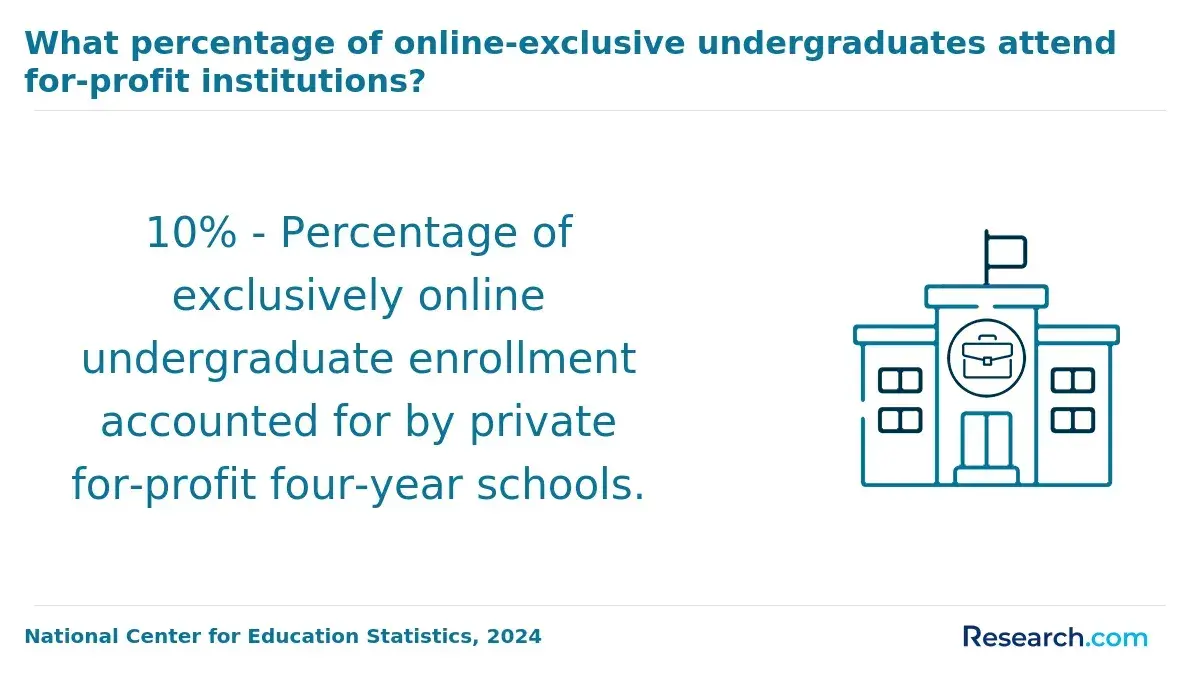
Online non-degree programs can be effective for theory-heavy subjects, career changers with work obligations, and learners who need asynchronous scheduling. They are less suitable when competence depends on supervised clinical procedures, shop equipment, driving time, or immediate instructor correction. In those fields, the practical portion should be campus-based, employer-based, or arranged at an approved local site.
The right format is the one that preserves required hands-on learning while fitting your schedule and budget.
| Format | Usually works best for | Main advantage | Primary risk to check |
| Fully online | IT, legal support, business software, design theory | Maximum schedule flexibility | Limited networking or weak practical assessment |
| Hybrid | Healthcare theory, technical programs, lab-based learning | Online convenience plus supervised practice | Travel, lab, or clinical scheduling constraints |
| Campus-based | Trades, labs, clinical and equipment-intensive training | Direct access to tools and instructors | Less flexibility and possible commuting costs |
| Employer or apprenticeship-based | Skilled trades and some public-service roles | Paid work experience may accompany training | Competitive entry and longer commitment |
Do not assume an online healthcare or trade certificate satisfies state rules. Request written confirmation of lab hours, clinical partners, instructor supervision, and eligibility for the relevant exam or license.
What do curricula typically include in job-focused non-degree programs?
Job-focused programs should teach both task skills and the workplace behaviors employers use to assess readiness. Strong curricula connect each course, lab, or simulation to an identifiable job function rather than relying on generic lectures.
Look for the following components because they make it easier to judge whether a program is truly career-aligned.
- Technical instruction tied to current tools, codes, software, equipment, or clinical procedures used in the target field.
- Supervised practice through labs, simulations, clinical rotations, internships, externships, or shop work when the occupation requires hands-on competence.
- Safety, ethics, documentation, communication, and customer-service training, which are essential in regulated and public-facing roles.
- Career preparation such as résumé support, interview practice, portfolio review, employer introductions, and exam preparation where relevant.
- Clear assessment standards showing what students must demonstrate to complete the program.
Ask for a course sequence, total clock or credit hours, instructor qualifications, equipment list, and the percentage of training spent in supervised practice. A program that cannot explain how it verifies practical competence is a meaningful red flag.
How long do leading non-degree programs take, and what do they cost?
Completion time ranges from a few weeks for focused noncredit training to two years for associate-level clinical or technical programs. Cost also varies widely based on public versus private provider status, residency, equipment, testing, uniforms, tools, insurance, transportation, and lost work time. Compare the total price, not tuition alone.
This overview helps set realistic expectations, but each school should provide a written cost sheet.
| Program type | Typical duration | Cost drivers | Best fit |
| Short noncredit course | Weeks to several months | Instruction, software, exam voucher | Skill upgrade or narrow job requirement |
| Career certificate or diploma | Several months to about one year | Tuition, tools, labs, books, testing | Entry-level trade or support occupation |
| Credit-bearing certificate | About one year | Per-credit tuition, fees, supplies | Students seeking a stackable college pathway |
| Associate-level clinical or technical program | About two years | Tuition, clinicals, equipment, licensing costs | Roles with higher training or licensure thresholds |
Federal student aid may be available for eligible programs at eligible schools, but many short noncredit offerings do not qualify. Employer tuition assistance, workforce grants, apprenticeships, and payment plans can help, yet they should not replace verifying the program's employment relevance. If long-term advancement is your priority, compare the time and cost with an easiest masters degree to get online only after you have the undergraduate education and career foundation such a degree requires.
What career paths, roles, and advancement opportunities follow these programs?
The best non-degree program is one that maps to a realistic first job and leaves room to progress. A certificate may open a support role, while advancement may later require experience, a professional certification, an apprenticeship milestone, a license, or a degree. Do not assume a program title matches an employer's job title.
The pathways below show common progression patterns rather than guaranteed outcomes.
| Starting pathway | Possible entry roles | Common advancement step |
| Electrical or HVAC training | Helper, installer, maintenance technician | Apprenticeship completion, journeyman licensing, specialization |
| Medical assisting | Medical assistant, clinical support staff | Experience, specialty certification, nursing or allied-health education |
| Paralegal certificate | Legal assistant, paralegal support worker | Practice-area experience, advanced legal technology skills, degree study |
| Design certificate | Production artist, junior designer, freelance assistant | Stronger portfolio, niche expertise, project leadership |
| IT support certification preparation | Help desk technician, desktop support specialist | Vendor certification, networking, cloud, or cybersecurity specialization |
Choose an entry path after reviewing local postings and speaking with employers or program graduates. Favor programs that disclose where graduates work, what roles they pursue, and whether reported outcomes separate completers from people who obtained a license or certification afterward.
What salaries, job outlook, and licensing or certification requirements should students expect?
Salary and outlook figures describe occupations, not a promise of earnings after a particular program. Pay differs by location, shift, union status, experience, specialty, and employer. The U.S. Bureau of Labor Statistics reported 2024 median annual wages of $62,350 for electricians, $59,810 for heating, air conditioning, and refrigeration mechanics and installers, $44,200 for medical assistants, and $61,010 for paralegals and legal assistants.
Licensing or certification can be the deciding factor in whether training leads to employability. Electricians typically progress through state or local licensing rules; practical nurses must meet state board requirements and pass the NCLEX-PN; dental hygienists require state licensure; and many medical assisting, pharmacy technician, and IT credentials are employer-preferred rather than universally mandated. Check the relevant state board or certifying body directly because requirements change.
Use this final screening process before committing.
- Match the program to a specific occupation and verify the local education, license, examination, and experience requirements.
- Calculate full cost, including tools, transportation, background checks, testing, renewal fees, and time away from work.
- Ask for recent completion, licensure-exam, placement, and employer-partnership information, including how each measure is calculated.
- Compare the training timeline with the occupation's likely advancement path instead of choosing solely on advertised speed.
Other Things You Should Know About
Healthcare, skilled trades, and other regulated hands-on fields often offer the clearest job-security case because work is local and employers may need licensed or credentialed staff. The best choice still depends on local hiring demand, your physical and schedule preferences, and whether you can meet licensing requirements.
They can be worthwhile when they teach skills employers request and lead to a recognized exam, license, apprenticeship, or demonstrable portfolio. They are less compelling when the provider cannot explain job relevance, practical training, total costs, or outcomes.
Yes, some occupations in trades, transportation, healthcare support, and technology support use non-degree routes. However, some higher-level clinical, management, and professional positions require degrees, licenses, or substantial experience beyond an initial certificate.
Choose a certificate for structured education, a certification for third-party validation of knowledge or skills, and an apprenticeship when a trade employer pathway combines paid experience with training. In many careers, the strongest route uses more than one of these options.
References
- Job seekers with no degrees - but plenty of skills - deserve more https://www.luminafoundation.org/news-and-views/job-seekers-with-no-degrees-but-plenty-of-skills-need-and-deserve-more/
- How does a college degree improve graduates' employment and earnings potential? - APLU https://www.aplu.org/our-work/publicuvalues/employment-earnings/
- Best Paying Jobs Without a Degree: 24 High-Income Careers for 2026 - tripleten.com/blog https://tripleten.com/blog/posts/best-paying-jobs-without-a-degree
- Research Summary: Education and Lifetime Earnings https://www.ssa.gov/policy/docs/research-summaries/education-earnings.html
- When the Cost Doesn't Match the Career: The Case for Career-Focused Education | Accelerated Academy https://www.acceleratedacademy.us/blog-articles/when-the-cost-doesnt-match-the-career-the-case-for-career-focused-education
- High-Paying, Fast-Growing Jobs Without a Degree https://www.rockwellinstitute.com/blog/jobs-dont-require-degree/
- Measuring - and Proving - the Effectiveness Of Non-Degree Programs https://www.calbright.edu/newsroom/blog/measuring-and-proving-the-effectiveness-of-non-degree-programs/