2027 Best Online Career Training Programs With Low GPA Options

Co-Founder and Chief Data Scientist
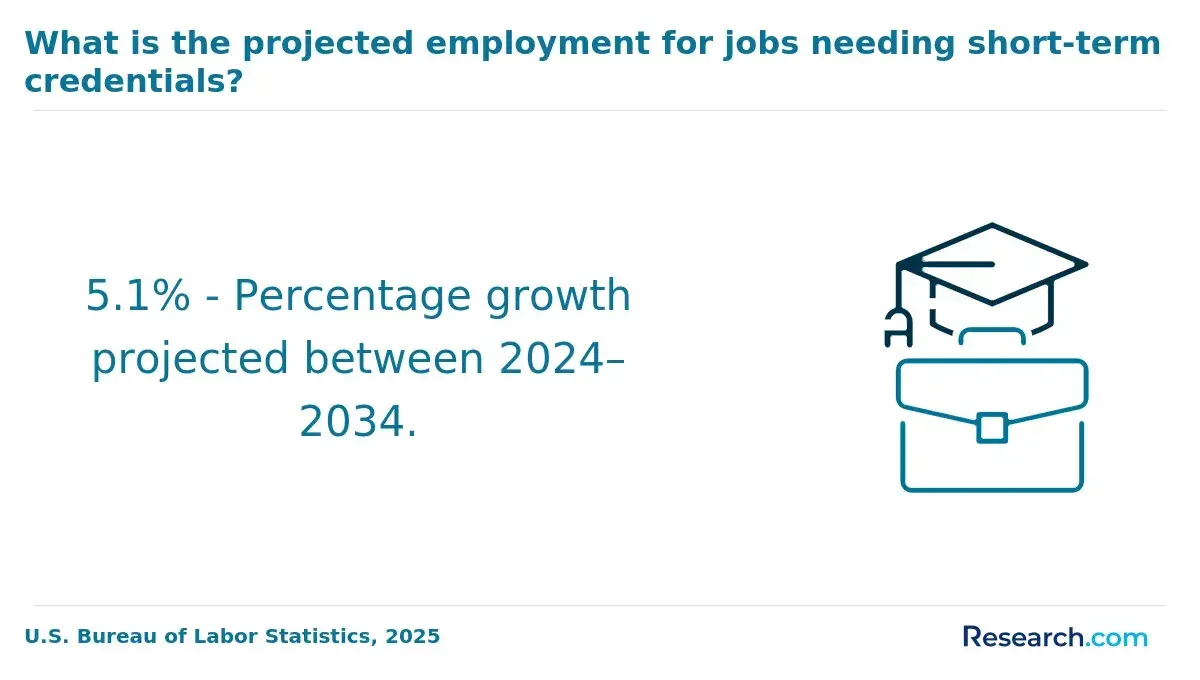
A low GPA can make traditional college admission feel out of reach, but many online career training programs evaluate applicants through a high school diploma, placement test, work history, or open enrollment instead. This matters because the U.S. Bureau of Labor Statistics projects healthcare occupations to grow much faster than average from 2024 to 2034.
This guide helps prospective students compare low GPA-friendly online certificates and associate pathways, verify whether training supports a license or certification, estimate time and cost, and avoid programs that do not match their target job.
Key Things You Should Know
- Low GPA-friendly does not always mean "no requirements": many career-training providers use open enrollment, while credit-bearing colleges may require a diploma, placement assessment, prerequisite courses, or conditional admission.
- Online training is most practical for administrative, technology, legal-support, design, and theory-based coursework; hands-on fields such as welding, medical assisting, and clinical healthcare usually require local labs, simulations, or supervised externships.
- BLS projections for 2024-2034 show healthcare occupations growing much faster than average, but program completion alone does not guarantee employment, licensure, certification eligibility, or an occupation's reported median wage.
Top 10 Best Online Career Training Programs With Low GPA Options
Popular Trade School Programs
Online-friendly trade pathways often include HVAC theory, construction management support, electrical theory, drafting, CAD, logistics, and skilled-trade estimating. A short certificate can build job-specific knowledge, while an associate degree may include broader general education and potentially transferable credits. Students pursuing regulated or hands-on trades should confirm where practical training occurs and whether local employers recognize the credential. Welding, automotive repair, electrical work, and plumbing typically require substantial in-person practice, apprenticeships, or state-specific licensing steps beyond online coursework.
Healthcare Programs
Common options include medical billing and coding, pharmacy technician preparation, medical administrative assisting, health information technology, and associate-level health sciences. Programs may award a school certificate, not an industry certification; for example, coding credentials are generally earned separately through a certifying organization. Clinical programs such as medical assisting, nursing, phlebotomy, and sonography can place lectures online but usually require approved clinical experiences. Before enrolling, verify externship availability, state eligibility rules, required background checks, immunizations, and whether the program prepares students for a specific exam.
Criminal Justice / Law Programs
Online criminal justice certificates and associate degrees can introduce policing systems, corrections, courts, criminology, ethics, and report writing. Legal studies, paralegal, and legal-support certificates may cover legal research, civil procedure, contracts, and document preparation. These programs can suit entry-level administrative or support goals, but they do not authorize someone to practice law. Paralegal hiring standards vary by employer, and police, corrections, and court roles may require separate agency screening, fitness standards, background checks, or academy training. Check whether coursework is credit-bearing if future degree completion matters.
Arts & Design Programs
Online design training may focus on graphic design, UX fundamentals, digital illustration, web design, animation, photography, or video editing. Portfolio quality usually matters more to employers than GPA, making project-based programs attractive for applicants seeking a fresh start. A certificate can provide structured software practice and feedback, while an associate degree may add design history, communication, and broader portfolio development. Compare instructor feedback, portfolio reviews, software costs, ownership of completed work, and whether the curriculum teaches current tools without promising a particular creative-industry job.
What are online career training programs with low GPA-friendly admissions?
Online career training programs are short, occupation-focused learning options delivered fully online or in a hybrid format. They may be offered by community colleges, career schools, universities, employers, professional associations, or private training providers. "Low GPA-friendly" usually means GPA is not the primary admissions filter, not that every applicant automatically qualifies.
The right option depends on the credential type. A school-issued certificate documents completion of coursework. An industry certification is awarded by an independent organization after a candidate meets its rules, which may include an exam, education, or work experience. An associate degree is a longer, credit-bearing academic award and can be more useful when a learner wants transfer options.
Low GPA-friendly programs are often a strong fit for adults returning to education, recent graduates with uneven academic records, career changers, and learners who need a fast, targeted skill path. They are a weaker fit for occupations that require a bachelor's degree, graduate degree, state-approved education, or extensive supervised clinical training.
The comparison below shows how common provider models differ. Use it to decide whether you need academic credit, exam preparation, or simply job-relevant skills.
| Program model | Typical admission approach | Credential outcome | Best for |
| Community college certificate | Diploma/GED and possible placement or prerequisites | Often credit-bearing certificate | Students seeking lower-cost credits and possible degree progression |
| Career-school certificate | May use open enrollment or basic eligibility review | Institutional certificate or diploma | Focused training with structured student support |
| Industry training provider | Usually open enrollment; prerequisites vary | Completion certificate or preparation course | Skill building or preparation for an external certification exam |
| Online associate degree | College application, diploma/GED, and possible placement review | Associate degree | Students who need broader coursework and future transfer potential |
How do online career training programs compare to campus-based options?
Online programs can reduce commuting and allow asynchronous coursework, but they are not automatically easier or better. Campus-based programs can provide immediate lab access, equipment, peer interaction, and local employer relationships. Hybrid delivery is often the most realistic option for careers requiring practical assessments or supervised practice.
This comparison highlights the trade-off between flexibility and hands-on access. Select the format based on the job's actual training requirements rather than marketing language.
| Factor | Fully online | Campus-based or hybrid |
| Schedule | Often flexible, especially for recorded lectures | Usually fixed meeting times for labs or clinical work |
| Hands-on learning | Limited to simulations, kits, or remote projects | Better access to equipment, labs, and instructor observation |
| Networking | May require proactive virtual outreach | Often easier through local instructors and employers |
| Best fit | Administrative, coding, design, business, and theory-based training | Clinical, mechanical, construction, and other practical occupations |
Students who need a broader academic route after gaining confidence may compare an accelerated online bachelor's degree with a standalone certificate. A bachelor's program generally requires more admissions documentation and time, but it may be the better long-term choice for degree-required careers.
What admission requirements do low GPA online career training programs typically have?
Requirements vary substantially by provider. Noncredit career training may have no GPA threshold and accept learners through open enrollment. Credit-bearing certificates and associate degrees often request a high school diploma, GED, or equivalent and may use placement measures to determine readiness in math, reading, or writing. Some programs admit students conditionally and require satisfactory performance in early courses.
Before applying, ask admissions staff these specific questions. The answers can reveal whether "low GPA-friendly" means accessible admission or simply limited selectivity.
- Is there a minimum cumulative high school or college GPA, and are exceptions or conditional admission available?
- Do I need a diploma, GED, placement test, prerequisite course, entrance exam, background check, or immunization record?
- Is the award credit-bearing, and can the credits transfer into an associate or bachelor's degree?
- Does the program require an in-person practicum, lab, externship, or proctored exam near my home?
- What happens if I need academic support, repeat a course, or pause enrollment for work or family responsibilities?
Career changers who need a compressed but more comprehensive academic option can explore accelerated programs for career changers. Confirm prerequisites first: accelerated does not mean prerequisite-free.
How can students verify accreditation and program quality for online career training?
Quality checks are essential because admission accessibility says nothing by itself about instructional quality, employer recognition, or eligibility for a licensing exam. For credit-bearing college programs, confirm institutional accreditation through the U.S. Department of Education or Council for Higher Education Accreditation directories. For career schools and noncredit providers, evaluate curriculum transparency, instructor qualifications, refund policies, student support, and independent industry recognition.
Use the following verification sequence before paying a deposit. It helps prevent a common mistake, enrolling in an attractive online program before confirming that it meets the requirements of the intended employer, certifying body, or state board.
- Identify the exact job title you want and determine whether it requires a degree, license, certification, apprenticeship, or employer training.
- Ask the provider whether the program is credit-bearing, what credential it awards, and whether it prepares learners for a named external exam.
- Check the relevant state licensing board or certification organization directly rather than relying only on admissions claims.
- Request written information on total tuition, fees, equipment, exam costs, externships, cancellation rules, and completion requirements.
- Review job postings in your area to see whether employers request the program's skills, credential, or a different qualification.
Red flags include vague claims of "national accreditation," guaranteed jobs or salaries, missing faculty information, pressure to enroll immediately, and no clear explanation of required in-person training.
What program lengths, formats, and schedules do online career training options offer?
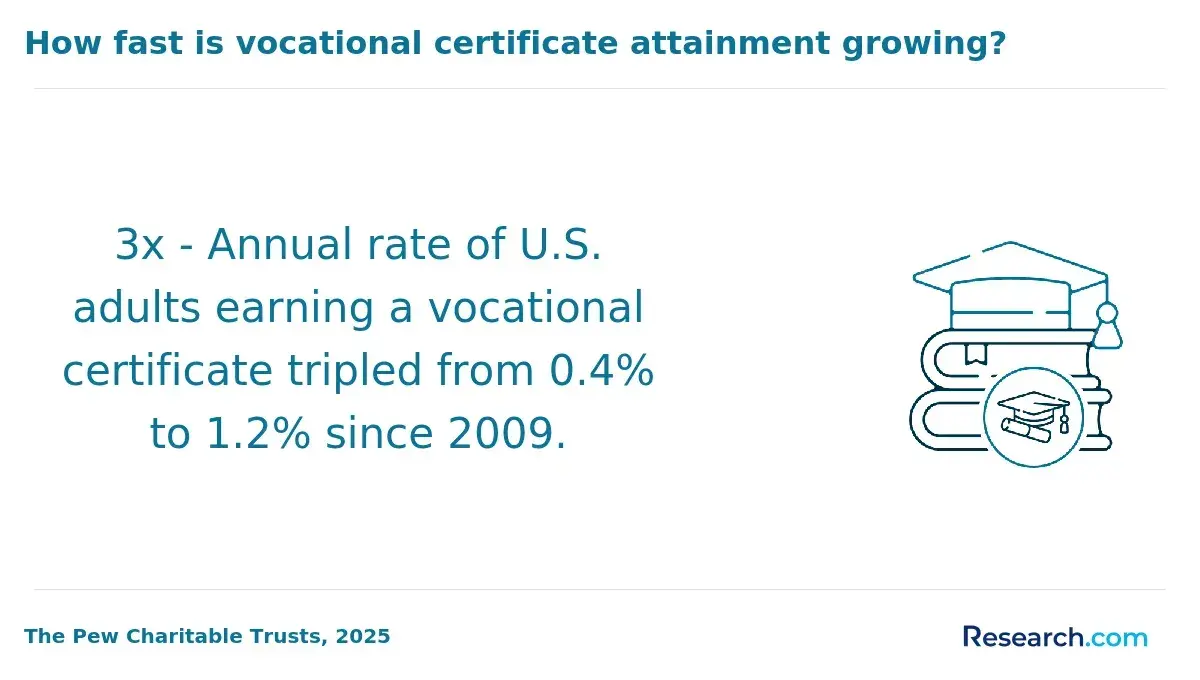
Program length can range from a few weeks for a noncredit introductory course to roughly two years for a full-time associate degree. Self-paced programs can be convenient but may provide less instructor feedback and fewer cohort-based networking opportunities. Term-based college certificates offer more structure and may qualify for forms of aid when the institution and program meet eligibility rules.
This table separates common formats by the commitment they typically require. Actual pacing, course loads, and attendance rules vary by school.
| Format | Typical structure | Important consideration |
| Self-paced noncredit training | Independent modules with flexible deadlines | May not carry academic credit or include live support |
| Instructor-led online certificate | Weekly deadlines and virtual instruction | Offers structure but requires regular time each week |
| Hybrid certificate | Online theory plus scheduled labs or practice | Travel and local scheduling remain necessary |
| Online associate degree | Multiple academic terms, general education, and major courses | May support transfer, but verify each receiving school's policy |
Military spouses and dependents who need portability should compare attendance rules, transfer policies, and support services at online schools for military spouses. Programs with mandatory local placements may be less portable after a relocation.
What coursework and skills are taught in leading online career training certificates?
Leading online career certificates focus on demonstrable competencies rather than broad academic exploration. Depending on the field, coursework may include digital tools, professional communication, customer service, records management, workplace safety, ethics, documentation, troubleshooting, and project-based assignments. Strong programs identify the software, equipment, or standards students will use instead of promising generic "career readiness."
Look for coursework that maps clearly to real entry-level tasks. The following skill categories help readers compare curricula across providers.
- Technical skills: software operation, coding systems, CAD tools, medical terminology, design applications, or field-specific procedures.
- Workplace skills: communication, documentation, time management, customer interaction, confidentiality, and teamwork.
- Applied evidence: graded projects, case studies, simulations, portfolio pieces, practical assessments, or supervised experiences.
- Career preparation: résumé feedback, interview practice, professional networking, and guidance on external certification exams where relevant.
AI tools are increasingly used for drafting, design, scheduling, and data tasks. Choose programs that teach ethical tool use, verification, privacy, and human review rather than treating automation as a substitute for foundational skills.
Which careers and entry-level roles do online career training certificates lead to?
Career training certificates can support entry-level roles, but the outcome depends on local hiring practices, prior experience, licensing rules, and the quality of a learner's portfolio or practical experience. A certificate may help someone qualify for support work; it may not meet the education requirement for higher-level professional roles.
The roles below illustrate realistic directions rather than guaranteed job placements. Confirm requirements in local job postings before choosing a program.
| Training area | Possible entry-level direction | Common additional requirement |
| Medical billing and coding | Billing specialist, coding support, patient accounts representative | Employer preference for certification or experience may vary |
| IT support | Help desk technician, technical support representative | Industry certification or hands-on troubleshooting portfolio can help |
| Legal support | Legal assistant, records clerk, litigation support assistant | Employers may prefer paralegal education or legal-office experience |
| Graphic design | Junior design support, production artist, content assistant | Portfolio and software proficiency are central |
| Skilled trades theory | Estimator assistant, dispatcher, shop support, apprentice pathway | Apprenticeship, supervised hours, or licensing may be required |
For learners whose target role ultimately requires advanced study, reviewing the cheapest doctoral programs can clarify the longer educational ladder. A short career certificate is usually a starting point, not a replacement for a required professional doctorate.
What salary ranges and job outlook can graduates of online career training expect?
Salary data should be used as labor-market context, not as a promise tied to a particular certificate. The U.S. Bureau of Labor Statistics reported a May 2024 median annual wage of $49,210 for medical records specialists, an occupation that may be accessible through postsecondary training, although employers can set different requirements. Local pay varies by experience, employer, region, shift, certification, and job duties.
Employment outlook also differs by occupation. BLS projects healthcare occupations overall to grow much faster than average from 2024 to 2034, which supports interest in healthcare training but does not mean every healthcare certificate leads to the same demand or pay. Compare local postings and ask providers for completion, placement, and licensure data when they collect it; request definitions for every outcome figure.
When evaluating return on investment, calculate the full cost: tuition, registration fees, books, software, equipment, background checks, exam fees, travel for labs, and income lost if required attendance reduces work hours. Lower tuition is valuable only if the program also meets the credential requirement for the job you want.
What licensing or certification exams do certain online career training programs prepare for?
Some online programs prepare students for an external certification exam, while others only provide education. Examples may include medical coding certifications, pharmacy technician certification exams, CompTIA technology certifications, Autodesk credentials, or project-management examinations. Eligibility rules belong to the certifying organization and can change, so students should verify them directly before enrollment.
Licensure is different from certification. State boards typically control licenses for regulated occupations such as nursing, certain allied health roles, electricians, and other trades. An online program may provide classroom instruction but still require approved clinical hours, an apprenticeship, a background check, supervised experience, and a state exam. Never assume that a program marketed nationally satisfies the rules in every state.
Ask for the program's written exam-preparation statement, the name of the credentialing body, pass-rate methodology if advertised, and confirmation of state eligibility where applicable. If the provider cannot identify the exact exam or licensing pathway, treat that as a reason to investigate further.
Other Things You Should Know About
Often, yes. Many noncredit programs use open enrollment, and some colleges offer conditional admission or placement-based entry. However, healthcare, clinical, and credit-bearing programs may still require prerequisites, minimum grades in specific courses, or screening requirements.
They can be when the curriculum teaches relevant skills, the provider is credible, and the credential aligns with employer expectations. For design and technology roles, projects and portfolios can be especially important. For regulated fields, employer respect does not replace licensing or certification requirements.
Eligibility depends on the school, program, enrollment status, and the type of aid. Credit-bearing programs at eligible institutions may have more aid options than noncredit training. Ask about total costs, payment plans, employer tuition assistance, and refund rules before borrowing.
The fastest appropriate path depends on the target role. Noncredit training can begin quickly, but a short program is worthwhile only if it teaches skills employers seek or prepares you for a required next step. Avoid choosing solely by duration; verify job requirements first.
References
- Can You Get Into Online College With a Low GPA? 2026 Guide https://www.collegetransitions.com/blog/can-you-get-into-online-college-with-a-low-gpa/
- Online Career Training | Certificate Programs | CareerStep https://www.careerstep.com/
- Financial Aid For Online Colleges https://www.affordablecollegesonline.org/financial-aid/financial-aid-for-online-colleges/
- Advanced Career Training Programs Overview - /info/landing/online-career-training-program https://commed.smc.edu/info/landing/online-career-training-program
- CourseCareers https://coursecareers.com/
- Tuition Assistance for Job Training Programs https://www.fastweb.com/financial-aid/articles/tuition-assistance-for-job-training-programs
- Best Online Degrees for Working Adults in 2026 https://www.straighterline.com/blog/degreecompletion-best-online-degrees-for-working-adults-in-2026
- Finacial Aid | Payment Plans, Ignite ISA, Grants, GI Bill https://digitalworkshopcenter.com/about/financial-aid/
- Best Careers for Introverts, HSPs, Sensitive People: 70+ Jobs with Less Stress https://valnelson.com/introvert-power/best-careers-for-introverts-hsps-and-other-sensitive-souls/
- Aid for Non-Traditional Students - Finaid https://finaid.org/otheraid/nontraditional/