2027 Best Certifications With Financial Aid Options

Co-Founder and Chief Data Scientist
Choosing a short career program is difficult when "financial aid available" can mean grants, loans, payment plans, or nothing at all. This guide helps prospective students compare certificates, industry certifications, and associate degrees that may qualify for aid. Federal Student Aid reported a maximum Pell Grant of $7,395 for the 2024-25 award year, making eligible programs substantially more affordable for qualifying students. Learn what to verify before enrolling, which paths fit common careers, and how to estimate your actual out-of-pocket cost.
Key Things You Should Know
- Federal aid generally requires enrollment in an eligible program at an approved school; many standalone industry certification exams, bootcamps, and noncredit courses do not qualify.
- A certificate is an educational credential earned through coursework, while a certification is usually a professional credential awarded by an industry body after an exam or other requirements.
- Compare net price, required tools and exam fees, completion time, accreditation, and local employer demand - not advertised tuition or salary claims alone.
Top 10 Best Certifications With Financial Aid Options
Popular Trade School Programs
Trade-school certificates and associate degrees commonly cover HVAC, welding, electrical technology, automotive service, plumbing, diesel technology, and industrial maintenance. A certificate can build entry-level technical skills in months, while an associate degree usually adds general education and may support later advancement. Apprenticeship may be the better option for trades requiring paid supervised work or state licensing. Before enrolling, confirm shop hours, tool costs, safety training, local licensing rules, and whether the curriculum prepares students for recognized exams such as EPA Section 608 for refrigerant work.
Healthcare Programs
Financial-aid-eligible healthcare options may include medical assisting, practical nursing, dental assisting, pharmacy technology, sterile processing, health information technology, and associate-degree nursing. These programs vary sharply: a college certificate may be credit-bearing, while a vendor training course may not qualify for federal aid. Clinical placements, immunizations, background checks, drug screening, uniforms, and licensing or certification exams can add costs. Choose a program only after confirming that it meets your state's rules and, where relevant, prepares you for the appropriate licensure or national certification examination.
Criminal Justice / Law Programs
Criminal justice certificates and associate degrees can introduce policing, corrections, emergency management, legal studies, paralegal work, or cybersecurity foundations. They are useful for exploring public-safety or legal-support careers, but they do not automatically meet hiring standards for law enforcement agencies, courts, or law firms. Paralegal programs are strongest when they offer substantive legal coursework and clear employer recognition; some employers prefer an associate or bachelor's degree. Applicants should also review background-check standards, physical requirements, state peace-officer rules, and whether internships are available.
Arts & Design Programs
Certificates in graphic design, digital media, web design, photography, animation, interior design, and UX-related tools can help learners build a focused portfolio. Programs differ between credit-bearing college certificates and short noncredit professional training. For creative roles, a portfolio, software fluency, and real project experience often matter as much as the credential. Ask whether tuition includes Adobe or other software, equipment access, critique from working professionals, and portfolio development. A longer associate degree may make sense for students who need broader design foundations and transferable college credit.
What types of certifications qualify for federal and state financial aid?
Federal financial aid is not attached to a subject area; it depends mainly on the student, school, and program meeting federal eligibility rules. Eligible programs are commonly credit-bearing certificates, diplomas, or associate degrees offered by institutions approved to participate in Title IV federal student aid. Students generally must complete the FAFSA and meet citizenship, academic-progress, and other federal requirements.
Program length and credential design matter. A short workforce certificate may qualify if it meets federal program eligibility standards, while an individual online course, exam voucher, microcredential, or most independent bootcamps usually does not. State grants may use different residency, enrollment, and institutional rules.
The comparison below shows why readers should ask about the exact program rather than relying on broad claims that a school "offers financial aid."
| Credential type | May qualify for federal aid? | Key verification point |
| Credit-bearing college certificate | Often, if the school and program are Title IV eligible | Ask the financial-aid office whether the specific program has an eligible program code. |
| Diploma at an eligible career school | Sometimes | Confirm institutional participation and the program's approved length. |
| Associate degree | Often, if offered by an eligible institution | Review enrollment status, satisfactory academic progress, and total borrowing. |
| Industry certification exam or vendor course | Usually not by itself | Check employer reimbursement, workforce grants, or bundled college programs. |
Do not confuse eligibility with a guaranteed grant. Aid can include Pell Grants, state grants, scholarships, work-study, and federal loans; the final mix depends on financial need, enrollment, and available funding.
How can you compare online vs campus certification programs with financial aid?
Online and campus programs can lead to the same academic certificate when they are offered by the same institution, but delivery format affects learning, scheduling, clinical or lab access, and total expenses. Fully online study works best for theory-heavy fields such as legal studies, health information, business software, and some IT coursework. Campus or hybrid study is often essential for welding, HVAC, nursing skills, dental assisting, and other hands-on programs.
Use this comparison to match the format to the work you must be able to perform after completion.
| Factor | Online or mostly online | Campus or hybrid |
| Best fit | Lecture-based content and self-directed learners | Programs requiring equipment, labs, simulations, or clinical practice |
| Schedule | May offer asynchronous coursework | Usually fixed lab, shop, or clinical times |
| Costs to check | Technology, proctoring, software, and residency travel | Transportation, parking, tools, uniforms, and campus fees |
| Career preparation | Requires verified local placements where practical training is needed | Can provide direct access to facilities and instructors |
Compare the required in-person hours, clinical placement responsibility, withdrawal policy, and student support before choosing. Students exploring the fastest degree to get online should still prioritize programs with realistic pacing and required practical training over a rapid marketing claim.
How do you verify that a certification program is properly accredited and recognized?
Accreditation evaluates an institution or, in some fields, a specialized program against established standards. It is most important when federal aid, transfer credit, licensure, or employer recognition is involved. Institutional accreditation may support federal-aid participation, but it does not automatically mean every program meets a profession's licensing or certification requirements.
Verify recognition before paying a deposit. Start with the school's official accreditation disclosure and confirm the accreditor through the U.S. Department of Education or the Council for Higher Education Accreditation. Then check the relevant state licensing board, certifying organization, or major local employers when your intended role is regulated.
- Ask whether the exact certificate or degree is eligible for federal aid and obtain the answer in writing.
- Confirm whether the curriculum meets educational requirements for the intended license or certification exam in your state.
- Request published completion, licensure-exam, placement, and debt information where applicable.
- Ask whether credits transfer to a named associate or bachelor's program, rather than assuming they will.
A major red flag is a school that emphasizes a vague "accredited" label but will not name its accreditor, disclose the program's approval status, or explain exam eligibility.
What admission requirements and prerequisites do certification programs typically have?
Requirements depend on the credential. Credit-bearing certificates and associate degrees commonly require a high school diploma, GED, or recognized equivalent; some schools use placement testing or request transcripts. Selective healthcare programs may add prerequisite courses, minimum grades, immunizations, criminal background checks, and health screenings. Trade programs may require safety orientation or basic math readiness.
Noncredit training and industry certifications operate differently. A vendor certificate program may have no college application, while a professional certification can require work experience, training hours, or a passing exam. For example, entry-level IT certifications may be exam-based, whereas advanced certifications can expect documented professional experience.
Ask admissions staff to separate "admission to the school," "admission to the program," and "eligibility for licensure or an external certification exam." Missing that distinction is a common mistake that can delay a career plan.
How much do certification programs cost after grants, scholarships, and employer tuition help?
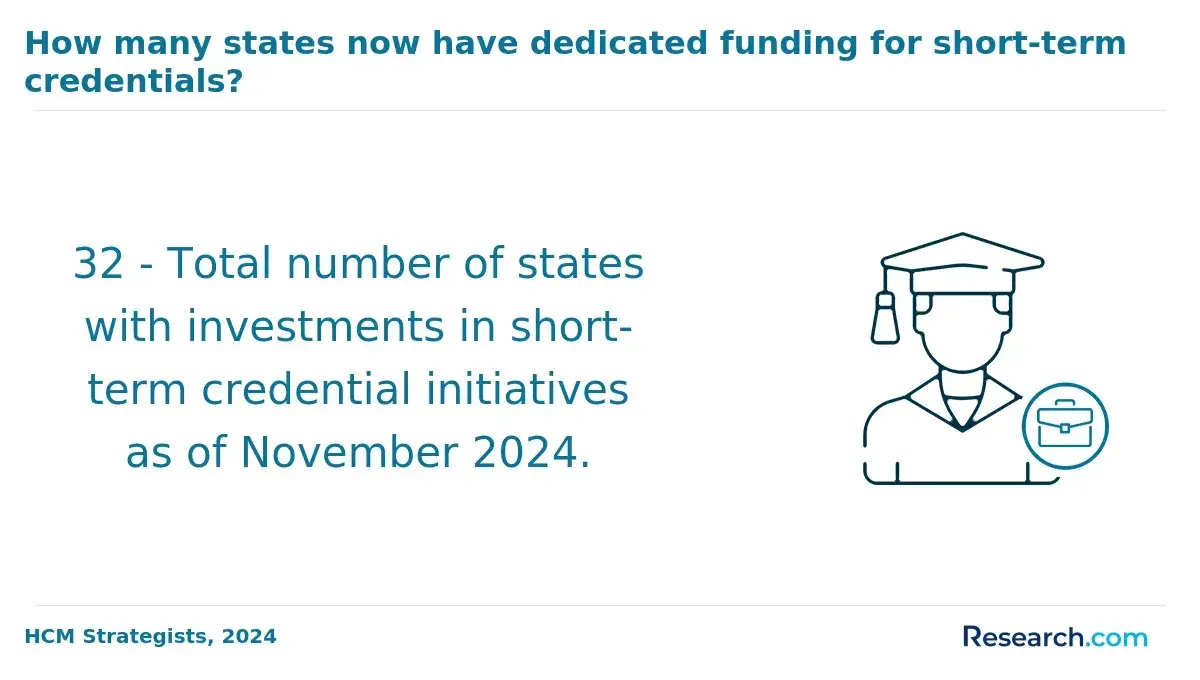
The price that matters is net cost: tuition and required fees minus grants, scholarships, employer support, and other gift aid. It is not the sticker price, and it is not automatically reduced by loans. The maximum Federal Pell Grant for the 2024-25 award year was $7,395, but each eligible student's amount depended on financial circumstances, enrollment intensity, and program eligibility.
Build a one-year budget that includes expenses schools sometimes separate from tuition.
- Tuition, institutional fees, books, software, tools, uniforms, and examination fees
- Transportation, parking, childcare, internet access, and unpaid clinical or practicum time
- Grants and scholarships that do not need repayment
- Employer tuition assistance, including repayment obligations or required employment periods
- Federal and private loans, including interest and repayment terms
Request a personalized aid offer and ask which awards renew each year. A lower-cost public college or an accredited nonprofit university may offer clearer pricing than a program advertising low monthly payments while relying heavily on borrowing. Compare the cost per completed credential and the cost of required licensing steps, not monthly installments alone.
How long do most financial-aid-eligible certification programs take to complete?
Completion time ranges from a few months for a focused college certificate to about two years for a full-time associate degree. The calendar depends on credit requirements, prerequisite courses, cohort schedules, clinical rotations, externships, and whether a student attends full time. A "six-month program" can take longer when it begins only once or twice a year or requires students to secure their own placement.
Accelerated study is sensible when you have time for the workload, the curriculum meets employer or licensing requirements, and the program's total cost remains reasonable. Part-time study is often safer for working adults who need predictable scheduling, even if it delays completion.
Students comparing certificates with degree pathways can use this guide to the fastest degree to get online only if they are considering a degree route; short-term training should never be chosen solely because it appears fastest.
What careers and entry-level job roles do popular certifications lead to?
Popular credentials can support entry into technical, healthcare-support, public-safety-support, legal-support, and creative roles, but the credential should match the actual job description. Employers may value coursework, an external certification, a license, a portfolio, apprenticeship hours, or prior experience in different combinations.
This overview identifies common entry points and important limitations.
| Program area | Possible entry-level roles | Important limitation |
| HVAC or electrical technology | Installer helper, maintenance technician trainee, service apprentice | State licensing, apprenticeship, and supervised experience may still be required. |
| Medical assisting | Medical assistant, clinical support staff | Employer preferences and state scope-of-practice rules vary. |
| Health information technology | Medical records specialist, health information support worker | Some employers prefer experience with specific systems or additional credentials. |
| Legal studies or paralegal studies | Legal assistant, paralegal support role | Hiring standards vary; a certificate alone does not authorize legal practice. |
| Graphic or digital design | Production artist, junior designer, content production assistant | A strong portfolio is usually necessary alongside coursework. |
Artificial intelligence is changing task expectations in administrative, design, and technology work, increasing the value of verification, communication, ethics, and hands-on problem solving. Ask programs how their curriculum uses current workplace tools without treating software familiarity as a substitute for foundational skills.
What salary ranges and earning potential can these certifications help you achieve?
Salary information should be used as occupational context, not as a promise that completing a certificate produces a particular income. Pay varies by location, shift, union coverage, employer, experience, licensure, and education level. The U.S. Bureau of Labor Statistics reported a 2024 median annual wage of $59,810 for HVAC mechanics and installers, illustrating why a regulated technical path can be attractive - but many workers enter through apprenticeships and gain experience beyond initial schooling.
Compare the occupation's typical entry requirements with the credential you are considering. A low-cost certificate may be a strong return on investment if it leads to an accessible entry role and recognizable next step. It is less compelling when employers usually expect an associate degree, bachelor's degree, extensive portfolio, or licensure that the program does not support.
Before enrolling, review local job postings for required credentials, estimate conservative starting pay rather than median pay, and calculate how long loan repayment would remain manageable if job search or wage growth takes longer than expected.
How can you choose a reputable certification that matches your long-term career goals?
A reputable program connects directly to your target job, has transparent costs and outcomes, and can document how it is recognized. Start with the role you want, then work backward to identify the minimum education, license, certification, skills, and experience employers expect. If your goal needs a bachelor's degree, a short certificate may still help you explore the field or build skills, but it should not be marketed as an equivalent replacement.
Use the following checks before applying.
- Find 10 local or remote job postings for your intended role and identify repeated requirements.
- Confirm the program's aid eligibility, total charges, refund rules, and required out-of-pocket expenses.
- Verify accreditation, state approval, and exam or licensure preparation when relevant.
- Ask whether credits are transferable or stackable into a degree you may need later.
- Compare completion schedules, placement support, and outcomes with at least one public-college alternative.
If cost is the central constraint, compare tuition and aid policies with options described in this guide to the cheapest online college. Older adults seeking low-pressure learning rather than a career credential may also consider open university free courses for over 60s, though free courses generally do not provide the same aid eligibility, credit, or career preparation as a formal program.
Other Things You Should Know About
Possibly. You generally need to enroll in a qualifying program at a school that participates in federal student aid. Ask the school's financial-aid office whether the exact program, not merely the institution, is eligible.
No. A certificate usually shows completion of an educational program. A professional certification is typically awarded by an industry organization after a candidate meets standards such as passing an exam, completing training, or documenting experience.
Some do. Format alone does not determine eligibility. The school and specific online program must meet federal requirements, and programs involving clinical, lab, or shop training may have required in-person components.
Consider loans only after grants, scholarships, employer aid, and lower-cost options. Compare the total amount borrowed with realistic entry-level wages, required licensing costs, and the likelihood that the credential meets local job requirements.
References
- Types of Student Finanical Aid | Forsyth Tech https://www.forsythtech.edu/students/how-to-pay-for-college/types-of-aid/
- How new education policies could change financial aid and loans in 2026 https://www.troweprice.com/personal-investing/resources/insights/how-new-education-policies-could-change-financial-aid-and-loans-in-2026.html
- Are Certificate Programs Eligible for Financial Aid? | University of Phoenix https://www.phoenix.edu/blog/are-certificate-programs-eligible-for-financial-aid.html
- New FAFSA Data Restrictions Threaten Critical Research and Practices to Support Student Success https://www.ihep.org/new-fafsa-data-restrictions-threaten-critical-research-and-practices/
- Work Ready Scholarship provides free tuition for in-demand fields https://ltcareercenter.org/work-ready-scholarship-provides-free-tuition-for-in-demand-fields/
- How does a college degree improve graduates' employment and earnings potential? - APLU https://www.aplu.org/our-work/publicuvalues/employment-earnings/
- Best Paying Jobs Without a Degree: 24 High-Income Careers for 2026 - tripleten.com/blog https://tripleten.com/blog/posts/best-paying-jobs-without-a-degree
- Gainful Employment Rule: How It Affects Federal Student Aid https://www.credible.com/student-loans/gainful-employment-rule
- Types of Financial Aid: Loans, Grants, and Work-Study Programs https://angelo.campusesp.com/posts/1141
- Top 25 Colleges with the Best Financial Aid Packages in 2025 https://www.edvisorly.com/student-guides/colleges-with-the-best-financial-aid