2027 Master's in Data Science vs. Master's in Supply Chain Analytics: Choosing Your Graduate Path

Co-Founder and Chief Data Scientist
A master's in data science and a master's in supply chain analytics can both lead to analytical work, but they prepare students to solve different problems. Data science generally offers a broader technical path; supply chain analytics applies quantitative methods to decisions about sourcing, inventory, transportation, and operations. If you are choosing between them, the deciding factors are the work you want to do, the skills you need to build, and whether a program's projects and cost justify the investment.
Key Things You Should Know
- Choose data science for broader modeling and computing work; choose supply chain analytics when you want to apply analytics to operations decisions.
- The U.S. Bureau of Labor Statistics reports a $120,230 median annual wage for data scientists in May 2025, but that occupation-wide figure is not a graduate salary or a return-on-investment estimate.
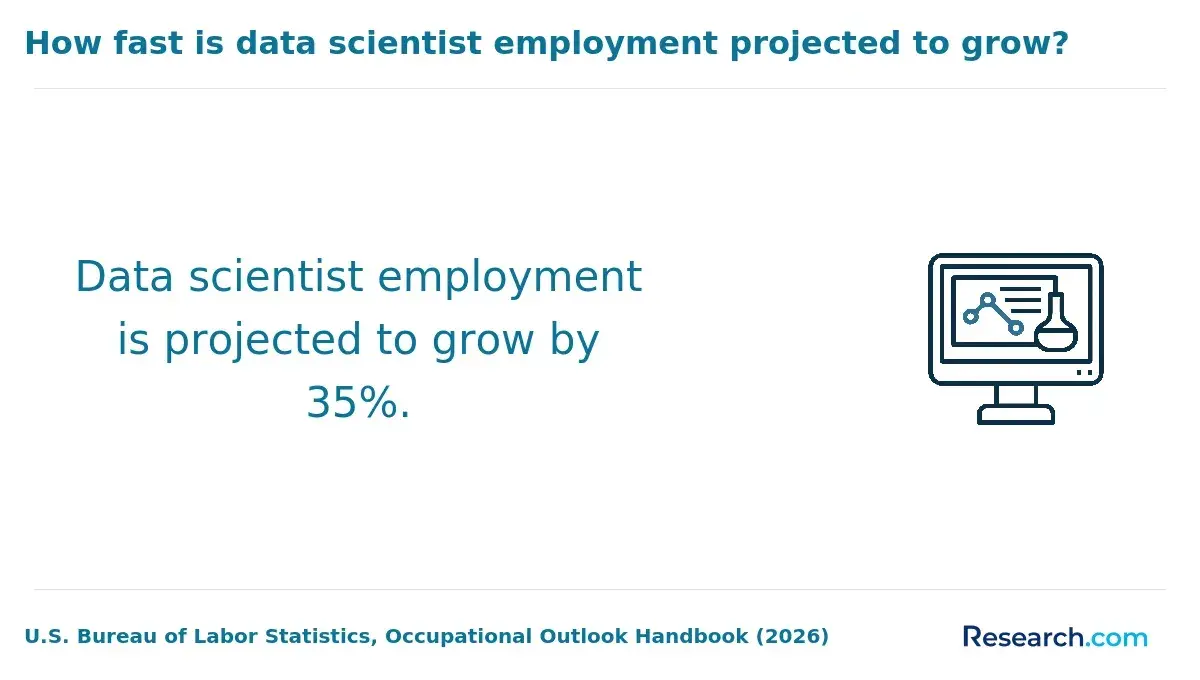
- Data scientist employment is projected to grow 35% from 2025 to 2035; compare that outlook with the actual roles each program's graduates pursue, not just its degree title.
What is the difference between a master's in data science and supply chain analytics?
The central difference is scope. Data science programs typically teach methods that can be applied across industries. Supply chain analytics programs use analytical methods to improve how goods, materials, information, and capacity move through an organization. Neither title alone establishes how much programming, statistics, or business coursework a particular program requires.
This comparison shows what to look for in course descriptions and projects, rather than treating degree names as interchangeable guarantees.
| Decision criterion | Master's in data science | Master's in supply chain analytics |
| Primary focus | Building, evaluating, and applying data-driven methods across domains | Using data to make sourcing, inventory, logistics, and operations decisions |
| Typical technical emphasis | Statistics, programming, machine learning, and data systems | Forecasting, optimization, operations analysis, and supply chain data |
| Value of domain knowledge | Depends on the industry and role sought | Central to interpreting constraints and implementing decisions |
| Potential trade-off | Broader technical preparation may leave less room for supply chain depth | Stronger operations context may provide less depth in general-purpose computing |
Choose by the problems you want to own. Someone who wants to develop models for varied products or industries may prefer data science. Someone who wants to improve demand plans or distribution decisions may get more relevant practice from supply chain analytics.
Which graduate degree offers better career opportunities and earning potential?
Neither degree has a universal earnings advantage. The better opportunity depends on your target role, prior experience, location, and ability to demonstrate the skills employers need. A supply chain professional may benefit more from advanced forecasting and optimization than from a broader degree that does not address operational decisions. A candidate seeking technical roles across industries may value the flexibility of data science.
The U.S. Bureau of Labor Statistics reports that the median annual wage for data scientists was $120,230 in May 2025. That is a wage for workers in an occupation - not evidence that earning a data science master's will produce that salary. It also is not directly comparable with a program's advertised alumni salary, which may reflect a different population or measurement method.
Before using either degree to justify its cost, ask programs for outcomes by job title and graduating cohort. Check whether reported salaries include experienced students, how many graduates responded, and whether the figure describes salary level or salary increase. If those details are unavailable, treat an earnings claim as insufficient evidence for a financial decision.
What do you learn in data science and supply chain analytics master's programs?
Both paths can involve statistics and programming, but their strongest projects should look different. In data science, a substantial project might compare predictive methods, document data preparation, and test whether results hold on new data. In supply chain analytics, a project might forecast demand and then show how forecast error changes inventory or capacity decisions.
Read required courses before electives. A supply chain degree with one introductory analytics course may not provide the technical depth you want; a data science degree with no operations electives may not prepare you to handle procurement or transportation constraints. For students specifically interested in building the underlying data infrastructure, artificial intelligence master's options covering data pipelines offer another curriculum comparison - not a substitute for checking each program's required courses.
Look beyond tool names in a syllabus. Ask what data students work with, whether projects require reproducible code, how models are evaluated, and whether students must translate results into an implementable decision. Those answers reveal more about depth than a course title does.
What are the admission requirements for each master's degree?
Requirements vary by institution and program. Applicants to data science programs may be asked to demonstrate preparation in programming, mathematics, or statistics. Supply chain analytics programs may also expect quantitative readiness, while placing greater value on operations or business experience. Neither background automatically qualifies or disqualifies an applicant unless a program states a specific requirement.
Compare the published prerequisite courses with your transcript, then ask admissions staff whether professional work, prior coursework, or an approved preparatory course can satisfy any gaps. Self-study can help you succeed, but it should not be assumed to fulfill a formal prerequisite. Applicants considering adjacent AI degrees can use guidance on AI master's preparation for graduates outside computer science to identify possible skill gaps; the admission rules of the data science or supply chain program still control.
How long do these master's programs take and how much do they cost?
There is no reliable degree-wide price or completion time: credit requirements, tuition policies, course availability, and full-time or part-time enrollment differ by school. An advertised tuition rate is not a total program cost, and a shortest-possible schedule may not be available to every student.
Request a program-specific estimate based on the credits you must complete. Include mandatory fees, any required software or materials, and travel for campus visits; then consider financing costs and income you would forgo if you reduce work hours. Compare like with like - total expected cost against total expected cost, not one school's tuition rate against another's comprehensive estimate. If speed is a priority, faster paths to a data science master's degree can help you identify scheduling questions to bring to programs.
A practical affordability test is whether the curriculum supports a specific career move you would pursue even without an assumed salary increase. Ask about scholarships and employer tuition assistance, but do not count either until eligibility and award terms are confirmed.
Are online or campus-based programs better for graduate students?
Neither format is inherently stronger. Online study can make it easier to keep working, while a campus program may offer more convenient access to in-person projects, recruiting, or faculty. What matters is whether the format lets you complete the same substantive coursework and obtain the support you need.
Ask whether classes meet live, when group work happens, how projects access data and computing resources, and whether internships or campus visits are required. These details matter especially to working students: an "online" label does not establish that the schedule is asynchronous or travel-free.
If your interests extend beyond these two degrees, online AI study programs are a separate option to assess. Compare their required curriculum against your target work rather than assuming an AI title provides equivalent supply chain or general data science preparation.
How do you verify accreditation for a data science or supply chain program?
Check the institution first, then any additional accreditation the school claims for a business unit or program. Institutional accreditation and specialized accreditation are different; a business school's accreditation should not be assumed to cover every degree the university offers.
Use the institution's current accreditation disclosure and confirm its status in the U.S. Department of Education's accreditation database or the relevant accreditor's directory. For an online program, also ask the school whether it is authorized to enroll students where you live. Accreditation does not, by itself, establish curriculum quality, eligibility for every employer benefit, or authorization in every state.
What jobs can you get with either master's degree?
A data science master's may support applications for data scientist, machine learning, analytics, or related technical roles, subject to the skills each employer requires. A supply chain analytics master's may be more directly aligned with demand planning, inventory analysis, logistics analytics, procurement analytics, or operations analysis. Job titles overlap, so examine responsibilities rather than assuming that a degree maps to one occupation.
What are the job outlooks for data science and supply chain analytics careers?
The U.S. Bureau of Labor Statistics projects data scientist employment to grow 35% from 2025 to 2035. That signals strong projected demand for the occupation, not an individual graduate's chance of being hired. Employers may also expect applicants to show relevant projects and technical skills.
Supply chain analytics is not a single, consistently defined occupation, so one job-growth figure would misrepresent its range of possible roles. For a fair comparison, identify the specific occupations and employers you would target with each degree, then review their current requirements and outlooks. Growing use of predictive tools does not remove the need to understand operational constraints or explain decisions to stakeholders.
Which certifications can complement either graduate degree?
A certification is most useful when it fills a demonstrable gap or appears in jobs you actually want. Supply chain credentials may help document knowledge of planning, logistics, or process improvement; cloud or platform credentials may help candidates whose target data roles use those systems. Employer recognition, examination rules, and renewal requirements vary.
Do not buy a credential simply because it is listed alongside a master's program. Check target job postings first, then compare the certification's assessed skills with your coursework and work samples. A completed project showing sound analysis and a defensible recommendation may be more persuasive than an additional credential with no connection to the role.
Other Things You Should Know About Data Science
Only if your employer and program permit it. Confirm data ownership, privacy rules, publication requirements, and whether an anonymized or synthetic dataset would be acceptable before proposing the project.
A thesis can provide stronger evidence of independent research, but doctoral admission depends on the specific program and your overall preparation. Ask prospective doctoral departments what research experience they expect.
Possibly, but credit-sharing rules differ. Obtain written confirmation of eligible courses, grade requirements, and time limits before enrolling in a certificate with the expectation that its credits will transfer.
Neither degree title should be treated as a license. If a particular job has a licensing or other regulatory requirement, verify it with the relevant employer or authority before choosing a program.
References
- Tuition and Fees Data - Texas Higher Education Coordinating Board https://www.highered.texas.gov/legislative-appropriations-overviews/tuition-and-fees-data/
- Students and Recent Graduate Opportunities | dol.gov https://www.dol.gov/general/jobs/students-and-recent-grads
- Master of Science in Supply Chain Analytics | CSUSM https://www.csusm.edu/el/programs/business/master-of-science-supply-chain-analytics/index.html
- Analytics Career Paths | Northeastern University Graduate Programs https://graduate.northeastern.edu/knowledge-hub/analytics-career-paths/
- Master of Science in Technology Management and Data Analytics | UVA Wise https://www.uvawise.edu/academics/graduate/technology-data
- What Can I Do With a Degree in Data Science? Career Paths & Skills | Harvard SEAS https://seas.harvard.edu/news/what-can-i-do-degree-data-science-career-paths-skills
- A Guide to Choosing Between Data Science vs. Data Analytics | UCLA MSOL Data Science https://www.msol.ucla.edu/data-science-engineering/articles/demystifying-data-guide-choosing-between-data-science-vs-data-analytics/
- Data Analyst Career Path: Roles, Skills, and Outlook | Syracuse University https://ischool.syracuse.edu/data-analyst-career-path/
- What You Can Do with a Master's in Data Science and Artificial Intelligence | Harvard Extension School https://extension.harvard.edu/blog/what-you-can-do-with-a-masters-in-data-science-and-artificial-intelligence/
- Which Jobs Require a Graduate Degree? | UCLA https://www.ucla.edu/academics/graduate-benefits/which-jobs-require-a-graduate-degree