2027 Best Online Short Certificate Programs for Flexible Careers

Co-Founder and Chief Data Scientist
Choosing a short online certificate can be difficult when providers promise fast career results but credentials vary widely in employer recognition and licensing value. These programs can build targeted, job-relevant skills with flexible schedules, but they are not substitutes for every degree, certification, or hands-on license.
U.S. Bureau of Labor Statistics projections for 2024-2034 show healthcare support and skilled-trade-related roles continuing to create openings through growth and replacement needs. This guide helps career changers, working adults, and upskillers compare program types, costs, requirements, and realistic next steps.
Key Things You Should Know
- Short online certificates commonly take weeks to about one year. Credit-bearing college certificates may be stackable, while noncredit career programs usually are not transferable.
- For regulated work such as nursing, electrical work, medical assisting, and paralegal practice, confirm state rules and required supervised training before enrolling; fully online study may not meet every requirement.
- BLS May 2024 wage data shows wide occupational variation. The program's value depends on the specific role, local demand, prior experience, and whether a separate license or industry certification is required.
Top 10 Best Online Short Certificate Programs for Flexible Careers
Popular Trade School Programs
Online trade certificates are strongest for theory, estimating, safety, codes, and entry-level technical knowledge; most hands-on trades still require labs, apprenticeships, or employer training. Common options include HVAC fundamentals, welding technology, construction management, electrical theory, plumbing basics, automotive service, and industrial maintenance.
A short certificate suits someone already employed in the field or seeking an entry point. Choose an associate degree or registered apprenticeship when employers require substantial supervised practice. Before paying, verify required tools, in-person lab dates, apprenticeship connections, and whether the curriculum supports a recognized exam or state licensing pathway.
Healthcare Programs
Healthcare certificates may cover medical billing and coding, pharmacy technician preparation, medical assisting, health information support, EKG technology, or patient care skills. Billing, coding, and administrative programs can be largely online, while clinical programs generally require in-person skills labs and supervised externships.
A certificate is education; it is not automatically professional certification or state authorization to practice. For patient-facing roles, confirm background-check rules, immunizations, clinical placement support, and eligibility for exams from the relevant certifying body. Consider an associate degree when your target role requires licensure, broader clinical preparation, or advancement into nursing or allied health.
Criminal Justice / Law Programs
Short online programs in criminal justice, legal studies, paralegal support, cybersecurity foundations, corrections, and emergency management can introduce legal systems, documentation, ethics, and case-management skills. They work best as career exploration or skills-building for people with related experience.
A certificate alone rarely qualifies someone to become a police officer, lawyer, investigator, or licensed legal professional because hiring agencies and jurisdictions set separate standards. Paralegal candidates should check employer expectations and program quality carefully; some jobs prefer substantial legal experience or education. Review background-screening standards and local hiring requirements before choosing a specialization.
Arts & Design Programs
Online short certificates in graphic design, UX design, digital marketing design, photography, video editing, web design, animation, and content creation usually emphasize portfolio-based work. They can be useful for freelancers, career changers, and professionals adding a specific software or production skill.
Employer evaluation often centers on demonstrated work rather than the certificate alone, so choose programs that provide feedback and finished portfolio pieces. Check software costs, equipment requirements, instructor access, and ownership of completed projects. A longer degree may be worthwhile for art direction, advanced interaction design, or roles requiring a broad visual-communication foundation.
What are online short certificate programs and who are they best suited for?
An online short certificate program is a focused educational program, usually completed in less time than a degree, that teaches a defined subject or occupational skill.
It may be offered by a college, university, employer, nonprofit, trade school, or private training provider. The credential can be credit-bearing or noncredit, and that distinction affects transferability, financial-aid eligibility, and academic progression.
These programs are best suited to adults who need a targeted skill, workers updating their knowledge, people testing a field before committing to a degree, and candidates who already meet a role's baseline education requirements. They are less suitable when the desired occupation requires a degree, extensive clinical practice, an apprenticeship, or a state license.
A certificate differs from a professional certification. You earn a certificate by completing education; a certification is awarded by a certifying organization after meeting its standards, often through an exam, work experience, or continuing education. Some certificate programs prepare learners for a separate certification exam, but completion does not guarantee passing it.
How do accredited online certificate programs compare to campus-based options?
Accredited online certificate programs can deliver the same academic content as campus options, especially for business, technology, administration, and theory-heavy subjects.
Online delivery is often better for schedule flexibility, commuting savings, and self-paced review. Campus or hybrid formats are usually better when equipment access, live coaching, clinical simulations, or employer networking are central to the outcome.
Use this comparison to match the learning format to the occupation rather than assuming one format is universally better.
| Decision factor | Online certificate | Campus or hybrid option |
| Scheduling | Often asynchronous or evening-friendly | Set meeting and lab times |
| Hands-on training | May require local practicum or separate lab | Usually easier access to equipment and supervision |
| Networking | Requires deliberate virtual outreach | More informal contact with peers and employers |
| Best fit | Knowledge-based upskilling and working adults | Clinical, technical, and workshop-intensive training |
For credit-bearing programs, institutional accreditation matters because it can affect credit acceptance and federal aid eligibility. Verify the institution through its accreditor and ask whether the exact program has specialized approval where relevant.
For noncredit providers, prioritize employer recognition, transparent instructors, assessed work, and a clearly stated credential, not vague claims of "accreditation." If a degree is ultimately your goal, compare the certificate's pathway with the best college degrees for the future before committing.
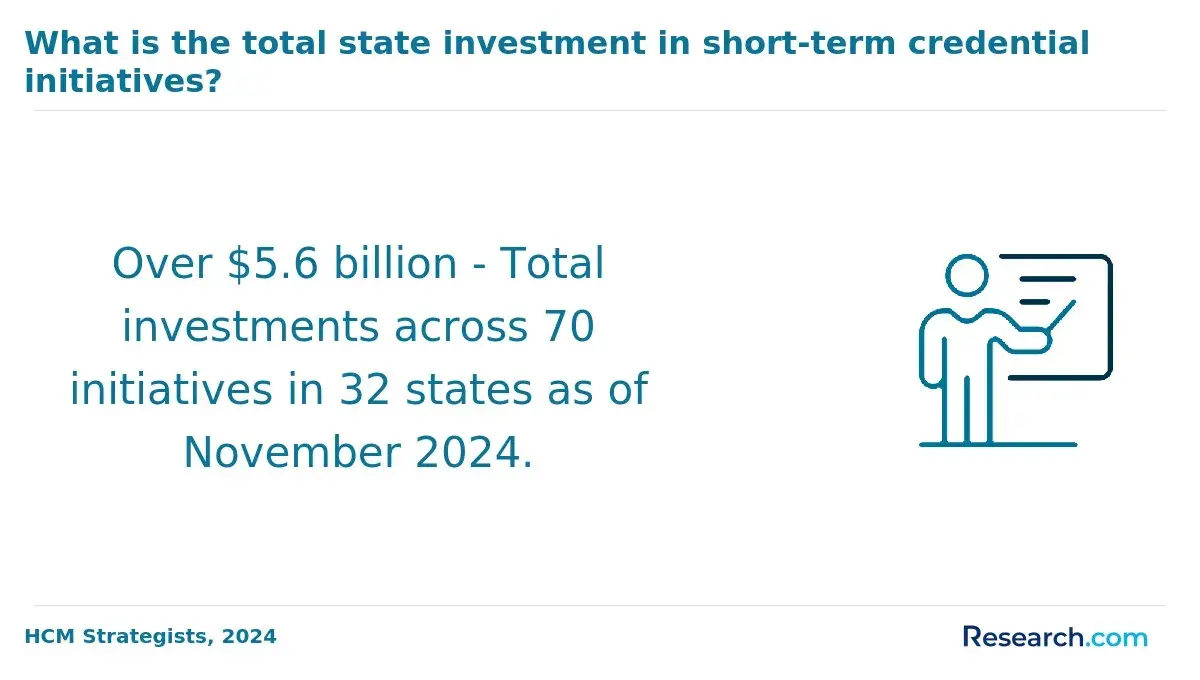
What admission requirements and prerequisites do short online certificate programs have?
Admission requirements depend on the provider and level of instruction. A noncredit introductory certificate may require only identity verification, payment, and basic computer access.
A college undergraduate certificate may require an application, high school completion or equivalent, transcripts, placement measures, and prerequisite courses. Graduate certificates generally require a bachelor's degree and may expect prior coursework or professional experience.
Programs leading toward clinical work, licensure, or security-sensitive employment can add requirements that are not traditional admissions criteria. Ask about the following before enrolling:
- Required prior education, prerequisite courses, technical skills, and minimum grades.
- Background checks, drug screening, immunizations, health records, or criminal-history restrictions for clinical or field placement.
- Technology specifications, required software, proctored exams, live meeting times, and local placement responsibilities.
- Whether prior learning, military training, industry certifications, or transfer credits can reduce coursework.
Do not assume "no GPA requirement" means no eligibility screening. It may simply mean the provider uses open enrollment. Also, a school can admit you to a program without guaranteeing eligibility for a later certification exam, practicum, or state license.
How long do online short certificate programs take and what do they cost?
Most online short certificates range from a few weeks to roughly 12 months, depending on the number of courses, expected weekly workload, prerequisite knowledge, and whether a practicum is required.
Self-paced programs can feel faster, but learners still need enough time to complete graded projects and retain job-relevant skills. Accelerated schedules are best for learners with reliable weekly study time; part-time formats are often safer for people balancing work and caregiving.
Total cost is more than advertised tuition. Compare the complete out-of-pocket amount and the credential's likely usefulness for your target role.
| Cost factor | Why it matters | Question to ask |
| Tuition or subscription fee | May cover all courses or only a limited access period | Is the full completion cost fixed? |
| Books, software, tools, and exams | Can materially increase total spending | Which items are mandatory and separately billed? |
| Clinical, lab, or practicum expenses | May include travel, uniforms, screening, and insurance | Who arranges placement and pays related fees? |
| Financing | Payment plans and aid differ by credential type | Is federal aid available, or only private financing? |
Credit-bearing certificates at eligible institutions may qualify for federal aid when students meet program and enrollment rules; many short noncredit programs do not. Employer tuition assistance, workforce-agency funding, and veterans' education benefits may help in qualifying programs, but eligibility varies.
For lower-cost degree pathways, compare cheap online colleges alongside standalone certificates. Avoid borrowing for a credential until you have confirmed its direct relevance to a job target.
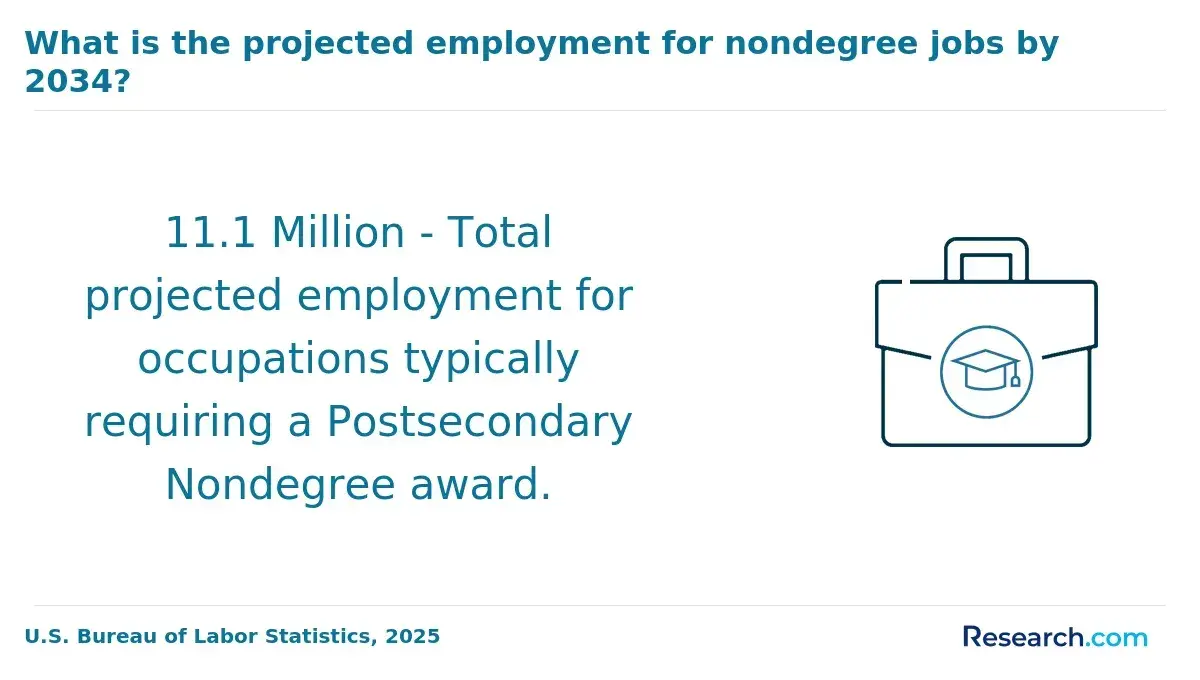
What curriculum and coursework do flexible online certificate programs typically include?
Flexible online certificate coursework typically combines short lectures, readings, quizzes, discussion boards, projects, simulations, and instructor feedback. Career-focused programs may add portfolio assignments, case studies, software practice, virtual labs, or supervised field experience. Synchronous programs require attendance at scheduled sessions; asynchronous programs let learners complete work by weekly deadlines.
Curriculum depth should match your goal. An introductory certificate can help you explore a field or speak more confidently with employers. A career-entry certificate should demonstrate applied competence and include assessments that resemble workplace tasks. Advanced certificates work best when learners already have foundational knowledge and want specialization.
Before enrolling, request the course sequence and compare it with job postings in your area. Look for instruction in current tools, communication, documentation, ethics, and problem-solving, not only video content.
In fields affected by AI and automation, prioritize programs that teach how to verify outputs, protect sensitive information, and use digital tools responsibly. If a program claims to prepare you for an external exam, confirm that its topics align with the exam blueprint.
Which careers and job roles can you pursue with short online certificates?
Short certificates can support entry-level, support, and skills-upgrade roles, but the appropriate career path depends on prior education, experience, licensing rules, and local employers. They are often most valuable when paired with a portfolio, work samples, internship, apprenticeship, or existing work history.
The following examples distinguish roles a certificate may support from occupations that commonly require more than short online study.
| Certificate focus | Potential related roles | Important limitation |
| IT support or data tools | Help desk support, junior operations support, data-entry or reporting support | Employers may also expect an industry certification, portfolio, or experience |
| Medical billing and coding | Billing specialist, coding support, patient-account representative | Certification preferences and hiring standards vary by employer |
| Digital design | Production designer, content assistant, freelance creative support | A portfolio usually carries substantial weight |
| Construction or skilled-trade theory | Estimator assistant, project support, apprentice candidate | Hands-on work and licensure pathways are separate requirements |
| Legal studies | Legal assistant, records or compliance support | It does not qualify someone to practice law |
A short credential is also a reasonable bridge to a degree when it has clearly documented transfer or stackability rules. Adults returning to school may prefer a paced credential before considering a one year degree for seniors or another degree-completion option.
What salary ranges and earning potential are common for roles using these certificates?
Salary should be evaluated by occupation, location, experience, schedule, and employer, not by a certificate title. The U.S. Bureau of Labor Statistics' May 2024 Occupational Employment and Wage Statistics reported a national median annual wage of $49,500 for all occupations.
Many certificate-related entry roles fall below or above that benchmark, particularly when they involve clinical responsibility, technical expertise, commission-based work, or licensed skilled trades.
This comparison gives broad occupational context, not a promise of pay for certificate completers.
| Occupation | Median annual wage, May 2024 | Certificate relevance |
| Computer user support specialists | $60,340 | Certificates and industry certifications may support entry, but employers vary |
| Medical records specialists | $50,250 | Relevant coding or health-information training can be useful |
| Paralegals and legal assistants | $61,010 | Many employers prefer formal legal education or related experience |
| Dental assistants | $47,300 | State-specific requirements may include approved education or registration |
Use wage data as a screening tool: compare local postings, required credentials, shift differentials, and advancement options before deciding what to spend. A certificate may strengthen candidacy, but it does not establish a direct causal salary outcome.
If your target career requires graduate study, evaluate costs and career requirements before moving to affordable master degree programs.
What licensing, professional certification, or continuing education requirements may apply?
Licensing, professional certification, and continuing education are separate from certificate completion. Licensing is government authorization to practice a regulated occupation and is often state-specific. Professional certification is usually issued by an industry association or certifying body. Continuing education helps professionals maintain a license or certification after initial qualification.
Requirements are especially important in healthcare, education, cosmetology, construction trades, accounting, and security-related fields. A fully online program may teach required theory but still lack the supervised clinical hours, practical examination, approved curriculum, or local background clearance required for a license. For IT, project management, coding, and other nonlicensed fields, an external certification may be optional but preferred by employers.
Before enrolling, contact the relevant state board or certifying organization and obtain written confirmation that the exact program meets educational requirements, if applicable.
Ask whether the certificate prepares for an exam, includes the exam fee, and meets renewal or continuing-education rules. Never rely on a provider's general statement that a program is "license-ready" without verifying your state and intended job title.
How can you choose a reputable online certificate program with strong career outcomes?
A reputable flexible program makes its credential, curriculum, instructors, total costs, delivery format, and career limits easy to verify. The best choice is not necessarily the shortest or cheapest option; it is the option that satisfies the actual requirement for your next role without paying for unnecessary coursework.
Use this process to compare programs before submitting an application:
- Start with five to 10 current local or remote job postings and list the education, skills, licenses, and software employers actually request.
- Decide whether you need academic credit, an industry certification exam, hands-on practice, a portfolio, or simply a targeted skill update.
- Verify the provider's institutional accreditation when academic credit, aid, transfer, or licensure is involved, and confirm any specialized approval directly with the relevant board.
- Calculate total cost, including exams, equipment, software, travel, clinical requirements, and lost work time, not tuition alone.
- Ask for completion rates, placement definitions, employer partners, instructor qualifications, and written policies for refunds, extensions, and career support.
Common red flags include guaranteed-job language, undisclosed mandatory fees, vague "accreditation" claims, no published curriculum, pressure to finance immediately, and claims that an online-only course meets a hands-on licensing requirement.
A credible provider explains limitations, identifies any in-person component, and does not confuse its certificate with an external certification or license.
Other Things You Should Know About the Best Online Short Certificate Programs
They can be worthwhile when they teach a skill clearly requested in your target job postings and cost substantially less than a longer program. They are less worthwhile when the job requires a license, degree, apprenticeship, or extensive experience that the certificate does not provide.
Short self-paced certificates may take only weeks, but speed should not be the deciding factor. Choose a program with enough assessed practice, instructor support, and employer relevance to help you use the skill after completion.
Some employers hire for support, administrative, technical, creative, and skilled-trade entry roles based on skills, work samples, and experience. A certificate can help, but job eligibility depends on the role, employer, local market, and any required license or certification.
Employers generally care more about the provider's credibility, the skills demonstrated, and whether the credential matches the role than whether coursework was online. Credit-bearing certificates from established institutions, recognized industry certifications, and portfolios or projects tend to be easier to explain to employers.
References
- How Much Does It Cost to Create an Online Course? A Complete Breakdown for Businesses That Want to Sell Courses https://oasis-lms.com/post/how-much-does-it-cost-to-create-an-online-course
- Best online certificates for career growth | edX https://www.edx.org/certificates
- Best Online Certificate Programs | Enhance Your Skills https://bootcampgis.com/best-certificate-programs-online/
- Top Online Courses for Certifications for Tech Jobs https://sciontechnical.com/top-online-courses-certifications-tech-jobs/
- Certificate Programs: Programs, Costs, Duration & Are They Worth It? - University of the Potomac https://potomac.edu/certificates-programs-costs-duration-are-they-worth-it/
- What are the top 10 skills that'll get you a job when you graduate? https://targetjobs.co.uk/careers-advice/skills-for-getting-a-job/what-are-top-10-skills-thatll-get-you-job-when-you-graduate